
What Happened
CNN's chief executive Mark Thompson spent months in private negotiations trying to convince star anchor Christiane Amanpour to remain at the network. Thompson made personal appeals, asking her to wait through the uncertainty surrounding the Skydance acquisition. The effort failed. Amanpour is leaving. And now the whole thing is public, which is its own separate problem.
The Communication Angle
Here is the lesson: when you negotiate to keep a top performer, the ask itself has to be worth something. Thompson reportedly asked Amanpour to stay until there was "greater certainty" about leadership under the new ownership. That is not an offer. That is a delay tactic wearing a suit. You cannot ask someone to bet their career on a promise you cannot keep, and you certainly cannot ask someone of Amanpour's stature to wait in a holding pattern with no defined endpoint.
The failure here was not emotional. Thompson clearly cared enough to make personal appeals. The failure was structural. He came to the table with urgency but without currency. When you want to retain someone who has options, you need three things: a clear picture of what they gain by staying, a concrete timeline with real milestones, and something only you can offer. "Wait and see" delivers none of those.
There is also a secondary failure, and it is just as damaging. This negotiation is now public. Whatever Thompson said behind closed doors, the outside world now reads it as: CNN begged, and she said no. That narrative is almost impossible to reverse. The moment a private retention effort becomes public knowledge, both parties lose control of the story. Thompson loses authority. Amanpour's departure looks like a verdict on the network's future. This is why secrecy in sensitive negotiations is not just courtesy. It is strategy.
What should Thompson have done differently? Front-load the value. Before any conversation about staying, establish what the new chapter looks like in specific terms. A title, a mandate, a platform commitment, a number. Come in with something concrete, not a plea dressed as a conversation. And if you cannot offer specifics yet, say so plainly and reschedule. A premature negotiation is worse than no negotiation at all because it signals that you are not ready.
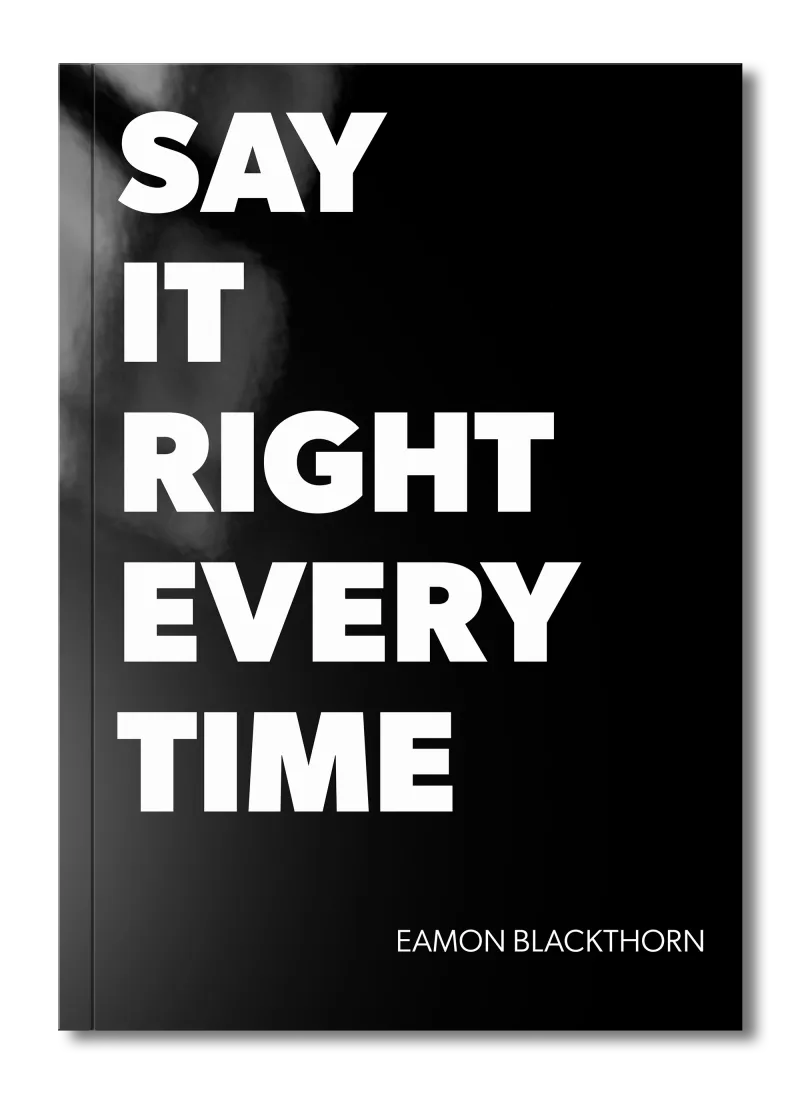
This is exactly the kind of scenario I break down in Say It Right Every Time. The chapter on high-stakes negotiation conversations gives you a framework for what I call "offer architecture," which is how to sequence what you say so that the other person hears substance before they hear urgency. Thompson led with urgency. The anchor heard desperation. That order matters more than most people realize, and the book walks you through how to reverse it.
Never Be Lost
for Words Again
Get word‑for‑word scripts for the conversations that shape your life, from job interviews and negotiations to difficult talks with family and partners, so you always know exactly what to say and how to say it.
Never Be Lost
for Words Again
Get word‑for‑word scripts for the conversations that shape your life, from job interviews and negotiations to difficult talks with family and partners, so you always know exactly what to say and how to say it.
Key Takeaway
Before your next high-stakes retention conversation, write down two things: the one concrete offer on the table (not a vague future promise) and the specific date by which that offer becomes real. If you cannot fill in both blanks, you are not ready to have the conversation. Wait until you can. Showing up empty-handed to a negotiation does not show effort. It shows you have not done the work.