

What Happened
A new study reveals that more than 80% of organizational leaders report their managers are being asked to do significantly more than before. Despite widespread anxiety about AI eliminating jobs, only one in ten leaders believe AI will make managers less relevant. The research points to a clear trend: as technology handles more operational tasks, the human demands on managers are actually increasing.
The Communication Angle
Here is the lesson: the most dangerous manager in any organization right now is not the one who resists AI. It is the one who cannot talk to people.
This research confirms what anyone paying attention already knows. AI is absorbing the mechanical work, the scheduling, the reporting, the data sorting. What it cannot do is look a struggling employee in the eye and say something that actually lands. It cannot read the room in a difficult team meeting. It cannot deliver feedback that changes behavior instead of triggering defensiveness. That is the manager's job now, more than ever, and most managers are not trained for it.
The role of a manager has always had two tracks: operational and human. For decades, organizations rewarded people on the operational track because results were measurable. You hit your numbers, you got promoted. Your ability to have a hard conversation, to motivate someone who had checked out, to align a team around a direction they did not choose. Nobody graded that. Now AI is absorbing the operational track entirely, and the human track is all that remains. Managers who cannot communicate clearly, honestly, and with precision are suddenly exposed.
What does better communication look like at the management level? Three things. First, clarity: saying exactly what you need without burying it in qualifications. Second, consistency: your team should be able to predict how you communicate, because unpredictability kills trust. Third, candor: the ability to say the hard thing directly, without cruelty and without delay. Most managers fail on all three. They are vague because they fear conflict. They are inconsistent because they react instead of respond. They avoid candor entirely because nobody ever taught them how to deliver it well.
Organizations that treat communication as a soft skill are about to get a hard lesson. The managers who thrive in this next decade will be the ones who can make people feel heard, directed, and trusted, using nothing but words.
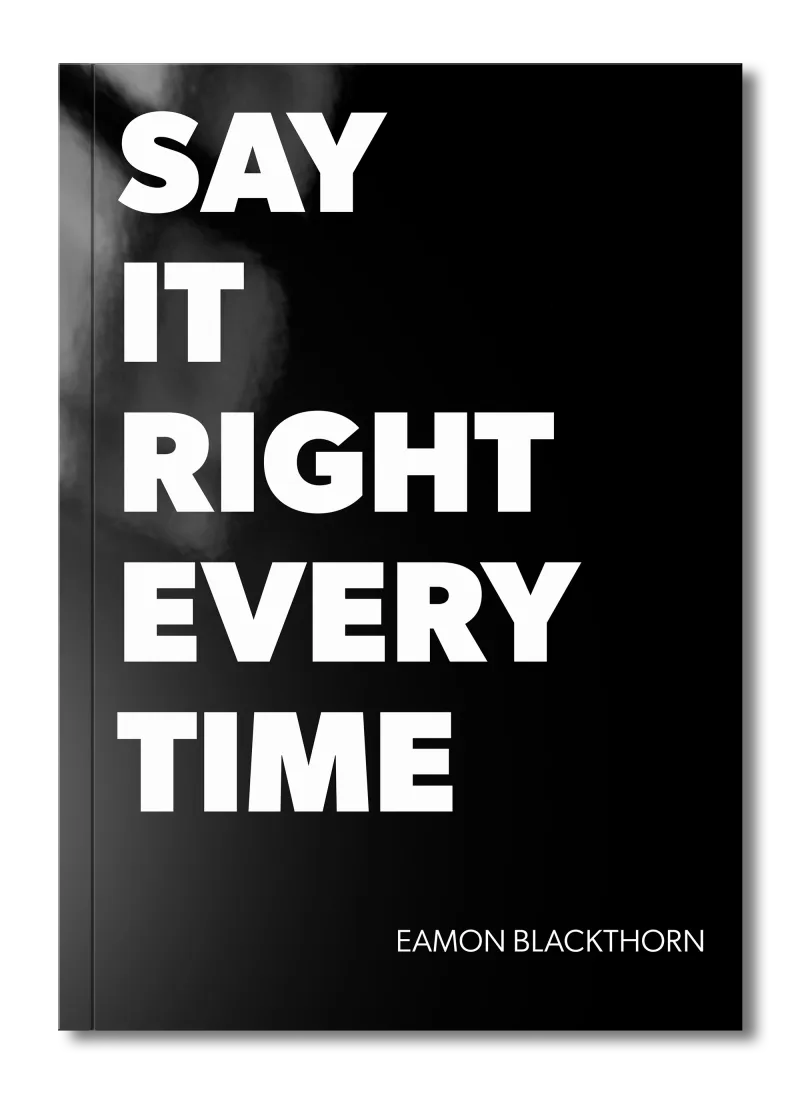
This is exactly the kind of scenario I break down in Say It Right Every Time. The chapter on delivering clear direction gives you a framework for stripping the vagueness out of your management conversations, so your team always knows what you actually mean, not what they think you might mean. That gap between what you said and what they heard is where performance problems are born.
Never Be Lost
for Words Again
Get word‑for‑word scripts for the conversations that shape your life, from job interviews and negotiations to difficult talks with family and partners, so you always know exactly what to say and how to say it.
Never Be Lost
for Words Again
Get word‑for‑word scripts for the conversations that shape your life, from job interviews and negotiations to difficult talks with family and partners, so you always know exactly what to say and how to say it.
Key Takeaway
Before your next one-on-one with a team member, write down one sentence that answers this question: "What is the one thing I need this person to understand or do differently after this conversation?" If you cannot write that sentence, you are not ready for the meeting. Go in with that sentence as your anchor, and do not leave without saying it plainly.