
What Happened
A commentary published in the Malay Mail argues that the real wall between science and the public is not scientific complexity. It is how scientists choose to communicate. The author uses Jane Austen and Albert Einstein as unlikely teachers, suggesting that clarity, story, and human connection matter more than technical precision when sharing discoveries with a general audience.
The Communication Angle
Here is the hard truth: most scientists are brilliant thinkers and terrible communicators. Not because they lack intelligence, but because they were never taught that explaining something and communicating something are two completely different skills.
Invoking Austen alongside Einstein is actually a smart rhetorical move. Austen wrote about ordinary social dynamics and made readers feel seen. Einstein, at his best, used thought experiments about trains and elevators, not equations, to pull people into his ideas. The commentary is pointing at something real: the communicators who last are the ones who make you feel something first, then inform you second. Facts alone do not move people. Feeling moves people. Facts confirm the feeling.
The failure pattern in science communication is almost always the same. A researcher presents data, then conclusions, then implications. That is the scientific method. It is the wrong order for a human audience. A human audience needs the stakes first. Why should I care? What does this mean for my life, my child, my city? If you do not answer that question in the first thirty seconds, you have already lost most of the room.
What Austen mastered, and what scientists need to steal, is the art of the specific detail. She never wrote "people behaved oddly at social gatherings." She gave you Mr. Collins, awkward and oblivious in precise, painful detail. Specificity is what makes abstract ideas land. If you want someone to understand climate change, do not lead with parts per million of CO2. Lead with a specific farmer in a specific region watching a specific crop fail for the third year running. Then bring in the data. The data now has weight.
The Austen-Einstein framing also reveals something else worth naming: the best communicators across any era solved the same core problem. They closed the distance between themselves and their audience. They did not talk down. They did not oversimplify to the point of condescension. They found the shared human ground and started there.
This is exactly the kind of scenario I break down in Say It Right Every Time. The chapter on audience-first framing gives you a framework for reversing the order of your message so that your listener's concern comes before your expertise. That single shift changes everything about how people receive what you say.
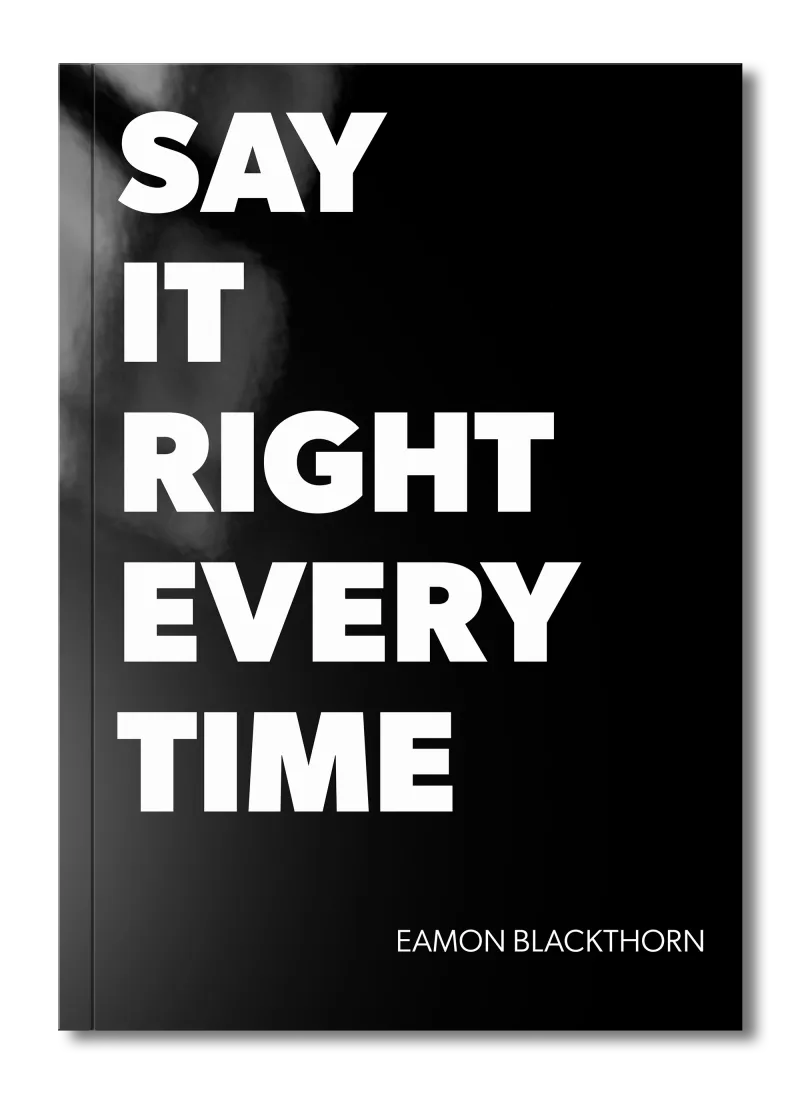
Never Be Lost
for Words Again
Get word‑for‑word scripts for the conversations that shape your life, from job interviews and negotiations to difficult talks with family and partners, so you always know exactly what to say and how to say it.
Never Be Lost
for Words Again
Get word‑for‑word scripts for the conversations that shape your life, from job interviews and negotiations to difficult talks with family and partners, so you always know exactly what to say and how to say it.
Key Takeaway
Before your next presentation, speech, or article about a complex topic, write one sentence that answers this question from your audience's perspective: "So what does this mean for someone like me?" Write that sentence first. Put it at the top. Build everything else around it. If you cannot write that sentence, you do not understand your audience well enough yet. Go back and figure that out before you write a single word of content.