
What Happened
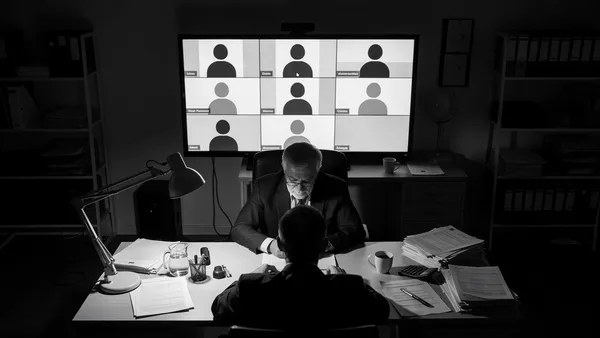
Remote work is no longer an experiment. Five years in, companies are still fumbling the basics of managing distributed teams. HR departments across industries are now doubling down on new strategies: clearer check-in structures, intentional communication protocols, and deliberate culture-building that doesn't rely on physical presence. The question isn't whether remote work works. It's whether managers know how to talk to people they can't see.
The Communication Angle
Here's the comparison that matters: the manager who runs a remote team like it's still 2019 versus the manager who has actually adapted.
The old approach looks like this. Weekly status meetings where everyone reports what they did. A Slack channel that functions as a digital suggestion box nobody reads. Feedback delivered once a year in a performance review. This manager thinks communication is happening because words are being exchanged. It isn't. What's actually happening is noise. Nobody knows where they stand. Nobody knows what's expected. And when something goes wrong, it's a surprise to everyone except the person who caused it.
The adapted manager does something radically different. They separate information-sharing from connection-building. The update goes in writing, async, before the meeting. The meeting itself becomes a conversation: priorities, blockers, decisions. This manager also names the invisible things. "Here's what I'm seeing. Here's what I need from you. Here's what I'm worried about." That's not soft management. That's precision. It removes the guesswork that kills remote team performance.
The second contrast is in feedback delivery. The old-school manager gives feedback in big batches, usually when frustration has built to the point where the conversation is half-feedback and half-complaint. The adapted manager gives feedback in real time, in specific terms. Not "your communication needs work" but "in Tuesday's client call, you answered a question I had already addressed. Here's how to handle that next time." One of those sentences is useful. The other is a mood.
Remote work didn't create bad communication habits. It exposed them. When you share a building with someone, proximity masks a lot. You can read body language, overhear context, pick up on tone in the hallway. Strip all that away and what you're left with is whatever your actual communication skills are. For most managers, that's a rude awakening.
This is exactly the kind of scenario I break down in Say It Right Every Time. The chapter on specificity in feedback gives you a framework for replacing vague impressions with precise, actionable language. Because vague feedback doesn't just fail to help people improve. It actively erodes trust. And in a remote environment, trust is the only infrastructure you've got.

Never Be Lost
for Words Again
Get word‑for‑word scripts for the conversations that shape your life, from job interviews and negotiations to difficult talks with family and partners, so you always know exactly what to say and how to say it.
Never Be Lost
for Words Again
Get word‑for‑word scripts for the conversations that shape your life, from job interviews and negotiations to difficult talks with family and partners, so you always know exactly what to say and how to say it.
Key Takeaway
This week, before your next one-on-one with a remote employee, write down one specific thing you've observed about their work, positive or negative, with the exact situation attached. Not a general impression. A moment. Bring that moment into the conversation. Watch what changes.