
In Short
This article teaches the seven-step R.E.C.O.V.E.R. Method, a structured framework from Say It Right Every Time for repairing your physical expression after a nonverbal breakdown and rebuilding trust through deliberate body language.
- How to recognise the specific nonverbal signals that caused the breakdown
- How to physically reset your posture, face, and gestures under pressure
- How to recommit to open, grounded presence so the repair actually holds
Physical expression repair is the deliberate process of correcting body language after it has sent an unintended or damaging signal. It involves resetting your posture, facial expression, and gestures to rebuild trust and re-establish genuine connection with the other person.
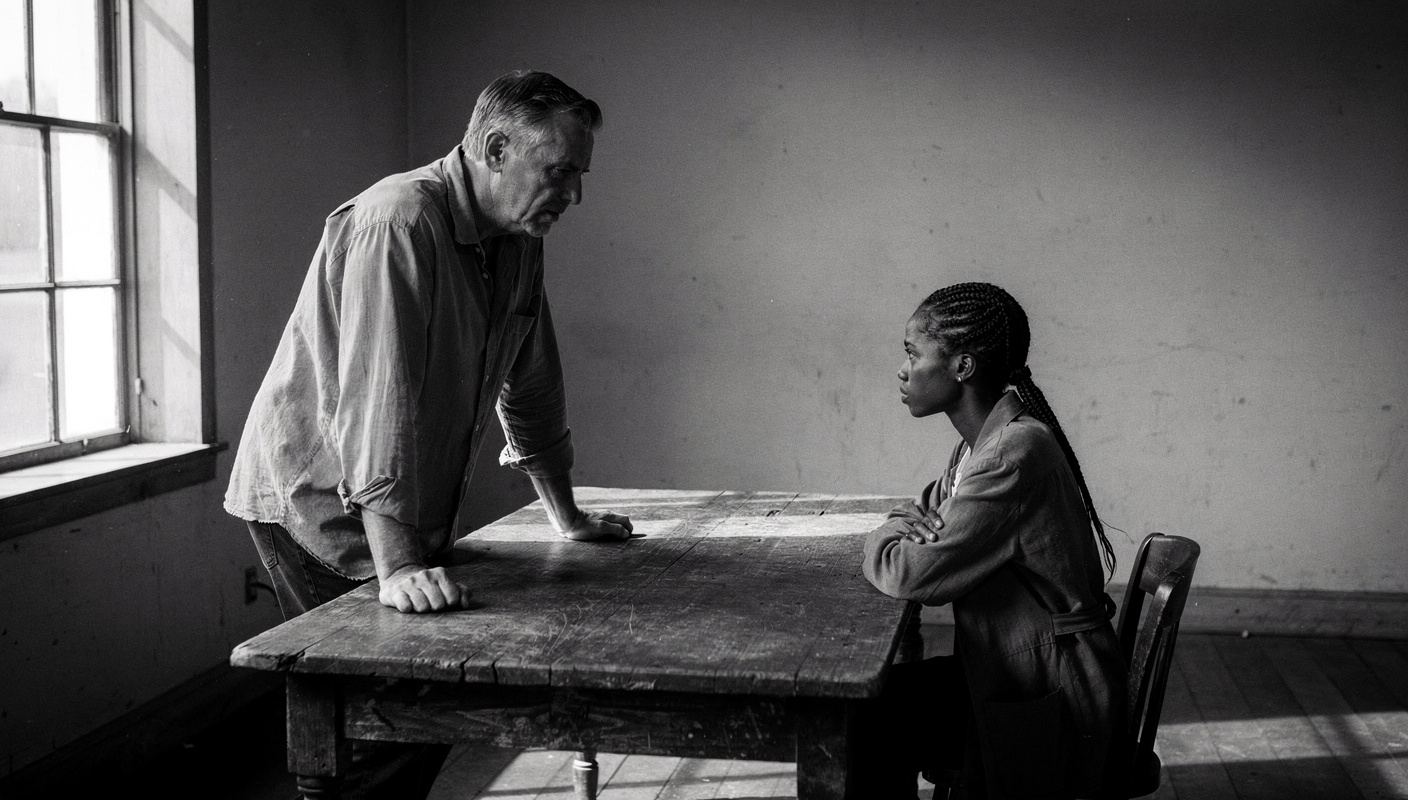
Your intentions were good. You walked into the conversation wanting to listen, to stay open, to work things through. Then the pressure rose. Your shoulders crept up toward your ears. Your jaw tightened. You crossed your arms without realising it. And somewhere across from you, the other person read every one of those signals, even if you never said a word out of turn.
Physical expression repair is one of the hardest skills to master, because by the time you need it, your body is usually operating on its own. In Say It Right Every Time, I introduce the R.E.C.O.V.E.R. Method as a seven-step framework for exactly these moments: conversations where your body has betrayed your intent and you need a clear, reliable path back. I cover this in detail in Chapter 14 of Say It Right Every Time.
In this article, you will learn all seven steps of the R.E.C.O.V.E.R. Method as it applies specifically to physical expression, so you have a real system to reach for the next time your body language lets you down.
This article connects closely with How to Use the R.E.C.O.V.E.R. Method When a Team Conversation Goes Wrong, which applies the same framework to the verbal and relational side of breakdown and recovery.
Why Body Language Recovery Needs a Structure
Most people believe that if their intentions are good, their body will follow. It will not. Under pressure, the body defaults to protection, not connection. Without a clear structure to return to, you will keep defaulting to the same closed, tense, defensive posture every time the stakes rise.
A reliable framework for physical expression repair matters in these specific moments:
- When you feel your jaw tightening mid-conversation and have no idea how to release it without looking like you are performing calm.
- When you have already crossed your arms or turned your body away and the other person has noticed, and now you need to correct without making it worse.
- When your facial expression has given away frustration or contempt, and the other person has pulled back in response.
- When you are on a video call and your posture, eye contact, and micro-expressions are the only things the other person can read, and all of them are broadcasting tension.
- When a previous nonverbal breakdown has damaged trust, and you are returning to the conversation needing to demonstrate through your body, not just your words, that things are different this time.
The method in this article gives you that structure. Use it until it becomes instinct.
"The Conversation You're Avoiding Is the One You Need to Have."
"The Conversation You're Avoiding
Is the One You Need to Have."
Stop rehearsing conversations you'll never have. Say It Right Every Time gives you 115 word-for-word scripts and 16 proven frameworks to speak with confidence in every conversation that matters.
Method Step 1: Recognise What Went Wrong Nonverbally
The R.E.C.O.V.E.R. Method begins with honest recognition. This is the step that separates people who recover from those who simply move on and repeat the same breakdown next time. Recognising means identifying the specific physical signals that caused or worsened the breakdown, not just acknowledging that things went sideways.
What it is designed for: This step addresses the moment immediately after you notice a nonverbal breakdown, whether it happened seconds ago or earlier in a conversation you are still inside.
How it works:
Identify the specific signal. Stop and name what your body actually did. "My arms were crossed." "I turned slightly away." "My face went flat." "I was staring at the floor instead of making eye contact." Vague self-awareness is not enough. You need precision. Example: "I realised I had been leaning back in my chair with my chin down for the past five minutes while my colleague was speaking."
Read the other person's response. Look at what changed in their body language after yours shifted. Did they stop making eye contact? Did their voice go quieter? Did they cross their own arms? Their response is your mirror. Example: "She had stopped gesturing and was holding her hands still in her lap. That told me she had felt something change in me."
Name the emotion your body was expressing. Your defensive posture had a source. Name it: fear, irritation, fatigue, feeling attacked. You do not need to share it, but you need to know it. Example: "I was defensive. I felt criticised, and my body closed to protect itself."
When to use it: Use this step the moment you catch a nonverbal breakdown, whether you are still in the conversation or reflecting afterward.
When not to use it: Do not spend so long in recognition that you freeze in the conversation. Recognition is the entry point, not the destination.
A quick example in practice: You are in a one-to-one meeting and your manager raises a concern about your recent work. You feel the challenge rise in your chest. You notice you have crossed your arms, your shoulders have risen, and you are leaning back. You say nothing yet. You simply notice: "My body went defensive. My manager probably read that as resistance or dismissal."
Eamon's take: Recognition without judgment is the key. You are not here to criticise yourself. You are here to see clearly, so you can act clearly.
Method Step 2: End the Physical Spiral Before It Deepens
The second step is about stopping the escalation in your body. When a nonverbal breakdown takes hold, your physical tension tends to compound: tight shoulders lead to a rigid neck, which leads to a harder facial expression, which leads to shorter breath. You must break that cycle before you can repair anything.
What it is designed for: This step addresses the physical escalation pattern that makes nonverbal breakdowns worse the longer they continue.
How it works:
Create a pause, physical or conversational. If you can, suggest a brief break. If the conversation cannot pause, create a micro-pause for yourself: a slow, deliberate breath, a momentary shift in your seat, a single blink and refocus. Example: "I reached for my glass of water. The pause was only five seconds, but it was enough to interrupt the spiral."
Unclench the most obvious tension point first. You cannot reset everything at once. Start with what is most visible and most harmful. Usually it is the jaw, the hands, or the arms. Unclench one thing. Example: "I consciously let my crossed arms drop into my lap and rested my hands open on the table."
Lower your shoulders one deliberate movement. Raised shoulders signal threat and defensiveness to everyone in the room. A slow, intentional drop resets your baseline posture and sends the first visible signal that something has shifted. Example: "I exhaled quietly and let my shoulders settle. I felt the change immediately, and so did the quality of the room."
When to use it: Use this step the moment you recognise a breakdown is in progress, especially when your physical tension is visible to the other person.
When not to use it: Do not suggest a formal break as a delay tactic. If the other person senses you are avoiding the conversation, the trust damage deepens.
A quick example in practice: You are mid-conversation and you feel the familiar lock-up: jaw set, arms folded, body angled away. You reach for your pen, set it down, and let your arms fall open. You take a breath that is slightly longer than your last. Nothing dramatic. The conversation continues, but your body has started its return.
Eamon's take: You cannot think your way out of a physical spiral. You have to move your way out. One deliberate physical action is worth more than ten mental instructions to yourself.
Method Step 3: Cool the Physiological State Driving the Signals
Your body language is a symptom. The real cause is your internal physiological state: elevated heart rate, shallow breath, muscles primed for conflict. You must address the root before the repair on the surface will hold.
What it is designed for: This step targets the nervous system response underneath the visible nonverbal signals, especially in high-stakes conversations where your body reads threat even when there is none.
How it works:
Slow your breathing to its physiological floor. Breathe in for four counts, out for six. The longer exhale signals your nervous system that the threat has passed. You do not need to announce it or perform it. Do it quietly. Example: "I let out a long, slow breath through my nose while my colleague was still speaking. My heart rate dropped noticeably within thirty seconds."
Ground your feet flat on the floor. Feel the physical contact of the ground under you. This is not a metaphor; it is a direct somatic anchor that interrupts the flight response. Example: "I pressed both feet flat to the floor and held that pressure consciously. Something settled in me that I had no other way to reach."
Soften your eye area deliberately. A hard stare and tight eyes signal aggression. Relax the muscles around your eyes and let your gaze become interested rather than watchful. Example: "I let my focus soften from fixed to curious. The other person responded immediately by meeting my gaze for the first time in several minutes."
When to use it: Use this step before you attempt any verbal repair. If your body is still physiologically activated, any words you say will be undercut by your physical presence.
When not to use it: This is not a step to rush. If the conversation is moving fast and you do not have time to ground, take the smallest version: one breath and both feet flat. That is enough to begin.
A quick example in practice: You are in a difficult performance conversation and you feel your face going hot. Instead of speaking, you take three quiet grounding breaths. You press your feet to the floor and let your shoulders drop. By the time you speak, your voice carries a steadiness that was not there sixty seconds ago.
Eamon's take: I spent years trying to manage my body language from the outside in. Adjusting my face, straightening my posture, uncrossing my arms. None of it held until I learned to work from the inside out first.
Method Step 4: Own the Nonverbal Breakdown Directly
Repair without acknowledgment is decoration. You can reset your posture and soften your face, but if the other person felt the impact of your earlier body language, you need to name it. Not dramatically. Not with excessive apology. But honestly, specifically, and in plain language.
What it is designed for: This step addresses the repair conversation itself: specifically, the moment when you acknowledge what your physical expression communicated and take responsibility for its impact.
How it works:
Name the specific nonverbal behaviour, not just the emotion. "I was closed off" is too vague. "I was sitting back with my arms crossed, and I can see how that looked" is specific enough to be real. Example: "I said, 'I notice I had my arms crossed and I was leaning back while you were talking. That wasn't the message I wanted to send.'"
Separate the intent from the impact. You may have crossed your arms because you were cold. The other person felt dismissed. Both things can be true. Acknowledge the impact without minimising it. Example: "I added, 'Whatever I was feeling internally, what I showed you was defensiveness. I understand why that was hard to read.'"
Keep the acknowledgment brief and grounded. Over-explaining becomes its own performance and erodes credibility. Say what happened, own it, and stop. Example: "I did not add excuses. I said it, I meant it, and I let it land."
When to use it: Use this step as soon as your physical state is cool enough that you can speak without defensive body language contradicting your words. Owning it from a still-tense body creates a second breakdown.
When not to use it: Do not perform ownership without actually changing your physical presence. If you say "I can see my body language was closed" while your arms are still crossed, you are making things worse.
A quick example in practice: You have reset your posture and your breathing. You look at the person across from you and say: "I want to address something. When you were explaining your concerns just now, I was leaning back and I had my arms crossed. That looked like I was dismissing what you were saying. I wasn't, but I can see how it felt that way, and I'm sorry for that."
Eamon's take: This much I know for certain: the body always tells the truth faster than the mouth does. When you own the nonverbal as clearly as you own the verbal, people trust the repair.
Method Step 5: Validate What the Other Person Experienced
The person across from you felt something. Your defensive posture, your averted gaze, your tight expression: all of it landed on them as a message. Before you move forward, you need to acknowledge their experience, not explain it away.
What it is designed for: This step repairs the relational damage caused by the nonverbal breakdown by giving the other person evidence that their response was reasonable and that you understand it.
How it works:
Reflect back what they likely experienced without assuming you know exactly. Use tentative language: "I imagine that felt like..." or "I can understand if that came across as..." This leaves room for them to correct you. Example: "I said, 'I imagine that felt like I wasn't taking you seriously, and that would have been frustrating.'"
Let their response land without defending. When they confirm or correct your reading, receive it with open body language: forward lean, direct eye contact, a nod. Do not immediately offer your own explanation. Example: "She said, 'It felt like you had already decided before I said anything.' I nodded and said, 'That's fair. Thank you for telling me.'"
Use your physical presence to reinforce the validation. Lean in slightly. Keep your hands open and visible on the table. Let your face show that you are genuinely listening. Validation without physical expression is just words. Example: "I kept my hands open on the table, my face forward and attentive, and I did not break eye contact while she spoke."
When to use it: Use this step before explaining your intent. Intent comes after impact. This sequence is non-negotiable.
When not to use it: Do not use validation as a technique to get through a process. If your body language is performing interest while your posture is already prepared to argue, the other person will feel it.
A quick example in practice: You say: "I think what I showed you felt like disinterest, maybe even contempt. I understand why you pulled back. That makes complete sense given what my body was communicating." Then you wait. You hold the open posture. You receive what comes next.
Eamon's take: People do not need you to be perfect. They need to know their experience was real and that you saw it. Your body has to confirm that as clearly as your words do.
Method Step 6: Explain Your Intent Without Rewriting the Past
Intent matters. But it only earns its place in the conversation after impact has been acknowledged. This is the step where you offer context, not excuse. You explain what was driving your body language without using that explanation to diminish what the other person experienced.
What it is designed for: This step rebuilds clarity after a nonverbal breakdown by separating what your body communicated from what you actually intended to express.
How it works:
Use a clear "I was feeling" structure, not a "you made me feel" structure. Own the internal state that drove your body language. Do not attribute it to the other person's behaviour. Example: "I said, 'What was actually happening for me was that I felt cornered. My arms came up as a reflex, not a message.'"
Keep the explanation proportional. A two-sentence explanation is usually enough. More than that tips into defensiveness and undoes the work of the previous steps. Example: "I added one sentence: 'I was more anxious about this conversation than I showed, and my body took over in a way I didn't intend.' Then I stopped."
Reconnect to the relationship after the explanation. Finish this step by returning to the other person: "What I actually wanted was..." or "What matters to me is..." This restores the relational focus. Example: "I said, 'What I actually wanted was to hear you clearly. I want to do that now, if you are willing to continue.'"
When to use it: Use this step only after you have completed the validation step. Explanation before validation is defensiveness. Explanation after validation is repair.
When not to use it: If the other person is still processing what they felt, do not rush into explanation. Sit with the silence. Let them come to you.
A quick example in practice: You say: "What was driving that for me was genuine anxiety, not dismissal. I was afraid the conversation was heading somewhere difficult, and my body responded before I could. That's mine to own. I want to be clear that what you were saying mattered, and I want to hear it properly."
Eamon's take: After decades of getting this wrong, I have learned that the explanation only heals when it comes last. Lead with impact, follow with intent. Never the other way around.
Method Step 7: Recommit Through Sustained Physical Presence
Repair is not a single act. It is a sustained demonstration. The final step of the R.E.C.O.V.E.R. Method is the one most people skip: holding the open, grounded, present physical expression you have reclaimed and keeping it there for the rest of the conversation and beyond.
What it is designed for: This step addresses the follow-through that makes the repair real. It is the difference between a conversation that recovered in the moment and a relationship where trust was genuinely rebuilt. You can find the full framework in Chapter 14 of Say It Right Every Time.
How it works:
Hold the open posture as a commitment, not a performance. Uncrossed arms, forward lean, visible hands, direct and relaxed eye contact. Check in with yourself every few minutes and reset if you feel the old patterns returning. Example: "Every time I noticed my shoulders starting to rise again, I took a quiet breath and let them drop. I did this four or five times before the end of the conversation."
Let your face track genuine engagement. Nod when something lands. Let a small expression of concern appear when it is warranted. Your face should reflect the conversation in real time, not stay neutral and controlled. Example: "When she described the impact on her team, I let my face show that I had actually heard it. Not a performance. A response."
Return to the same open presence in the next conversation. One repair in one conversation is a start. Consistent physical presence over multiple interactions is what rebuilds trust at its root. Example: "Two days later, I walked into the follow-up meeting and sat forward immediately, hands open. She noticed. She relaxed."
When to use it: This step begins the moment the repair conversation ends and continues into every subsequent interaction with this person.
When not to use it: Do not fake sustained presence. If you are genuinely exhausted or the conversation has stretched your capacity, it is better to name that and reschedule than to hold a performance of openness that your body will eventually betray.
A quick example in practice: The conversation ends on better ground. You stand, make direct eye contact, and say: "I appreciate you staying with this. I want to keep showing up differently." Then you do. In the next meeting, you sit forward. You keep your hands open. You make contact. The repair becomes a practice.
Eamon's take: The method only earns its name if you recommit. Recover is not past tense. It is present, ongoing, and proven through repetition.
How to Choose the Right R.E.C.O.V.E.R. Step for Your Situation
Knowing the method is only half the work. Knowing which step demands the most attention in your specific situation is the other half.
| Situation | Step to Prioritise |
|---|---|
| You are still inside the conversation and your body is escalating | Step 2: End the spiral, then Step 3: Cool down |
| The conversation ended badly and you are returning to repair it | Step 4: Own it, then Step 5: Validate |
| The other person pulled back but has not said why | Step 1: Recognise the signal, then Step 5: Validate |
| You have apologised verbally but the other person is still closed | Step 3: Reset your physical presence first |
| You are preparing for a follow-up after a breakdown | Step 7: Commit to sustained open presence from the first moment |
| Your intent was misread and you want to explain | Step 6: Explain, but only after Steps 4 and 5 |
| You are unsure what caused the breakdown | Step 1: Recognise, starting with what your body was doing |
When two steps seem equally relevant, work from the inside out: reset your physical state before you attempt any verbal repair. If your body is still broadcasting defensiveness, your words will not be believed.
When in doubt, start with the simplest physical action available. Complexity is not strength.
Common Mistakes When Applying the R.E.C.O.V.E.R. Method
The method works. But it only works when you apply it with real discipline, not as a script you recite from a distance.
Skipping the physical reset and going straight to the apology. You say the right words while your arms are still crossed and your jaw is still set. The other person hears the apology and feels the contradiction. The repair fails before it begins.
Performing openness instead of embodying it. You consciously unclamp your arms and smile because you know you are supposed to. Your eyes stay watchful. Your shoulders stay braced. People read the gap between your face and your body far more accurately than you expect.
Rushing to the explanation before the validation lands. You want to clear your name. So you move to intent before the other person has been given space to have their experience acknowledged. This collapses trust instead of rebuilding it.
Treating the method as a one-time event. You do the seven steps in one conversation and assume the repair is complete. Physical expression repair requires follow-through across multiple interactions. One open posture in one meeting is a start, not a conclusion.
Applying the method without adapting to the relationship context. The warmth and depth of your nonverbal repair should match your relationship with the person. A close colleague and a senior stakeholder need different calibrations of tone, proximity, and expression. Adjust accordingly.
A method applied badly is still better than no method at all. But a method applied with genuine presence is what actually rebuilds trust.
How to Start Building Physical Expression Recovery Today
Do not try to master all seven steps in one conversation.
Start with Step 1 in every conversation this week. Notice your body language at three distinct moments in each conversation. Name specifically what your posture, face, and hands are communicating. Write it down afterward if it helps. This builds the recognition muscle that makes everything else possible.
Practice the physical reset in low-stakes moments. The next time you feel your shoulders rise in a meeting or your jaw tighten in a phone call, run through Step 3 quietly. Press your feet flat. Slow your breath. Drop your shoulders. Build the habit when the stakes are low so it is available when the stakes are high.
Prepare one repair conversation. Think of a recent interaction where your body language sent the wrong message. Plan what you would say using Steps 4, 5, and 6. Then have the conversation. You do not need to be perfect. You need to begin. The full R.E.C.O.V.E.R. framework for difficult conversations is covered in Say It Right Every Time, where I lay out how to apply it across every kind of high-stakes situation.
Review one conversation daily. Ask yourself: what did my body communicate today that I did not intend? What would I correct? This short daily practice compounds faster than you would believe. Small adjustments, repeated consistently, produce real change.
Frameworks are tools. The more you use them, the less you have to think about them.
Key Takeaways
Here is what to carry with you from this article.
- The R.E.C.O.V.E.R. Method gives you a seven-step structure for physical expression repair, from recognising what your body communicated to rebuilding trust through sustained open presence.
- Your body language sends messages before you speak and overrides your words when they conflict. Physical repair must address the body directly, not just the conversation.
- The sequence matters: reset your physical state before you attempt verbal acknowledgment, and validate impact before you explain intent.
- Sustained recommitment is what turns a single repair moment into lasting trust; one open posture in one conversation is a beginning, not a resolution.
- This method works in real time during a conversation and in follow-up repair conversations after the damage has already been done.
If you want to apply these principles to your team dynamics, the C.O.R.E. Framework for restoring team synergy and the B.R.I.D.G.E. Method for rebuilding synergy after a breakdown extend this work into the relational space. For conflict that has fractured the group, the D.E.A.L. Method gives you a direct, structured path through it. And if you want to understand how physical expression fits inside the larger picture of communication under pressure, the role of communication in meeting success and how to give constructive feedback without causing tension are worth your time.
The body never lies. Physical expression repair is not about making your body lie more convincingly. It is about bringing your body back into honest alignment with what you actually mean.
Frequently Asked Questions (FAQ)
What is physical expression repair in communication?
Physical expression repair is the process of correcting your body language after it has sent the wrong message. It involves recognising what your posture, face, and gestures communicated, then deliberately resetting your physical presence to rebuild trust and connection with the other person.
How do you use the R.E.C.O.V.E.R. Method for physical expression?
The R.E.C.O.V.E.R. Method guides you through seven steps: Recognise what went wrong nonverbally, End the current exchange if needed, Cool your body down, Own the breakdown, Validate the other person, Explain your intent, and Recommit through consistent physical presence. Each step addresses a specific stage of nonverbal repair.
What causes a physical expression breakdown during a conversation?
A physical expression breakdown happens when your body language contradicts your words or signals emotions you did not intend to show. Common causes include stress, defensiveness, fatigue, or high-stakes pressure. Crossed arms, a tight jaw, averted eyes, or a rigid posture can all trigger the other person to shut down or react negatively.
Can you repair nonverbal communication after the damage is done?
Yes, but it requires deliberate action, not just good intentions. Physical expression repair works because the body can send new signals once you reset your posture, soften your face, and re-engage with open, grounded presence. The R.E.C.O.V.E.R. Method gives you a structured path to do exactly that.
How long does physical expression recovery take in a conversation?
Recovery can begin within seconds if you act with awareness and intention. A full physical reset, including posture, breathing, and facial expression, takes roughly thirty to sixty seconds of deliberate effort. Rebuilding the other person's trust through sustained open body language may take several minutes of consistent nonverbal signals.
What is the difference between verbal and physical expression repair?
Verbal repair uses words to address what went wrong. Physical expression repair corrects the body language that caused or worsened the breakdown. Both matter, but body language often carries more weight. If you apologise verbally while your posture stays closed and tense, the other person will trust your body over your words every time.