
In Short
The physical expression mistakes presenters make in front of senior stakeholders are often invisible to the presenter and immediately obvious to the room.
- Gripping furniture or clutching notes signals anxiety and erodes trust before you speak.
- Avoiding sustained eye contact reads as uncertainty about your own content.
- Gestures that contradict your words create confusion that no slide can fix.
Physical expression mistakes are unintentional nonverbal behaviours during a presentation that contradict or undermine your spoken message. They include posture, movement, gesture, eye contact, and facial expression errors that senior stakeholders read as signs of low confidence or poor preparation.
You walked into that boardroom prepared. You knew the numbers. You had rehearsed the narrative. And still, something went wrong. The room felt distant. Questions came in a tone that suggested doubt, not curiosity. The senior leader at the end of the table barely looked up from her notes. You replayed it for days, wondering what you missed.
What you missed was not in your slides. It was in your body. Physical expression mistakes are the ones that do the most quiet damage because you cannot see yourself while you present. Your words were ready. Your posture, your hands, your eyes, your movement: those were telling a different story.
Most people never get honest feedback on their physical delivery. They are told their content was good, or that they seemed a bit nervous, nothing more specific than that. So the same mistakes repeat across every high-stakes room.
In this article, you will learn to recognise six specific physical expression mistakes that cost presenters credibility with senior stakeholders, and what to do about each one. For related thinking on how communication shapes outcomes in senior settings, the piece on the role of communication in meeting success is worth your time alongside this one.
Why Nonverbal Habits Are So Hard to Catch in Yourself
These mistakes are not obvious because they feel normal. When you are anxious, swaying slightly feels like standing still. When you are focused on your next point, you do not notice that your eyes have dropped to the table. The body does what it has always done under pressure, and nobody tells you otherwise.
Here are the reasons these habits go undetected for so long:
- You have no mirror in the room. You experience a presentation from the inside. Your audience experiences it entirely from the outside. What feels calm to you may read as rigid or closed to the room.
- Feedback after presentations is usually vague. People say "great job" or "good energy" because honest feedback about body language feels personal and uncomfortable to give.
- Nervous habits feel like coping. Swaying, gripping the lectern, or pacing feel like they are helping you manage anxiety. In reality, they are broadcasting that anxiety to every person watching.
- Senior rooms are quiet. Experienced stakeholders rarely react visibly. The absence of warm body language in the audience makes presenters feel they are doing fine, when the room has actually gone cold.
- You are focused on content, not delivery. Most preparation time goes into what you will say. Almost none goes into how your body will carry that message.
The first step is knowing what to look for. That is what this article gives you.
"The Conversation You're Avoiding Is the One You Need to Have."
"The Conversation You're Avoiding
Is the One You Need to Have."
Stop rehearsing conversations you'll never have. Say It Right Every Time gives you 115 word-for-word scripts and 16 proven frameworks to speak with confidence in every conversation that matters.
Mistake 1: Anchoring Yourself to the Lectern or Table
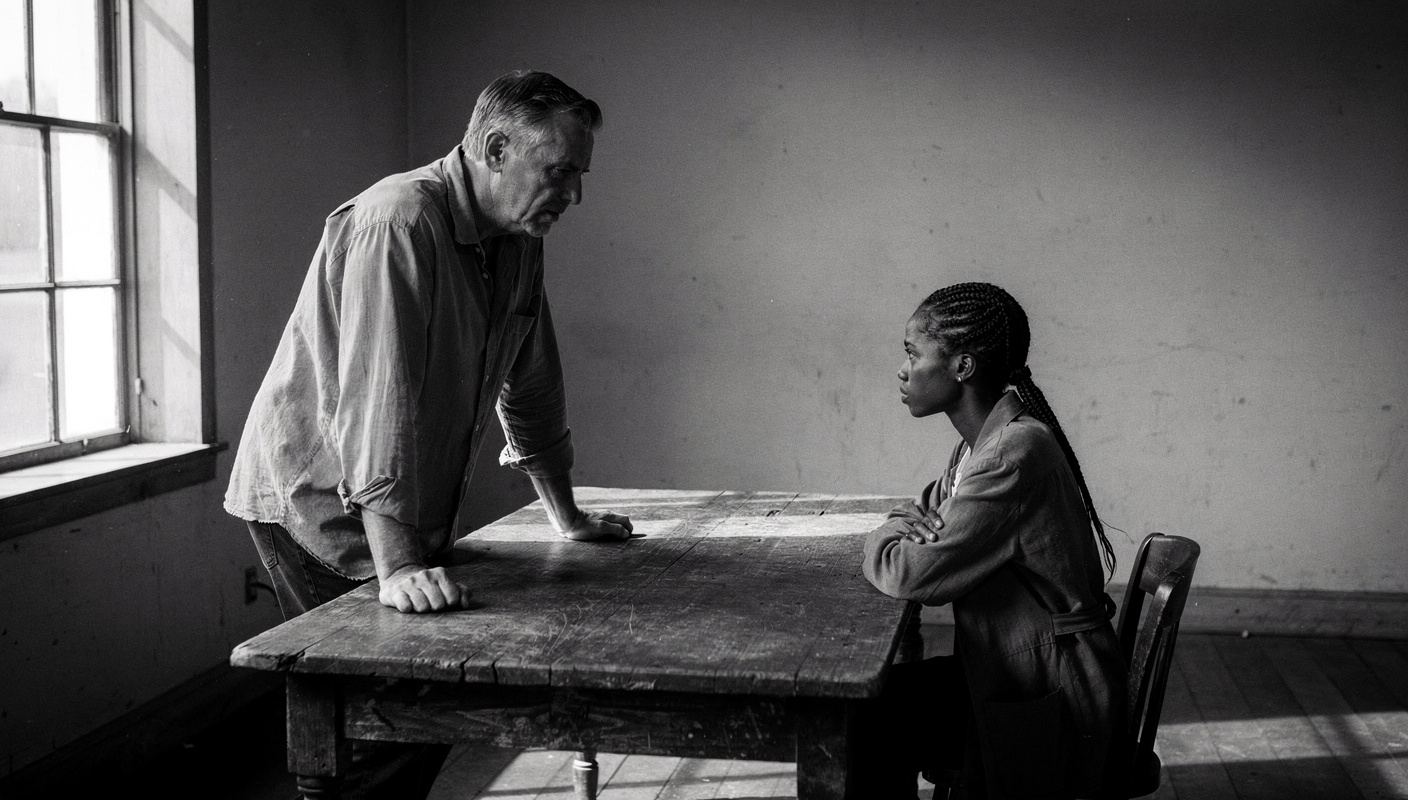
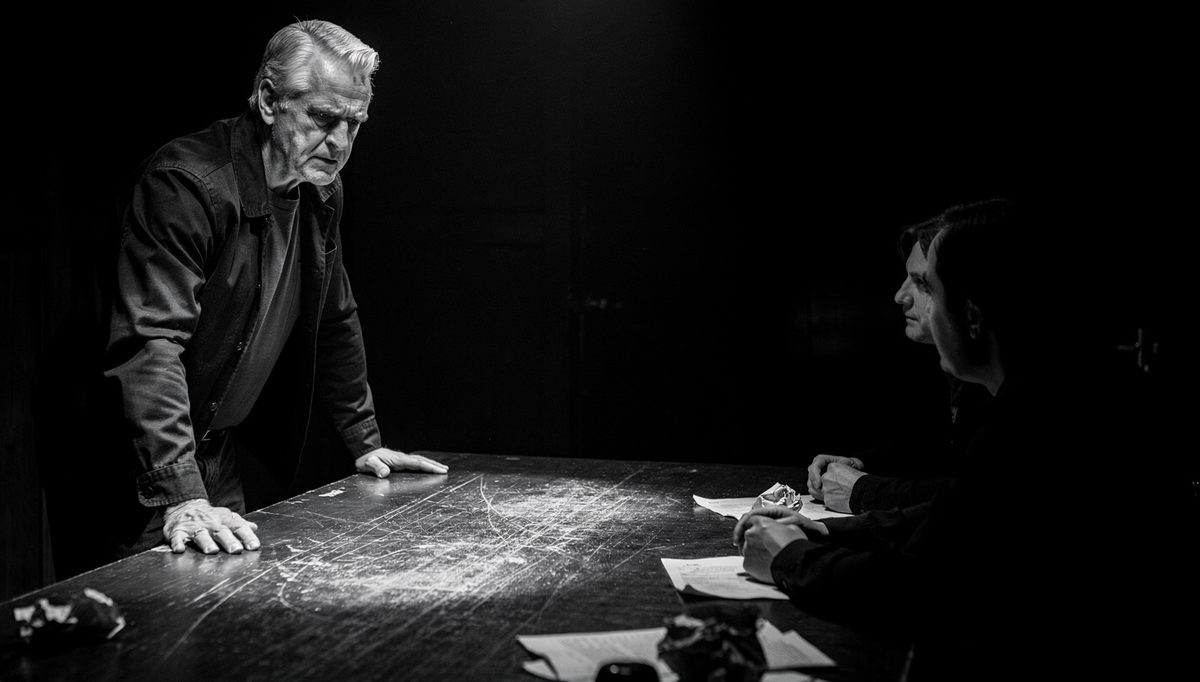
What it looks like: You grip the sides of a lectern, rest both hands on the table and lean in, or keep one hand perpetually on a chair back. The grip tightens when a hard question arrives. You barely move from a one-metre radius for the entire presentation.
Why it happens: Furniture feels safe. It is solid, predictable, and gives your hands something to do. Under pressure, the body seeks anchor points, and most presenters reach for the nearest physical object without realising it.
Why it matters: Gripping furniture signals containment and anxiety. Senior stakeholders read it as a presenter who is holding on rather than leading the room. It shrinks your presence at exactly the moment you need to expand it.
What to do about it: In your next rehearsal, present with your hands physically behind your back for the first two minutes. This forces you to stand without props. Then practise letting your arms rest naturally at your sides between gestures. It feels deeply uncomfortable at first. That discomfort means the habit is breaking.
Eamon's note: I gripped lecterns for fifteen years before someone finally filmed me doing it, and I barely recognised the man on screen.
Mistake 2: Eye Contact That Skims Instead of Lands
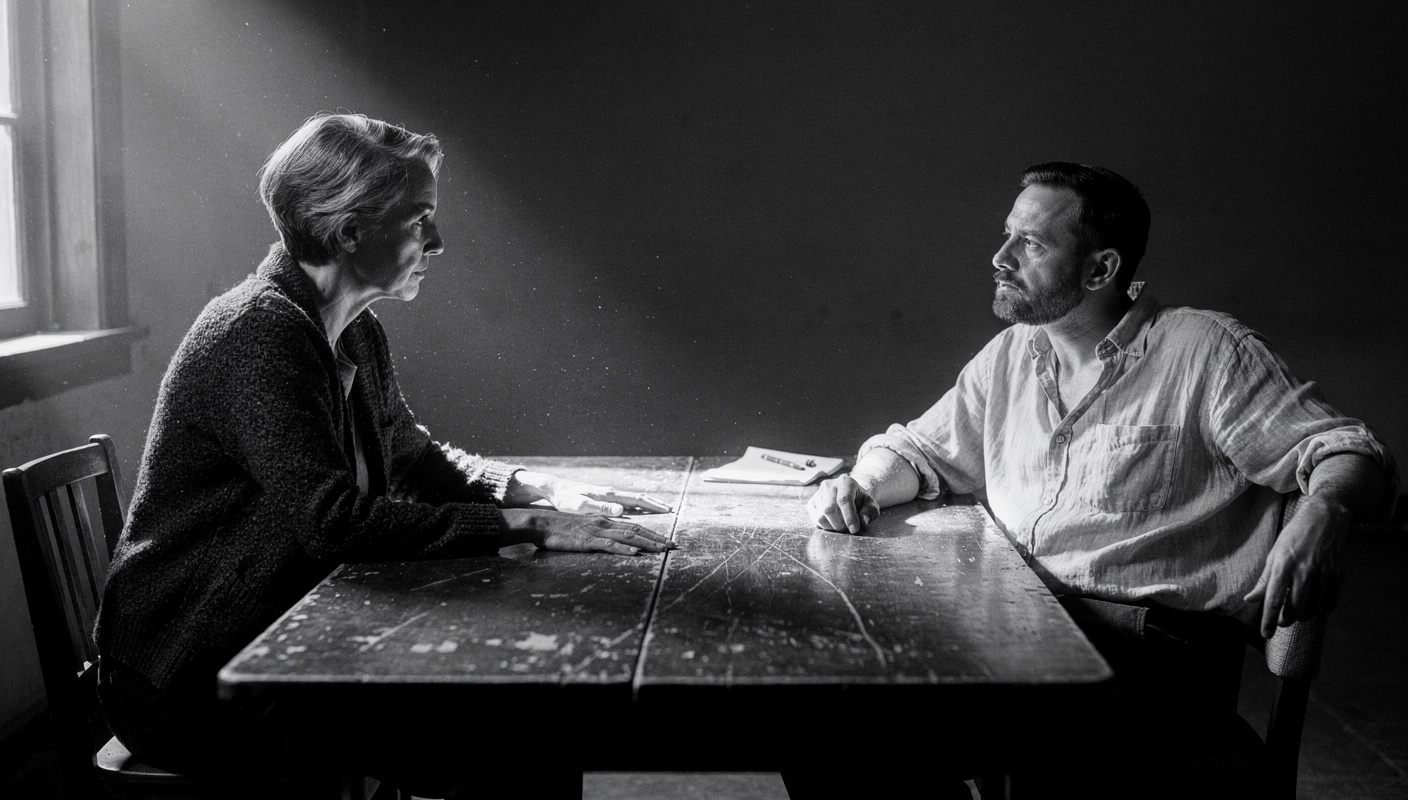
What it looks like: Your gaze moves continuously around the room, touching each face for less than a second before moving on. You glance at your slides more than three times per minute. During the most important points in your presentation, you look at the floor or the middle distance.
Why it happens: Sustained eye contact feels confrontational when you are anxious. The brain interprets a held gaze as a threat, and scanning the room feels like inclusion. It is neither. It is avoidance dressed as engagement.
Why it matters: Senior stakeholders use eye contact to judge whether you believe what you are saying. If your eyes leave them when you make your central claim, they notice. Doubt follows immediately. As noted in how leaders can model effective feedback behaviour, the body's signals carry authority that words alone cannot.
What to do about it: Practise the "complete thought" method. Hold eye contact with one person for the duration of a single sentence or idea, then move to the next. Three to five seconds per person feels like a long time to you and feels like genuine attention to them. Rehearse this with a colleague until it stops feeling strange.
Eamon's note: A room of senior people will forgive a weak slide, but they will not forgive a presenter whose eyes tell them he does not believe his own argument.
Mistake 3: Gestures That Contradict the Words
What it looks like: You say "we are confident in this forecast" while shaking your head slightly. You describe growth with a downward sweeping hand movement. You make small, tight gestures near your waist when your words are expansive and ambitious. The body and the voice are not telling the same story.
Why it happens: Gestures are largely unconscious. They emerge from emotional state, not from intention. If you are uncertain about a figure, your hands will say so even when your words do not. This is one of the most revealing physical expression mistakes because it happens below the level of awareness.
Why it matters: Senior stakeholders are experienced at reading contradiction. When gesture and word conflict, they trust the gesture. Every time. Your credibility takes damage that your content cannot repair.
What to do about it: Video yourself presenting your three most important claims. Watch the footage with the sound off. Identify any gestures that feel closed, downward, or constricting. Then deliberately design two or three open, forward gestures that match your key messages and rehearse them until they feel natural. You are not manufacturing emotion; you are aligning expression with intent.
Eamon's note: The hands will always tell the truth the voice is trying to hide.
Mistake 4: Purposeless Movement That Reads as Restlessness
What it looks like: You shift your weight from foot to foot every few seconds. You take small steps sideways and back repeatedly. You pace during slides and freeze when asked a question, or pace faster when the questioning gets harder. None of the movement is tied to a transition in content.
Why it happens: Nervous energy has to go somewhere, and when you have not trained it to go into your voice and stillness, it goes into your feet. Swaying and pacing are self-soothing behaviours that feel invisible to the presenter and are deeply visible to the audience.
Why it matters: Purposeless movement fragments attention. Senior stakeholders find themselves tracking your body instead of your argument. It also signals that you are not fully in control of yourself, which makes them less likely to trust you with their resources or decisions. Meeting facilitation skills for managers touches on this dynamic in group settings, but it is equally true when you are presenting alone.
What to do about it: Practise presenting with your feet planted shoulder-width apart and flat on the floor. Set a mark on the floor with tape during rehearsal if it helps. Move with purpose only: step forward when you make a major claim, step back when you invite questions. Every other moment, be still.
Eamon's note: Stillness is not passive. In a senior room, stillness is the loudest signal of confidence in the space.
Mistake 5: Facial Expression That Flatlines Under Pressure
What it looks like: Your face becomes neutral, even blank, when the content is serious or complex. You concentrate so hard on delivering the information correctly that all natural expression disappears. You look neither engaged nor confident; you look processed.
Why it happens: Cognitive load competes with expressiveness. When your working memory is full of data, cues, and concerns about how the room is receiving you, the face goes still as a default. This is a survival mechanism, not a choice.
Why it matters: A flat face reads as either indifference or anxiety, depending on the stakeholder. Neither interpretation helps you. Expressiveness communicates that you are connected to your own material. Its absence suggests you are reciting rather than communicating. This is one of the physical expression mistakes that tends to surprise people; most do not realise their face has gone blank until they see a recording.
What to do about it: Before entering the room, deliberately animate your face for thirty seconds. Raise your eyebrows, smile, frown, reset. This sounds absurd, and it works. Your facial muscles will carry more of that warmth into the first minutes of your presentation, when the room forms its first impression of you.
Eamon's note: Your face is part of your argument. If it goes silent, the room hears the absence.
Mistake 6: Posture That Collapses at the Moment of Challenge
What it looks like: You stand well during the prepared sections of your presentation, then visibly shrink when a senior stakeholder challenges a figure or asks a pointed question. Shoulders come forward. Chin drops slightly. You lean back or step away from the person asking. The physical retreat happens in real time, in full view.
Why it happens: Challenge triggers a stress response. The body prepares to defend or withdraw, and the postural collapse is a physical version of that withdrawal. It happens in fractions of a second, well before conscious thought catches up.
Why it matters: Your response to challenge is the moment senior stakeholders assess your resilience. If your body retreats while your words attempt to hold the ground, the body wins that argument every time. Understanding this connects directly to the advice in how to handle conflict during meetings, where the physical and emotional responses to pressure are closely linked.
What to do about it: Practise challenge scenarios with a trusted colleague who asks you hard questions while you present. Your job is to maintain your stance, keep your shoulders level, and hold eye contact through the entire response. Repeat this until the postural hold becomes the default under pressure, not the exception.
Eamon's note: The room decides whether to trust you in the moment you are challenged, not the moment you are comfortable.
The Pattern Behind These Physical Expression Mistakes
These mistakes rarely appear in isolation. When you see one, you will usually find two or three others present in the same presentation.
The root cause is almost always underprepared physical delivery. Most presenters spend the great majority of their preparation time on content, slides, and anticipated questions. They do almost nothing to rehearse the physical experience of being in the room. So when pressure arrives, the body falls back on unexamined habits.
There are two secondary patterns worth naming. The first is what I call the internal focus trap: all your attention is directed at what you will say next, leaving none available to monitor how you are carrying yourself. Physical awareness requires attentional bandwidth, and that bandwidth gets consumed by content anxiety.
The second pattern is the absence of honest rehearsal conditions. Most people practise in their office chair or in front of a bathroom mirror. They do not rehearse standing, in a room, with someone watching, under the pressure of being questioned. Without that condition, the body has no calibrated response to draw on when the real moment arrives.
As you consider the advice in how to ensure every participant gets heard and emotional intelligence in feedback conversations, notice that physical self-awareness is the foundation beneath both. Fix the physical root and the communication above it becomes substantially stronger.
Your Diagnostic Checklist
Use this checklist to assess where you currently stand with your physical delivery.
- I grip the lectern, table, or chair back during presentations.
- My eye contact moves across the room in less than two seconds per person.
- I look at my slides more than three times per minute during a presentation.
- I sway, shift my weight, or pace without a clear reason to move.
- My gestures often happen below my waist or close to my body.
- My facial expression goes neutral or blank when I am concentrating on content.
- My posture changes when a senior stakeholder challenges or questions me.
- I have never watched a full video recording of myself presenting.
- I have not rehearsed my physical delivery separately from my content delivery.
- My gestures and my words have not been deliberately aligned in rehearsal.
- I feel significantly less composed when answering questions than when presenting prepared content.
- I have never received specific feedback on my posture, eye contact, or gestures.
If you checked three or fewer, your physical delivery has a solid foundation worth building on. If you checked four to seven, identify the two highest-impact items and address those before your next senior presentation. If you checked eight or more, your physical expression is actively working against you, and it needs immediate, structured attention before content preparation will matter.
How to Start Fixing This
Diagnosis without action is just worry. Here is where to begin.
Film yourself presenting. Set up a phone on a tripod and record a full fifteen-minute rehearsal. Watch it back with the sound off. You will see your physical expression mistakes with a clarity that no amount of internal reflection can match. Note the three most distracting behaviours and address those first.
Rehearse stillness as a skill. Practise standing with feet planted and arms at your sides while delivering your opening two minutes from memory. Do this five times in a row until the stillness stops feeling awkward and starts feeling grounded. Stillness is not something you find in the moment; it is something you build in rehearsal.
Design your gestures deliberately. Identify your three central claims in any upcoming presentation. For each one, choose a specific open gesture that matches the scale of the message. Rehearse those gestures with the words until the pairing becomes automatic. This removes the accidental contradiction between body and voice.
Rehearse under challenge conditions. Ask a colleague to interrupt you with hard questions while you present. Your goal is to maintain posture, hold eye contact, and respond without physical retreat. This is uncomfortable. It is also the only way to build composure that holds under genuine pressure.
For the interpersonal dimensions of how your physical presence affects discussion dynamics, how to deal with dominant voices in a discussion offers complementary thinking worth reading alongside this work.
Summary
You can now see what most presenters never see: that physical delivery is not a secondary concern. It is the primary signal that senior stakeholders use to judge whether your content deserves their trust.
- Physical expression mistakes happen below conscious awareness and repeat until you deliberately address them.
- The most damaging mistakes, including postural collapse under challenge and gestures that contradict words, are also the least discussed in post-presentation feedback.
- Stillness, sustained eye contact, and aligned gesture are learnable skills, not personality traits.
- Recording yourself is the single fastest diagnostic tool available to any presenter.
- Rehearsing physical delivery separately from content delivery is how composure is built, not hoped for.
- Senior stakeholders form their assessment of your credibility in the first ninety seconds. Your body writes that first impression.
The articles on the role of communication in meeting success and meeting facilitation skills for managers extend this thinking into the broader meeting environment. Correcting your physical expression mistakes is not about performance. It is about ensuring the quality of your thinking is never undermined by the signals your body sends without your permission.
Frequently Asked Questions (FAQ)
What are the most common physical expression mistakes in presentations?
The most common physical expression mistakes include gripping lecterns or tables, avoiding eye contact, swaying or pacing without purpose, crossing arms defensively, and making gestures that contradict spoken words. These signals undermine credibility before a single argument lands with senior stakeholders.
How do physical expression mistakes affect credibility with senior stakeholders?
Senior stakeholders are experienced readers of nonverbal signals. Physical expression mistakes like poor posture or erratic movement communicate anxiety and uncertainty, which causes leaders to question your confidence in the content, regardless of how well-prepared your slides are.
Can you fix physical expression mistakes quickly before a presentation?
Yes. The most impactful fixes are simple: plant your feet, slow your breathing, and rehearse your opening sixty seconds until stillness feels natural. These three adjustments alone can transform how senior stakeholders receive you in the first critical minutes.
Why do physical expression mistakes happen even with experienced presenters?
Even experienced presenters revert to anxious physical habits under high-stakes pressure. The body defaults to self-soothing behaviours like swaying, touching the face, or retreating behind a lectern. Without deliberate rehearsal of physical delivery, nervous energy overrides good intentions.
What does good physical expression look like when presenting to executives?
Good physical expression in executive presentations means planted feet, open gestures at chest height, steady eye contact held for three to five seconds per person, and deliberate stillness during key points. The body communicates calm authority, which makes the content far easier to trust and act on.
How can I practise physical expression for high-stakes presentations?
Record yourself presenting and watch the footage with the sound off. Your physical expression mistakes become obvious when you remove the distraction of your words. Then rehearse your opening and closing sections specifically for stillness, eye contact, and intentional gesture until they feel controlled.