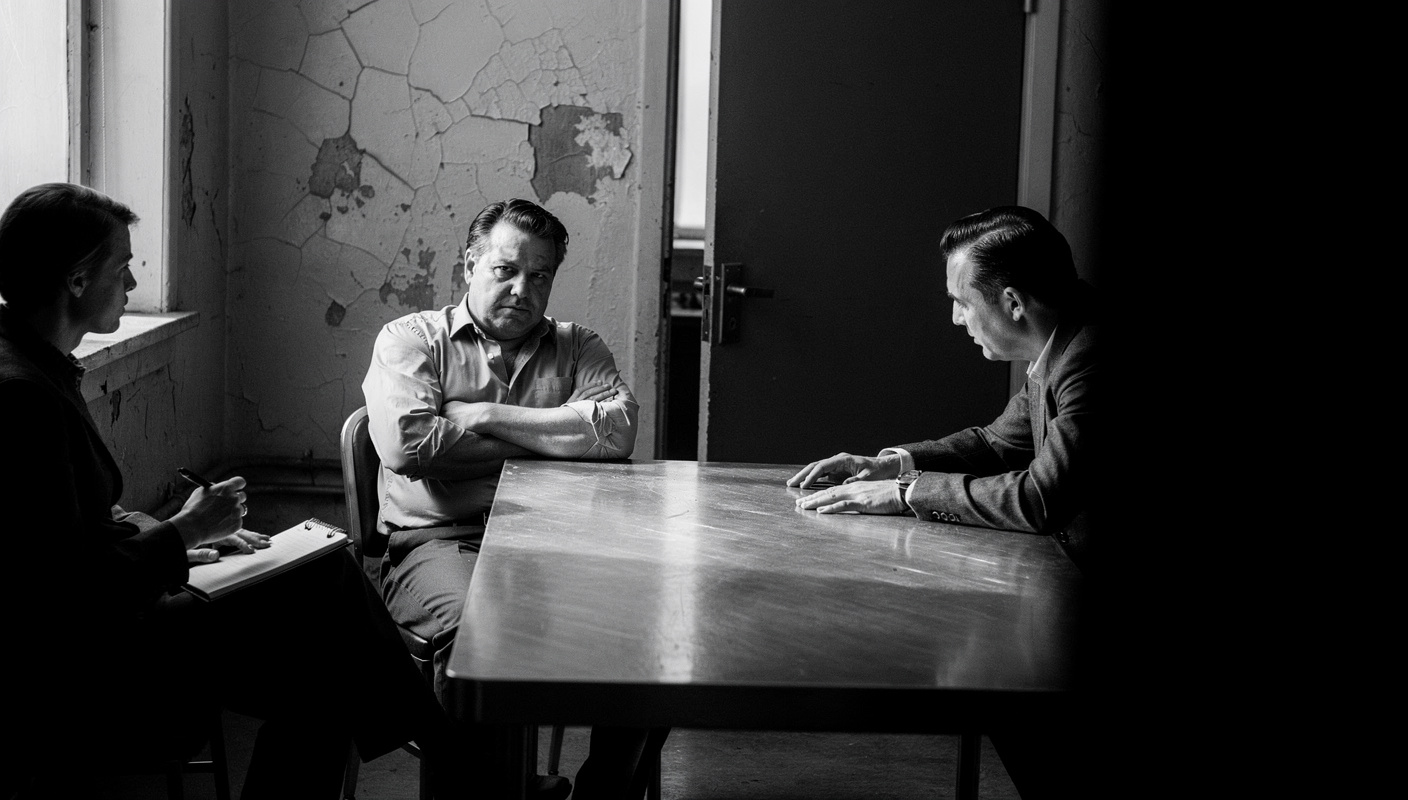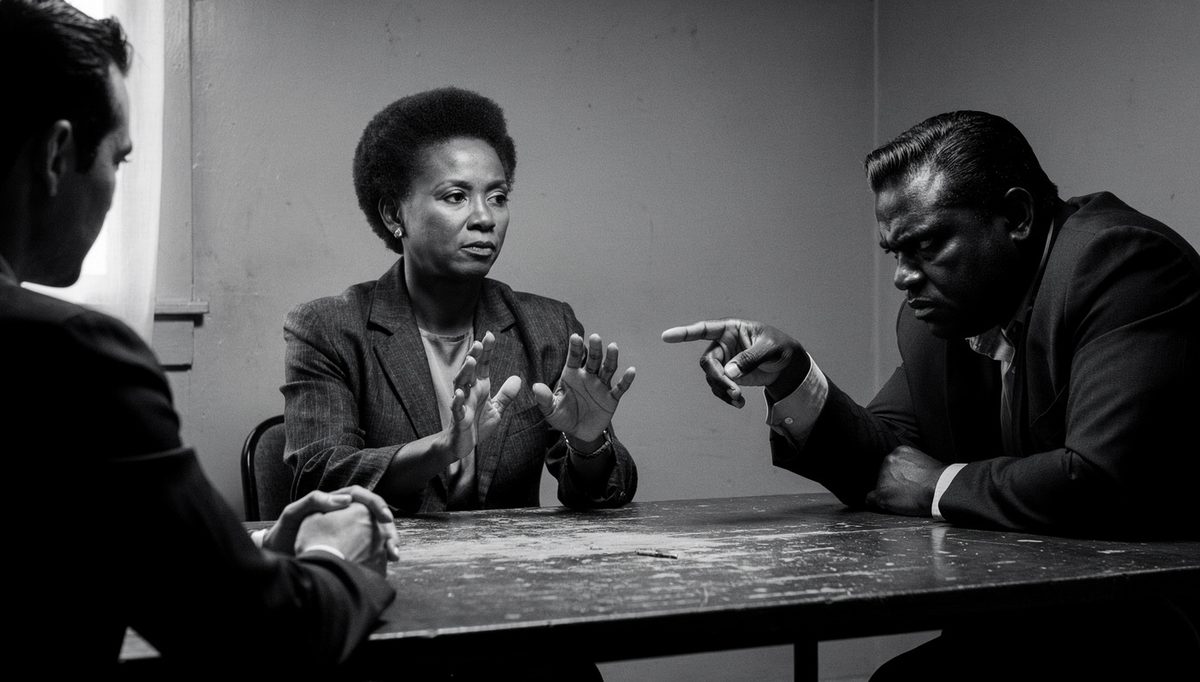

In Short
Accusatory language is the most common reason mediation sessions stall. The S.B.I. Method gives mediators a precise, repeatable tool to redirect personal attacks toward observable behavior, keeping both parties in a problem-solving state rather than a defensive one.
- S.B.I. stands for Situation, Behavior, and Impact: three components that replace judgment with observation.
- The mediator's job is not to silence emotion but to translate it into language the other party can actually hear.
- With practice, this redirection becomes the most powerful move in a mediator's toolkit.
The S.B.I. method is a structured communication framework using Situation, Behavior, and Impact to describe specific, observable events without personal judgment. In mediation, it helps parties replace accusations with factual behavioral descriptions that open dialogue rather than close it.
There is a moment in almost every mediation session when the language turns. One party stops describing what happened and starts describing who the other person is. "She's manipulative." "He never takes responsibility." "They don't care about anyone but themselves." When that shift happens, the other party stops listening. The S.B.I. method is the tool that catches that moment and redirects it before the session goes off a cliff.
I have sat in more difficult conversations than I can count. In the early years, I had no reliable way to interrupt accusatory language without seeming to take sides. I would try to stay neutral, and both parties would end up feeling unheard. What I eventually learned, and what I now teach through Chapter 5 of Say It Right Every Time, is that the mediator's job is not to suppress emotion. It is to give emotion a more precise form. The S.B.I. method does exactly that.
This article gives you the full process for applying the S.B.I. method in a mediation context, including the scripts you need, the mistakes to avoid, and a field checklist you can take into your next session.
Why Accusatory Language Is So Hard to Redirect
Here is the truth of it: people in conflict genuinely believe their accusations are accurate descriptions. When someone says "you're always dismissive," they are not trying to sabotage the mediation. They are expressing something real, something they have felt repeatedly, and their language reflects the intensity of that experience. Telling them to "be more specific" without a framework feels like you are minimizing their pain.
The difficulty for a mediator is that you are holding two competing responsibilities at once. You must honor the emotional reality of the person speaking while simultaneously protecting the other party from language that will trigger their defenses. That is a narrow path to walk. Most people who attempt it without a reliable tool end up either too soft, letting the accusations pile up, or too sharp, cutting people off in ways that feel dismissive.
The second difficulty is timing. Accusatory language tends to spike at the worst moments, when emotion is highest and both parties are least receptive. A mediator who does not have a practiced, internalized response will hesitate, and hesitation in those moments signals to both parties that no one is in control of the process.
The S.B.I. method solves both problems. It gives you a structure that honors emotion while redirecting it, and it gives you a response you can deliver calmly because you have prepared it in advance.
"The Conversation You're Avoiding Is the One You Need to Have."
"The Conversation You're Avoiding
Is the One You Need to Have."
Stop rehearsing conversations you'll never have. Say It Right Every Time gives you 115 word-for-word scripts and 16 proven frameworks to speak with confidence in every conversation that matters.
What Needs to Be in Place Before You Begin
Before you apply the S.B.I. method in a joint session, two conditions must be present. Without them, the technique loses most of its power.
Ground rules are established and agreed upon. Both parties must have explicitly committed to describing behavior, not attacking character, before the joint session begins. This is not a vague "let's be respectful" instruction. It is a specific, named agreement: "In this session, we will describe what we observed and how it affected us. We will not label or evaluate the other person's character." Without this foundation, redirecting accusatory language will feel arbitrary to the parties rather than consistent with a process they agreed to.
You have met with each party privately. Individual pre-mediation sessions are not optional in high-stakes work. They allow you to hear each party's accusations in their rawest form, which tells you where the emotional heat lives and what S.B.I. redirections you are likely to need. Private sessions also build enough trust that when you redirect someone in the joint session, they do not feel attacked. They feel guided by someone who already heard them.
If either of these conditions is missing, slow down. Invest the time in a preparatory session before you attempt joint work. The D.E.A.L. Method outlines how to structure those preliminary steps before bringing conflicting parties into the same room.
The Six-Step Process for Redirecting Accusations With S.B.I.
This is the sequence I use, drawn directly from the S.B.I. framework I outline in Chapter 5 of Say It Right Every Time. Each step builds on the one before it. Do not skip steps to save time. The speed you gain by skipping almost always costs you more later.
Step 1: Catch the Accusatory Language Without Interrupting
When a party shifts from describing events to labeling the other person, notice it. Do not interrupt immediately. Let the person finish their thought. Cutting someone off mid-sentence signals that you are more interested in process management than in hearing them. Your goal in this first step is simply to mark the shift internally so you know a redirection is needed.
You are listening for language that targets character rather than conduct. Phrases like "she always," "he never," "they are," and "you're the kind of person who" are your signals. Write them down if you need to. The act of noting the exact words will help you construct the S.B.I. redirect in the next step.
Step 2: Acknowledge the Emotion Behind the Words
Before you redirect, you must demonstrate that you heard the feeling underneath the accusation. This is not agreement. It is recognition. If you skip this step and jump straight to "can you be more specific," the speaker will experience your intervention as a dismissal, and you will lose their cooperation for the rest of the session.
A simple acknowledgment sounds like this: "It sounds like that experience has been genuinely frustrating for you, and I want to make sure we understand it fully." That one sentence does three things. It names the emotion, it signals respect, and it sets up the redirect that follows. You are not endorsing the accusation. You are honoring the experience behind it.
Step 3: Introduce the Situation Component
Now you move the speaker from their general characterization toward a specific event. The Situation step anchors the conversation in time and place, which immediately reduces the scope of the accusation from "this is who you always are" to "this is what happened once."
Your question here is direct: "Can you describe a specific situation where this happened? Give me a time, a place, what was going on." You may need to ask this more than once. Some people will offer a situation that is still too vague. Push gently: "Can you get even more specific? Which meeting? Which day?" The specificity is not pedantic. It is what makes the next two steps possible.
Step 4: Extract the Observable Behavior
This is the most critical step, and the most difficult one. You are asking the speaker to separate what they saw or heard from what they concluded about the other person. Most people have never been asked to do this. They experience their interpretation as the fact itself.
Here is a script that works for this step:
"Now I want to ask you something specific. In that situation, what exactly did [name] do or say? Not what you think it meant, not the effect it had, just the action itself: what did you observe?"
You will often get a blend of behavior and interpretation on the first attempt. "She dismissed my idea entirely" still contains a conclusion. Press further: "What did she say or do, specifically? The words, if you remember them." When the speaker produces something like "she looked at her phone while I was presenting my numbers," you have an observable behavior. That is what you are looking for.
If the speaker cannot separate the behavior from the interpretation on their own, offer them the distinction directly: "There is a difference between 'she looked at her phone' and 'she was dismissing me.' The first is what you saw. The second is what you concluded. I need to hear the first one, so that [name] can respond to something specific."
For more on how this distinction shapes productive feedback and conflict conversations, the feedback skills application of the S.B.I. method is worth reading alongside this mediation-specific process.
Step 5: Name the Impact in the Speaker's Own Words
Once you have a clean behavior statement, invite the speaker to describe the impact that behavior had on them. This step keeps the conversation personal and grounded without sliding back into character attack. Impact statements are about the speaker's experience, not a verdict on the other party's motives.
Guide the speaker with this framing: "And when that happened, what was the impact on you? How did it affect your work, or your ability to contribute?"
Impact statements that work: "I felt my contribution was being devalued, and I stopped speaking up in subsequent meetings." Impact statements that slide back into accusation: "It showed everyone that he thinks he is more important than the rest of us." If the speaker moves toward the second form, redirect again: "I hear that. What was the direct effect on you personally?"
This is the step where the other party often begins to listen differently. When they hear an impact statement rather than an accusation, their defensive wall comes down slightly. That small opening is what makes resolution possible. For a fuller look at how unmet needs sit beneath most of these impact moments, this piece on what drives team conflict offers useful context.
Step 6: Reflect the Full S.B.I. Statement Back to Both Parties
Once you have a Situation, a Behavior, and an Impact, assemble them and read them back, clearly and neutrally, to both parties. This step is often skipped by less experienced mediators, and it is a costly omission.
Your reflection serves four purposes: it confirms accuracy with the speaker, it ensures the other party heard a clean factual statement rather than an emotionally charged accusation, it models the language you want both parties to adopt going forward, and it creates a shared record of the concern that both parties witnessed being stated fairly.
A reflection sounds like this: "So let me make sure I have this right. During last Tuesday's project meeting, when the Q4 numbers were being presented, [name] was looking at her phone while you were speaking. The impact on you was that you felt your contribution was not being taken seriously, and you pulled back from contributing in the meetings that followed. Is that accurate?"
Wait for confirmation. If the speaker corrects any detail, adjust and reflect again. Then turn to the other party: "I want to give you the chance to respond to what you just heard."
When You Are Mediating Remotely
The S.B.I. redirection process does not change in remote mediation, but the execution requires more active management. On a video call, you cannot see body language fully, people talk over each other more easily, and the technology itself creates a slight emotional distance that reduces natural empathy between parties.
In this context, the acknowledgment step becomes even more important. People in remote sessions feel less seen to begin with. Taking an extra moment to name what you are observing, "I can hear that this has been building for some time," compensates for the absence of physical presence.
You also need to be more explicit about turn-taking. In a room, you can use physical presence to signal whose floor it is. On a call, state it directly: "I am going to ask [name] to hold on while we complete this thought." Do not rely on natural social cues that the medium cannot carry.
For the Behavior extraction step, consider asking each party to type their behavior statement into the chat before speaking it aloud. This small friction slows the language down and gives both parties a moment to read the statement rather than react to how it was delivered. It is a simple tool, but it consistently produces cleaner behavior statements in remote sessions.
Three Errors That Undermine the Redirection
Even experienced mediators fall into these patterns. I have made all three of them myself.
The mistake: Moving to Behavior before fully completing Situation.
Why it happens: The mediator is trying to pace the session and senses that specificity is close enough.
What to do instead: Hold the Situation step until you have a named event with time and context. "The project" is not a situation. "The Monday morning all-hands on the fourteenth" is. Without that anchor, the Behavior step drifts back toward generalization.
The mistake: Accepting interpretations as behaviors.
Why it happens: Interpretations sound confident and detailed, so they feel like facts.
What to do instead: Ask the single clarifying question every time: "Is that what you observed, or what you concluded?" It feels blunt, but parties consistently report that this question was the most useful moment of the session. It teaches them a distinction they carry out of the room.
The mistake: Skipping the final reflection step because the behavior statement seems clear enough.
Why it happens: Mediators are managing time pressure and assume both parties heard the same thing.
What to do instead: Always reflect. Two people sitting three feet apart in a tense conversation process language through completely different emotional filters. The reflection ensures they are working from the same statement. This is the core of feedback that unifies rather than divides: the commitment to a shared, accurate statement before any response is made.
When one party disagrees with feedback they are hearing, the D.E.A.L. method for resolving feedback disagreements offers a structured next step that pairs naturally with the S.B.I. redirection you have just completed.
Mediator's S.B.I. Redirection Field Checklist
Use this before and during any mediation session where accusatory language is likely. It is designed to fit on a single card.
Before the joint session:
- Confirm ground rules have been stated and agreed to in writing or verbally by both parties.
- Review your pre-mediation notes for the specific accusations each party used in their individual sessions. Prepare S.B.I. redirections for the two or three most likely flash points.
- Rehearse your acknowledgment phrase so it sounds natural, not scripted.
During the session, when accusatory language appears:
- Let the speaker finish their thought. Do not interrupt mid-sentence.
- Acknowledge the emotion: name what you hear without endorsing the accusation.
- Ask for the Situation: "Can you describe a specific time and place this happened?"
- Extract the Behavior: "What exactly did you see or hear? Just the action itself."
- Confirm it is observable: "Is that what you saw, or what you concluded from it?"
- Ask for the Impact: "What effect did that have on you directly?"
- Reflect the complete S.B.I. statement back to both parties. Wait for confirmation.
- Turn to the other party: "What would you like to say in response to what you just heard?"
If a party resists the redirection:
- Do not push harder in the joint session. Call a brief break.
- In a private moment, acknowledge their frustration and explain the purpose: "I am not trying to minimize what you experienced. I am trying to give you language that [name] can actually hear and respond to."
- Return to the joint session only when the resistant party has agreed to try the specific language.
The C.O.R.E. Framework for staying grounded in tense conversations is a useful companion tool for managing your own internal state during these moments of resistance. The mediator who stays regulated is the mediator who keeps the room regulated.
What Comes After the S.B.I. Redirection
Once you have a clean behavior statement from one party and a genuine response from the other, you are at the threshold of resolution work. This is where a broader conflict resolution structure takes over. The D.E.A.L. method picks up naturally from this point, moving the session from shared understanding into agreed solutions and locked-in commitments.
The S.B.I. method does not resolve conflict by itself. What it does is create the conditions under which resolution becomes possible. It clears the accusatory language out of the room, leaving two people looking at a specific, agreed-upon set of facts. From that ground, problem-solving can begin.
I have watched this process change the temperature of a room completely. Not because it is magic, but because most people in conflict are not actually fighting about who the other person is. They are fighting about what the other person did, and they have never been given the language to say so clearly. When a mediator provides that language through the S.B.I. method, the relief in the room is almost visible.
The S.B.I. method is something I cover in depth in Say It Right Every Time because it is, in my experience, one of the most transferable communication tools you will ever learn. It works in mediation. It works in performance conversations. It works whenever the gap between what someone means and what they are saying is costing everyone in the room. Practice it before you need it, and it will serve you every time.
Frequently Asked Questions (FAQ)
What is the S.B.I. method in mediation?
The S.B.I. method is a three-part communication structure using Situation, Behavior, and Impact. In mediation, it helps parties replace personal accusations with specific, observable descriptions of what happened, making it far easier to reach a genuine resolution without defensiveness derailing the conversation.
How do you use the S.B.I. method to reframe accusatory language?
When someone says something accusatory like "you never listen," a mediator using the S.B.I. method prompts them to identify the specific situation, the observable behavior, and its impact. This shifts language from character attacks to factual descriptions that the other party can hear without shutting down.
Why do accusations derail mediation sessions?
Accusations trigger a defensive response, sometimes called an amygdala hijack, where the other party stops listening and starts protecting themselves. Once that happens, productive conversation stalls. The S.B.I. method interrupts this cycle by replacing judgment with observation, keeping both parties in a thinking rather than reacting state.
Can the S.B.I. method work in high-conflict mediation?
Yes, but it requires more groundwork. In high-conflict settings, the mediator must establish ground rules and conduct private sessions before any joint conversation. The S.B.I. method is most effective once both parties have agreed to describe behavior rather than attack character, which sometimes takes a full separate session to achieve.
What is the difference between a behavior statement and an accusation?
An accusation targets character: "You are reckless and selfish." A behavior statement targets a specific observable action: "In Tuesday's meeting, you approved the budget change without consulting the team." The first closes conversation; the second opens it. The S.B.I. method trains both parties to speak the second language.
How does the S.B.I. method connect to the D.E.A.L. method in conflict resolution?
The S.B.I. method gives mediators a precise tool for the language of conflict, while the D.E.A.L. method provides the overall structural process. In practice, a mediator uses S.B.I. to reframe accusations during the Explore Perspectives step of D.E.A.L., making the two frameworks highly complementary in a structured mediation session.
What should a mediator do when a party refuses to move away from accusatory language?
First, acknowledge the emotion behind the accusation without endorsing it. Then ask a situational question: "Can you tell me exactly when this happened and what you saw?" This moves the speaker from feeling to describing. If resistance continues, a brief private session often helps the party find safer, more specific language.