
In Short
After reading this, you will know how to use empathy bridges to lower defensive barriers in team communication and build the conditions for lasting team synergy.
- Acknowledge before you challenge: the empathy bridge goes first, always.
- Use the C.O.R.E. Framework to keep difficult team conversations structured and safe.
- Practice the method consistently until it becomes your team's natural communication rhythm.
Empathy bridges team communication is a structured technique where you verbally acknowledge a teammate's feelings or situation before delivering a difficult message, lowering defensive barriers and creating the psychological safety needed for genuine team synergy to grow.
How Empathy Bridges Create the Conditions for Lasting Synergy
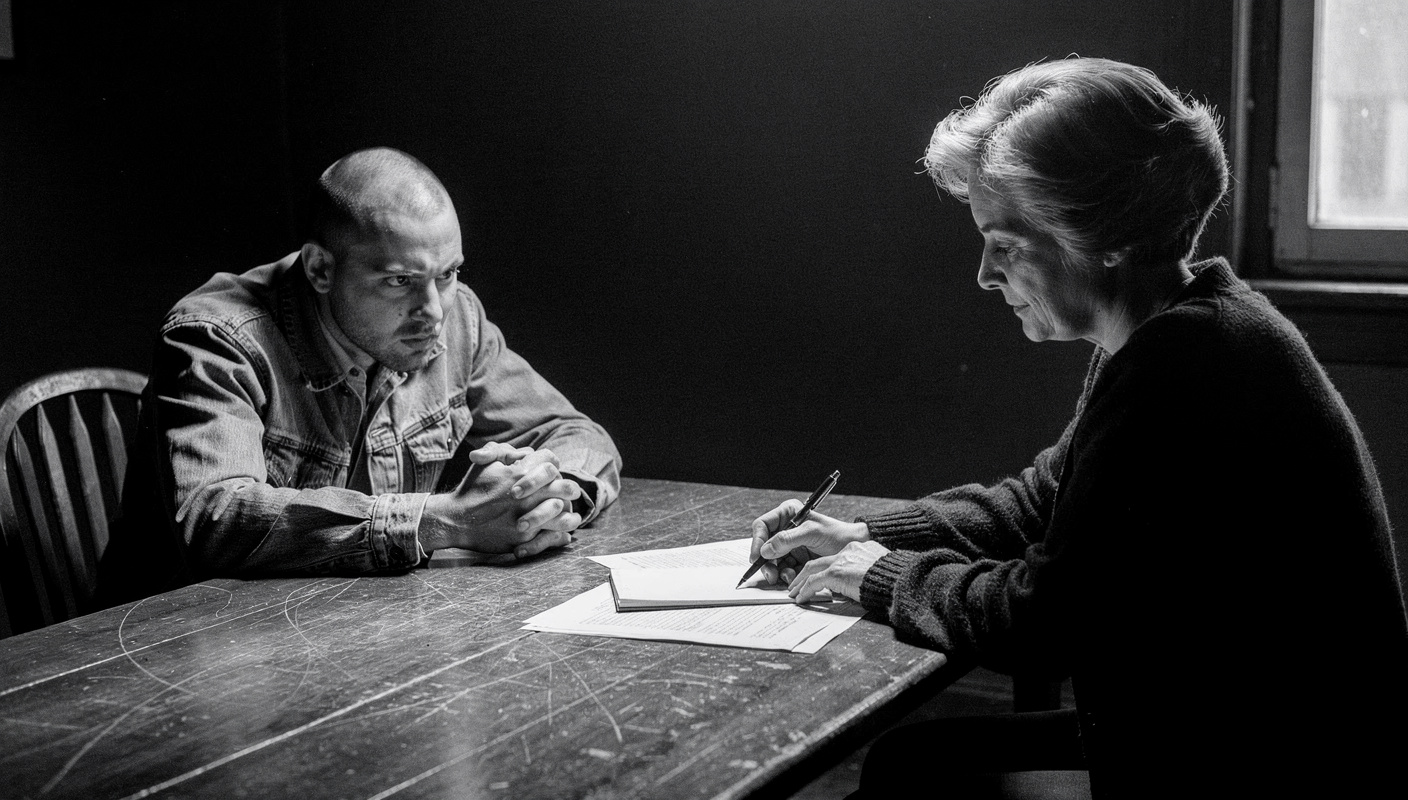
Two project leads are in a tense meeting. One has a serious concern about the other's approach. She opens with: "That plan is going to cause us problems." He shuts down immediately. The rest of the meeting goes nowhere.
This happens every day in teams across every industry. It is not a talent problem. It is a structural one. When we skip straight to the message, the other person's defenses rise before the words even land. They stop listening, and they start protecting. The team fractures a little more each time this happens, and no one quite knows why the atmosphere feels so guarded.
The real issue is not what people say. It is the order in which they say it. Most of us were never taught to prepare the ground before planting the seed. We deliver the message, wonder why it did not take root, and blame the other person.
In this guide, you will get a clear, practical process for using empathy bridges to protect and strengthen team synergy that you can use immediately.
"The Conversation You're Avoiding Is the One You Need to Have."
"The Conversation You're Avoiding
Is the One You Need to Have."
Stop rehearsing conversations you'll never have. Say It Right Every Time gives you 115 word-for-word scripts and 16 proven frameworks to speak with confidence in every conversation that matters.
Why Sustaining Real Team Synergy Is Harder Than It Looks
Knowing that empathy matters is not the same as knowing how to apply it under pressure. I have watched capable, intelligent people fall apart in difficult team conversations because good intentions are not enough when emotions are running high.
Here is what actually makes this difficult:
- Pressure collapses good habits. When a deadline is tight or a conflict is hot, most people revert to blunt delivery or silence. The nuanced communication habits they practiced in calm moments disappear when they are most needed.
- Empathy feels like weakness in competitive teams. In environments where assertiveness is rewarded, acknowledging someone else's feelings can feel like surrender. People avoid it because they fear it will undermine their credibility.
- Most teams have no shared communication structure. Without a common framework, every difficult conversation is improvised. Some people are naturally skilled at navigating these moments; most are not. The gap creates inconsistency and erodes trust over time.
- The amygdala hijack is real and fast. When someone feels attacked or dismissed, the emotional part of the brain takes over before the rational part has a chance to respond. By the time they are thinking clearly again, the conversation has already gone sideways. Understanding this is one of the key lessons in The Role of Emotional Intelligence in Team Synergy.
- We confuse agreement with understanding. Teams often assume that because a message was delivered, it was received. But a teammate who feels unheard has not truly received anything. They have just gone quiet.
The goal is not to eliminate these difficulties. It is to build a system that works in spite of them.
The Foundation: What You Need Before You Start
Before you begin using empathy bridges in your team's daily communication, there are three things that need to be clear.
- Your desired outcome for the conversation. Before any difficult exchange, know exactly what you want to achieve. Not in the abstract: "I want things to improve." Specifically: "I want us to agree on a new handover process by the end of this conversation." A vague outcome leads to a vague conversation. As I outline in the Clarity Checklist from Chapter 5 of Say It Right Every Time, your desired outcome must be specific, realistic, and actionable before you open your mouth.
- A baseline of psychological safety on the team. An empathy bridge works when the person receiving it can trust it is genuine. If your team has never operated with openness, a sudden display of empathy may land as manipulation. You need to build at least a minimum of safety first. What Is Psychological Safety and How It Drives Team Synergy is where I would send you to start.
- The habit of separating behavior from character. The empathy bridge is not a technique for softening personal attacks. It only works when the message that follows it focuses on specific actions and behaviors, not on who someone is as a person. Clarify that distinction in your own mind before the conversation begins.
Get these right first. The steps that follow will not work without them.
Step 1: Name What the Other Person Is Carrying
The first step is to acknowledge the other person's situation or feeling before you say anything else, and this is the heart of the Empathy Bridge method.
In Chapter 5 of Say It Right Every Time, I introduce the Empathy Bridge as a technique specifically designed to lower defenses and invite collaboration. The core principle is simple: connect before you correct. When a person feels seen and understood, their nervous system relaxes. They can actually hear what you say next.
This step is not about agreement. You are not saying they are right. You are saying: I see what you are dealing with. That is all it takes to shift the entire dynamic of what follows.
- Before the conversation, write one sentence naming their likely emotion or situation: "I know this project has been stressful for you."
- Say it first, before your core message, and say it with genuine attention.
- Make it specific to them, not generic: "I know you have been carrying most of the testing load this sprint" lands better than "I know things have been busy."
- Avoid immediately following the bridge with "but." Use "and" or simply pause and move to your point.
- Check your own tone: a warm acknowledgment delivered in a flat, clipped voice sends a contradictory message.
Here is how it sounds in practice. A team lead needs to tell a developer that her code review process is creating bottlenecks. Instead of opening with the problem, she says: "I know you have taken on more reviews than anyone else this month, and I genuinely appreciate that effort. I want to talk about how we structure the process going forward so it does not fall so heavily on you." The developer's posture visibly changes. She leans in. The rest of the conversation is a problem-solving discussion, not a defence.
When you name what the other person is carrying, you disarm the conversation before it has a chance to become a confrontation.
Step 2: State Your Core Message with Precision
Once the empathy bridge is in place, deliver your core message clearly and directly. Vague messages waste the goodwill the bridge just built.
The Clarity Checklist from Chapter 5 of Say It Right Every Time asks you to reduce your concern to a single sentence before you speak. Not a paragraph, not a list of grievances: one sentence that captures the specific issue. This discipline matters because a muddled message forces the other person to interpret what you mean, and they will almost always interpret it in the most threatening way possible.
Use I statements rather than you statements. "I have noticed that our sprint reviews are getting delayed" is different from "You keep delaying the sprint reviews." The first invites problem-solving. The second triggers defensiveness and ends the collaboration the empathy bridge just opened.
- Write your core message in one sentence before the conversation starts.
- Begin with "I have noticed..." or "My concern is..." rather than "You always..." or "The problem with you is..."
- Follow the script format from Say It Right Every Time: "My core concern is [one sentence]. The reason this matters is [your why]. What I would like to see happen is [your desired outcome]."
- Keep the message focused on behavior and impact, not personality or intent.
- After you deliver it, stop talking and let it land.
After this step, the other person has received your message in an environment where they felt safe enough to actually take it in. Now comes the harder part: listening to what comes back.
Step 3: Use the 3-Second Pause When Emotions Spike
Even with a strong empathy bridge and a clear message, emotions will sometimes spike. This is normal. Your next move determines whether the conversation repairs or deteriorates.
I describe the 3-Second Pause in Chapter 5 of Say It Right Every Time as a micro-intervention: a deliberate three-second silence before you respond when the temperature in the room rises. It sounds trivial. It is one of the most powerful tools I have ever taught. The pause interrupts what neuroscientists call the amygdala hijack: the moment when emotional threat processing takes over and rational thinking goes offline. Three seconds is enough to re-engage the thinking brain. For how feedback loops interact with this dynamic in teams, the pause is equally essential.
- When you feel the urge to react immediately, count three seconds internally before speaking.
- When the other person's voice rises or their body language closes, do not accelerate. Slow down.
- Use a bridging phrase to signal the pause is intentional: "I want to make sure I hear you right."
- If the conversation becomes genuinely unproductive, name it without blame and propose a pause: "I think we are both too activated right now to get where we need to go. Can we come back to this tomorrow morning?"
- After the pause, return to curiosity rather than defence: "Can you tell me more about what concerned you about that?"
Here is what the pause looks like under pressure. A product manager is mid-conversation with a frustrated designer who says: "I feel like my work is never taken seriously in this team." The old response is defensive: "That is not true, we always consider your input." The 3-Second Pause response is: silence, then: "I hear that. Help me understand where that feeling is coming from." The designer opens up. The real issue surfaces. The team synergy that seemed unreachable a moment ago suddenly has a path forward.
The pause is not weakness. It is the exact moment where confident communicators separate themselves from reactive ones.
Step 4: Explore Their Perspective with Genuine Curiosity
After delivering your message and managing the emotional temperature, your job is to listen, not to win.
This step is what separates a monologue dressed up as a conversation from an actual exchange. Teams that achieve genuine synergy are built on a pattern of mutual understanding, not a pattern of alternating persuasion attempts. The D.E.A.L. Method covered in Chapter 9 of Say It Right Every Time names this the "Explore Perspectives" phase: you approach the other person's view with the genuine openness of a journalist, not the selective hearing of a lawyer building a case.
Most people listen just enough to prepare their next argument. Real perspective-taking means you summarize what you heard before you respond to it. This single habit changes the quality of team conversations dramatically.
- After the other person speaks, summarize their point before you reply: "So what I am hearing is... Do I have that right?"
- Ask one open question to go deeper: "What would a better outcome look like from your side?"
- Do not interrupt. Let them finish, even when you disagree with every word.
- Notice what they are not saying. Often the real concern lives just beneath the stated one.
- Acknowledge what is valid in their view before you return to your own position.
This is also where role clarity becomes essential to team synergy: when people understand their boundaries and responsibilities, perspective-taking becomes focused rather than chaotic. Without that clarity, these conversations spiral into territory disputes.
Step 5: Agree on a Specific, Shared Next Step
A conversation that ends with mutual understanding but no clear action is a conversation that will need to happen again. The final step is to close with a committed, specific agreement.
The D.E.A.L. Method calls this "Lock in the Commitment," and it is the step most teams skip. They reach a warm understanding and leave the room assuming things will now be different. Without a specific, named next step, nothing changes. This is what I cover as a pattern of communication failure in Common Communication Mistakes That Quietly Destroy Team Synergy: the agreement that was never actually made.
A verbal commitment needs a specific who, what, and when. Without all three, it is not a commitment. It is a wish.
- Before closing, name the specific action you have agreed on: "So we are both going to..." not "We will try to improve things."
- Assign clear ownership: "You will handle the client update by Thursday. I will confirm the spec changes by Wednesday."
- Set a follow-up checkpoint: "Let us check in on Friday to see how this is landing."
- Write it down in front of the other person. The act of writing signals seriousness.
- Close warmly: "I appreciate you working through this with me."
Here is the script from Say It Right Every Time that I return to again and again for closing a difficult conversation: "Thank you for this discussion. To summarize, we have agreed that [summarize the agreement and next steps]. I appreciate your willingness to work through this with me." It takes twenty seconds to deliver. It saves hours of future confusion.
When this step is in place, the conversation has not just happened. It has been completed.
Step 6: Reinforce the Bridge as a Team Habit
A single well-handled conversation builds trust. A consistent pattern of well-handled conversations builds team synergy. The empathy bridge only reaches its full power when it becomes the team's shared communication standard, not one person's private technique.
This requires deliberate repetition. Teams develop communication cultures the same way individuals develop habits: through consistent practice, visible modeling, and clear expectation-setting. When a team leader uses the empathy bridge in every difficult exchange, the team notices. When they name the technique and invite others to use it, the culture begins to shift.
Advanced Communication Strategies for Sustaining Team Synergy in Complex Organizations explores the systemic side of this: how you embed communication practices at the organizational level so they outlast any single leader or conversation.
- Name the empathy bridge explicitly in a team meeting. Teach it as a shared tool, not a secret technique.
- After a team conversation goes well, briefly acknowledge what made it work: "I noticed we all came in genuinely curious today. That made a real difference."
- When a conversation goes badly, revisit it without blame: "Where could we have opened differently?"
- Encourage teammates to hold each other accountable to the habit: "Can we try acknowledging that concern first before we respond?"
- Build a brief check-in at the start of high-stakes meetings: "Is there anything anyone needs to name before we get into it?"
The goal of this step is not to make every conversation feel scripted. It is to make respectful, clear, empathetic communication the team's default, so that when difficulty arrives, the team's instinct is to connect rather than to defend.
Adapting This Process for High-Conflict Team Environments
In teams with a history of unresolved conflict or broken trust, the empathy bridge faces a harder road. People who have been burned before interpret almost everything as a threat. The technique itself may initially be met with suspicion.
Start smaller than you think you need to. In high-conflict teams, a full empathy bridge at the start of a contentious meeting can feel theatrical. Begin with brief, genuine acknowledgments in everyday exchanges: "That sounded like a rough client call" or "I know you have been stretched this week." Build the habit in low-stakes moments before you rely on it in high-stakes ones. How to Rebuild Team Synergy After Conflict or Organizational Change covers the broader repair arc you may also need.
Use the B.R.I.D.G.E. Method for deeper ruptures. Chapter 9 of Say It Right Every Time introduces the B.R.I.D.G.E. Method: a six-step relationship repair framework that begins with a genuine apology, reaffirms the relationship's value, and works through the breakdown systematically. In teams where damage has accumulated over months or years, this structured approach is more appropriate than a single conversation. How to Rebuild Trust Between Two Departments Whose Lack of Synergy Is Hurting Results applies this logic at a larger scale.
Name the pattern, not just the problem. In high-conflict environments, individual conversations rarely resolve systemic issues. You need to surface the communication pattern itself as the subject of discussion: "I have noticed we tend to skip straight to argument when a concern comes up. I want us to try something different."
Expect skepticism and stay consistent. A team that has never operated with empathic communication will not immediately trust it. Your consistency over time is the proof. Keep using the method even when it is not reciprocated at first.
The core process holds in every environment. Only the pace and gentleness of introduction changes.
Common Mistakes to Avoid
Let me tell you about the mistakes I see most often. I have made most of them myself.
The mistake: Using the empathy bridge as a softening trick rather than genuine acknowledgment.
Why it happens: People learn the formula without the feeling behind it. The words are right; the tone is hollow.
What to do instead: Before you speak, take five seconds to genuinely consider what the other person is dealing with. If you cannot feel even a trace of it, do not start the conversation yet.
The mistake: Following the empathy bridge immediately with "but."
Why it happens: "But" is our habitual pivot word. We have been trained to use it.
What to do instead: Replace "but" with "and" or a full stop. "I know this has been hard, and I want to talk about the next step" lands very differently from "I know this has been hard, but you need to do better."
The mistake: Skipping the empathy bridge entirely when you are frustrated.
Why it happens: When we are angry or pressed for time, the bridge feels like a detour. We go straight to the point.
What to do instead: That is precisely when the bridge matters most. Write a one-sentence acknowledgment before the meeting. Read it before you speak.
The mistake: Closing the conversation without a specific agreement.
Why it happens: The emotional relief of a good exchange feels like resolution. It is not.
What to do instead: Always end with a named action, a named owner, and a named deadline. No exceptions.
The mistake: Using the technique in isolation without building psychological safety over time.
Why it happens: People treat the empathy bridge as a one-time fix rather than a daily practice.
What to do instead: Apply it consistently in small moments, not just big ones. The connection between psychological safety and honest communication grows from repeated small acts, not grand gestures.
These are not character flaws. They are gaps in the system. Fix the system.
Your Practical Checklist
Use this checklist before you begin and after each cycle.
- I have identified the specific desired outcome for this conversation before it starts.
- I have written a one-sentence empathy bridge that names the other person's situation or feeling.
- My core message is reduced to a single, clear sentence focused on behavior, not character.
- I am using I statements, not you statements, in my core message.
- I have reminded myself to use the 3-Second Pause if emotions spike.
- I am prepared to summarize the other person's perspective before I respond to it.
- I have a specific proposed next step ready, including who does what and by when.
- I am entering this conversation with genuine curiosity, not a predetermined conclusion.
- I plan to close with a named, written commitment before leaving the conversation.
- I have considered whether this conversation contributes to our team's communication culture, not just solves this one issue.
If you cannot check most of these, that is your starting point.
Summary and Next Steps
You now have a complete, field-tested process for using empathy bridges to build the kind of trust and openness that makes genuine team synergy possible. More importantly, you have the specific language to make it work tomorrow.
- The Empathy Bridge is a deliberate acknowledgment of the other person's situation that comes before your message, every time.
- The C.O.R.E. Framework from Chapter 5 of Say It Right Every Time gives you the full architecture: Clarity, Openness, Respect, and Empathy, applied in sequence.
- The 3-Second Pause is not a technique for the timid. It is a tool for anyone serious about keeping a difficult conversation productive.
- A clear core message, delivered with I statements and focused on behavior, is what makes the empathy bridge land rather than collapse.
- Closing with a specific, committed agreement is the difference between a good conversation and a resolved one.
- In high-conflict teams, consistency over time is your proof. The technique earns trust by being repeated, not by being perfect.
- Team synergy is not built in a single conversation. It is built in the pattern of how your team communicates every day.
For the full framework behind the Empathy Bridge, including the Clarity Checklist and the C.O.R.E. system, see Say It Right Every Time. If you are working on how to deliver feedback within this new communication culture, How to Give Feedback That Strengthens Team Synergy Instead of Breaking It is your next read. And if you want to understand how to repair relationships where trust has already broken down, start with How to Rebuild Trust Between Two Departments Whose Lack of Synergy Is Hurting Results.
Building empathy bridges team by team, conversation by conversation, is the only way I know to grow something that actually lasts.
Frequently Asked Questions (FAQ)
What are empathy bridges in team communication?
Empathy bridges are a structured communication technique where you acknowledge another person's feelings or situation before delivering a difficult message. They lower defensive barriers and invite collaboration. I introduce this concept in Chapter 5 of Say It Right Every Time as part of the C.O.R.E. Framework, designed for exactly this kind of high-stakes team exchange.
How do empathy bridges improve team synergy?
Empathy bridges create psychological safety by showing teammates they are heard before any criticism or challenge lands. When people feel understood, they stop defending and start collaborating. Over time, this pattern of acknowledgment before challenge builds the trust that sustains genuine team synergy across difficult conversations.
When should you use an empathy bridge in a team setting?
Use an empathy bridge any time you are about to deliver difficult feedback, challenge a teammate's idea, or raise a conflict. It works especially well in high-pressure environments where defensiveness runs high and people default to self-protection rather than open, productive problem-solving with their teammates.
What is the difference between empathy and an empathy bridge?
Empathy is a feeling: the capacity to understand another person's experience. An empathy bridge is the deliberate communication act that puts that empathy into words before your main message. One is internal; the other is a practical team communication tool with a clear, repeatable structure you can learn and apply.
Can empathy bridges team communication work in remote teams?
Yes, empathy bridges work effectively in remote teams and often matter more there. Without body language and shared physical space, teammates misread tone easily. Opening a video call or written message with a genuine empathy bridge reduces that misreading and sets the collaborative tone the whole team needs.
How do you write an empathy bridge for a difficult team conversation?
Start by naming the other person's likely feeling or situation in one sentence: "I know you have been carrying most of the load on this project." Follow it immediately with your core message. The acknowledgment comes first, always. Keep it genuine and specific to this person, not formulaic or generic.