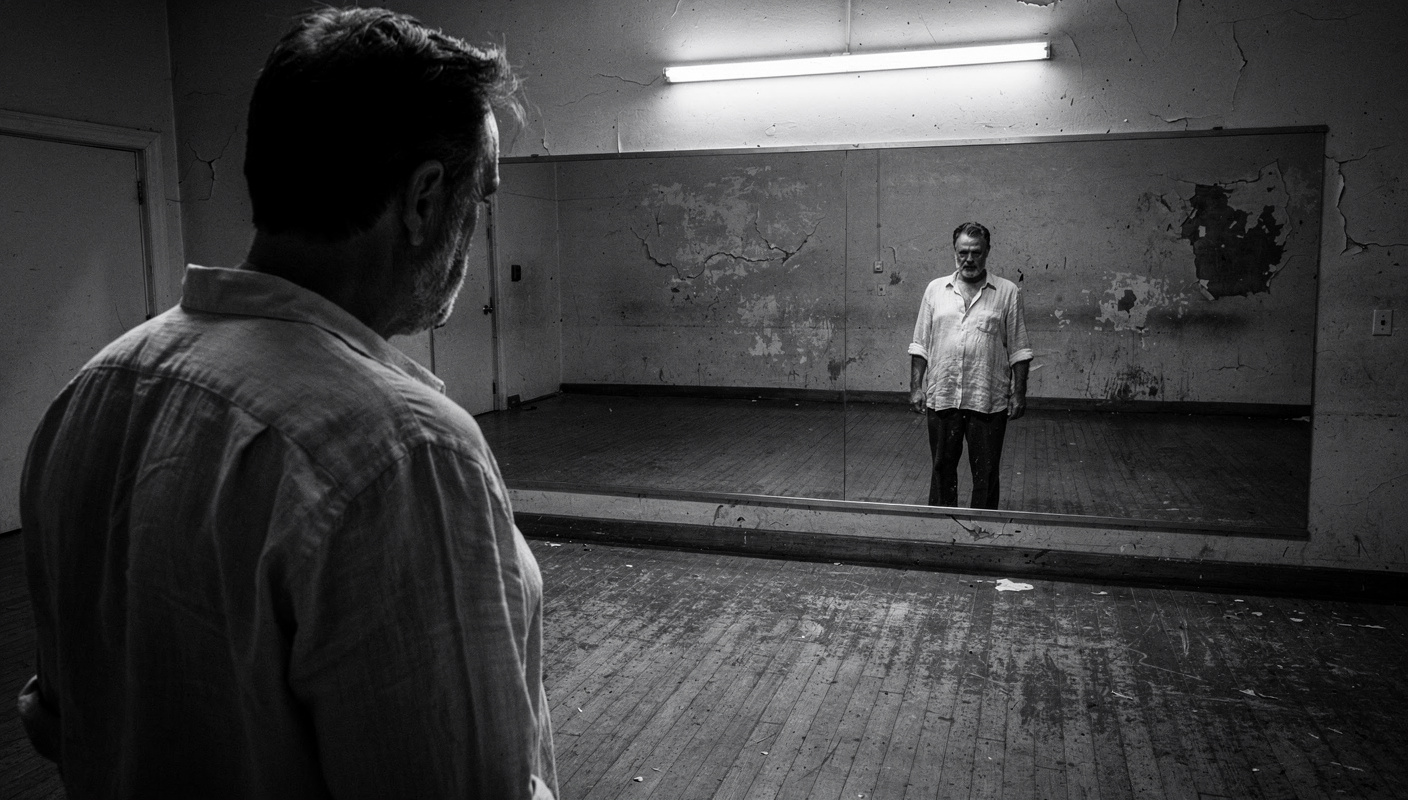

In Short
After reading this, you will know exactly how to reset your physical expression, step by step, after a nonverbal breakdown at work or in public.
- Ground your body first; your mind cannot recover until your nervous system does.
- Identify the specific physical failure so you can rehearse the right response.
- Rebuild confidence through low-stakes practice before returning to high-pressure settings.
Physical expression recovery is the process of deliberately resetting your body language, posture, and nonverbal presence after a high-stress or embarrassing moment has disrupted them. It is a structured practice, not a passive reset.
Introduction
You were mid-sentence in front of the room and your voice cracked. Or you shook someone's hand and your arm went rigid. Or you froze at the whiteboard, shoulders climbing toward your ears, eyes dropping to the floor while twenty people watched. You recovered eventually, but the damage lived in your body long after the moment passed.
Physical expression recovery is harder than most people expect, because the problem is not knowledge. You know what confident body language looks like. The problem is that your nervous system has now associated that room, that person, or that type of situation with threat. And when threat registers, your body stops listening to your intentions.
In this guide, you will get a clear, practical process for physical expression recovery that you can use immediately. If you are curious about how stress hijacks your responses at a deeper level, the article What Is the Amygdala Hijack and How It Silently Blocks Team Synergy in High-Pressure Moments is worth reading alongside this one.
"The Conversation You're Avoiding Is the One You Need to Have."
"The Conversation You're Avoiding
Is the One You Need to Have."
Stop rehearsing conversations you'll never have. Say It Right Every Time gives you 115 word-for-word scripts and 16 proven frameworks to speak with confidence in every conversation that matters.
Why Rebuilding Nonverbal Presence Is Harder Than It Looks
Knowing that you should stand tall, hold eye contact, and breathe steadily is not the same as being able to do it when your system is flooded. I have spent decades watching capable, intelligent people struggle here, and I have struggled here myself. This is not a knowledge gap. It is a wiring gap.
Here is why it is so difficult in practice:
The body remembers the failure before the mind does. When you re-enter a similar setting, your muscles tighten and your posture collapses before you have consciously registered why. The physical pattern has been rehearsed once, badly, and your system treats it as established habit.
Overcompensation looks worse than the original problem. Many people respond to a nonverbal failure by going rigid, over-smiling, or making exaggerated gestures. This reads as performance, not presence, and erodes trust faster than the original moment did.
You cannot practice what you cannot name. Most people know something went wrong physically, but they cannot describe it precisely enough to rehearse a correction. "I looked nervous" is not actionable. "My shoulders rose and I broke eye contact at the three-second mark" is.
Avoidance feels like wisdom. Staying away from the room, the person, or the context where the failure happened feels protective. It is, in fact, the mechanism that locks the pattern in permanently.
Stress compounds in layers. A single bad nonverbal moment creates anxiety about the next one, which creates more physical tension, which produces another bad moment. Each repetition deepens the groove.
The goal is not to eliminate these difficulties. It is to build a system that works in spite of them.
The Foundation: What You Need Before You Start
Before you begin, there are three things that need to be clear.
An honest account of what happened physically. Vague self-criticism will not serve you here. You need to identify the specific physical failure: where your posture collapsed, when your eye contact broke, how your voice changed, whether your hands became restless or locked. Write it down in plain language. Without a specific target, your practice has no direction.
A baseline of psychological safety. If the environment where the failure happened is actively hostile or punishing, rebuilding your physical expression there first is the wrong order of operations. Start with a setting where you feel reasonably safe. Build the skill there, and transfer it outward. The article What Is Psychological Safety and How It Drives Team Synergy explains why this foundation matters so much for communication under pressure.
Patience measured in weeks, not hours. A single rehearsal will not overwrite a stress response that fired in front of twenty people. Your muscle memory needs repetition. Commit to a minimum of two weeks of deliberate, low-stakes practice before you judge the results.
Get these right first. The steps that follow will not work without them.
Step 1: Stop and Ground Your Body Immediately
This step interrupts the spiral before it sets into a pattern.
The moment after a nonverbal failure, your system wants to flee the feeling by rushing forward: talking faster, moving away, filling silence with words. Every one of those impulses makes the physical recovery harder. Your first job is to stop moving and create a brief physical anchor.
This does not require a dramatic pause. It takes about three seconds and it is invisible to most observers.
- Plant both feet flat on the floor, hip-width apart, and feel the ground beneath you.
- Drop your shoulders away from your ears by exhaling slowly through your nose.
- Soften your jaw. If you are clenching, let your back teeth separate slightly.
- Rest your hands. If you are standing, let them fall to your sides or clasp loosely in front. Do not stuff them in your pockets.
For example: you are presenting and your voice shakes on a key word. Instead of rushing through the next sentence to escape the moment, you pause, plant your feet, exhale, and continue. The audience reads the pause as confidence, not weakness. You have told your nervous system that the situation is manageable. That single interruption is the seed of recovery.
Once you have grounded physically, you have the first inch of control back. The next step builds from there.
Step 2: Name the Specific Breakdown with Precision
This step transforms a vague sense of failure into something you can actually work with.
After the moment has passed, find a quiet space and write down exactly what happened in your body. Not what you felt emotionally, but what your physical expression did. This distinction matters. Emotional accounts lead to self-criticism. Physical accounts lead to practice targets.
- Write the setting first: where you were, who was present, what you were doing.
- Then describe your posture at the moment of breakdown: did your shoulders rise, did you turn away, did your spine curve inward?
- Note your eye contact: did you look down, scan the room, fix on one person?
- Describe your hands: did they grip something, go into your pockets, move erratically?
- Note any voice changes: pitch rise, volume drop, speed increase, trailing off mid-sentence.
The goal of this inventory is a single, clear sentence that you can carry into rehearsal. Something like: "When challenged, I drop my chin, lose eye contact, and my voice falls below audible." That sentence is now your practice script. You know exactly what physical expression to rebuild, because you know exactly what broke. Understanding how emotional intelligence shapes these moments is also worth exploring; the article The Role of Emotional Intelligence in Team Synergy gives useful context on the connection between emotional awareness and physical response.
Step 3: Rebuild the Physical Response in Private First
You cannot recover in public what you have not yet repaired in private.
This is the rehearsal step. Using the specific breakdown you identified in Step 2, you are going to practice the correct physical response, in isolation, until it begins to feel natural rather than forced. Private rehearsal removes the audience variable and lets your nervous system associate the physical action with safety rather than scrutiny.
- Stand in front of a mirror or use your phone camera on a neutral recording setting.
- Recreate the context that triggered the failure: stand as if presenting, or sit as if in a difficult meeting.
- Speak the words or do the action that preceded your breakdown, but this time execute the physical response you want: chin level, eye contact held for four to five seconds, shoulders down, voice steady and projected.
- Repeat the sequence a minimum of five times in a single session.
- After each repetition, pause and notice what your body actually feels like when you execute it correctly.
For example: if your breakdown was losing eye contact when challenged, you practice holding your gaze forward and speaking a direct response while looking at your own reflection. You do this until the discomfort of holding that gaze decreases from sharp to dull. The physical expression you want to rebuild is, at this point, still foreign to your body. Repetition is how you make it familiar.
When the mirror no longer feels threatening, you are ready to move into a safer real-world setting.
Step 4: Transfer the Practice into Low-Stakes Real Settings
Private rehearsal builds the skill. Real contact builds the confidence.
You need to take the physical response you have been practicing and test it in a situation where the stakes are low enough that a second failure will not compound the original one. This is a deliberate stepping-stone, not a shortcut back to the high-pressure setting.
- Choose a real interaction where you are comfortable: a coffee with a friend, a brief meeting with a colleague you trust, a casual check-in with your team.
- Deliberately practice the specific physical element you rebuilt in private: maintain the eye contact, hold the open posture, keep your shoulders down through a moment of mild tension.
- Do not announce what you are doing. Just execute it and observe how it feels in a real exchange.
- Repeat this across three to five different low-stakes interactions before you assess your progress.
- After each interaction, take thirty seconds to note what held and what slipped.
The psychological safety present in low-stakes settings matters more than it might seem. If you find that even low-stakes interactions trigger the old pattern, reading How Psychological Safety Enables Honest Communication and Sustains Team Synergy may help you understand the environmental factors at play.
Each successful real-world repetition is a vote for the new pattern over the old one.
Step 5: Return to the High-Stakes Setting with a Clear Plan
This is the step most people skip, and it is where recovery either sticks or collapses.
Returning to the room, the person, or the context where the original failure happened is not optional if you want genuine recovery. Avoidance teaches your nervous system that the threat was real and the retreat was correct. You need to go back, and you need to go back prepared.
- Write a brief plan before you return: what physical expression you will lead with when you enter the space, where you will stand or sit, and what your grounding anchor will be if tension rises.
- Arrive early if possible, so you can settle your body in the space before others arrive.
- Use the three-second grounding anchor from Step 1 before you begin speaking.
- Set one specific physical target for the interaction: not "be confident," but "hold eye contact for the first four seconds of my opening statement."
Here is what a prepared return might look like. You are about to present again to the same group where you froze last month. You arrive five minutes early. You stand where you will present, plant your feet, exhale, and look at the empty chairs. When people enter, you greet two of them by name and hold eye contact through their response. When it is time to begin, your first sentence comes out slower and lower than it would have naturally. You have prepared for this moment, and your body knows it.
After completing this return, your physical expression recovery is no longer theoretical. It is lived.
Step 6: Use Feedback to Calibrate, Not to Judge
Recovery without feedback is guesswork.
At this stage, you need an honest outside perspective on your physical expression, not because you cannot trust yourself, but because stress distorts self-perception. People routinely believe they looked calmer than they did, or more rigid than they were. A trusted colleague who will tell you the truth is worth more here than any self-assessment. This connects directly to the principles in How to Give Feedback That Strengthens Team Synergy Instead of Breaking It, which outlines how honest feedback should be framed to be useful.
- Ask one specific question, not a general one: "When I paused after the question from the floor, what did my posture look like?"
- Receive the feedback without defending it. Write it down.
- Compare the external observation to your own experience of the moment.
- Identify one adjustment based on the feedback, not five. One adjustment per iteration.
- Build the adjustment into your next private rehearsal cycle and carry it back into real settings.
Feedback is not a verdict on your character. It is data about your physical expression in a specific moment. Treat it with the same clinical curiosity you would bring to any other technical skill you are refining.
Step 7: Build a Maintenance Practice So the Pattern Does Not Return
This is the step that separates people who recovered once from those who stay recovered.
A single successful return to a high-stakes setting does not permanently overwrite a stress-driven pattern. Under enough pressure, under enough sleep deprivation, under enough accumulated tension, the old physical collapse is always available to resurface. A brief, consistent maintenance practice is the only way to keep the new pattern dominant. The tools of Emotional Intelligence in Feedback Conversations are worth applying here, since maintaining composure across repeated high-stakes exchanges is as much an emotional practice as a physical one.
- Spend five minutes, three times per week, on physical expression rehearsal: posture, eye contact, breath, and gesture in sequence.
- Before any high-stakes situation, run through your grounding anchor and your one specific physical target.
- After high-stakes situations, spend two minutes noting what your body did well, not only what slipped.
- Once per month, return to your original breakdown description and assess whether it still applies.
- If tension starts rebuilding in a recurring setting, treat it as early warning and repeat Steps 3 and 4 before it compounds.
The people I have seen sustain strong physical expression over years are not the naturally calm ones. They are the ones who practice consistently enough that their baseline keeps rising. Physical expression recovery is not a finish line. It is a living practice.
Adapting This Process for Remote and Hybrid Work Settings
Remote work creates a specific challenge for physical expression recovery, because the visual frame is compressed to a rectangle on a screen. The same nonverbal failure that might go unnoticed in a large room becomes unavoidable when your face fills two-thirds of someone's display.
Redefine your physical frame. In remote settings, your physical expression exists from the shoulders up. Practice your posture and facial expression specifically for the camera frame, not for a full-body room presence. Set your camera at eye level so you are neither looking down at people nor up at them.
Use the pre-call grounding anchor. Run your three-second grounding sequence before you join a call, not after you are already visible. Plant your feet under your desk, drop your shoulders, exhale, and then click join. You enter grounded rather than scrambling to get there.
Rehearse for the camera specifically. Record yourself on a short practice call with a trusted colleague and review the footage with the same precision you would bring to an in-person observation. Notice where your eyes go when you are thinking, whether your jaw tightens under challenge, and how your shoulders move when you are surprised. The camera catches what the room does not.
Rebuild eye contact as camera contact. True eye contact in a video call means looking at the camera lens, not at the faces on your screen. This feels deeply unnatural at first. Practice it in low-stakes calls before you rely on it in high-stakes ones. How Empathy Bridges in Team Communication Create the Conditions for Lasting Synergy has useful thinking on how warmth and connection are communicated even across a digital channel.
The core recovery process holds in remote work. Only the execution changes.
Common Mistakes to Avoid
Let me tell you about the mistakes I see most often. I have made most of them myself.
The mistake: Returning to the high-stakes setting before completing private rehearsal.
Why it happens: The urge to prove recovery as quickly as possible overrides patience.
What to do instead: Complete at least five private rehearsal repetitions and three low-stakes real interactions before returning. Rushing destroys the groundwork.
The mistake: Correcting too many physical elements at once.
Why it happens: After a breakdown, people feel every part of their nonverbal behaviour needs fixing immediately.
What to do instead: Identify one primary physical failure and address that single element first. Confidence in one area rebuilds the others organically.
The mistake: Using rigid, performative posture as the correction.
Why it happens: People confuse "confident posture" with "motionless posture" and lock every joint as a response to looking nervous.
What to do instead: Practice settled, not stiff. Shoulders down, weight balanced, movement natural. Stillness without tension is what reads as composed.
The mistake: Avoiding the setting where the breakdown happened.
Why it happens: Avoidance reduces immediate anxiety, so it feels like the right call.
What to do instead: Treat Step 5 as non-negotiable. Return to the high-stakes setting with a plan. Every week of avoidance deepens the association between that setting and threat.
The mistake: Treating the recovery as complete after one successful interaction.
Why it happens: Relief after a good return makes the maintenance practice feel unnecessary.
What to do instead: Continue the three-times-per-week rehearsal for a minimum of four weeks after the successful return. One good performance is a data point, not a cure.
The mistake: Seeking general reassurance instead of specific feedback.
Why it happens: We want comfort after a failure, not more exposure to difficult observations.
What to do instead: Ask one precise, physical question of a trusted colleague. Use the answer as calibration data, not as a verdict.
These are not character flaws. They are gaps in the system. Fix the system.
Your Practical Checklist
Use this checklist before you begin and after each cycle.
- I have written down the specific physical breakdown in one clear sentence.
- I have identified the exact moment in the interaction when my physical expression shifted.
- I have named the three elements of my body language that changed: posture, eye contact, and one other.
- I have completed the grounding anchor practice at least once today.
- I have run at least five private rehearsal repetitions of the correct physical response.
- I have practiced the rebuilt response in at least three low-stakes real interactions.
- I have prepared a specific physical target for my return to the high-stakes setting.
- I have received at least one piece of specific feedback from a trusted observer.
- I have scheduled my three maintenance rehearsals for this week.
- I have reviewed my original breakdown description and noted any change.
- I have avoided avoidance: I have a date set for my return to the original context.
- I can describe what settled, natural physical expression feels like in my body right now.
If you cannot check most of these, that is your starting point.
Summary and Next Steps
You now have a step-by-step process for physical expression recovery that takes you from the moment of breakdown all the way through to a sustainable maintenance practice. You do not have to hope the pattern changes. You can actively rebuild it.
- Ground your body first; nothing else works until your nervous system settles.
- Name the specific physical failure with precision so your rehearsal has a real target.
- Rebuild the correct physical response in private before taking it anywhere public.
- Transfer the practice into low-stakes real settings to build embodied confidence.
- Return to the high-stakes setting with a plan, not a prayer.
- Use honest, specific feedback to calibrate your progress, not to judge your character.
- Maintain the practice consistently, because one recovery does not rewrite a lifetime of stress responses.
For deeper reading on the emotional layer underneath these physical patterns, start with The Role of Emotional Intelligence in Team Synergy and Emotional Intelligence in Feedback Conversations. If you want to understand the group dynamics that make physical expression recovery harder or easier in a team setting, How Empathy Bridges in Team Communication Create the Conditions for Lasting Synergy is the right next step.
Physical expression recovery is not about performing calm. It is about earning it, one deliberate repetition at a time.
Frequently Asked Questions (FAQ)
What is physical expression recovery after a stressful moment?
Physical expression recovery is the process of deliberately resetting your body language, posture, and nonverbal presence after a high-stress or embarrassing moment has disrupted them. It involves identifying what went wrong physically, calming your nervous system, and rebuilding confident nonverbal habits through structured practice.
How do you rebuild your physical expression after freezing in public?
Start by grounding your body: plant your feet, lower your shoulders, and slow your breath. Then identify the specific physical breakdown that occurred, such as eye contact loss or a voice shake. Rehearse the correct physical response in low-stakes settings before returning to high-pressure situations.
How long does physical expression recovery take?
Recovery from a single embarrassing nonverbal moment can begin within hours, but rebuilding consistent, confident physical expression typically takes two to four weeks of deliberate practice. The more specifically you rehearse the gestures and posture that failed you, the faster your muscle memory responds.
Why does stress destroy your physical expression so quickly?
Under stress, your nervous system triggers a threat response that tightens muscles, raises shoulders, speeds breath, and narrows focus. This is an involuntary reaction, not a character flaw. It overrides your trained body language because the threat response is older and faster than your conscious communication habits.
Can physical expression recovery help rebuild trust with an audience?
Yes. When people see you return to a room or a conversation with controlled, grounded physical expression, they read it as composure and strength. A visible recovery, handled with calm and directness, often builds more trust than if the original moment had gone perfectly.
What are the most common mistakes in rebuilding physical expression?
The most common mistakes include rushing back into high-stakes situations before rehearsing, over-correcting with rigid or performative posture, and avoiding the setting where the breakdown happened. Each mistake deepens the pattern rather than breaking it. A structured, patient recovery process is the only reliable fix.