
In Short
Power poses work not because they fool others, but because your body actively shapes your internal state, and your internal state shapes how clearly and confidently you communicate.
- Expansive posture sends signals to your nervous system that reduce threat response and increase composure.
- Your body does not just express confidence; it generates it through physical feedback loops.
- Understanding this changes where you focus your preparation before high-pressure communication.
Power poses confidence refers to the practice of using open, expansive body postures to shift your physiological and psychological state before or during communication. The physical stance reduces tension, steadies breathing, and primes your nervous system for composed, authoritative expression.
Why the Question Matters More Than the Answer
I have watched hundreds of people prepare for high-stakes conversations. Most of them focus on what to say. Very few focus on how they are holding themselves when they say it. And the ones who dismiss physical expression as superficial are almost always the ones who fall apart the moment the room goes quiet and all eyes land on them.
The question this article answers is not simply "do power poses work?" That is the wrong question. The deeper question is this: how does the physical position of your body actually influence your psychological state, and why does that mechanism matter for how you communicate? Understanding the psychology behind power poses and confidence changes where you put your attention before a difficult conversation, a presentation, or any moment where the stakes feel high.
In this article, you will understand the mechanism connecting body posture to confidence, not as a trick, but as a genuine feature of how your nervous system and self-perception operate. If you want to explore how psychological safety in groups relates to confident communication, What Is Psychological Safety and How It Drives Team Synergy is a good companion piece.
"The Conversation You're Avoiding Is the One You Need to Have."
"The Conversation You're Avoiding
Is the One You Need to Have."
Stop rehearsing conversations you'll never have. Say It Right Every Time gives you 115 word-for-word scripts and 16 proven frameworks to speak with confidence in every conversation that matters.
The Surface vs the Root of Physical Expression
Most people think of physical expression as a byproduct of how they feel. You feel nervous, so your shoulders curl inward. You feel confident, so you stand tall. On the surface, this seems straightforward: emotion first, body second.
That surface understanding is incomplete. It treats the body as a display screen, something that shows the world what is already happening inside. What it misses is the fact that the body is also an input device. Your posture, your breathing, your muscle tension, your position in space: all of these are feeding information back into your brain continuously, helping it decide how safe you are, how capable you are, and how you should prepare to respond.
The deeper mechanism reveals that the relationship between body and mind runs in both directions at once. Change the body, and you change the signal your brain receives. Change that signal, and you change your state. Change your state, and you change how you speak, how you listen, and how others experience you. Understanding the root changes how you respond to the surface.
The Psychology Behind Power Poses and Confidence, Explained
Here is the truth of it. When you hold an expansive, open posture, you are not performing confidence for the benefit of an audience. You are sending a specific set of physical signals into a system that is constantly monitoring your body for information about your situation.
Your nervous system runs a threat assessment all day long. It reads muscle tension, breathing rate, spinal position, and the position of your limbs to estimate how much danger you are in. A contracted posture, rounded shoulders, a lowered chin, arms pulled close, registers as a threat signal. Your body is doing what bodies do under threat: making itself smaller. That physical contraction triggers a cascade of responses, tighter muscles, shallower breath, a narrower field of attention. Which means that in practice, you feel less capable before you have even opened your mouth.
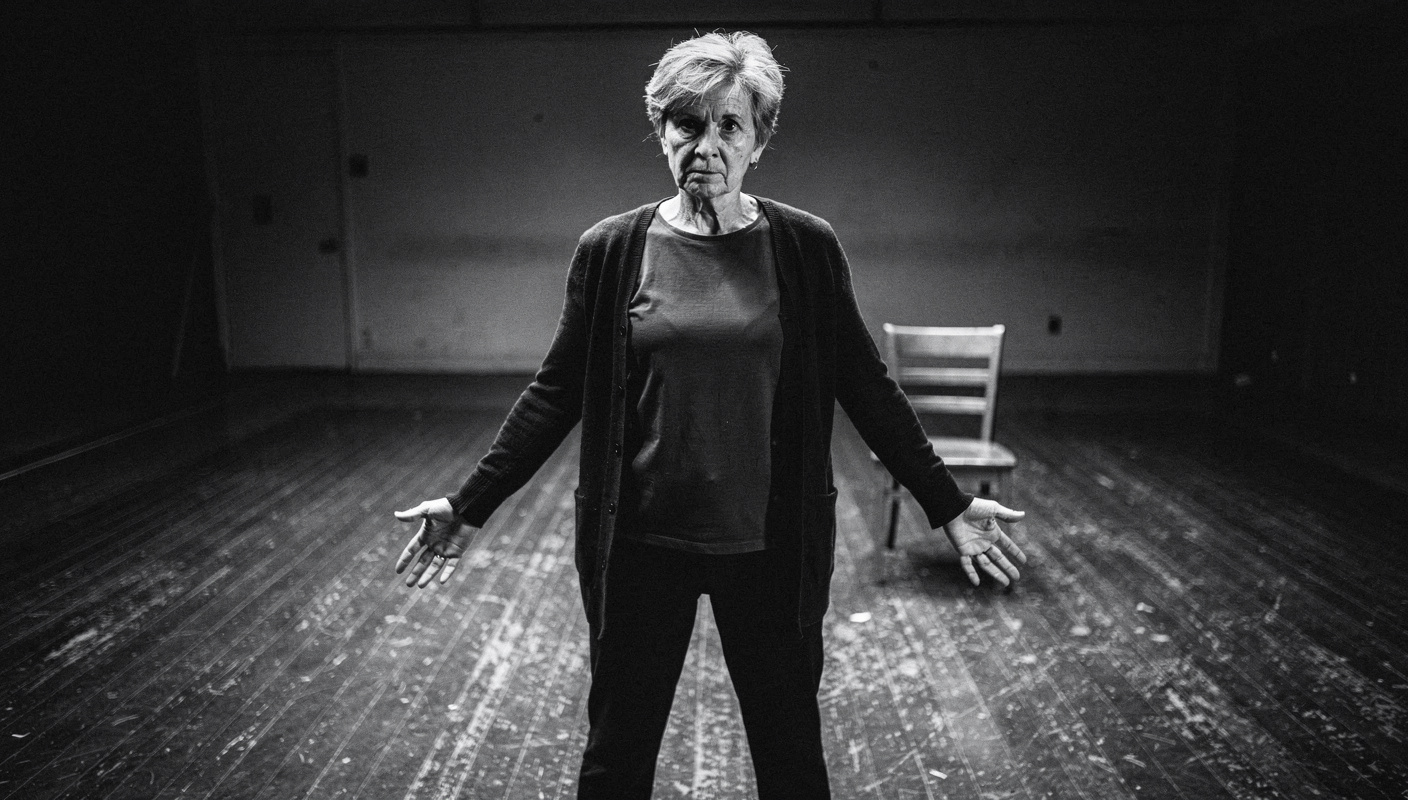
An expansive posture sends the opposite signal. Feet planted wide, chest open, head level: these are the physical markers of an organism that does not perceive immediate threat. Your nervous system reads this and responds accordingly, loosening the stress response, allowing fuller breathing, and widening your attention. This is why you see experienced speakers instinctively use space and stillness rather than shrinking themselves on a stage.
There is also a self-perception loop at work. When you physically occupy space with confidence, you begin to perceive yourself differently. Your internal narrative shifts. This is not positive thinking; it is proprioception, the body's sense of its own position feeding into identity and capability assessment. That is why the confidence-competence loop matters: the physical experience of holding yourself well becomes evidence your brain uses to assess how prepared you are.
Your voice is directly affected by this process. A collapsed chest restricts your diaphragm and produces a thinner, quieter sound. An upright, open stance allows full breath support. The voice that results carries further, sounds steadier, and communicates authority without you having to force it. Which means that posture is not separate from vocal delivery; it is the foundation of it.
The sum of all of this is straightforward: physical expression is not decoration. It is input. Your body is an active participant in generating your psychological state, not merely a screen displaying it. Treat it that way, and you gain a tool most people leave unused.
What This Looks Like in Real Situations
Here is where this psychology becomes visible in everyday communication.
A project manager I worked with for years used to sit hunched over her notes before every board presentation, re-reading slides, shoulders pulled forward, jaw tight. She always described herself as nervous and underprepared, even when her material was excellent. We shifted one thing: she spent three minutes before each presentation standing in an empty corridor, feet wide, arms at her sides, breathing slowly. Her self-assessment changed. More importantly, her voice changed. She walked in steadier and spoke with a clarity she had always possessed but rarely accessed.
A sales professional told me he noticed something odd: he performed better on calls where he stood at his desk than on calls where he sat. He had not connected this to physical expression. Once he understood the mechanism, he started standing for every call that mattered. His breathing opened up, his voice dropped to a more grounded register, and clients consistently described him as calm and trustworthy, which was exactly the quality he had been trying to project through his words alone.
A team leader preparing for a difficult conversation with a colleague arrived at the meeting having spent the previous five minutes slumped in her car, scrolling through her phone. She walked in tight and reactive. The conversation turned adversarial quickly. When we replayed the situation, she recognised that her physical state had primed her for conflict before a single word was exchanged. In each of these situations, the surface behavior was different. The root mechanism was the same.
Why Most People Miss the Power of Posture
If this insight is this important, why do so few people see it clearly? I have watched this pattern repeat for decades, and a few honest explanations keep emerging.
Confidence feels like a mental problem. When people feel nervous or uncertain, they go looking for the solution in their thinking. They rehearse arguments, recite affirmations, or search for the right words. The body rarely enters the frame because we have been taught to treat confidence as a psychological state that lives entirely above the shoulders. This framing is incomplete, and it leaves the most accessible lever untouched.
Physical expression feels too simple to be powerful. Standing differently seems trivial compared to the size of what is at stake. Professionals especially resist it. There is something that feels undignified about the idea that standing with your feet wider apart could matter. So the idea gets dismissed before it is ever properly tested. The role of emotional intelligence in team settings is respected and studied; the role of physical posture in generating that emotional state is routinely ignored.
The effect is invisible from the inside. When posture works, you do not notice it working. You simply feel more composed. There is no dramatic moment of transformation. Because the shift is gradual and subtle, people rarely connect the cause to the effect, and the practice does not get repeated consistently.
Feedback is delayed and ambiguous. You stand differently before a meeting and the meeting goes well. But meetings go well for many reasons. Without a framework for reading cause and effect in physical communication, the connection stays invisible.
Awareness is the beginning. But awareness without application changes nothing.
What This Means for How You Communicate
Understanding this changes what you do in three specific ways.
Prepare your body, not just your content. Before any high-pressure communication, spend two to three minutes in an expansive, open stance. This is not performance. It is preparation at the physiological level. The goal is to arrive with your nervous system already settled, rather than spending the first five minutes of a conversation climbing out of a stress response.
Treat your posture as a communication instrument. During conversations and presentations, your physical position is transmitting information to two audiences simultaneously: the room, and your own nervous system. Sitting upright with open shoulders is not arrogance; it is respect for both. When you notice yourself contracting, that is a signal to consciously reposition. Introverts and extroverts alike can use this skill; it does not require an outgoing personality.
Understand that physical contraction precedes emotional shutdown. When someone goes quiet in a meeting, collapses their posture, or pulls their arms inward, they are not just expressing discomfort. They are entering a physical state that will make speaking feel harder and riskier. This connects directly to what happens during high-pressure moments: the amygdala hijack is often preceded by physical contraction, not just emotional overwhelm. Recognising this in yourself and others gives you an earlier point of intervention.
Use physical grounding to rebuild presence mid-conversation. If a conversation turns difficult and you feel yourself becoming reactive, the fastest route back to composure is physical, not cognitive. Plant your feet. Breathe fully. Relax your jaw. These are not relaxation techniques; they are signals to your nervous system that the situation is manageable. Psychological safety in teams is built through moments exactly like this: when one person regulates their physical state and holds the room steady.
These are not new behaviors. They are the same behaviors, grounded in a deeper understanding of why they work.
Key Insights and Next Steps
Your body is not waiting to express your confidence. It is actively generating it, or blocking it, based on the physical signals you give it moment to moment.
- Power poses confidence is not a performance for others; it is a signal to your own nervous system that reduces threat response and allows clearer thinking.
- The relationship between posture and psychological state runs in both directions: body shapes mind just as reliably as mind shapes body.
- Your voice, your attention, and your self-perception are all downstream of your physical position.
- Physical contraction under pressure is a cause of communication breakdown, not just a symptom of it.
- The preparation that matters most before a hard conversation often happens in the two minutes before it begins, not in the hours of rehearsal that preceded it.
- You can use physical grounding mid-conversation to restore composure without anyone in the room noticing what you are doing.
To go deeper into the connected psychology, read How to Use Personality Assessments to Strengthen Team Synergy for insight into how individual differences shape communication under pressure, and explore What Is the Amygdala Hijack to understand the neurological process your physical stance is working to prevent.
The body has always known things the mind is slow to accept. Trust it. Train it. And understand that power poses confidence is not about striking a pose; it is about choosing the physical state that allows your best thinking and your clearest voice to reach the room.
Frequently Asked Questions (FAQ)
What are power poses and how do they build confidence?
Power poses are expansive, open body positions that signal status and calm the nervous system before a high-pressure situation. Holding them for even a short time shifts your physiological state, reducing the felt sense of threat and increasing your readiness to speak and engage clearly.
Does the psychology of power poses actually work?
The psychology behind power poses is real, even if the original research has been debated. Your body posture sends continuous signals to your brain. An open, grounded stance reduces muscle tension and slows breathing, which changes how composed and confident you feel from the inside out.
How long should you hold a power pose before speaking?
Two to three minutes is enough time for your posture to shift your physiological state noticeably. The goal is not a dramatic transformation but a reduction in physical tension and a steadier breath, both of which directly improve how you come across when you speak.
Can power poses confidence techniques work in everyday communication?
Yes. Power poses confidence principles apply every time you walk into a room, sit in a meeting, or begin a difficult conversation. The way you hold your body before and during those moments shapes both your internal state and how others unconsciously read your authority.
Why do people underestimate the role of physical expression in confidence?
Most people treat confidence as a mental state and try to fix it with thinking. Physical expression feels too simple to be powerful, so they overlook it. But your body is not just expressing your emotional state; it is actively creating it, moment by moment.
What is the connection between posture and vocal confidence?
Your posture directly affects how your voice sounds. A collapsed chest restricts the diaphragm and produces a thinner, quieter voice. An open, upright stance allows full breath support, which creates a voice that carries further, sounds steadier, and communicates genuine authority to everyone listening.