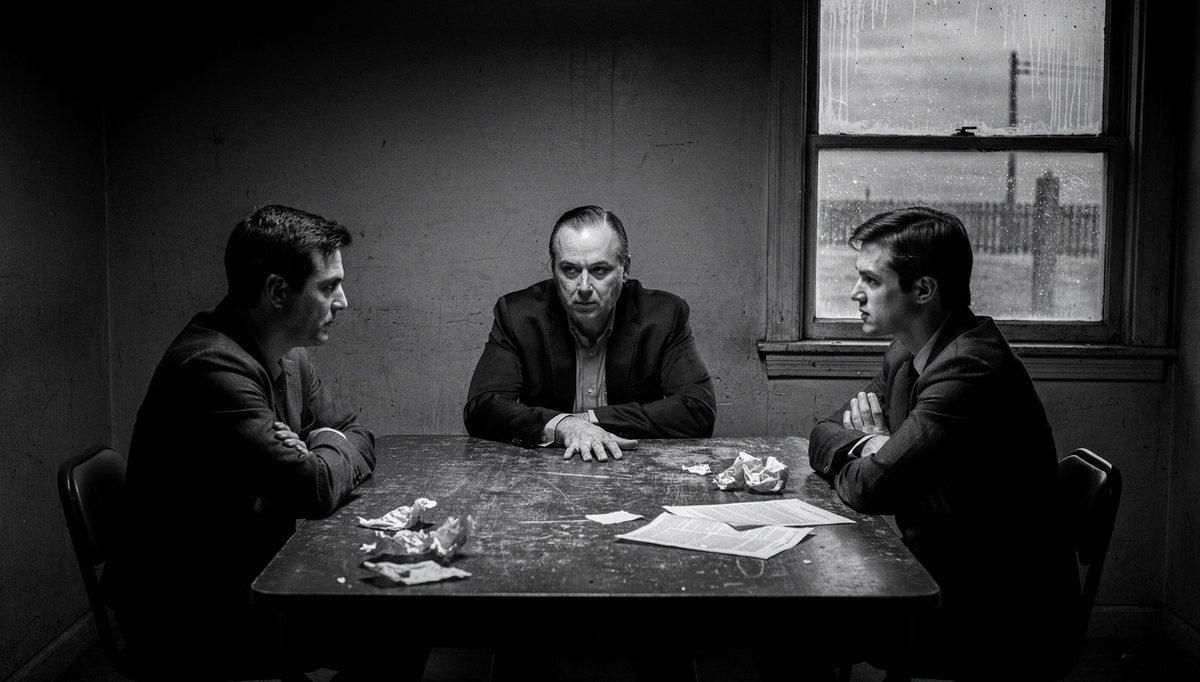

In Short
Mediating a neighbor property dispute is not about finding who is right. It is about creating the conditions for two people to hear each other, often for the first time in months or years.
- Set up each party separately before any joint session takes place.
- Surface what each person actually needs, not just what they are demanding.
- Your job is to hold the process steady, not to decide the outcome.
Mediate property disputes is the practice of using structured, impartial dialogue to help two neighbors in conflict move from entrenched positions toward a voluntary, mutually acceptable resolution, without a court ruling or an external authority imposing the outcome.
I watched a good friendship end over fourteen inches of garden. The two families had lived side by side for eleven years. Then one of them built a small extension, and suddenly they were measuring, then arguing, then refusing to speak. By the time anyone tried to help, both sides had hardened into positions they could not climb down from without feeling humiliated. The mediator who stepped in walked straight into a joint session without any preparation. It collapsed within twenty minutes.
That failure was not inevitable. Long-running property disputes between neighbors are genuinely difficult to mediate, but they are not impossible. The difficulty is not legal complexity. It is the layered history, the bruised pride, and the fact that these two people have to continue living within sight of each other after the conversation ends. This guide gives you the specific process I have refined across decades of working with people in conflict: what to prepare, what to say at each stage, and how to keep the process from derailing at the moments when it most wants to.
Why Neighbor Property Disputes Are So Hard to Mediate
Most conflicts that need mediation are about something that happened once. Neighbor disputes are different. They are continuous. Every time one party looks out their window, the problem is still there: the fence, the overhanging tree, the parked van, the extension that blocks the light. The daily visibility of the issue keeps the injury fresh and prevents either party from cooling down naturally.
There is also the matter of stakes. For most people, their home is the largest investment they will ever make. When they feel that a neighbor is encroaching, their response is rarely proportionate because what they feel they are protecting is enormous. By the time a mediator arrives, this is rarely just about the fence. It is about respect, about who they are as a person, and about whether their neighbor truly sees them.
Long-running disputes breed patterns. People rehearse their grievances, collect evidence, and tell their version so often to friends and family that it becomes the only version they can imagine. Breaking through that calcification is the core challenge of mediating a neighbor conflict, and no amount of goodwill alone will do it.
"The Conversation You're Avoiding Is the One You Need to Have."
"The Conversation You're Avoiding
Is the One You Need to Have."
Stop rehearsing conversations you'll never have. Say It Right Every Time gives you 115 word-for-word scripts and 16 proven frameworks to speak with confidence in every conversation that matters.
What Needs to Be in Place Before Anyone Sits Down Together
The most common mediation mistake is calling a joint session too early. If you bring both neighbors into the same room before certain preconditions are met, you do not get a conversation. You get a performance of positions.
Before any joint session, you need three things in place. First, both parties must agree, voluntarily, to participate. Any pressure to attend will poison the process before it starts. Second, you need a clear, accepted role as a neutral party. Both neighbors must understand that you are not there to judge or decide, only to help them communicate. Third, you need a private meeting with each neighbor individually, which I will describe in the steps below. None of these are optional.
If you are unsure whether genuine voluntary agreement exists, ask each party directly: "Are you here because you want to try to resolve this, or because you feel you have to be here?" The second answer tells you that you have more preparation work to do.
The Process: Six Steps for Mediating a Neighbor Property Dispute
Step 1: Meet Each Neighbor Separately First
This private meeting, often called a caucus, is where the real work begins. You are not gathering ammunition for the joint session. You are building enough trust with each person that they will stay in the process when it gets uncomfortable.
In each private meeting, let the person speak without interruption for as long as they need. Do not take notes visibly. Ask two questions, and ask them gently: "What do you need from this situation?" and "What would a fair resolution look like to you?" Listen for the difference between their position, which is the demand, and their underlying interest, which is the need beneath it. A neighbor who demands the fence be torn down may, at the level of interest, simply need to feel that their property line is respected. That is workable. A fixed demand often is not.
End each private meeting by confirming what you can and cannot share from that conversation in the joint session. This protects trust and protects you.
Step 2: Set the Ground Rules Before the Joint Session Begins
Before either neighbor speaks to the other, you establish the rules of the conversation, out loud, so both parties hear them at the same time. This is not bureaucracy. It is the structure that will hold the session together when tension rises.
The rules are simple and non-negotiable: one person speaks at a time, no interrupting, no personal insults, and either party can call a short break if they need one. State them plainly. Then ask each party to confirm they agree. That confirmation is a small but real commitment to the process.
Something I say at this point: "I am not here to decide who is right. I am here to make sure you both get heard. What happens after that is in your hands."
Step 3: Give Each Party Uninterrupted Time to Speak
In the joint session, each neighbor speaks first without the other responding. You direct this explicitly: "I am going to ask you to just listen for now. You will have your full time to respond."
Let the person who initiated contact with you go first, or simply choose one and be transparent about it: "I am going to ask Sarah to start. John, you will have equal time." During each person's statement, your only job is to listen carefully and to keep the other party from interrupting. If they do interrupt, a calm but firm hand gesture and the words, "I will make sure you get to respond," is usually enough.
This step often surfaces something important: the two parties frequently have a completely different factual understanding of what happened. The date the extension went up, who said what to whom, what was agreed informally years ago. Do not challenge these discrepancies now. Note them. They become material for the next step.
For help managing the heat in these moments, the techniques in Strategies for Defusing Heated Conversations are directly transferable to neighbor mediation.
Step 4: Reflect and Reframe Without Taking Sides
After each person speaks, you summarize what you heard in neutral language. This is not a transcript. It is a reframe that preserves the core concern while stripping out the accusatory language. You are translating grievance into need.
If a neighbor says, "He just does whatever he wants and doesn't care how it affects us," you might reflect: "What I am hearing is that you feel your concerns haven't been taken seriously. Is that right?" This does two things. It makes the speaker feel heard, which is the precondition for any movement. And it gives the other party something they can actually respond to, rather than defending themselves against an attack.
Practice this in your private conversations before the session. The skill of reframing hostile language into neutral language is one of the most important mediation skills you will ever build. It does not come automatically. You have to work at it.
Step 5: Look for the Overlap
After both parties have spoken and been reflected back to, you name what you heard as shared ground, however small. There is almost always something. Both parties want to resolve the dispute. Both parties want to feel respected. Both parties want to be able to live comfortably in their own homes.
Say it out loud: "I noticed that you both said you want this settled without going to court. That is actually important common ground."
From that overlap, you begin asking questions that push toward specifics. "What would need to be different for you to feel the situation was fair?" "Is there a solution here that works for both of you, even if it's not everything either of you wanted?" You are not proposing solutions yourself. You are drawing solutions out of the parties by asking questions. The moment the resolution feels like their idea rather than yours, it has a future.
If you find one party is genuinely unwilling to move from their position, a private break, where you speak with each party separately again, can reset the dynamic. This is shuttle diplomacy, and it is an underused tool in neighbor mediation.
Step 6: Build the Agreement and Write It Down
If the session reaches a resolution, however partial, write it down before either party leaves the room. A verbal agreement between two neighbors who have been in conflict for months is worth very little. A written summary of what was agreed, who will do what, and by when, creates accountability.
The document does not need to be legal. It needs to be specific. "John will remove the section of fence between posts three and four by 15 November. Sarah will not pursue the formal boundary survey for six months to allow this to be implemented." That specificity is what turns good intentions into actual change.
Both parties sign it, or at minimum both confirm they agree with it in your presence. This also provides a reference point if the situation deteriorates again later.
When the Dispute Has Been Running for Years
Long-running disputes change the mediation process in important ways. When two neighbors have been in conflict for two years or more, the dispute usually has layers. What started as a fence argument has accumulated side grievances: a harsh word at Christmas, a complaint to the council, a letter from a solicitor. Each layer has to be acknowledged before the original issue can be addressed.
In these situations, do not try to solve everything in one session. Set explicit expectations at the start: "This is a first conversation, not a final one. Our goal today is to begin, not to finish." Attempting to rush to closure in a single session with a multi-year dispute almost always collapses, and a collapsed mediation is harder to restart than one that was simply paused.
You may also need to address the relationship before you can address the property. If the parties cannot be in the same room without escalating, start with separate sessions and use shuttle diplomacy until enough trust exists for a joint meeting. See Tension Management Mistakes to Avoid When Mediating Between Two Strong Personalities for specific guidance on holding the space when two strong-willed people are circling each other.
Where Mediators Go Wrong in Neighbor Disputes
Even experienced mediators make these mistakes. I have made most of them myself.
The mistake: Skipping the private caucus and going straight to a joint session.
Why it happens: It feels more efficient, and you want to make progress quickly.
What to do instead: Always do individual sessions first. The ten minutes you invest in each caucus saves an hour of derailed joint conversation.
The mistake: Trying to convince both parties that the other person has a valid point.
Why it happens: You want them to understand each other, which is a good instinct.
What to do instead: Let them arrive at that understanding themselves, through the process. Telling someone their adversary has a point rarely works. Asking questions that help them see it themselves usually does.
The mistake: Letting the dominant personality control the session.
Why it happens: Some people are louder and more confident, and it is socially uncomfortable to interrupt them.
What to do instead: Use structure as your tool. "Thank you, I want to make sure the other person has equal time now." The ground rules you set at the start give you the authority to do this without it feeling personal. The D.E.A.L. Method for resolving conflicts that are fracturing team synergy offers a useful framework for managing dominant voices without escalating tension.
The mistake: Proposing your own solution when the parties get stuck.
Why it happens: You can see a perfectly good answer, and the silence is uncomfortable.
What to do instead: Ask a question instead. "If you could design a solution that gave both of you something, what might it look like?" A solution the parties generate themselves will stick. One you hand them often will not.
Understanding why unmet needs drive these disputes in the first place is essential groundwork. The article on how unmet needs drive conflict and what to say to restore balance applies directly to neighbor disputes, where the surface argument and the real wound are rarely the same thing.
Your Pre-Session Checklist
Use this before every neighbor mediation session. It takes five minutes and prevents the most common causes of session failure.
Before the first individual caucus:
- Have I confirmed both parties are attending voluntarily?
- Have I clarified my role as a neutral party to both neighbors?
- Do I have a quiet, private space available for the individual meetings?
- Have I prepared two open questions: one about needs, one about what fair looks like?
- Have I agreed with each party what from our private conversation can be shared?
Before the joint session:
- Have I set ground rules and heard both parties confirm them?
- Do I know the main concern of each party, as they stated it privately?
- Do I have paper and a pen ready to write down any agreement reached?
- Have I identified at least one potential area of overlap to name if the conversation stalls?
- Am I genuinely neutral, or have I formed a view about who is right? If the second, I need to reset before I walk in.
Moving From Mediator to Trusted Third Party
The tools described here, private caucus, structured joint session, active reframing, shared agreement, are not complicated. But they require practice, and the practice has to happen before the high-stakes moment, not during it.
If you want to sharpen your skills before taking on a live dispute, the word-for-word scripts for de-escalating tension are a practical training ground. The same language patterns that de-escalate a workplace exchange will serve you in a neighbor mediation. You can also use the C.O.R.E. Framework to stay grounded during tense conversations, which helps you manage your own reactions when the room gets charged.
For disputes that have already escalated and need more structured intervention, the D.E.A.L. Method for workplace tension gives you a repeatable sequence that holds under pressure.
Here is the truth of it: the moment you step in to mediate property disputes between neighbors, you are not just managing a boundary argument. You are helping two people find a way to live beside each other again. That matters. Do not underestimate it, and do not walk in without a process. The checklist above is your starting point. Use it, adapt it, and trust that preparation is where good mediation begins.
Frequently Asked Questions (FAQ)
What does it mean to mediate property disputes between neighbors?
To mediate property disputes means to act as a neutral third party who helps two neighbors in conflict talk through their disagreement and reach a voluntary agreement. The mediator does not decide who is right. They create the conditions for both parties to be heard and to find common ground.
How do you start a mediation session between two hostile neighbors?
Start by meeting each neighbor separately before any joint session. Establish what each person needs, not just what they want, and agree on basic ground rules for the joint conversation. This preparation prevents the session from collapsing into accusations before it has a chance to move forward.
What are the most important mediation skills for neighbor disputes?
The most important mediation skills include active listening, impartial reframing, asking questions that surface underlying needs, and managing your own emotional reactions. You also need the courage to interrupt hostile exchanges without taking sides, and the patience to let people feel genuinely heard before pushing toward resolution.
How long does it take to mediate property disputes?
Most neighbor property disputes require at least two or three sessions to resolve. Long-running disputes, where the relationship has been strained for months or years, often need more time. Rushing to a resolution in a single session usually produces an agreement neither party honors, because the underlying tension was never addressed.
Can you mediate a property dispute without legal training?
Yes, you can conduct an effective mediation without legal training for most common property disputes such as fence lines, trees, parking, and noise. What you need is a clear process, strong communication skills, and strict impartiality. Complex disputes involving formal title claims or serious financial stakes may benefit from involving a professional mediator.
What should you do if one neighbor refuses to participate in mediation?
If one neighbor refuses to participate, do not force the process. Meet with the willing party first to acknowledge their frustration and explore what, if anything, might make the other neighbor more comfortable attending. Sometimes a private conversation with the reluctant party, without the other neighbor present, opens the door.