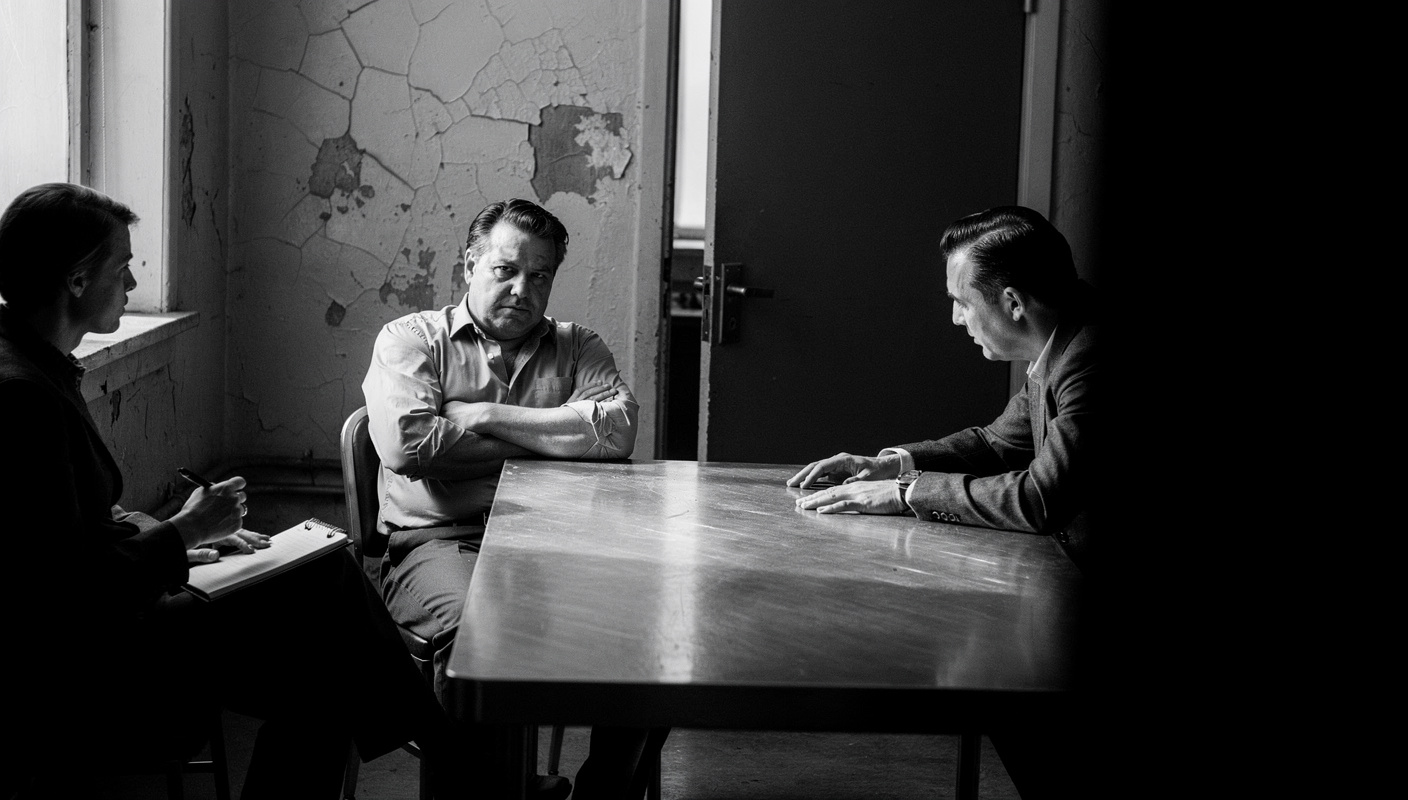

In Short
Empathy in mediation is not a soft skill on the side. It is the mechanism that unlocks resolution when logic and process alone have failed.
- People in conflict defend positions. Empathy moves them from positions to the needs underneath.
- A mediator who acknowledges feelings, without taking sides, creates the safety people need to shift.
- When people feel truly heard, they become capable of hearing others. That is where resolution begins.
Empathy in mediation is a mediator's deliberate practice of understanding and communicating each party's emotional experience during a dispute, without judgment or alignment. It creates the psychological safety that allows people to move from defended positions toward honest dialogue and, eventually, resolution.
Spend enough time watching conflicts fail to resolve and a pattern emerges. It is rarely because the facts were too complicated. It is rarely because the gap between the parties was too wide. Most of the time, the dispute stays stuck because nobody in the room felt genuinely understood. Empathy in mediation is the thing that breaks that deadlock. Not sympathy, not agreement, not clever process design. The capacity to make each person feel heard by someone who has no stake in the outcome. I have sat in enough rooms over the decades to know this with certainty: when that moment of feeling understood arrives, something shifts. The tension does not vanish, but the rigidity softens. People become capable of movement. That is what this article is about. Not the theory of empathy, but why it works the way it does in mediation specifically, and what happens when it is applied well or bypassed entirely.
What Most People Assume About How Mediation Works
The common understanding of mediation goes roughly like this: two parties present their positions, a neutral third party helps them find common ground, and they reach a compromise. It is a neat picture. It also explains why so many mediations produce agreements that unravel within weeks.
That model treats conflict as a problem of misaligned facts or competing interests. If you can just organise the information clearly enough and find the overlap, the conflict resolves. The mediator becomes a kind of referee or traffic manager, keeping the exchange orderly and steering toward a deal.
What this misses is the emotional architecture underneath every dispute. People do not stay stuck in conflict because they cannot see the logical middle ground. They stay stuck because they do not feel safe enough to move. They are protecting something. That something is almost never the position they are stating out loud.
Understanding that gap, between what people say they want and what they actually need, is where empathy in mediation becomes not just useful but essential.
"The Conversation You're Avoiding Is the One You Need to Have."
"The Conversation You're Avoiding
Is the One You Need to Have."
Stop rehearsing conversations you'll never have. Say It Right Every Time gives you 115 word-for-word scripts and 16 proven frameworks to speak with confidence in every conversation that matters.
The Mechanism: Why Feeling Heard Changes What People Can Do
Here is the truth of it. When a person is in conflict, their nervous system is activated. They are not simply disagreeing; they are defending. And a person in a defensive posture cannot genuinely listen, cannot consider another perspective, and cannot negotiate with any real flexibility.
The mediator's first real job is not to manage the dispute. It is to bring each person out of that defensive state far enough that they can engage. Empathy is how that happens. When someone's experience is accurately reflected back to them by a neutral party, something neurological occurs: the threat response quiets. They no longer need to fight to be understood because they already are understood.
This is the mechanism that most process-focused mediation misses entirely. [How unmet needs drive team conflict](/ articles/workplace-communication/team-synergy/how-unmet-needs-drive-team-conflict-and-what-to-say-to-restore-synergy) is directly connected to this: beneath every stated position is a need that has not been acknowledged. Empathy names that need. And once it is named, it loses some of its power to control the conversation.
The practical consequence is significant. A person who has been empathically heard does not suddenly agree with the other party. But they become capable of hearing the other party for the first time. That is the shift. From defended to open. From reactive to reflective. The mediator creates that shift through empathy, before any problem-solving begins.
What Empathy in Mediation Is Not
It is worth being direct about a confusion that undermines many mediators. Empathy is not sympathy. Sympathy means feeling what someone feels, or expressing sorrow for their situation. Empathy means understanding what someone feels and communicating that understanding accurately.
More importantly, empathy in mediation is not agreement or alignment. You can fully acknowledge someone's anger, frustration, or sense of injustice without endorsing their account of events or their proposed solution. Impartiality and empathy are not opposites. They work together. A skilled mediator can hold empathy for both parties simultaneously, which is one of the most demanding things in this work.
The mediator who confuses empathy with taking sides has lost the one quality that makes their presence valuable: neutrality. Learn more about how this skill connects to interpersonal tension in the article on how to resolve interpersonal tension through empathy, which covers the same dynamic in one-to-one conversations.
Where You See This Play Out in Real Mediations
Let me give you three situations I have seen repeat across decades of watching conflict up close.
The colleague dispute that had run for months. Two team members, both convinced they were right, both feeling disrespected by the other. A manager had already tried to fix it twice by laying out the facts. Each time, both parties left more entrenched. When a mediator began the session not by discussing the issue but by asking each person separately what the last few months had been like for them, something changed within minutes. One person's eyes filled. The other looked startled. Neither had been asked that question before. The problem had been treated as a logistics issue. It was a dignity issue.
The negotiation stuck on a single contractual clause. Rational argument had gone nowhere for two sessions. The clause was almost secondary. What one party actually needed was acknowledgment that they had been misled in the original agreement. Nobody had said that out loud. When the mediator named it, gently and without accusation, the energy in the room shifted entirely. The clause was resolved within the hour.
The team conflict with a clear villain narrative. One group had decided another was acting in bad faith. The mediator's temptation is always to challenge the narrative. Instead, the mediator acknowledged how exhausting and demoralising it must feel to work under that level of distrust. That simple acknowledgment stopped the escalation cold. From there, curiosity became possible. [How empathy bridges in team communication](/ articles/workplace-communication/team-synergy/how-empathy-bridges-in-team-communication-create-the-conditions-for-lasting-synergy) explores this dynamic in more depth, particularly where team-wide trust has eroded.
In each case, the breakthrough came not from a clever reframe or a new piece of information, but from a moment of genuine recognition.
Why Skilled Mediators Still Get This Wrong
If empathy is so central, why does it get bypassed so often? The answer is partly about training and partly about pressure.
Most mediators are taught to manage process. They learn how to open a session, how to set ground rules, how to move between joint sessions and private ones, how to craft a written agreement. These are real skills. But they train mediators to focus on structure, and structure can become a way of avoiding the uncomfortable work of sitting with someone's pain long enough to genuinely understand it.
Empathy also feels slow. When a party is upset, the instinct is to de-escalate quickly and get back to the agenda. Pausing to ask, "What has this dispute cost you personally?" feels like a detour. In practice, it is the fastest route to movement. Word-for-word scripts for de-escalating tension can help you develop the exact language to do this well in live situations.
There is also the mediator's own discomfort. Sitting with expressed emotion without trying to fix it requires a kind of discipline that does not come naturally to people who entered this field to solve problems. Emotion feels like a problem to be managed rather than information to be received.
The result is mediation that feels procedurally competent but emotionally thin. Parties feel processed. The agreement may hold for a few weeks. Then the underlying need, still unmet and still unnamed, surfaces again in a different form.
What This Means for How You Mediate
If you are a mediator, a manager, or anyone who regularly finds yourself between two conflicting parties, the analysis above carries direct implications.
Slow the opening down. Before any discussion of the dispute itself, give each party time to speak to their experience. Not their position. Their experience. Ask open questions. Reflect back what you hear, including the emotional content. This is not therapy; it is information gathering of the most important kind.
Separate acknowledgment from agreement. Practice saying things like "It sounds like you have felt completely sidelined in this process" without it meaning you agree they were sidelined. The distinction protects your impartiality while still giving the person what they need: recognition. How to use the D.E.A.L. method to resolve conflicts fracturing team synergy offers a practical framework for structuring this kind of conversation, including where empathic acknowledgment fits in the sequence.
Name what you are observing. When you hear an emotion underneath the words, name it carefully. "There seems to be a real sense of betrayal here, not just disagreement." People often cannot articulate their own emotional state clearly when they are inside the conflict. A mediator who names it accurately builds enormous trust in seconds.
Do not rush to solution. The pull toward agreement is strong, especially in workplace mediation where there is organisational pressure to resolve quickly. Resist it long enough to ensure both parties feel genuinely heard. An agreement reached before that happens is an agreement built on sand. For staying grounded during this pressure, how to use the C.O.R.E. framework during a tense workplace conversation is worth keeping close.
Apply this within structured methods. Empathy is not a replacement for process; it works inside it. If you use the D.E.A.L. approach, as outlined in how to use the D.E.A.L. method to resolve workplace tension, empathy belongs especially in the first two stages, before you move toward action or agreement.
The Ground a Resolution Actually Stands On
I have seen mediations that produced beautiful written agreements and left both parties feeling worse. I have also seen disputes that looked intractable dissolve in a single session where the only thing that changed was that someone finally felt understood. The difference was empathy in mediation, applied with skill and patience, not as a technique but as a genuine orientation toward the people in the room.
Conflict rarely ends at the level where it is being argued. It ends at the level of need. And you cannot reach that level without empathy as your tool. The mediator who learns to hold both parties' pain without losing their own equilibrium, who can name what is unspoken and reflect it back without judgment, who can create enough safety for people to risk honesty: that mediator does not just produce agreements. They produce resolution that lasts. That is what this work is for.
Frequently Asked Questions (FAQ)
What is empathy in mediation?
Empathy in mediation is the mediator's ability to genuinely understand what each party is feeling and why, and to communicate that understanding clearly. It does not mean agreeing with anyone. It means creating enough emotional safety that people can speak honestly and begin to hear each other.
How does empathy help resolve conflict in mediation?
Empathy lowers the defensive tension that keeps people locked into fixed positions. When a person feels genuinely heard by a neutral mediator, they become less rigid. That shift from defended to open is what makes movement toward resolution possible in the first place.
Can a mediator show empathy without taking sides?
Yes, and this is one of the most important skills in mediation. Empathy is not agreement. A skilled mediator can acknowledge the pain or frustration of both parties fully and equally, without endorsing either position. Impartiality and empathy are not opposites; they work together.
What does empathic listening look like in a mediation session?
It means reflecting back what you have heard without judgment, naming the emotion underneath the words, and asking questions that invite the speaker to go deeper. It is slower and more deliberate than ordinary conversation. The goal is understanding, not problem-solving, at least in the early stages.
Why do mediators sometimes fail to use empathy effectively?
Most mediators are trained to manage process and reach agreement. They focus on facts, timelines, and compromise. Empathy feels slower and harder to control, so it gets skipped. The result is people who feel processed rather than heard, and agreements that do not hold.
How do you practise empathy as a mediator?
Start by listening to understand, not to respond. Reflect back the emotion, not just the content. Use phrases like "It sounds like this has been deeply frustrating" rather than "So you disagree about X." Practise separating your own reaction from what the other person is experiencing.