
In Short
Full resolution is not always possible in the moment. Conditional agreements let you move forward anyway.
- They create structured, time-limited commitments that hold a conflict at bay while trust rebuilds.
- They are not a sign of weakness; they are a sign that you value the relationship enough to protect it.
- Used well, they turn a deadlock into a working arrangement that can grow into genuine resolution.
Conditional agreements in conflict are structured, temporary commitments between parties who cannot yet reach full resolution. They define specific terms, time boundaries, and review points, allowing people to keep working together while deeper disagreement remains active.
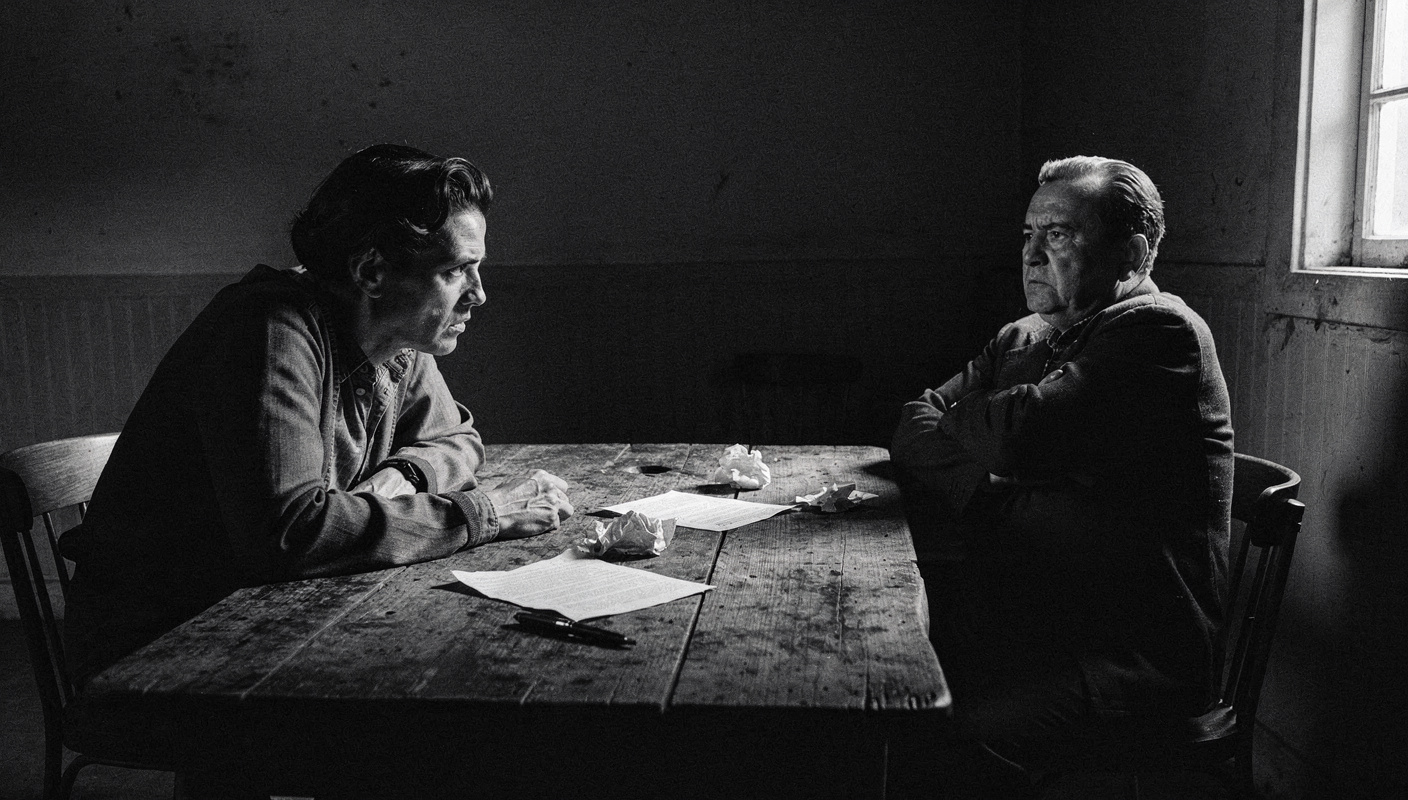
Two people walk into a room with a genuine dispute between them. Both have real concerns. Both are right about something. And neither is ready to fully let go of their position. This is where most conflict conversations go wrong. Someone pushes for a complete resolution, the pressure hardens both sides, and what started as a disagreement becomes a fracture. I have watched this happen in boardrooms and on building sites, in family businesses and government offices. The instinct to resolve everything now is understandable. It is also, often, exactly the wrong move.
Conditional agreements offer a different path. When full resolution is not yet possible, a well-built conditional agreement keeps the working relationship intact, gives both sides a manageable commitment they can honour, and creates the conditions for real resolution later. This article gives you five practical frameworks for building those agreements, a guide for choosing the right one, and the mistakes that will cost you if you are not careful.
Why Conflict Without a Temporary Structure Tends to Get Worse
Here is the truth of it: unresolved conflict does not stay still. Left without any structure, it hardens. People stop communicating directly. They build cases. They recruit allies. A disagreement that could have been managed in a single conversation becomes a months-long problem that requires significant effort to untangle.
The reason is simple. When people feel stuck in a conflict with no exit ramp, they default to protecting themselves. That protection takes the form of distance, silence, or escalation. None of those serve the situation. A conditional agreement gives both parties a third option: forward movement without surrender.
I learned this the hard way in my own professional life. I once pushed hard for full resolution in a conflict I was mediating between two senior colleagues. Both walked away feeling steamrolled. The agreement lasted three weeks. What they needed was a smaller, safer commitment they could actually keep. The frameworks below are built on that lesson.
If you are working through a conflict that is already straining a team, the D.E.A.L. method for fracturing team synergy offers a strong parallel system for the relational repair side of things.
"The Conversation You're Avoiding Is the One You Need to Have."
"The Conversation You're Avoiding
Is the One You Need to Have."
Stop rehearsing conversations you'll never have. Say It Right Every Time gives you 115 word-for-word scripts and 16 proven frameworks to speak with confidence in every conversation that matters.
Five Frameworks for Bridging Conflict With Conditional Agreements
Each framework below is a self-contained tool. Read them all before you choose one. The decision guide after them will help you match the right framework to your situation.
Framework 1: The Standstill Agreement
What it is: A formal pause that freezes the current conflict in place while both sides take time to think, gather information, or seek guidance.
What it is designed for: Situations where the conflict has escalated too quickly, where emotions are running hot, or where key facts are still unclear. It stops the damage without requiring anyone to change their position.
How it works:
- Name the pause clearly. Say: "I think we are both reacting to this faster than the situation deserves. I am proposing we agree to hold our positions exactly where they are for a defined period."
- Define the terms. Specify what each side agrees NOT to do during the standstill: no escalating, no recruiting allies, no unilateral action.
- Set a review date. A standstill without an end point becomes avoidance. Agree on a specific date to reconvene.
- Put it in writing. Even a brief email summary counts. Written terms create accountability.
- Honour it visibly. If one side acts within the spirit of the agreement, name it. "I noticed you held back on that. I appreciate it."
When to use it: When the emotional temperature makes productive dialogue impossible right now.
When not to use it: When one party is already taking harmful action that cannot wait. A standstill cannot stop active damage.
Quick example: Two colleagues in a dispute over resource allocation agree not to escalate to senior management for ten working days while they each gather data to support their respective cases.
Eamon's note: A standstill is not weakness. It is the professional equivalent of stepping back from the edge. Anyone who tells you otherwise has never seen what happens when two people keep pushing when they are both too heated to think clearly.
Framework 2: The Conditional Commitment
What it is: A provisional agreement where each party commits to a specific action on the condition that the other party fulfils a matching commitment.
What it is designed for: Situations where trust is low but mutual interest is high. Both parties want movement. Neither wants to move first.
How it works:
- Identify the minimum each party needs to see before they will act. Ask: "What would need to be true for you to take one step forward?"
- Link the commitments explicitly. "I will do X if you do Y, and both actions happen by the same date."
- Make both commitments specific and measurable. Vague conditional commitments collapse under the weight of interpretation.
- Build in a verification step. Before either action is taken, both parties briefly confirm the other is ready to proceed.
- Treat the first exchange as a test of good faith. If it works, you have built a foundation for the next step.
When to use it: When the conflict involves two parties who have stopped trusting each other but still need each other to function.
When not to use it: When the power imbalance is so significant that one party has no real ability to fulfil their side. Conditional commitments require roughly equal capacity to act.
Quick example: Two department heads in a budget dispute agree: one will hold back a planned complaint to the board if the other presents a revised proposal by Friday. Both actions happen on the same day.
Eamon's note: This is the heart of practical conflict resolution. Not grand gestures. Small, matched steps that let each person demonstrate they can be trusted before the stakes get higher.
If you want to understand what is driving the conflict underneath the surface behaviour, how unmet needs drive team conflict is worth reading alongside this framework.
Framework 3: The Working Protocol
What it is: A set of agreed behavioural ground rules that both parties commit to following while the underlying dispute remains unresolved.
What it is designed for: Ongoing conflicts where two people or two groups must continue to work together despite genuine disagreement. It separates the dispute from the day-to-day work.
How it works:
- Acknowledge the disagreement openly. "We both know this is not resolved. What we are building here is not a resolution. It is an agreement about how we treat each other while we work toward one."
- Co-create the rules. Each party names two or three behaviours they need from the other to function professionally. Write them down together.
- Keep the rules behavioural, not attitudinal. "We will communicate project updates within 24 hours" is workable. "We will respect each other" is not.
- Set a review frequency. Monthly is usually right. This is not the place to resolve the conflict; it is the place to assess whether the protocol is holding.
- Name a neutral point of contact. Someone both parties trust, who can raise a breach of the protocol without it becoming an accusation.
When to use it: When two colleagues who are in genuine conflict must continue collaborating on shared work.
When not to use it: When the conflict itself is directly about the work they share. A working protocol cannot hold if the battleground is the work itself.
Quick example: Two team leaders who disagree about strategy agree on a protocol: no public disagreement in front of their teams, direct communication before escalating to the director, and a fortnightly check-in to review how the protocol is holding.
Eamon's note: I have seen working protocols hold relationships together for months while the real resolution was being worked toward. They are not a permanent answer. But they are an honourable bridge.
Framework 4: The Contingent Concession
What it is: An agreement where one party offers a concession that only becomes permanent once a specified condition is met by the other side.
What it is designed for: Situations where one party is being asked to give something up but does not yet trust that the other party will hold up their end of the bargain.
How it works:
- Name your concession clearly and attach a condition to it. "I am willing to agree to X, but only once Y has happened."
- Define Y with precision. The condition must be observable by both parties, not a matter of interpretation.
- Set a time limit on the condition. "Y needs to happen within 30 days. If it does not, my concession is withdrawn and we return to the table."
- Document the full structure. Both parties sign or confirm in writing: the concession, the condition, the time limit, and the consequence of non-compliance.
- Follow through exactly as documented. If the condition is met, honour the concession immediately. If it is not met, say so clearly and return to negotiation without blame.
When to use it: When trust is low and you are being asked to give something up before you have any evidence that the other party will act in good faith.
When not to use it: When the condition you are setting is impossible for the other party to meet, or is designed to ensure the concession never actually applies. That is not negotiation; it is manipulation.
Quick example: A manager agrees to give a team member a schedule change, on the condition that the team member completes a specific handover document within two weeks. Both terms are written and confirmed.
Eamon's note: A contingent concession gives you the ability to be generous without being naive. That combination, courage and structure together, is where the best conflict work happens.
For moments when a conflict is actively boiling over in real time, how to de-escalate arguments during meetings gives you a set of tools you can reach for immediately.
Framework 5: The Phased Resolution Plan
What it is: A structured sequence of smaller agreements, each building on the last, that gradually moves two parties from active conflict toward full resolution.
What it is designed for: Complex conflicts where full resolution is genuinely not achievable in a single conversation. Each phase produces a real, workable agreement; the sequence builds trust over time.
How it works:
- Map the conflict into layers. What are the immediate practical issues? What are the longer-term concerns? What are the underlying needs that neither party has fully stated?
- Design Phase 1 around the least contested issue. Start where agreement is most achievable. A successful first phase changes the emotional climate.
- Make each phase its own conditional agreement. Phase 2 only begins once Phase 1 has held for an agreed period.
- Build in a formal review between phases. Not a negotiation, just a check: is Phase 1 holding? Are both parties ready to move forward?
- Keep the end goal visible. Both parties should know that the phases are leading somewhere. A phased plan with no stated destination feels like delay, not progress.
When to use it: When the conflict is layered, long-standing, or involves significant trust repair alongside the practical dispute.
When not to use it: When urgency requires resolution now. A phased plan requires time. If decisions must be made immediately, another framework is more appropriate.
Quick example: Two teams with a long-standing rivalry over shared resources agree to a three-phase plan: Phase 1 is a shared reporting structure for 60 days. Phase 2 is a joint review of resource allocation. Phase 3 is a co-drafted agreement on future access.
Eamon's note: The roots of a good tree go down before the tree goes up. A phased resolution plan works the same way. Patient, deliberate, and stronger for the time you give it.
The B.R.I.D.G.E. method for rebuilding working relationships pairs particularly well with a phased approach when the conflict has already caused a genuine breakdown.
Choosing the Right Framework for Your Conflict
Not every conflict calls for the same tool. Here is a quick reference to help you match the situation to the framework.
| If the conflict looks like this... | Reach for this framework |
|---|---|
| Emotions are high and both sides need space | Standstill Agreement |
| Trust is low but both sides need to act | Conditional Commitment |
| You must keep working together despite disagreement | Working Protocol |
| You are being asked to give something up first | Contingent Concession |
| The conflict is deep and will take time to resolve | Phased Resolution Plan |
A few navigation notes. If you are not sure where to start, begin with the Standstill Agreement. It costs neither party anything except restraint, and it creates breathing room for the other frameworks to become possible. If the conflict is already affecting daily work, the Working Protocol is the most urgent tool. If trust is the core problem, use the Conditional Commitment or the Contingent Concession to build a track record before attempting anything more ambitious.
If you want a framework for staying composed during these conversations yourself, the C.O.R.E. framework for staying grounded in tense conversations is one of the most practical tools I know.
The Three Ways These Agreements Break Down in Practice
Conditional agreements are only as strong as the people holding them. Here is where they most commonly fail, and what to do instead.
The mistake: The terms are left vague because both parties wanted to avoid another argument.
Why it happens: Precision feels confrontational when emotions are high.
What to do instead: Slow down and name the discomfort directly. "I know getting specific feels difficult right now, but a vague agreement will collapse. Let us take ten minutes to make this exact."
The mistake: No review date is set, so the agreement quietly expires without being replaced.
Why it happens: Both parties feel relief when an agreement is reached and do not want to think about what comes next.
What to do instead: Set the review date in the same conversation where you set the terms. Put it in writing before you leave the room.
The mistake: One party treats the agreement as a permanent concession rather than a temporary arrangement.
Why it happens: The language of the agreement was ambiguous about its temporary nature.
What to do instead: Use the word "provisional" or "conditional" explicitly. "We are agreeing to this arrangement until our review on the 15th. At that point, we reassess together."
If you are working with two colleagues who are actively refusing to cooperate, the D.E.A.L. method for colleagues who refuse to cooperate addresses that specific dynamic directly. And when feedback is part of the conflict picture, the C.O.R.E. framework for staying calm when feedback triggers a defensive reaction helps you keep your footing.
Building Fluency With These Frameworks Over Time
You will not master all five of these frameworks at once. That is not how skill builds. Choose one, learn its structure well enough that you could explain it to someone else, and then use it in the next conflict you face. A tool you have practised once is worth ten tools you have only read about.
Start with the Standstill Agreement. It is the simplest and the safest. Once you have used it successfully, you will have a felt sense of what a conditional agreement actually accomplishes, which makes every other framework easier to deploy. After that, the Conditional Commitment is the most universally applicable. Learn those two well, and you will have practical strength for most of the conflict situations you are likely to encounter.
The real work is not in knowing the frameworks. It is in reaching for one when you are under pressure, when your instinct is to either push hard for full resolution or walk away entirely. That moment of choice is where these tools earn their keep. Prepare for it by rehearsing the language before you need it.
Frequently Asked Questions (FAQ)
What are conditional agreements in conflict?
Conditional agreements in conflict are temporary, structured commitments that allow two parties to keep working together while a deeper dispute remains unresolved. They define specific terms, time limits, and trigger points, giving both sides a manageable path forward without requiring full resolution yet.
How do conditional agreements help resolve workplace conflict?
They stop a conflict from hardening into a permanent standoff by creating structured, short-term commitments both sides can honour. Each small agreement builds a record of good faith, which gradually restores enough trust to make a fuller resolution possible over time.
When should you use a conditional agreement instead of pushing for full resolution?
Use a conditional agreement when the emotional temperature is too high for productive dialogue, when key facts are still unclear, when one party needs more time, or when both sides must keep working together despite the unresolved dispute. Full resolution under pressure rarely holds.
What makes a conditional agreement fail in conflict situations?
Conditional agreements break down when the terms are vague, when no review date is set, when one party views it as a concession of weakness, or when the underlying needs driving the conflict are never named. A clear written record and a defined expiry point are essential.
Can conditional agreements be used in ongoing team conflicts?
Yes. They are particularly effective in team conflict because they restore a working baseline without requiring anyone to admit fault or abandon their position. They create enough breathing room for emotions to settle and for a more honest conversation to become possible later.
How do you propose a conditional agreement without seeming weak?
Frame it as a strategic choice, not a retreat. Say something like: I am not asking you to give up your position. I am asking us to agree on how we work together while we figure this out. Conditional agreements are a sign of discipline, not defeat.
This much I know for certain: the conflicts that do the most damage are rarely the ones that explode. They are the ones that quietly calcify because no one found a way to create a workable bridge in the moment when one was still possible. Conditional agreements in conflict give you that bridge. They are not the end of the work. They are what keeps the work going long enough for the end to become reachable.