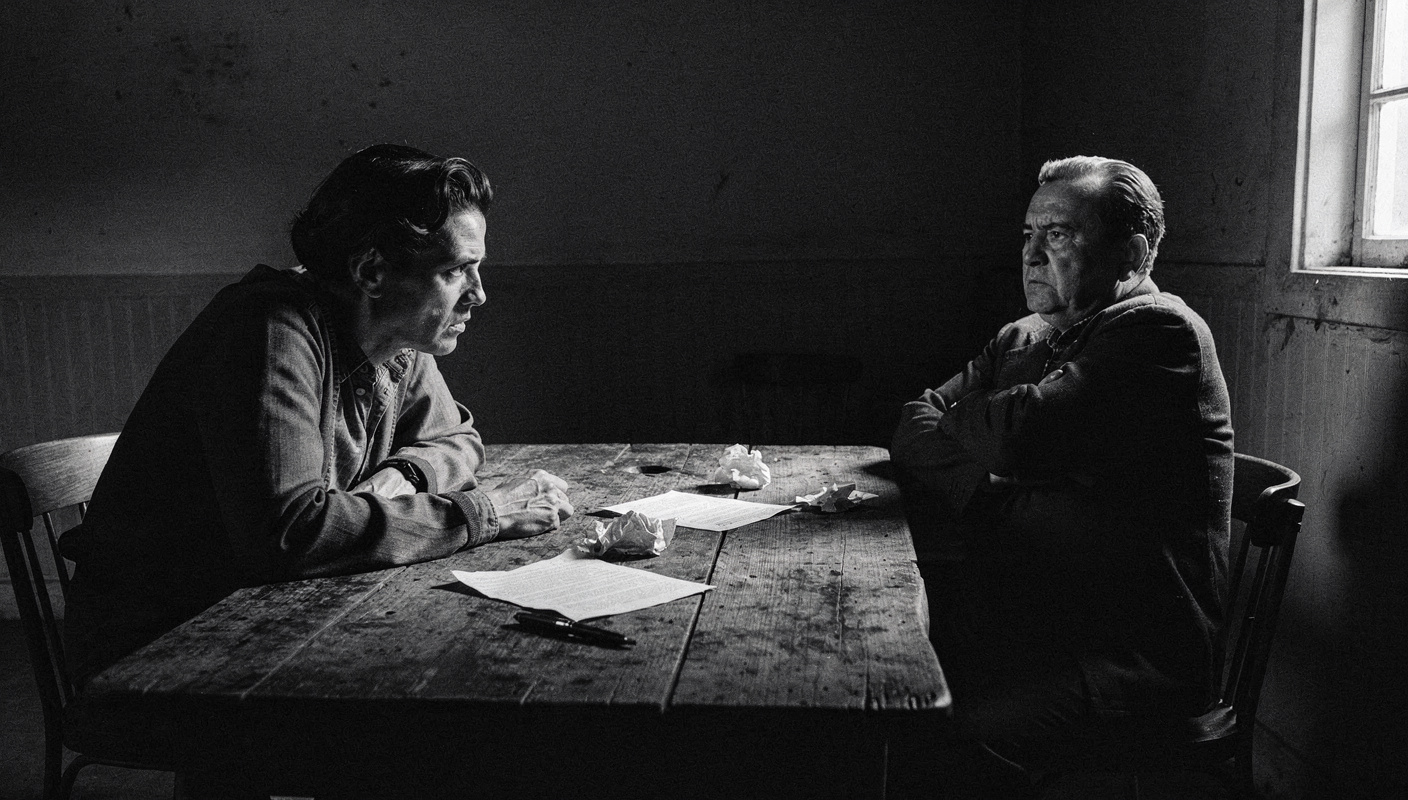

In Short
A conflict-resolution email is your best tool when a negotiation dispute cannot be settled face to face. Done well, it de-escalates tension, creates a written record, and keeps the path to agreement open.
- Use factual language: name the specific disagreement, not the person's character.
- Match your tone to the relationship, not to your frustration.
- End every email with a clear next step and an open invitation to respond.
A conflict-resolution email is a written message used to address a negotiation dispute when direct conversation is not possible or has already failed. It states the facts clearly, acknowledges both positions, and proposes a constructive path forward in 3–5 focused paragraphs.
I once watched a contract negotiation between two experienced professionals collapse, not because the gap between them was too wide, but because neither of them had the right words ready when the in-person conversation went sideways. By the time they tried to repair it, both had said things they could not take back. What followed was three weeks of terse emails that made everything worse. A single well-crafted conflict-resolution email, sent the evening after that first difficult meeting, would have changed everything. The scripts in this article are built for exactly that moment.
Why a Written Record Changes the Power Dynamic in a Negotiation Dispute
There is something important about putting words on the page during a conflict. In Say It Right Every Time, I describe what I call the Communication Medium Richness Hierarchy: a ranked model that runs from in-person conversation at the richest end down through video call, phone, email, and text at the leanest. The richer the medium, the more context, tone, and nuance it carries. Email sits near the lean end of that hierarchy.
So why use it for conflict resolution at all? Because lean does not mean weak. It means deliberate. When a negotiation dispute is running hot, a face-to-face conversation carries the risk of escalation that neither party can control in the moment. Email removes that risk. It gives both sides time to think. It creates a record that neither party can later deny. And as I write in Chapter 11 of Say It Right Every Time, when you move to a leaner medium by necessity, you compensate by adding extra clarity and extra care to every word.
That is the discipline this article asks of you. Write the email slowly. Read it out loud. If even one sentence sounds angry, defensive, or dismissive, rewrite it before you send.
"The Conversation You're Avoiding Is the One You Need to Have."
"The Conversation You're Avoiding
Is the One You Need to Have."
Stop rehearsing conversations you'll never have. Say It Right Every Time gives you 115 word-for-word scripts and 16 proven frameworks to speak with confidence in every conversation that matters.
How to Get the Most from These Scripts
Find the script that most closely matches your situation. Read the context note first; it tells you what kind of conflict this script is designed for. Then adapt the words to your own voice. These scripts are frameworks, not form letters. The brackets mark every element you need to personalise.
One more thing: read every script out loud before you send it. You will catch problems the screen hides. If it sounds like a legal notice, simplify it. If it sounds sarcastic, soften it. The goal is a message a confident, reasonable person would be proud to send.
If the dispute involves issues that go beyond email entirely, handling complaints and negative feedback via email covers the broader territory of written responses to charged situations.
Six Conflict-Resolution Email Scripts for Negotiation Disputes
Script 1: Reopening a Dispute That Stalled After a Difficult Meeting
When to use it: The in-person negotiation ended without resolution and the silence since has grown uncomfortable. You need to reopen the conversation without re-triggering the tension.
Why it works: It names what happened without assigning blame, signals your continued commitment to resolution, and invites a response without pressure. Silence after a difficult meeting often means both parties are waiting for the other to move. This script moves first.
Standard version:
Dear [Name],
I have been thinking about our conversation on [date], and I want to make sure we do not leave things where they ended. I know we did not reach agreement on [specific issue], and I think there is still a path forward if we are both willing to keep talking.
My position on [specific issue] remains [your position], and I understand yours is [their position]. I would like to explore whether there is a middle ground around [specific idea or option].
Would you be open to a call or a follow-up meeting this week? I am committed to finding something that works for both of us.
Best regards, [Your name]
Formal version:
Dear [Name],
Following our meeting on [date], I wanted to reach out regarding the unresolved matter of [specific issue]. I appreciate the time we have already invested in this discussion and believe a resolution remains within reach.
My position continues to be [your position]. I understand and respect that your position is [their position]. I would welcome the opportunity to explore [specific proposal or option] as a possible way forward.
Please let me know your availability for a follow-up conversation at your earliest convenience. I remain fully committed to reaching a constructive resolution.
Yours sincerely, [Your name]
Watch for: A defensive reply that re-litigates the original argument. If that happens, do not respond in kind. Acknowledge their points briefly and redirect to the proposed next step.
Eamon's note: The person who moves first after a difficult conversation almost always earns more respect, not less. Silence reads as stubbornness. This email reads as strength.
Script 2: Responding to an Accusation or Factual Dispute in a Negotiation
When to use it: The other party has made a claim about what was said, agreed, or offered that you know to be inaccurate. You need to correct the record without inflaming the dispute.
Why it works: As I write in Say It Right Every Time, manipulation thrives in confusion and dies in clarity. When someone misrepresents what happened, your best tool is a calm, factual account of events. This script avoids accusation while holding the ground firmly.
Standard version:
Dear [Name],
Thank you for your message. I want to address the point about [specific claim], because my recollection differs from yours.
What I understood to be agreed on [date] was [specific facts]. I have [notes from the meeting / the email thread / the draft agreement] that reflects this. I am not raising this to reopen old ground; I want to make sure we are working from the same understanding before we move forward.
Can we set aside ten minutes to align on this before our next discussion?
Best regards, [Your name]
Formal version:
Dear [Name],
I have reviewed your message carefully and wish to address the point regarding [specific claim]. My records indicate that the position agreed on [date] was [specific facts]. I have attached [relevant document or referenced the email chain] for reference.
I raise this not to dispute your account personally, but to ensure we are both working from an accurate shared record as we continue these discussions. A brief call to align our understanding would be a valuable use of time before we proceed.
Please let me know your availability.
Yours sincerely, [Your name]
Watch for: The other party doubling down or dismissing your documentation. If they continue to deny what the record clearly shows, this is gaslighting territory. See Script 3 below, and consider whether a richer medium such as a video call or phone conversation is now necessary. You can also consult how to handle conflict during meetings for guidance on what to do when the dispute continues in real time.
Eamon's note: Never send this email in the same hour you discovered the inaccuracy. Write it, set it aside, read it the next morning. Anger sharpens your words in the wrong direction.
Script 3: Addressing a Pattern of Denial or Rewriting of Events
When to use it: The other party in a negotiation dispute continues to deny or reframe what you clearly experienced. You need to hold your ground without the conversation becoming a shouting match on paper.
Why it works: Chapter 11 of Say It Right Every Time addresses gaslighting directly: the practice of denying another person's reality. The counter is a written record. This email creates one, calmly and clearly, adapted here for the specific context of a negotiation dispute.
Standard version:
Dear [Name],
I need to address something directly. On [date], [specific event or statement]. I was present for that conversation, and my notes reflect it clearly.
I understand that your recollection may differ. However, I am not in a position to proceed on the basis that [the event or statement] did not happen. I want to resolve this dispute constructively, and I can only do that from an accurate starting point.
I am proposing that we review [the relevant documentation / the email thread / the notes from the meeting] together, and agree on what we are both working from before we continue. I am available [specific dates and times].
Best regards, [Your name]
Formal version:
Dear [Name],
I am writing to address a point of ongoing disagreement about the facts of [specific situation]. My records clearly document that on [date], [specific event or statement]. I have [attached / referenced below] the relevant documentation.
I recognise that we have reached an impasse on this point. In the interest of progressing our discussions, I propose we engage a neutral third party or mediator to review the factual record and help us establish a shared basis for moving forward.
I remain committed to reaching a resolution and look forward to your response.
Yours sincerely, [Your name]
Watch for: This script requires genuine documentation to back it up. Do not send it if your record is incomplete. And recognise that once you have sent it, the tone of the negotiation will shift. Make sure you are ready for that.
Eamon's note: A written record is the most powerful thing you can create before a conversation where you expect your reality to be denied. Keep your notes. Date them. They are your anchor.
Script 4: Setting a Boundary When a Negotiation Has Become Hostile
When to use it: The in-person negotiation, or a previous exchange of messages, has crossed into hostile territory. The other party has raised their voice, used personal language, or threatened consequences. You need to name the line clearly.
Why it works: In Say It Right Every Time, I am direct about this: a boundary without enforcement is just a suggestion. This script names the behaviour, states what you need, and makes clear what happens next if the behaviour continues. It does so without matching the other party's hostility. Anger feeds on anger; this email gives it nothing to feed on.
Standard version:
Dear [Name],
I want to keep our negotiation moving forward, and I need to name something first.
During [our last meeting / your message on date], the conversation moved in a direction I am not willing to continue. [Specific behaviour: raised voice, personal language, threats.] I understand this negotiation is important to both of us and that things can get tense. However, I need us to communicate with mutual respect if we are going to reach a workable outcome.
I am ready to continue as soon as we can agree on that basis. Please let me know how you would like to proceed.
Best regards, [Your name]
Formal version:
Dear [Name],
I am writing regarding the tone of our recent communications. I wish to continue working toward a resolution on [specific negotiation matter], and I must first address the manner in which our discussions have been conducted.
On [date], [specific behaviour]. This approach is not conducive to productive negotiation, and I am not prepared to continue on those terms. I am requesting that we re-establish a professional and respectful basis for our discussions.
I remain committed to finding a resolution. I would welcome a response confirming your willingness to engage on that basis.
Yours sincerely, [Your name]
Watch for: No response, or a response that escalates further. If that happens, you may need to involve a manager, a mediator, or HR. The D.E.A.L. method for defusing tension between colleagues who refuse to cooperate can be useful context here.
Eamon's note: People who feel powerless often explode. That does not make the explosion acceptable. Name the line once, clearly, without drama. Then hold it.
Script 5: Proposing a Concrete Compromise After Repeated Deadlock
When to use it: Both parties have restated their positions multiple times and the negotiation is going in circles. You need to break the pattern by offering something specific and new.
Why it works: Deadlocked negotiations usually die not from genuine incompatibility but from both parties waiting for the other to move. This email does three things: it acknowledges the deadlock directly, it offers a concrete proposal, and it invites a counter. It shifts the conversation from positions to options, which is where resolution actually lives.
Standard version:
Dear [Name],
We have been at this for [time period], and I think we both know the current approach is not getting us anywhere.
I want to offer something specific. My proposal is [concrete proposal]. I believe this addresses [their key concern] while also meeting [your key requirement]. I am not presenting this as a final take-it-or-leave-it offer; I am presenting it as a starting point for a different kind of conversation.
If this does not work for you as written, I am open to hearing what would. What matters to me is finding something we can both commit to.
Best regards, [Your name]
Formal version:
Dear [Name],
Having reviewed the progress of our discussions to date, I believe it would serve both parties to introduce a new proposal rather than continue to restate existing positions.
I would like to formally propose the following: [specific proposal with clear terms]. This proposal is designed to address [their stated concern] while maintaining [your key requirement]. I present it as a basis for further discussion, not as a final position.
I welcome your counter-proposal or any revisions you believe would make this workable. I remain committed to reaching an agreement and look forward to your response.
Yours sincerely, [Your name]
Watch for: A counter-proposal that ignores your key requirement entirely. If that happens, it is a signal that the other party may not be negotiating in good faith. Consider whether the dispute now needs a structured mediation process. The D.E.A.L. method for resolving conflicts that are fracturing team synergy offers a framework for exactly this kind of structured reset.
Eamon's note: Most deadlocks break when one person stops defending their position and starts describing their need. There is a difference. Know which one you are doing.
Script 6: Apologising for Your Part in a Negotiation Breakdown
When to use it: You said something in the heat of the negotiation that you regret, or you recognise that your own behaviour contributed to the breakdown. You need to take responsibility without surrendering your position on the underlying issue.
Why it works: As I describe in Chapter 11 of Say It Right Every Time, a real apology has three parts: acknowledgment of the specific action, recognition of its impact on the other person, and a genuine commitment to change. It is also the single most powerful thing you can do to create space for repair. Taking responsibility for your part first does not mean accepting blame for everything; it means you are serious about the relationship and the outcome.
This script draws directly from Script 117 in Say It Right Every Time, adapted here for a negotiation context.
Standard version:
Dear [Name],
I have been thinking about our last conversation, and I want to address something before we go any further.
During [the meeting / our exchange on date], I [specific thing you said or did]. I regret that. I can see that it [specific impact: made the conversation harder / put you on the defensive / damaged the trust between us]. There is no excuse for it, and I take full responsibility.
Going forward, I am committed to [specific change in how you will communicate]. I value what we are trying to build here, and I want to resolve this properly. Can we start again?
Best regards, [Your name]
Formal version:
Dear [Name],
I wish to address my conduct during our recent discussions before we continue. On [date], I [specific action or statement]. I understand that this [specific impact on the other party]. I take full responsibility for that, and I offer my sincere apology.
Moving forward, I am committed to [specific behavioural change]. I value our professional relationship and the work we have invested in reaching an agreement. I hope we can continue our discussions on a renewed basis.
Please let me know how you would like to proceed.
Yours sincerely, [Your name]
Watch for: An apology that is not accepted, or that is used as an opportunity to re-litigate every grievance. If that happens, acknowledge their response briefly and redirect to the next step. You cannot control how an apology is received; you can only control whether it is genuine. For deeper repair after a significant breakdown, the B.R.I.D.G.E. method for rebuilding working relationships gives you a fuller framework.
Eamon's note: I spent years thinking that apologising in a negotiation showed weakness. I was wrong. It shows that you care more about the outcome than about being right.
Adapting These Scripts Without Losing What Makes Them Work
There is a real risk with any script: you copy it too closely, and it sounds like someone else wrote it, because someone else did. The person reading it will feel that, and it undermines the trust you are trying to build.
The brackets are your permission to make each script yours. Change the opening sentence. Use your own words for the context. Keep the structure and the purpose, but let the language breathe into your own voice.
The one thing you must not change is the discipline of factual, specific language. Vague emails produce vague responses. If you name the issue clearly, you give the other party something concrete to respond to. That is how conflict resolution emails actually move things forward.
If the dispute touches on dynamics beyond the immediate negotiation, how unmet needs drive team conflict may help you understand what is really driving the other party's position.
The Errors That Turn a Resolution Email Into a New Fight
People make the same mistakes with conflict-resolution emails. Knowing them in advance saves you from sending something you cannot take back.
The mistake: Writing the email while still angry.
Why it happens: The urgency to respond feels like pressure.
What to do instead: Write the draft immediately if you need to, then wait. Read it again in the morning. If even one sentence sounds sharp, rewrite it.
The mistake: Apologising for things that were not your fault.
Why it happens: You want the conflict to end and over-correct.
What to do instead: Use Script 6 carefully. Acknowledge your specific contribution. Do not accept responsibility for the entire breakdown.
The mistake: Burying the key point in the third paragraph.
Why it happens: You hedge before you state the issue.
What to do instead: Name the issue in the first or second sentence. A reader under stress will stop reading before they reach a buried point.
The mistake: Sending a long email that invites the reader to argue with every paragraph.
Why it happens: You want to be thorough and pre-empt every counter-argument.
What to do instead: Three to five paragraphs. One point per paragraph. Leave them something to agree to, not a list of things to dispute.
The mistake: Ending without a clear next step.
Why it happens: You are not sure what you want and the email reflects that.
What to do instead: Every conflict-resolution email must end with a specific, easy-to-accept invitation: a call, a meeting, a simple yes or no. If you give the reader no direction, they will find their own, and it may not be the one you want.
If your situation calls for a formal written apology as a standalone communication, how to write a professional apology email at work gives you a dedicated framework for that specific need.
And remember: email works best when it serves as a bridge to a richer conversation. As the M.A.S.T.E.R. Method in Chapter 11 of Say It Right Every Time makes clear, there is no substitute for full presence when the stakes are high. Use these scripts to keep the door open, but plan to walk back through it in person as soon as you can.
Frequently Asked Questions (FAQ)
What is a conflict resolution email?
A conflict-resolution email is a written message used to address a negotiation dispute when direct conversation is not possible or has already failed. It states the facts clearly, acknowledges both positions, and proposes a constructive path forward. The goal is to de-escalate tension and keep the conversation open.
How do you write a conflict resolution email after a failed negotiation?
State the specific point of disagreement, acknowledge the other party's position without conceding your own, and propose a clear next step. Keep the tone neutral and factual. Avoid loaded language and assign no blame. End with an open invitation to continue the dialogue.
When should a conflict resolution email replace an in-person conversation?
When schedules, geography, or emotional temperature make a face-to-face meeting impossible or unproductive. Email creates a written record, gives both parties time to think, and removes the risk of the conversation escalating in real time. It works best as a bridge to a future conversation, not a substitute for one.
What tone should a conflict resolution email use?
Calm, direct, and factual. Avoid defensive language, blame, and anything that reads as sarcastic in writing. The email should sound like you wrote it after thinking carefully, not in the heat of the moment. Read it out loud before sending. If it sounds aggressive, rewrite it.
How long should a conflict resolution email be?
Short enough to be read in under two minutes. State the issue, acknowledge the other party, make your request or proposal, and invite a response. Three to five short paragraphs is usually enough. Longer emails invite the reader to pick arguments instead of focusing on the path forward.
What should you do if the other party does not respond to your conflict resolution email?
Wait at least 48 hours before following up. If silence continues, send a single short follow-up restating your openness to resolve the matter. If there is still no response, escalate to a richer communication medium: a phone call or a face-to-face meeting where possible.