
In Short
The medium you choose is not just a delivery mechanism. It is a filter that decides which body language signals survive and which are cut off before they reach the other person.
- In-person conversation carries the full spectrum of nonverbal signals: posture, gesture, proximity, eye contact, and micro-expressions.
- Every step toward a leaner channel, from video to phone to text, strips away another layer of those signals.
- Choosing the wrong medium for an emotionally loaded conversation does not just reduce your message. It distorts it.
Communication medium body language describes the relationship between the channel you choose for a conversation and the nonverbal signals that channel can carry. Different media transmit different layers of body language, and some strip it out entirely, changing how your message is received.
Why the Channel You Pick Is a Body Language Decision
Most people treat choosing a communication channel as a logistical decision. Quick question? Send a text. Need a record? Use email. Bigger topic? Schedule a call. That thinking is not wrong, exactly. It is just incomplete.
Here is what that logic leaves out: every channel you choose is also a decision about which body language signals you are willing to give up. You are not just picking a delivery route. You are choosing how much of yourself the other person can actually see.
I have watched this go wrong hundreds of times. Someone sends a firm email because the conversation feels uncomfortable, and the recipient reads aggression into words that were meant to be straightforward. Or a manager tries to build rapport with a remote team through video calls while keeping the camera off, not realising the signal that sends. The words may be identical across all these channels. The nonverbal layer is not.
If you want to understand in-person versus digital communication for tense situations, the place to start is body language. Because the channel you choose decides how much of the nonverbal signal actually gets through.
"The Conversation You're Avoiding Is the One You Need to Have."
"The Conversation You're Avoiding
Is the One You Need to Have."
Stop rehearsing conversations you'll never have. Say It Right Every Time gives you 115 word-for-word scripts and 16 proven frameworks to speak with confidence in every conversation that matters.
What Body Language Actually Carries in Conversation
Before you can understand what gets lost, you need a clear picture of what body language actually does in face-to-face communication.
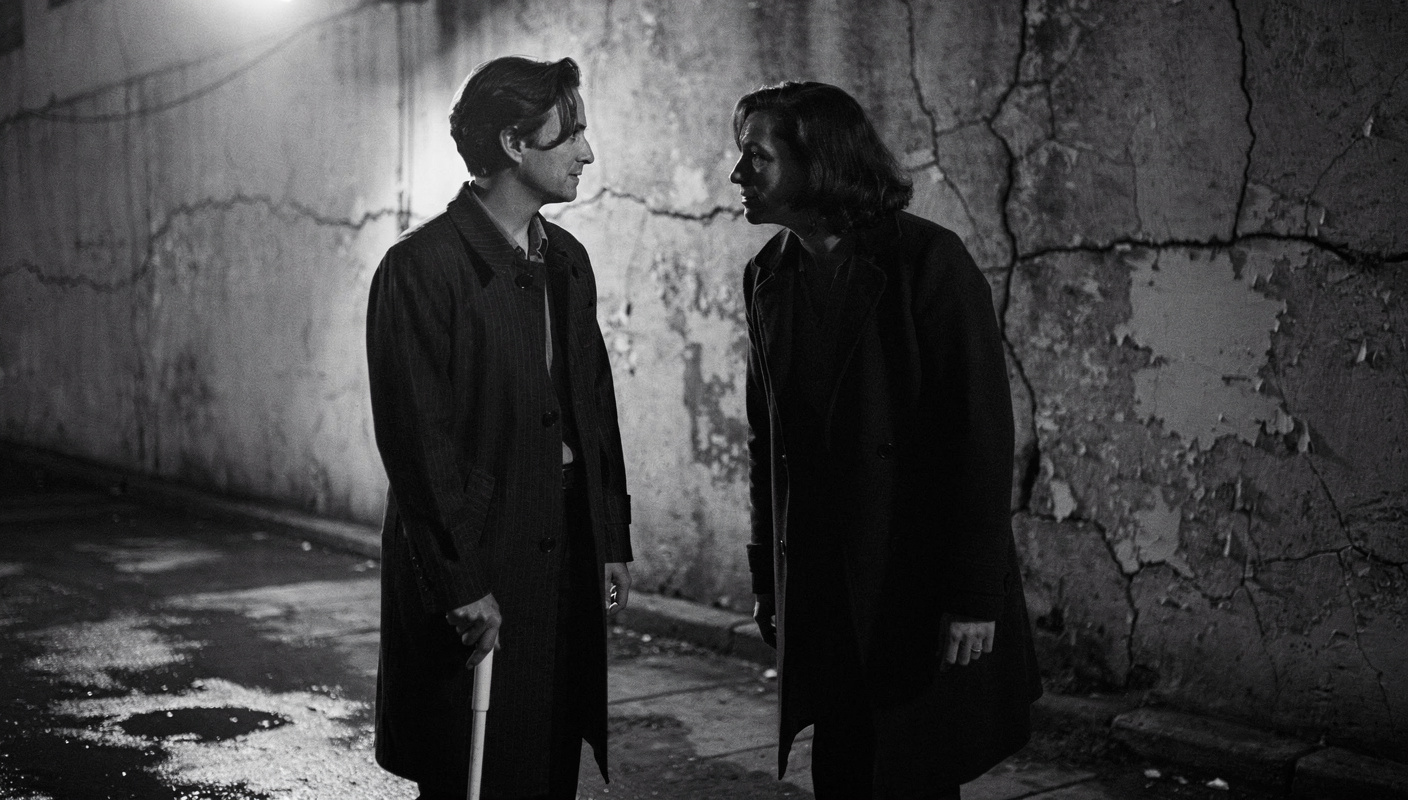
Your words carry content. Your body language carries credibility, intent, and emotional state. When someone is deciding whether to trust what you are saying, they are not just processing your sentences. They are reading your posture for confidence, your eye contact for honesty, your facial expressions for congruence, and your proximity for commitment to the conversation. These signals happen simultaneously, at speed, and mostly below the level of conscious thought.
Micro-expressions are the clearest example. A flicker of concern crosses your face before your reassuring words arrive. A slight tightening around your eyes when you claim certainty. These are not things people decode deliberately. They land in the gut. And they matter enormously to whether someone leaves a conversation feeling heard, or feeling managed.
Gestures do similar work. Open palms signal candour. Leaning forward signals engagement. Crossed arms do not always mean defensiveness, but in context, they add a layer of information the other person reads without thinking. Proximity, too: the physical distance you maintain tells someone whether you see this conversation as important or routine.
Strip any of those signals away, and the listener fills the gap. Usually with something worse than the truth.
The Richness Hierarchy: How Each Channel Filters Body Language
Think of communication channels as sitting on a spectrum. At one end, in-person conversation. At the other, a plain text message. Every step along that spectrum removes another layer of nonverbal information.
The concept of channel richness, which I cover in detail in Say It Right Every Time as the Communication Medium Richness Hierarchy, is simple: richer channels carry more signals; leaner channels carry fewer. Here is what that means in practice.
In-person conversation gives you everything. Facial expressions, eye contact, gesture, posture, proximity, physical synchrony, and micro-expressions. You can see when someone's breathing changes. You can feel the shift in energy when they go quiet. None of that is lost in transmission.
Video calls cut the signal significantly. You get the face, some gesture, and vocal tone. You lose full-body posture, proximity, and the kind of subtle physical mirroring that builds unconscious rapport. The camera angle matters more than most people realise. A camera below eye level reads as dominant or threatening. A camera above reads as passive. And that famous frozen expression when the connection lags? It lands as blankness, which the brain tends to read as coldness.
Phone calls strip the channel further. Every physical signal disappears. You are left with voice alone: pace, tone, volume, pausing, and the texture of silence. Skilled communicators learn to use these deliberately. But it is a far thinner signal than most people acknowledge when they reach for the phone.
Email and text remove body language entirely. What remains is the literal meaning of words, punctuation choices, and the gaps between messages. The reader supplies all emotional context themselves. That is a significant transfer of interpretive power from sender to receiver.
For a practical breakdown of when to use each of these channels, the email vs instant messaging vs phone comparison is worth your time.
What This Looks Like When It Goes Wrong
Let me give you a few situations where I have watched the wrong channel choice unravel a conversation.
A team leader needs to address a colleague's drop in performance. She decides to handle it over email because the conversation feels uncomfortable and she wants to give him time to process it. The email is clear and specific. But without facial expression, without the warmth in her posture, without eye contact that says "I am on your side here," the words read as a warning shot. He comes to the follow-up meeting defensive and closed. She cannot figure out why. She wrote everything down so carefully.
A manager tries to rebuild trust with a remote team after a difficult restructure. He sends a long, thoughtful video message. But the camera is off. He thought it would feel less formal. Instead, his team gets a disembodied voice delivering news with zero nonverbal signal. The absence reads as avoidance. The best practices for virtual meeting communication exist precisely because this kind of signal failure happens constantly in remote settings.
A colleague sends a short, direct reply to a sensitive question: "We can discuss." No tone. No facial expression. No pause that says "I am taking this seriously." The recipient reads it as dismissal. The relationship cools for weeks.
In each case, the channel choice was not neutral. It was an active decision that removed the nonverbal signals the conversation needed most.
Why People Keep Choosing the Wrong Channel
Here is the truth of it: most people choose their communication channel based on comfort, not consequence.
Difficult conversations feel easier to initiate in writing because you can compose yourself. You do not have to watch the other person's face. You control the pace. The problem is, you are optimising for your own comfort at the exact moment the other person needs your full nonverbal presence to feel safe in the conversation.
The second reason is habit. People default to whatever channel they use most often, regardless of the conversation's weight. If your team communicates primarily by message, even serious matters end up there. For thoughts on when that default breaks down and a channel switch becomes necessary, see when emails fail: switching to other channels.
The third reason is a genuine misunderstanding of what body language does. Many people think it is supplementary. Nice to have. They believe the words carry the message, and the nonverbal layer is just decoration. After six decades of watching conversations succeed and fail, I can tell you plainly: when the stakes are high, body language is not decoration. It is the primary signal of trust.
Understanding nonverbal communication in tense situations starts here, with recognising that the medium itself is part of the message.
How to Match the Medium to the Nonverbal Demands of the Conversation
The practical question is not "which channel is most convenient?" It is "which channel preserves enough body language for this specific conversation to land safely?"
For conversations that carry emotional weight, conflict, performance feedback, or anything requiring trust, choose the richest channel you can access. In-person is the gold standard. Video is the next best choice. The role of communication in meeting success includes this principle at its core: the channel shapes the outcome before a single word is spoken.
When you must use video, prepare your physical environment as carefully as you prepare your words. Camera at eye level. Light source in front of you, not behind. Upper body visible, not just your face. Lean slightly forward. Make deliberate eye contact with the lens when you are making your most important points. These are not aesthetic choices; they are the body language signals the channel has left you to work with.
When you use the phone, slow down. Pause more than you think you need to. The other person cannot see your face soften before a difficult sentence. They cannot see you nod while they speak. Your pacing and your silence become the only nonverbal signals doing any work, so make them count. Leaders who want to stay present for remote teams would benefit from thinking about this in terms of how leaders stay visible in virtual workspaces.
When you write, accept that your body language is gone. Use that knowledge wisely. Save text and email for low-stakes information transfer. When something important arrives in writing and lands badly, do not reply in writing. Pick up the phone or get on video. Restore the channel richness the original message stripped away. This is also covered at length in Say It Right Every Time, where the hierarchy of channel richness maps directly to the difficulty level of the conversation.
The Conversation Before the Conversation
Here is something I have learned the hard way: choosing your medium thoughtfully is itself an act of respect.
When you call someone instead of emailing. When you get on video instead of sending a voice note. When you walk down the corridor instead of opening a chat window. That choice signals that you take the conversation seriously enough to show up with your full self, not just your words. It signals courage. It signals that the other person deserves more than a text box.
Your communication medium body language choice begins before you speak a single word. And the person on the other end is reading that choice, whether they know it or not.
Frequently Asked Questions (FAQ)
How does communication medium body language work together?
The medium you choose determines which body language signals reach the other person. In-person conversation carries the full range: posture, gesture, eye contact, and facial expression. Video reduces that range. Phone strips it to voice alone. Text eliminates it entirely.
What body language signals are lost in digital communication?
Digital channels strip out most nonverbal signals. Posture, gesture, proximity, and micro-expressions disappear in email and text. Even on video, signals like full-body posture and subtle shifts in energy are reduced. The leaner the channel, the more body language you sacrifice.
Why does choosing the wrong communication channel cause misunderstandings?
When you remove body language from a difficult or emotionally charged conversation, you remove the signals that carry trust and intent. Words alone are easily misread. Without nonverbal cues to anchor meaning, the reader fills the gap with their own assumptions, often negative ones.
When should you choose in-person communication over digital channels?
Choose in-person when the conversation carries emotional weight, requires trust-building, or involves conflict. These situations depend on a full range of body language signals to convey intent and sincerity. Leaner channels strip those signals and increase the risk of misreading.
Can you rebuild body language presence on a video call?
You can recover some body language presence on video by positioning the camera at eye level, leaning slightly forward, and keeping your upper body visible. Deliberate eye contact with the camera lens, controlled gestures, and a clear backdrop all help compensate for what the medium strips away.
How does body language differ between phone and video calls?
On a phone call, your body language is reduced entirely to vocal quality: pace, tone, pausing, and emphasis. Video restores your face and upper-body gesture but cuts off posture and proximity. Each channel preserves a different slice of nonverbal communication, and each one loses something the other keeps.