
In Short
Body language patterns carry more weight in volunteer leadership than almost anywhere else. Without a salary, a title, or a formal hierarchy to back you up, your posture, your eye contact, and the way you occupy space become your primary tools of authority.
- Open, grounded physical presence signals trustworthiness when no institutional power exists.
- Closed or apologetic body language drains credibility faster in unpaid settings than in paid ones.
- Mirroring and stillness are reliable indicators that a volunteer team is genuinely following, not just tolerating.
Body language patterns are the recurring physical signals, including posture, gesture, eye contact, and spatial positioning, that communicate status, confidence, and emotional state without words. In leadership contexts, these patterns determine how much trust and authority a person earns from those around them.
I have watched a lot of leadership fall apart in rooms where nobody was getting paid. Community boards, volunteer committees, charity fundraising teams, neighbourhood associations. The people leading those groups had no salary to offer, no contract to enforce, and no HR department behind them. What they had was themselves. And what I noticed, over decades of watching this, was that body language patterns in those settings are everything. Not half of it. Everything.
What You Are Actually Looking At
Before the examples, you need a frame. When you watch a volunteer leader walk into a room, before they open their mouth, ask yourself three things: Where do they place themselves in the space? What are they doing with their hands and shoulders? And when someone challenges them, what does their body do first?
Those three questions reveal more about the leader's real confidence than any speech they give. Nonverbal communication in tense situations often comes down to these exact physical cues, and in volunteer settings, the stakes of getting them wrong are high. People who are not being paid to be there will leave if the person leading them does not feel trustworthy. They will not send an email. They will just stop showing up.
"The Conversation You're Avoiding Is the One You Need to Have."
"The Conversation You're Avoiding
Is the One You Need to Have."
Stop rehearsing conversations you'll never have. Say It Right Every Time gives you 115 word-for-word scripts and 16 proven frameworks to speak with confidence in every conversation that matters.
Example 1: The Volunteer Chair Who Owned the Room
A community garden committee had been struggling for three years with low attendance and low energy. A woman in her late forties stepped into the chair role. She had no credentials in horticulture, no formal management experience, and no budget to speak of.
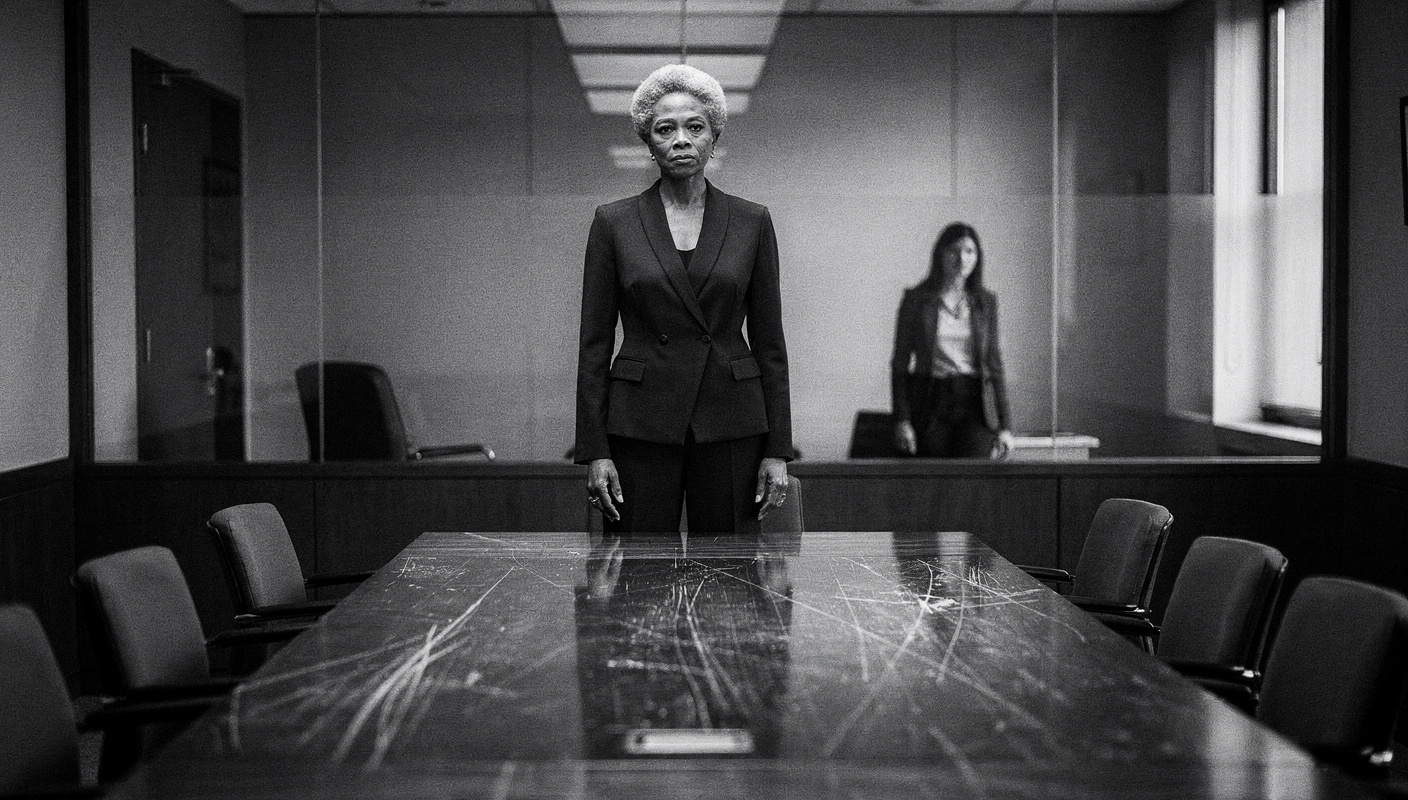
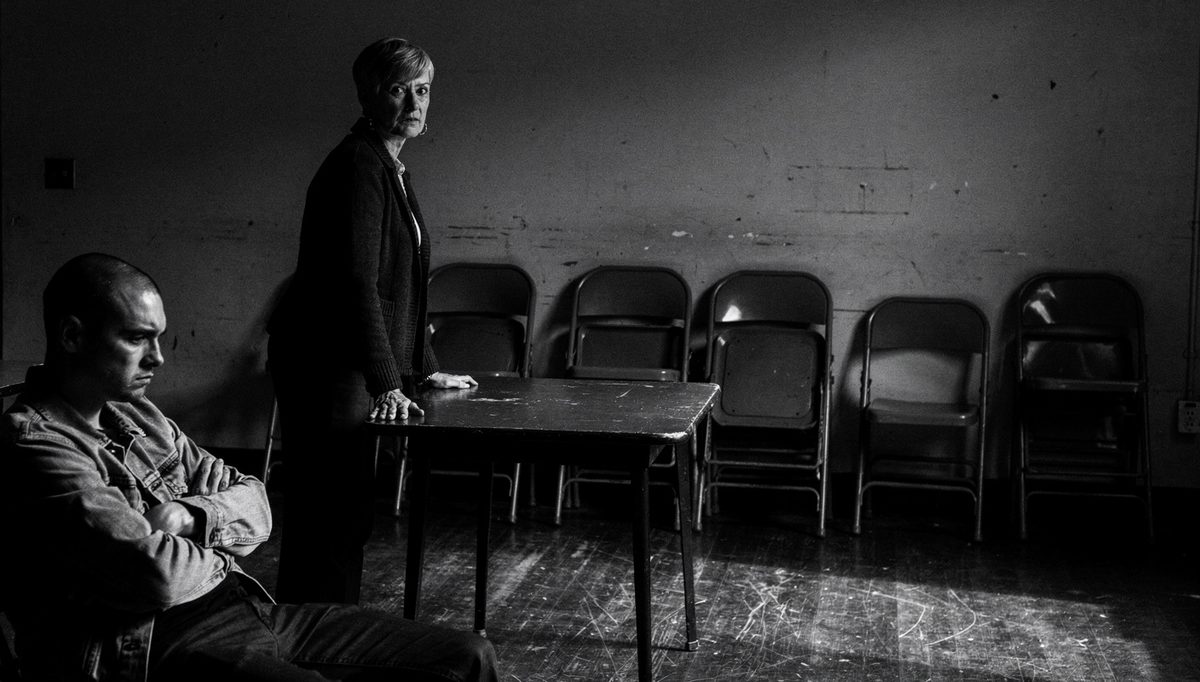
What she did have was stillness. When she called the first meeting to order, she stood rather than sat, placed both feet flat on the floor at shoulder width, and kept her hands loose at her sides. When the first objection came, she did not step back. She did not cross her arms. She tilted her chin slightly toward the speaker and waited a full four seconds before responding.
The room noticed. Not consciously, not immediately. But by the third meeting, attendance had doubled, and three people had volunteered for tasks they had previously avoided. Her body had communicated something her words alone never could: I am not going anywhere, and neither are we.
The stillness of a leader under pressure is one of the most powerful nonverbal signals available. It tells the room that tension is survivable.
Example 2: A New Coordinator Who Lost the Group in the First Five Minutes
Here is the cost of getting it wrong. A youth sports club appointed a new volunteer coordinator, a man in his early thirties who genuinely cared about the role and had prepared thoroughly. He arrived early, set up the room, and printed an agenda.
When people started arriving, he moved constantly. He adjusted papers that did not need adjusting. He walked from one side of the table to the other with no purpose. When he finally started speaking, his shoulders were raised and his gaze kept dropping to his notes even when he was not reading from them.
By the fifteen-minute mark, two people were checking their phones. One had pulled his chair back from the table by about six inches, a small movement, but a meaningful one. The coordinator had the right content. His body had already communicated that he was not sure he deserved the room.
Meeting facilitation skills for managers are relevant here, because the physical habits that undermine a paid manager do so twice as fast in a volunteer setting. Nobody is obligated to extend patience.
Example 3: A Conflict Handled Entirely Without Words
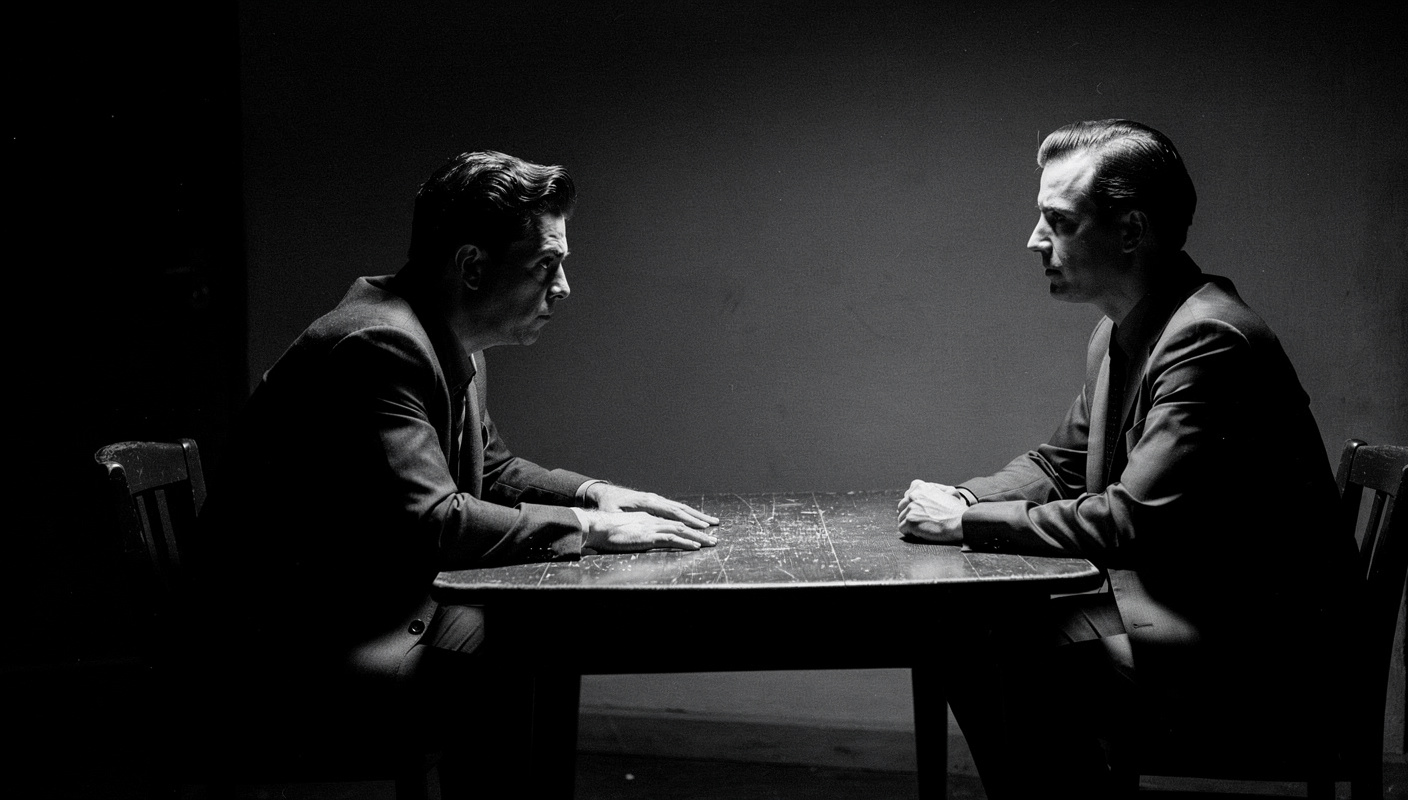
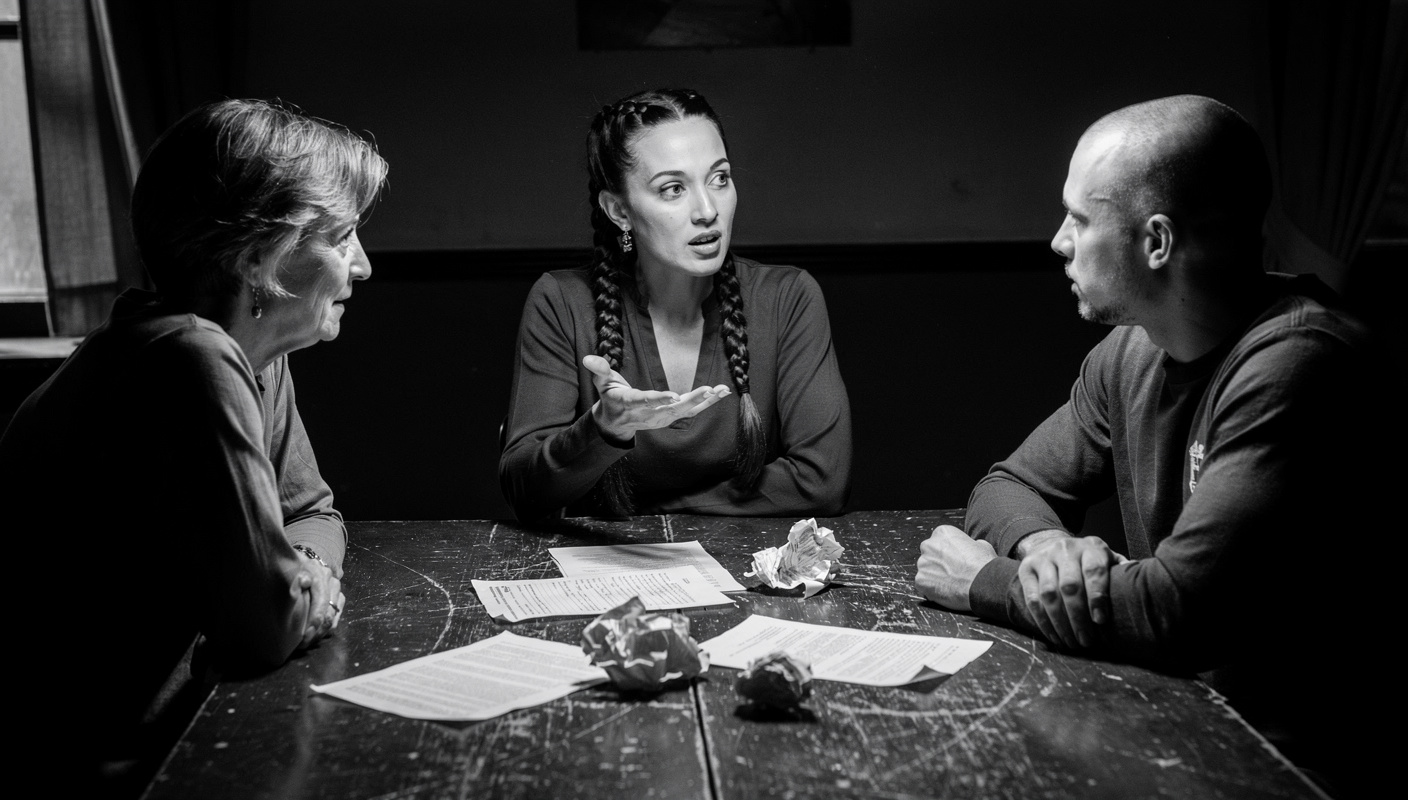
A fundraising team for a local hospice had two strong personalities who had disagreed publicly at the previous meeting. The volunteer lead knew the tension was unresolved when she walked in and saw them seated at opposite ends of the table, both with arms folded and shoulders angled away from each other.
She did not address it directly. She placed her chair at a point equidistant between them, angled slightly toward each in turn as she spoke, and made sustained eye contact with both individuals during the opening five minutes. When a disputed point came up, she turned her whole body, not just her head, toward each speaker. She leaned forward slightly when either of them talked.
By the midpoint of the meeting, both had unfolded their arms. One had pulled closer to the table. The other had made brief eye contact with his counterpart for the first time that evening. No speech was given about collaboration. The physical positioning had done the repair work. How to handle conflict during meetings often relies on exactly this kind of spatial and postural intervention before any verbal strategy becomes possible.
Example 4: The Leader Who Shrank When It Mattered
A neighbourhood association had been campaigning for a traffic calming measure for two years. Their volunteer lead was articulate, well-prepared, and deeply committed. At the public council meeting where the issue was finally heard, she stood to speak.
She gripped the podium with both hands. Her shoulders curved inward. Her gaze moved between the desk surface and a fixed point slightly above the heads of the councillors. When a councillor interrupted her with a sceptical question, she physically stepped back from the podium by half a pace.
The councillors' body language shifted immediately. Two sat back in their chairs. One exchanged a brief glance with a colleague. The proposal was deferred without a formal vote.
She had the evidence. She had the community support. But her body had communicated something that undermined her case before the facts had a chance to land. Nonverbal communication in tense situations is often decisive in public forums precisely because credibility is read physically before it is heard verbally.
Example 5: Mirroring as a Signal That Trust Is Building
A volunteer leadership transition in a regional heritage society offers a useful contrast to Example 4. The outgoing chair had led for six years and had genuine authority with the group. The incoming chair was younger, less experienced, and visibly nervous at the handover meeting.
Halfway through the session, something shifted. The new chair began unconsciously adopting the outgoing chair's cadence: a steady pace, a habit of pausing before answering questions, a tendency to rest one hand flat on the table during discussion rather than fidgeting. By the end of the meeting, three long-serving members had begun mirroring the new chair in return, leaning forward when he spoke, turning their chairs slightly toward him.
Mirroring is not performance. It is a physical signal that the nervous system is tracking someone as trustworthy and worth following. How leaders foster a culture of team synergy depends in part on exactly these unconscious physical negotiations happening across a room.
Example 6: A Dominant Voice, a Physical Concession, and What It Cost
In a volunteer board for a community theatre, one member had a habit of speaking over others. He was not malicious; he was simply accustomed to taking up space. The board's voluntary chair, a woman who had held the role for less than a year, consistently responded to his interruptions by pulling back. She would pause mid-sentence, her shoulders dropping slightly, her eye contact breaking toward the table.
Over four meetings, three other members began doing the same. The dominant voice had not gained formal authority, but the room had physically conceded it to him. How to deal with dominant voices in a discussion requires the chair to hold ground physically, not just procedurally. A firm, still posture and sustained eye contact when interrupted is often enough to signal that the floor is not available.
The Patterns Beneath All Six Scenarios
Step back and look at what recurs. In every example where leadership landed well, the body held its ground. Not aggressively. Not theatrically. Simply: weight on both feet, shoulders open, eye contact maintained, no retreat when tension arrived.
In every example where it failed, the body signalled apology before the words did. Shoulders curving inward, gaze dropping, physical retreat from confrontation. These are not personality flaws. They are learnable habits, and the first step is seeing them clearly.
The second pattern is about speed. Body language registers in the room before any word is spoken. In paid roles, institutional context buys a leader several minutes of credibility while people adjust their expectations. In volunteer settings, that window does not exist. The room is making a trust decision the moment the leader walks through the door.
Third: the direction of influence is reversible. A leader's grounded physical presence encourages the room to settle. A leader's nervous energy gives the room permission to disengage. How to sustain team synergy during leadership transitions and restructuring often hinges on whether the incoming leader's physical demeanour reassures the group or unsettles it.
Reading Your Own Body Language Patterns Before Others Do
Here is the honest question: if you are a volunteer leader, what is your body doing when pressure arrives? When someone challenges you in front of the group, do your shoulders rise? Does your gaze drop? Do you take a small step backward?
You do not need to perform confidence. You need to practice the physical habits of it until they become your default. Before your next meeting, try this: stand with your feet at shoulder width and take three slow breaths before entering the room. During the meeting, when challenged, pause for a full three counts before responding, and keep your weight forward rather than letting it shift back.
The role of communication in meeting success is built substantially on what happens before anyone speaks. And for volunteer leaders especially, the physical preparation you do before the room fills matters as much as anything on your agenda.
Pay attention to where people sit relative to you, whether they mirror your posture or angle away, and how quickly they settle when you do. These are your indicators. They tell you whether your body language patterns are building the trust your role requires, or quietly leaking it away.
Frequently Asked Questions (FAQ)
What are body language patterns in volunteer leadership?
Body language patterns in volunteer leadership are the repeated physical signals, posture choices, and gestural habits that either build or erode trust when no formal authority exists. Because unpaid leaders cannot rely on institutional power, their physical presence becomes the primary source of credibility.
How do body language patterns affect unpaid team dynamics?
When a volunteer leader displays closed posture, avoids eye contact, or physically retreats during tension, the team reads it as uncertainty. People follow physical confidence before they follow words. Consistent open, grounded body language signals that the leader believes in the work, which encourages others to commit.
Can poor body language undermine a volunteer leader?
Yes. A volunteer leader with strong ideas but closed or apologetic body language will lose the room before finishing the first sentence. People make trust decisions based on physical cues within seconds, and those impressions are difficult to reverse without deliberately changing the patterns causing them.
What body language signals build trust without formal authority?
Steady eye contact, an open and upright stance, forward lean when others are speaking, and deliberate stillness during conflict all signal trustworthiness. These body language patterns tell the room that the leader is present, calm, and committed, without needing a title or a salary to back it up.
How do you read body language patterns in a volunteer group?
Watch for mirroring: when team members begin to adopt the leader's posture and rhythm, trust is building. Watch for physical retreat, crossed arms, or avoidance of eye contact as early signals of disengagement. Group stillness during a leader's speech usually means the room is genuinely listening.
Why is body language different in volunteer roles than paid ones?
In paid roles, institutional structures, job titles, and financial dependency create automatic compliance. Volunteer leaders have none of those levers. Every signal of authority must come from the person directly, and body language is the fastest, most honest source of that signal in any room.