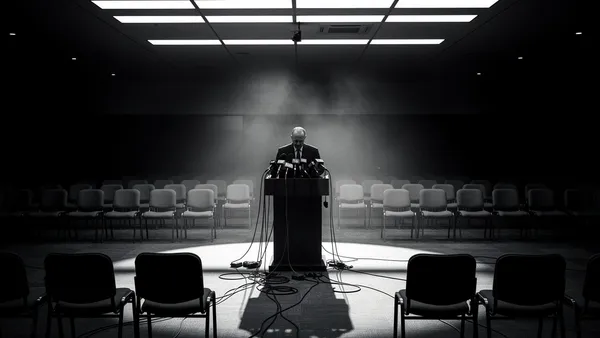

What Happened
A brand facing an online crisis has roughly one window to shape the narrative before the internet does it for them. Martech.org examined how companies manage reputation damage in digital spaces, where speed and tone determine whether a crisis becomes a footnote or a funeral. The core finding: most brands fail not because of the crisis itself, but because of how they talk about it.
The Communication Angle
The moment a crisis goes public, you are no longer in a crisis. You are in a communication contest. The facts are almost irrelevant at that point. What matters is who tells the story first, and whether that story sounds human or lawyered.
Most brands lose this contest before they open their mouths. They stall. They issue holding statements full of passive voice and corporate cushioning. "Mistakes were made." "We are looking into the situation." This language does two things, and both are catastrophic. It signals guilt without owning anything, and it creates a vacuum that critics, journalists, and angry customers rush to fill with their own version of events.
The brands that survive crises do the opposite. They speak first, they speak plainly, and they name the problem directly. Not "there have been reports of quality concerns" but "our product failed, and here is what we are doing right now." That specificity is not weakness. It is control. You cannot control what happened. You absolutely can control what you say next, and that is the only lever you have.
Here is where most communication teams get it wrong: they treat online crisis response as a PR problem. It is not. It is a trust problem. PR smooths things over. Trust gets rebuilt through consistent, honest, follow-through communication over time. Your first statement opens the door. Everything you say for the next thirty days either keeps it open or slams it shut. The brands that recover fast are the ones that make promises publicly and then prove them publicly, rather than going quiet once the news cycle moves on.
The deepest failure I see is the refusal to speak to the audience that is actually angry. Brands write statements for journalists, for shareholders, for the board. They forget the person sitting at home who feels burned. That person does not want corporate language. They want to hear from a real human being who understands why they are upset. One sentence written for that person is worth ten paragraphs written for a press release.
This is exactly the kind of scenario I break down in Say It Right Every Time. The chapter on high-stakes messaging gives you a framework for structuring what you say under pressure so that clarity does not collapse when the room is on fire. Most people assume they will find the right words when it matters most. They will not, unless they have built the habit before the crisis arrives.

Never Be Lost
for Words Again
Get word‑for‑word scripts for the conversations that shape your life, from job interviews and negotiations to difficult talks with family and partners, so you always know exactly what to say and how to say it.
Never Be Lost
for Words Again
Get word‑for‑word scripts for the conversations that shape your life, from job interviews and negotiations to difficult talks with family and partners, so you always know exactly what to say and how to say it.
Key Takeaway
Before your brand says a single word publicly during a crisis, write down three things on one page: what you did wrong (in plain language a twelve-year-old could understand), what you are doing about it right now (specific, not vague), and what you will do differently going forward (with a date attached). That page becomes your communication spine. Every statement, post, and interview should be able to trace back to it. If it cannot, you are improvising, and improvisation in a crisis is how brands go from wounded to dead.