
What Happened
SmartBrief recently outlined a five-step framework for building a crisis communication plan, covering everything from identifying your response team to crafting pre-approved messages before disaster strikes. The piece highlights that most organizations wait until a crisis hits to figure out how they will talk about it. That reactive approach is not a strategy. It is a gamble.
The Communication Angle
Here is the question every leader needs to answer honestly: When your company faces a scandal, a safety incident, or a PR nightmare, who speaks first, and do they know what to say?
Most organizations fail at crisis communication before the crisis even starts. They fail in the preparation phase, or more accurately, the complete absence of one. A five-step plan sounds bureaucratic until you realize what it actually is: a decision made in advance, when you are calm, rational, and not under fire. That is the entire point.
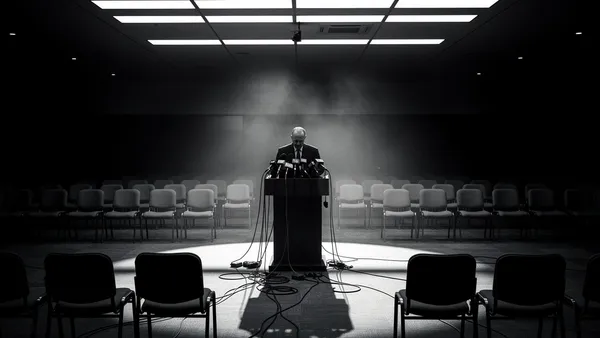
The single biggest communication error in a crisis is delay. Silence reads as guilt. Vagueness reads as cover-up. The public does not need you to have all the answers on day one. They need to know you are taking the situation seriously and that a real human being is in charge. That requires a designated spokesperson, a prepared statement structure, and a chain of command that everyone on your team has already agreed to. None of that happens in the first hour of a crisis if you are building it from scratch.
The second failure is message sprawl. Five different people making five different public statements is not communication. It is noise. A solid crisis plan designates one voice and gives that voice a tight, specific message: what you know, what you do not know yet, and what you are doing right now. That three-part structure is not complicated. But without a plan, your team will improvise, and improvisation under pressure almost always produces contradiction, and contradiction destroys trust faster than the original problem did.
Pre-approved language is also non-negotiable. Legal teams slow everything down during a crisis because every word needs sign-off. The fix is simple: get the sign-off before the crisis. Work with your legal and communications teams now to draft holding statements for the three most likely bad scenarios your organization could face. When the moment comes, you fill in the specifics and you move fast.
This is exactly the kind of scenario I break down in Say It Right Every Time. The chapter on high-stakes messaging gives you a framework for building language that holds up under pressure, specifically how to structure a statement that sounds honest without being reckless, and decisive without overpromising. Crisis communication is not a special skill. It is just regular communication with the volume turned all the way up. You either built the habit or you did not.

Never Be Lost
for Words Again
Get word‑for‑word scripts for the conversations that shape your life, from job interviews and negotiations to difficult talks with family and partners, so you always know exactly what to say and how to say it.
Never Be Lost
for Words Again
Get word‑for‑word scripts for the conversations that shape your life, from job interviews and negotiations to difficult talks with family and partners, so you always know exactly what to say and how to say it.
Key Takeaway
Today, before your next staff meeting, identify the three most realistic crises your organization could face and name the one person who will speak on behalf of your company if one of them happens. Write that person's name down, tell them they have the role, and make sure they have your personal number. That single conversation is more valuable than any communication policy document you will ever produce.