
What Happened
eMudhra, a digital trust and security company, suffered a security incident involving weak cryptographic keys. Co-founder Kaushik Srinivasan publicly characterized the event as isolated and limited to a single client, while acknowledging that existing internal checks failed to catch the problem. The company's board is now meeting to evaluate structural changes in response.
The Communication Angle
Picture this: your company just had a security failure. Cryptographic keys, the digital locks that protect sensitive data, slipped through your own internal controls undetected. Reporters are calling. Your board is convening. And your co-founder steps in front of the story and says: "one-time-one-client."
That phrase is a trap, and Srinivasan walked straight into it.
Here is the problem. "One-time-one-client" is a minimization frame. It tells the audience what the company wants them to feel (calm, reassured) rather than what the company has actually established (facts, fixes, accountability). The moment you say "this was minor," you have made two promises: that your definition of minor is trustworthy, and that nothing like this has happened before. You now own both of those claims. If either one turns out to be wrong, your credibility does not just dip. It collapses.
The deeper failure here is sequencing. Srinivasan led with the size of the incident before establishing competence. In a crisis, the order matters enormously. Audiences cannot hear your reassurances until they believe you understand what went wrong. The correct sequence is: acknowledge, explain, act. Srinivasan skipped straight to the explanation of scope, which sounds like spin even if it is entirely accurate. And then came the admission that maker-checker controls, systems specifically designed to catch this kind of error, failed. You cannot downplay a problem in sentence one and then admit your safeguards missed it in sentence two. Those two statements fight each other.
What should have been said? Something like this: "Our controls failed, and that is not acceptable to us regardless of how many clients were affected. Here is exactly what we are doing to understand why, and here is the timeline for our board review." That is not weakness. That is the only statement that actually contains credibility. It shows you are measuring yourself against your own standards, not against how bad things could theoretically have been.
The board meeting announcement is a positive signal, but it arrived without enough weight behind it. Structural change is a meaningful commitment. It deserved its own sentence, its own emphasis, its own moment. Instead it was bundled into a story already muddied by a minimization frame. The fix was right. The framing buried it.
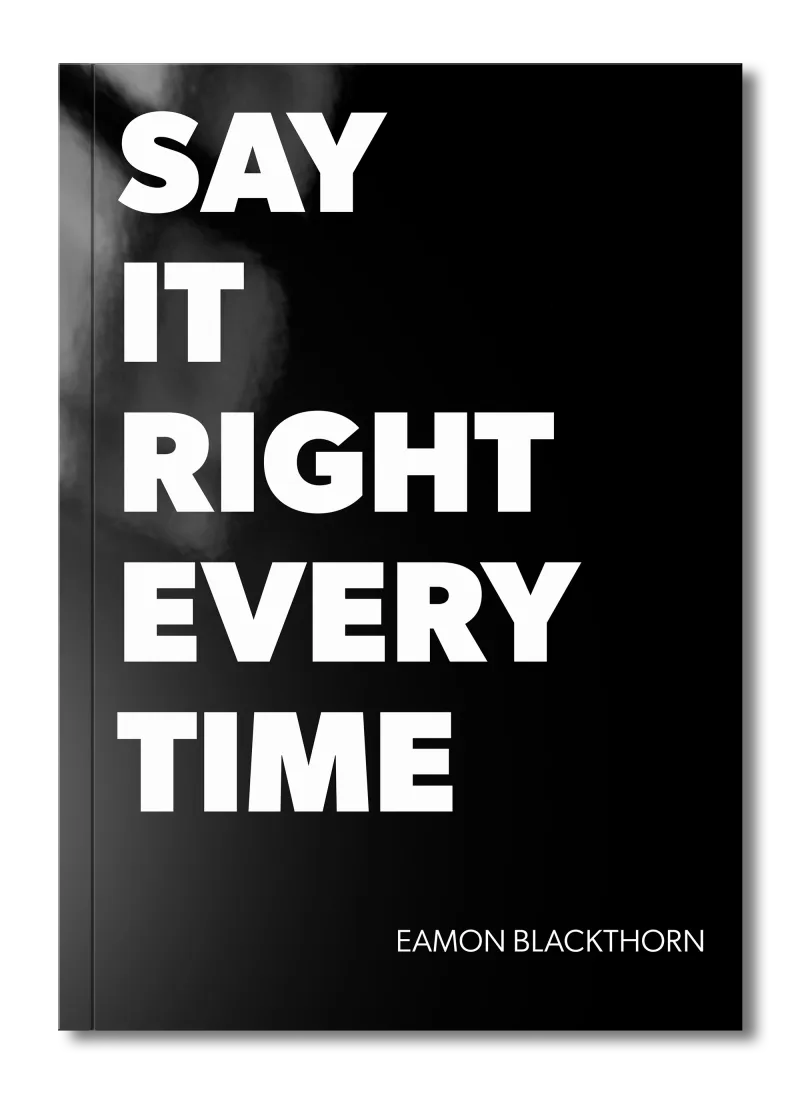
This is exactly the kind of scenario I break down in Say It Right Every Time. The chapter on crisis sequencing gives you a framework for ordering your words under pressure so that your credibility arrives before your conclusions do. Because if your audience does not trust you yet, your facts do not matter.
Never Be Lost
for Words Again
Get word‑for‑word scripts for the conversations that shape your life, from job interviews and negotiations to difficult talks with family and partners, so you always know exactly what to say and how to say it.
Never Be Lost
for Words Again
Get word‑for‑word scripts for the conversations that shape your life, from job interviews and negotiations to difficult talks with family and partners, so you always know exactly what to say and how to say it.
Key Takeaway
Before your next crisis statement, write down this question and answer it honestly: "Does this statement tell my audience what I know, what I am doing, and when they will hear from me again?" If it does not answer all three, you are not ready to speak. Cut everything that minimizes and add everything that commits.