
In Short
After reading this, you will know exactly how to use physical expression to project authority while remaining open, warm, and approachable in any professional setting.
- Ground your body before you speak: stillness signals confidence far more than movement.
- Use open gestures and steady eye contact to project both strength and warmth.
- Adapt your physical presence to the room without abandoning your natural authority.
Physical expression authority is the deliberate use of posture, gesture, eye contact, and movement to communicate confidence and credibility through your body. It signals to others that you are grounded and capable before you say a single word.
I want you to think about a manager I worked with many years ago. Smart. Prepared. Knew the brief inside out. She walked into the room, hunched her shoulders, crossed her arms, and stared at the table while she spoke. Nobody questioned her facts. But nobody followed her either. They left that meeting and went straight to her deputy for direction. She had all the knowledge and none of the presence. Physical expression had undermined everything she had worked to build.
Most people who struggle with this are not lacking confidence. They are lacking a system. They do not know what to do with their hands. They hold tension in their shoulders without realising it. They confuse standing tall with looking aggressive, and standing back with looking approachable. The result is a body that sends mixed signals, or worse, no signal at all.
In this guide, you will get a clear, practical process for physical expression that you can use immediately. If you want to understand how emotional intelligence shapes the way your physical cues land with others, The Role of Emotional Intelligence in Team Synergy is worth your time alongside this.
Why Mastering Physical Expression Is Harder Than It Looks
Knowing that body language matters is not the same as knowing what to do in the room. Most people understand that slouching looks weak and staring looks threatening. The gap is in the execution, and that gap is wider than most people admit.
You cannot see yourself in real time. You feel confident inside, but your body may be telegraphing anxiety through tight shoulders, a locked jaw, or restless hands. Without a mirror or a trusted observer, you are flying blind.
Old habits override new intentions under pressure. You can practise an open stance for a week and then revert to crossed arms the moment a difficult question lands. The body defaults to its history, especially when the stakes are high.
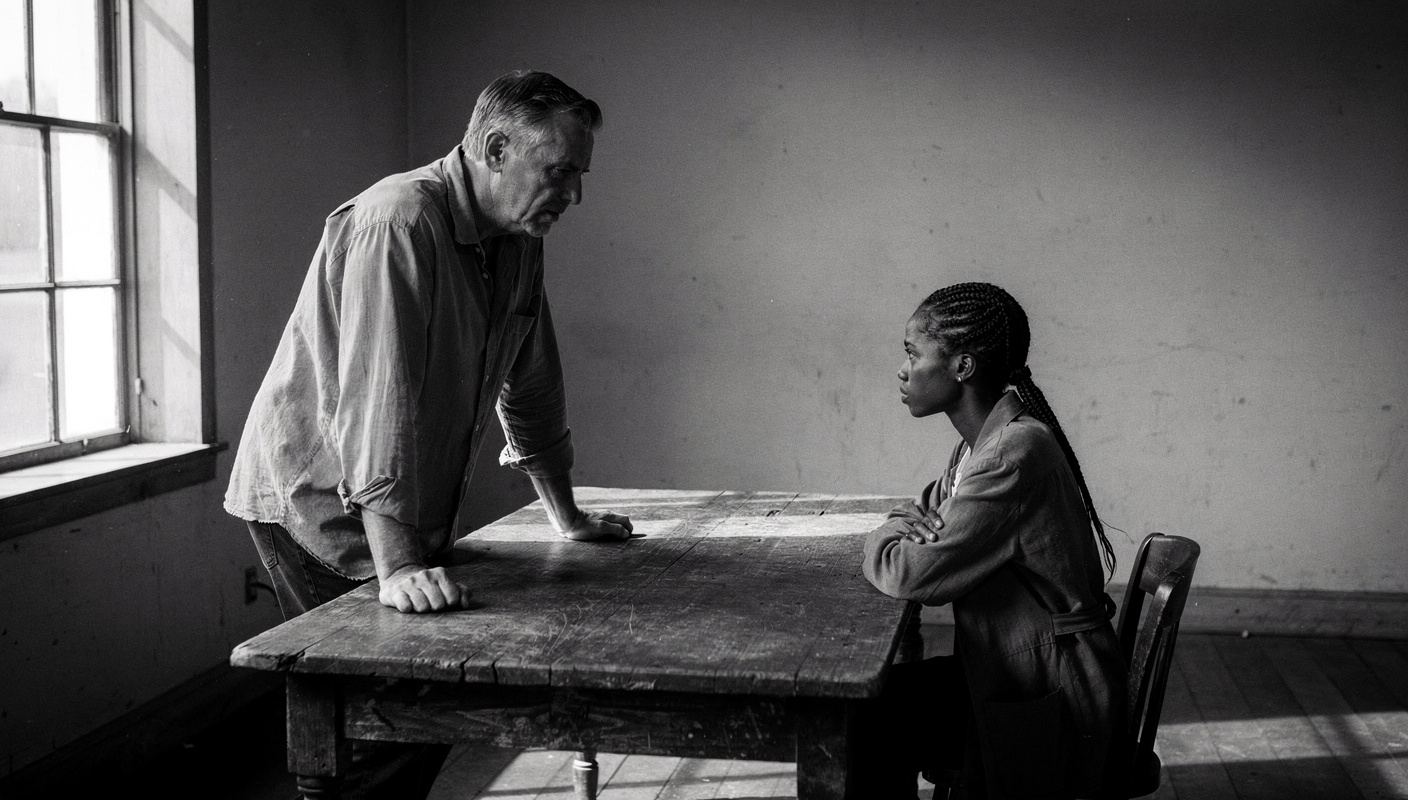
Authority and aggression look similar from the wrong angle. A direct gaze reads as confidence to one person and intimidation to another. Erect posture reads as gravitas to one person and arrogance to another. Context shapes everything, and most people have not learned to read the room.
Approachability and authority feel like opposites. Many people believe they have to choose: either stand tall and risk seeming cold, or stay relaxed and risk seeming soft. That false choice causes paralysis.
Anxiety manifests physically before you are aware of it. Your voice tightens, your gestures shrink, your eyes drop. These changes happen faster than your conscious mind can catch them, and they land with the room before you have said a word.
The goal is not to eliminate these difficulties. It is to build a system that works in spite of them.
"The Conversation You're Avoiding Is the One You Need to Have."
"The Conversation You're Avoiding
Is the One You Need to Have."
Stop rehearsing conversations you'll never have. Say It Right Every Time gives you 115 word-for-word scripts and 16 proven frameworks to speak with confidence in every conversation that matters.
The Foundation: What You Need Before You Start
Before you begin, there are three things that need to be clear.
Know your baseline body language. You need an honest picture of how you currently hold yourself before you can change anything. Record yourself on video during a real meeting or conversation, not a rehearsal. Watch it back with the sound off and notice what your body is saying. This single step will tell you more than any theory.
Understand the difference between performance and presence. Physical expression authority is not about putting on a show. It is about removing the physical static that obscures the confidence you already carry. You are not building a character. You are clearing the interference. That distinction matters because performed authority looks exactly like what it is: a performance. Grounded presence looks real, because it is.
Commit to low-stakes practice first. Your body learns through repetition, not intention. Before you apply these steps in a board presentation or a difficult one-to-one, practise them in a coffee queue, a team catch-up, a phone call where you are standing up. The nervous system needs repetition to make new physical habits automatic under pressure.
Get these right first. The steps that follow will not work without them.
Step 1: Establish Your Ground Stance
Your ground stance is the physical foundation of all other expression, and getting it wrong undermines everything that comes after.
Most people stand as if they are waiting for permission to take up space. Weight on one hip, arms crossed or hands fidgeting, head slightly down. That posture communicates uncertainty before you open your mouth. A ground stance reverses that signal entirely.
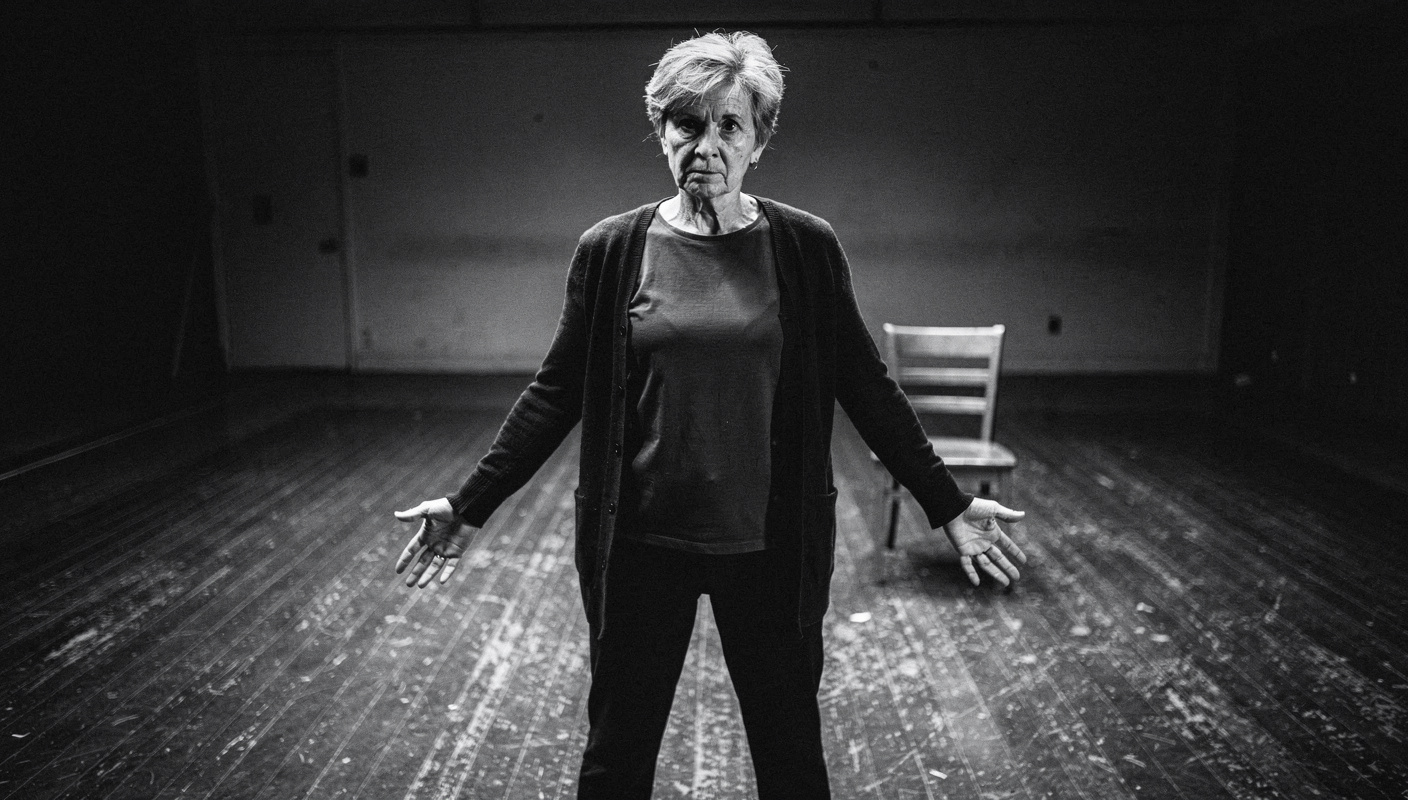
Place your feet at shoulder width. Distribute your weight evenly. Let your knees stay soft, not locked. Drop your shoulders back and down, not pinned or rigid. Let your arms hang naturally at your sides or rest one hand loosely in the other at waist height. Chin parallel to the floor.
- Stand in this position for sixty seconds before any high-stakes conversation, meeting, or presentation.
- Check three points: feet flat and even, shoulders down, chin level.
- If you feel tension in your jaw, unclench it deliberately. The jaw carries more anxiety than most people realise.
- Breathe from your diaphragm, not your chest. Three slow breaths before you enter the room.
Here is what this looks like in practice. A team leader I coached was consistently dismissed in cross-departmental meetings. We worked on nothing but his ground stance for two weeks. He stopped leaning against the wall, stopped shifting his weight, and stood level before he spoke. His colleagues later told him, without prompting, that he seemed different. More settled. More worth listening to. He had not changed a single word of what he said.
When your ground stance is solid, every gesture and expression that follows is built on something real.
Step 2: Open Your Hands and Arms
After grounding your lower body, the next signal your physical expression sends comes from your arms and hands. Crossed arms, hands in pockets, or hands gripping a pen all close the body off and reduce perceived approachability.
Visible, open hands are one of the clearest trust signals a human body can send. They say: I have nothing to hide. I am not a threat. I am here.
You do not need to gesture constantly. In fact, over-gesturing is its own problem. The goal is to keep your hands visible, relaxed, and occasionally purposeful.
- When standing, keep both hands visible at or below waist height. Rest them loosely together in front of you or at your sides.
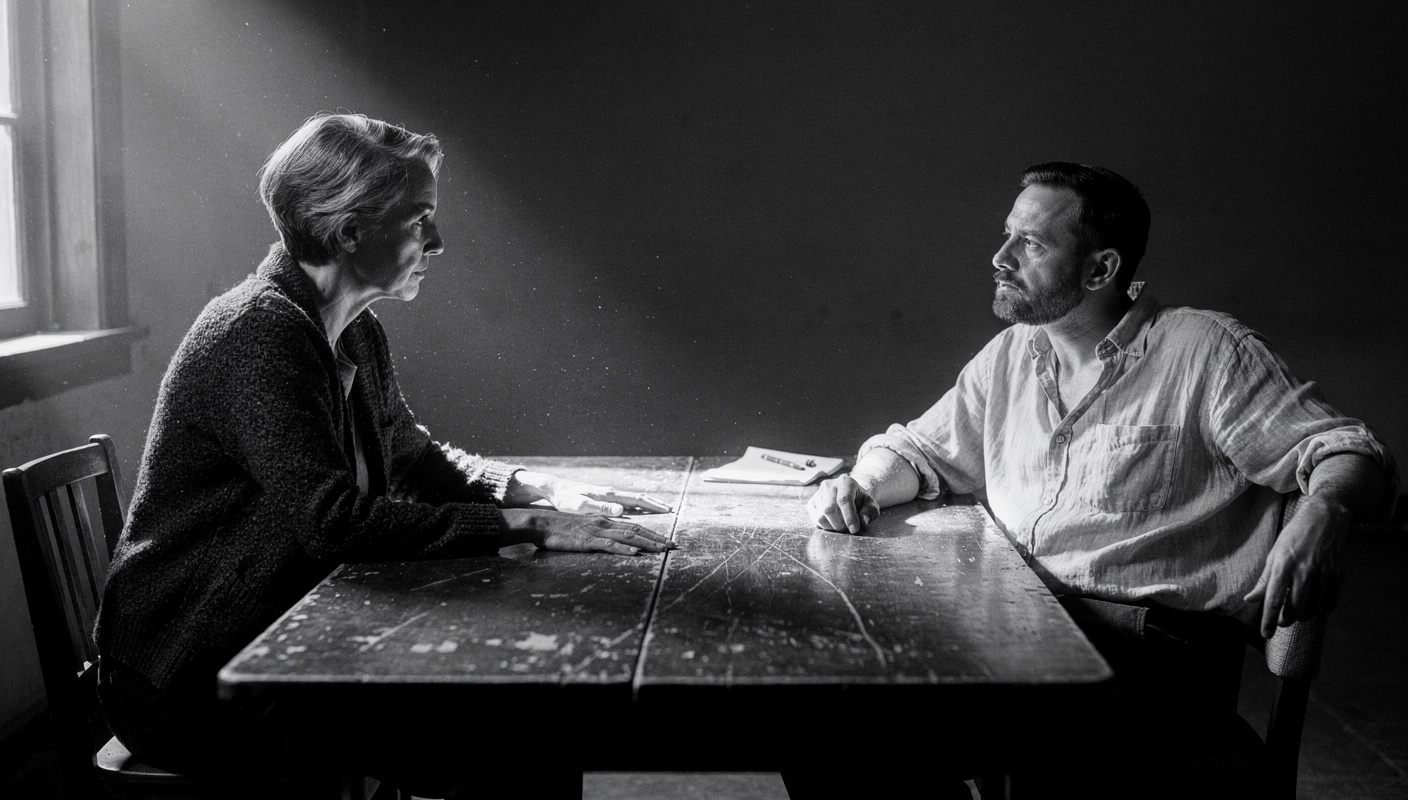
- When seated, rest your hands on the table rather than in your lap. Keep your forearms open, not crossed.
- Use deliberate gestures to emphasise key points: a slow open-palm movement outward, a gentle counting motion. Make each gesture finish cleanly and then let your hands return to rest.
- If you notice yourself crossing your arms, uncross them and consciously place your hands somewhere visible.
- Avoid repetitive hand movements: pen clicking, ring turning, hair touching. These signal anxiety and distract from your message.
The moment you open your posture, people feel the difference. Authority without openness reads as aggression. Openness without authority reads as submission. The combination is what you are after.
Step 3: Use Eye Contact to Connect, Not Dominate
Eye contact is the most powerful nonverbal tool in your physical expression toolkit. Used well, it signals presence, confidence, and genuine interest. Used badly, it intimidates, alienates, or signals evasion.
The most common mistakes are the extremes: staring without blinking, which reads as aggression or challenge; and breaking contact too quickly, which reads as uncertainty or disinterest. Neither builds the connection you are looking for.
The working method is simple. Hold eye contact for three to four seconds before looking briefly away to a neutral point, then returning. In a group setting, distribute your gaze deliberately: two to three seconds with each person, moving around the room, spending slightly longer with anyone who is speaking or asking a question.
- When someone asks you a difficult question, hold their gaze for a full breath before you respond. This signals calm, not defiance.
- Do not break eye contact downward; this reads as submission. If you need to look away, look to the side or up briefly.
- In one-to-one conversations, aim for roughly sixty to seventy percent eye contact from your side. The rest is natural.
- Pair eye contact with a slight forward lean to signal engagement, not dominance.
An example. A senior consultant I knew had a habit of looking at her notes while others spoke, then snapping her eyes up when she was ready to respond. Her team read it as disinterest, even dismissal. She began holding steady eye contact during questions, nodding once to acknowledge the speaker before glancing at her notes. Within a month, her team described her as more engaged and more trustworthy. The words had not changed. Her eyes had.
Steady, warm eye contact is the difference between a person who commands a room and one who merely occupies it.
Step 4: Manage Your Spatial Presence
Where you place yourself in a room, and how much space you occupy, sends powerful signals about your status and your intention. Physical expression authority is not just about your body in isolation. It is about your body in relation to the space around it.
People who shrink, who press themselves against walls or perch on the edges of chairs, signal that they are not sure they belong. People who expand aggressively into others' personal space signal threat. The goal is deliberate, respectful spatial confidence.
- When you enter a room, move to your seat or position directly, without hesitating at the door. Hesitation reads as uncertainty.
- Sit fully in your chair with your back against the support and both feet on the ground. Do not perch on the edge.
- In a standing situation, claim your area of floor clearly and stay in it. Do not drift or hover.
- Keep at least an arm's length of distance from others in professional settings unless the context invites closeness.
- When you want to signal engagement during a one-to-one conversation, a slight lean forward from the waist signals interest without closing space aggressively.
Spatial awareness is also about knowing when to move and when to stay still. Movement during a presentation can hold attention, but pacing or shifting weight erodes authority. If you move, move with purpose. Take a deliberate step, stop, stand still, speak.
Step 5: Control Your Facial Expression
Your face confirms or contradicts everything your body is already saying. A grounded stance with a tense, closed expression still reads as unapproachable. An open, relaxed face with slumped shoulders still reads as uncertain. The face and body must work together.
The most important thing I have learned about facial expression is this: most people's resting face communicates something they do not intend. Concentration looks like displeasure. Neutrality looks like coldness. Mild interest looks like boredom. You need to know what your face is doing when you are not thinking about it.
- Soften your jaw deliberately before important interactions. Unclench your back teeth and let your lips part slightly.
- Practise a baseline expression that signals calm attention: slightly raised brows, eyes open, mouth relaxed. It is not a smile. It is openness.
- When someone makes a valid point, let a single, clear nod confirm it. This signals that you are present and listening, not just waiting for your turn.
- In tense moments, resist the urge to mirror tension in your face. A calm expression during conflict is one of the strongest authority signals that exists.
Here is what this looks like. A department head I worked with had what his team privately called "the look." A tight jaw and a neutral stare he wore whenever he was thinking hard. His team had learned to read it as anger and would stop speaking around him. We worked on softening his baseline expression. He began nodding slightly during conversations and relaxing his jaw in meetings. His team began bringing him problems earlier, before things got critical. Nothing structural changed. His face changed. Building psychological safety in a team depends heavily on what your face tells people when you are not speaking.
Step 6: Synchronise Your Movement With Your Voice
Physical expression is not only about stillness. The way you move when you speak, when you pause, and when you listen shapes how your message lands. Movement that is out of sync with your words creates noise. Movement that is aligned with your words creates emphasis and clarity.
When leaders pace nervously, fidget with objects, or make sharp, erratic gestures, the body contradicts the confidence the words are claiming. The result is a mixed signal that the listener's brain resolves in favour of the body, not the words.
- Slow your movements down by thirty percent in high-stakes settings. Most people move faster when anxious. Deliberate, unhurried movement reads as confidence.
- Use gestures to mark the rhythm of your key points. Open both palms outward when presenting options. Bring fingertips together when summarising. Let each gesture be clean, finished, and then returned to rest.
- When you pause for emphasis, go completely still. A still body during a pause carries enormous authority.
- Match your energy level to the room without losing your groundedness. You can be animated and still be centred.
- After a significant statement, do not fill the silence with movement. Stand still and let the words land.
When your movement and your words are unified, people do not just hear you. They feel the weight of what you are saying. That is where real authority lives.
Step 7: Read and Adjust in Real Time
The final step is responsiveness. The best physical expression is not a fixed performance. It is a living system that adjusts to what the room gives you.
A static, rigid physical presentation, no matter how technically correct, can tip into dominance if you are not reading the signals coming back at you. When people lean away, cross their arms, avoid your gaze, or go quiet, your body has created distance. That is data, and it requires a response.
- Watch for clusters of signals rather than single gestures. One crossed arm means nothing. Crossed arms plus averted gaze plus a shift away from you means the connection has broken.
- When you notice someone pulling back, open your own posture further, soften your expression, and reduce your spatial claim. Give them room.
- In group settings, use your body to include quieter voices: turn your torso slightly toward them, hold their gaze a beat longer when they speak, and nod to affirm their contributions.
- After high-stakes interactions, review your physical presence briefly. What felt tense? What felt natural? What did you default to under pressure?
This step transforms physical expression from a set of techniques into a genuine communication skill. Giving feedback that lands well, for instance, depends as much on your body as your words. How to Give Feedback That Strengthens Team Synergy Instead of Breaking It is worth reading alongside this to see how posture and expression affect even structured feedback conversations.
Adapting This Process for Remote and Hybrid Settings
Remote and hybrid environments strip away much of your natural physical presence, which creates a specific challenge. The signals that work in a room do not translate automatically to a screen.
Your frame is your space. In a room, you occupy real estate. On camera, you occupy a rectangle. Sit so your head and upper chest are visible, with your eyes roughly two-thirds of the way up the frame. Too much headroom reads as small and distant. Too little reads as intense and crowded.
Eye contact requires deliberate recalibration. True eye contact on a video call means looking at the camera lens, not the faces on your screen. Most people stare at the screen, which means they appear to be looking down or away. Place a small dot or arrow sticker just below your camera as a reminder. When you want to signal authority and directness, look at the lens.
Stillness carries more weight on screen. On camera, even small movements are amplified. Swivelling in your chair, leaning back and forward, or touching your face constantly creates visual noise that erodes your presence. Plant your feet, keep your upper body steady, and use gestures only when they will be clearly visible in the frame.
Facial expression is your primary tool. In a room, your whole body communicates. On screen, your face does most of the work. Soften your jaw, raise your brows slightly, and nod to signal active listening. A flat face on camera reads as disengagement far more quickly than it does in person.
The core process holds whether you are in a room or on a screen. Only the execution changes.
Common Mistakes to Avoid
Let me tell you about the mistakes I see most often. I have made most of them myself.
The mistake: Using rigid, military-style posture to signal authority.
Why it happens: People equate "standing tall" with stiffness, believing tension communicates strength.
What to do instead: Ground yourself without locking your joints. Soft knees and dropped shoulders carry far more authority than a rigid spine.
The mistake: Overcorrecting on eye contact and holding it too long.
Why it happens: Someone hears "maintain eye contact" and interprets it as "never look away."
What to do instead: Use the three-to-four-second rule. Steady is not the same as unblinking.
The mistake: Using aggressive forward movement to emphasise a point.
Why it happens: The physical impulse to move closer when making a strong argument feels natural in the moment.
What to do instead: Stay in your ground position and use gesture instead of proximity to create emphasis. Stillness at close range reads as confrontation.
The mistake: Smiling constantly to appear approachable.
Why it happens: People fear appearing cold, so they default to a fixed smile as insurance.
What to do instead: Practise a relaxed, open expression as your baseline. Reserve your smile for moments of genuine warmth. Constant smiling erodes trust because it looks performed. Using the S.B.I. method to deliver feedback is far more effective when your facial expression matches the tone of what you are saying.
The mistake: Letting physical expression collapse in informal settings.
Why it happens: People treat small meetings or casual check-ins as low-stakes, so they stop paying attention to their presence.
What to do instead: Authority is built in cumulative interactions, not just formal ones. Your ground stance matters in the corridor as much as in the boardroom.
These are not character flaws. They are gaps in the system. Fix the system.
Your Practical Checklist
Use this checklist before you begin and after each cycle.
- I have recorded myself on video and watched it back with the sound off.
- I know my default physical habits under pressure: where I hold tension, what I do with my hands.
- Before important conversations, I take sixty seconds to establish my ground stance.
- My feet are at shoulder width, weight even, shoulders down, chin level.
- My hands are visible and relaxed during conversations, not in my pockets or crossed.
- I use three-to-four-second eye contact intervals rather than staring or avoiding.
- I have practised softening my jaw and opening my baseline facial expression.
- I match my movement to my words: slow, deliberate, and finished before resting.
- I watch for response signals from others and adjust my physical presence accordingly.
- In remote settings, I look at the camera lens, not the screen, when I want to signal directness.
- I apply my ground stance in low-stakes settings to build the habit before high-stakes moments.
If you cannot check most of these, that is your starting point.
Summary and Next Steps
You now have a working system for physical expression that signals authority without the aggression or distance that undermines it. This is not about performing confidence. It is about removing the physical static that hides the confidence you already carry.
- Ground your stance first: feet even, shoulders down, chin level. Everything else builds from here.
- Open your hands and arms to signal trust and openness alongside your authority.
- Use steady, distributed eye contact to connect with the room rather than dominate it.
- Claim your space deliberately without invading others', and let stillness do the heavy lifting.
- Soften your baseline facial expression so your face confirms your words rather than contradicting them.
- Synchronise movement with your message. When you move with purpose, everything you say carries more weight.
- Read the room in real time and adjust. Authority that cannot flex is just rigidity in a good suit.
Your next step is simple: record yourself this week and watch the first sixty seconds of footage with the sound off. That single act will tell you more than months of theory. For how physical presence connects to the way your team experiences safety, read What Is Psychological Safety and How It Drives Team Synergy. For how to bring the same deliberate presence to every conversation you lead, How Leaders Can Use the S.T.R.O.N.G. Method to Build Synergy Through Every Conversation is the natural companion to this guide. Understanding how physical expression shapes the emotional climate in a team becomes even clearer when you read about how empathy bridges create lasting synergy and what the amygdala hijack does to your team under pressure.
Physical expression authority is not a gift some people are born with. It is a skill, and like every skill worth having, it belongs to the person willing to practise it.
Frequently Asked Questions (FAQ)
What is physical expression authority in communication?
Physical expression authority is the ability to use your body, posture, gesture, and eye contact to project confidence and credibility before you speak. It signals to others that you are grounded, capable, and safe to follow, without aggression or intimidation.
How do you use physical expression to signal authority at work?
Stand with your weight evenly distributed, keep your hands visible and relaxed, and hold eye contact for three to four seconds at a time. These signals tell others you are confident and present. Stillness communicates more authority than constant movement or fidgeting.
Can physical expression make you look aggressive or unapproachable?
Yes. Crossed arms, a rigid jaw, prolonged staring, or invading someone's personal space can all read as threatening, even when you intend none of it. The goal is to pair authority signals with open, relaxed body language so you project strength and warmth together.
What body language signals project confidence without aggression?
An open stance, relaxed shoulders, and a slight forward lean show confidence and engagement. Keeping your chin level rather than raised avoids looking dismissive. Slow, deliberate gestures rather than sharp or sudden ones signal calm authority that others trust.
How does physical expression affect leadership presence?
Physical expression shapes how people read your authority in the first few seconds of an interaction. Leaders who use grounded, open, and deliberate body language are perceived as more credible and approachable. Your body confirms or contradicts every word you say.
How can I improve my physical expression in high-pressure situations?
Prepare a grounding stance before difficult conversations: feet flat, weight even, shoulders back and down. Slow your breathing to reduce visible tension. Practise these positions in low-stakes settings first so they become automatic when the pressure rises.