
In Short
Body language signals shift visibly and consistently when a group moves from division toward genuine agreement. You can read these shifts in real time, before anyone speaks a word of conclusion.
- Open, synchronised posture signals that consensus is forming; crossed arms and averted gazes signal that it is not.
- Silent dissent is physically distinct from genuine agreement; missing those signals is costly.
- Reading the room through body language lets you intervene before a false consensus hardens into a failed decision.
Body language signals are the physical cues, posture, gesture, gaze, orientation, and movement, through which people communicate meaning without words. In group settings, these signals reveal levels of agreement, resistance, and engagement that spoken contributions often conceal.
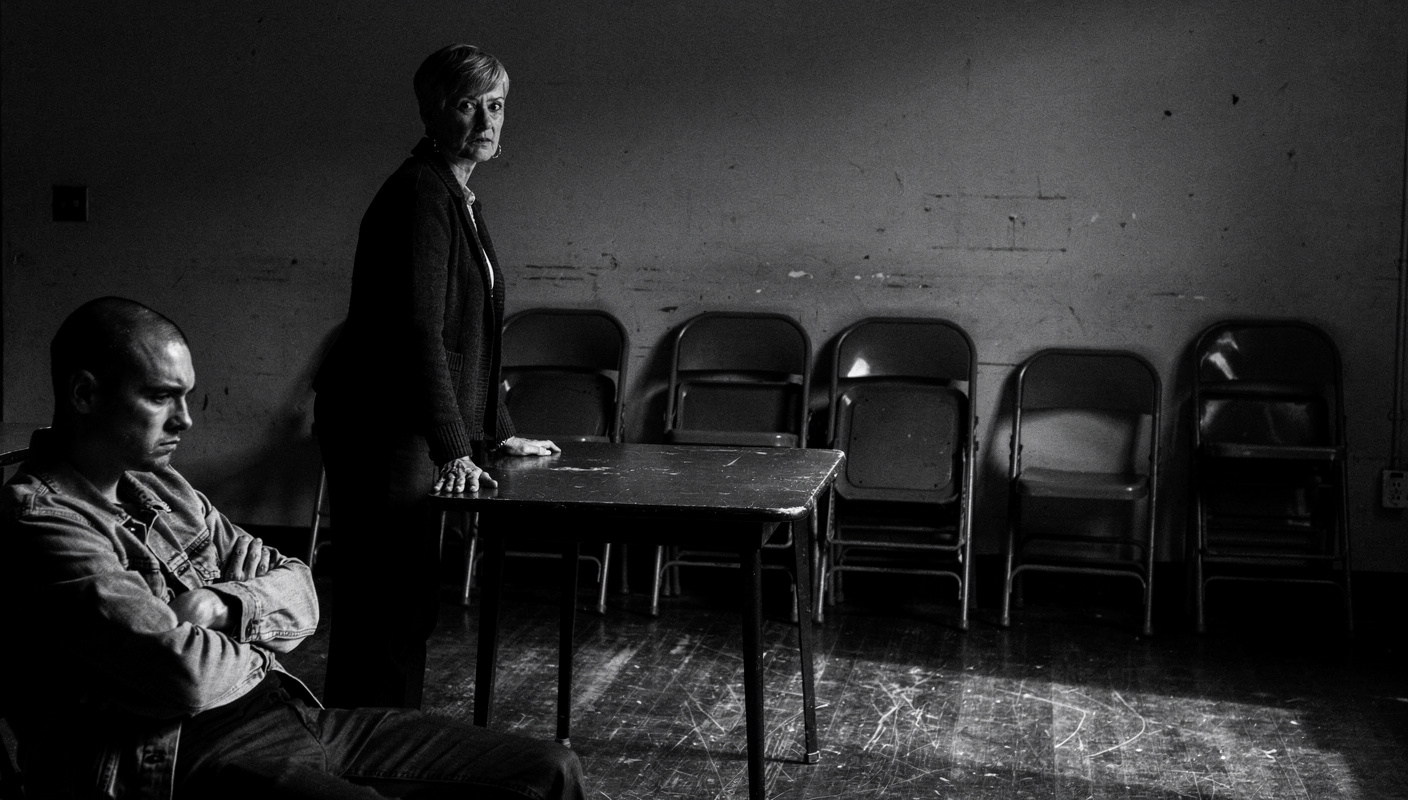
I once watched a project manager call a unanimous vote on a restructuring plan while two of his five team members were turned sideways in their chairs, arms folded, eyes fixed on the floor. He counted the raised hands. He called it done. Three weeks later, the plan had quietly collapsed because those two people had never truly agreed. The body language signals were all there. He just did not know how to read them.
That experience shaped everything I later taught about group communication. A room full of bodies tells a story that spoken words frequently contradict. When you can read that story in real time, you gain the ability to intervene before a false consensus becomes a broken decision. The five scenarios below are drawn from situations I have observed across decades: boardrooms, community halls, staff canteens, and cramped site offices. Each one shows a specific physical shift, what it looked like, what it meant, and what it cost when someone missed it or caught it just in time.
What to Watch Before You Trust the Words
Before the examples, you need a lens. The key is not to look at individual signals in isolation. A single crossed arm means very little. What matters is clusters and changes: a group of signals appearing together, or a shift in how people are holding themselves as the conversation moves.
Watch for three things as a discussion progresses. First, postural alignment: are bodies beginning to mirror each other, or are they diverging? Second, orientation: are people angling toward the centre of the group and toward each other, or are they pulling back and turning sideways? Third, engagement cues: are faces relaxed and directed at the speaker, or are people looking at documents, phones, or the middle distance?
These patterns do not lie. They tell you whether the group is genuinely converging or simply running out of energy to keep disagreeing. Knowing how to read nonverbal communication in tense situations is what makes the difference between a decision that holds and one that unravels.
"The Conversation You're Avoiding Is the One You Need to Have."
"The Conversation You're Avoiding
Is the One You Need to Have."
Stop rehearsing conversations you'll never have. Say It Right Every Time gives you 115 word-for-word scripts and 16 proven frameworks to speak with confidence in every conversation that matters.
Five Moments When Body Language Told the Real Story
1. The Team That Leaned In Together
A team of seven had been arguing about a product launch timeline for forty minutes. The discussion was fractious. People were interrupting, and two members had barely spoken. Then one of the quieter members offered a middle-ground proposal: a phased launch with clear review checkpoints.
Something shifted. Not in the words, but in the bodies. Over the next two minutes, five of the seven began to lean forward, forearms moving toward the table. Heads turned toward the person who had just spoken. One by one, members stopped looking at their own papers and started looking at each other. The two who had been most vocal in opposition physically softened: uncrossed arms, shoulders dropped from near the ears.
The facilitator caught it. She paused, named what she saw, and asked for a show of hands. It was unanimous, and it held. What those body language signals were showing was synchrony: the group's nervous systems arriving at the same place at the same time. That kind of mirroring is not manufactured. It emerges when people genuinely reach the same conclusion, and it is unmistakable once you know what you are looking for.
2. A Vote Called Too Soon
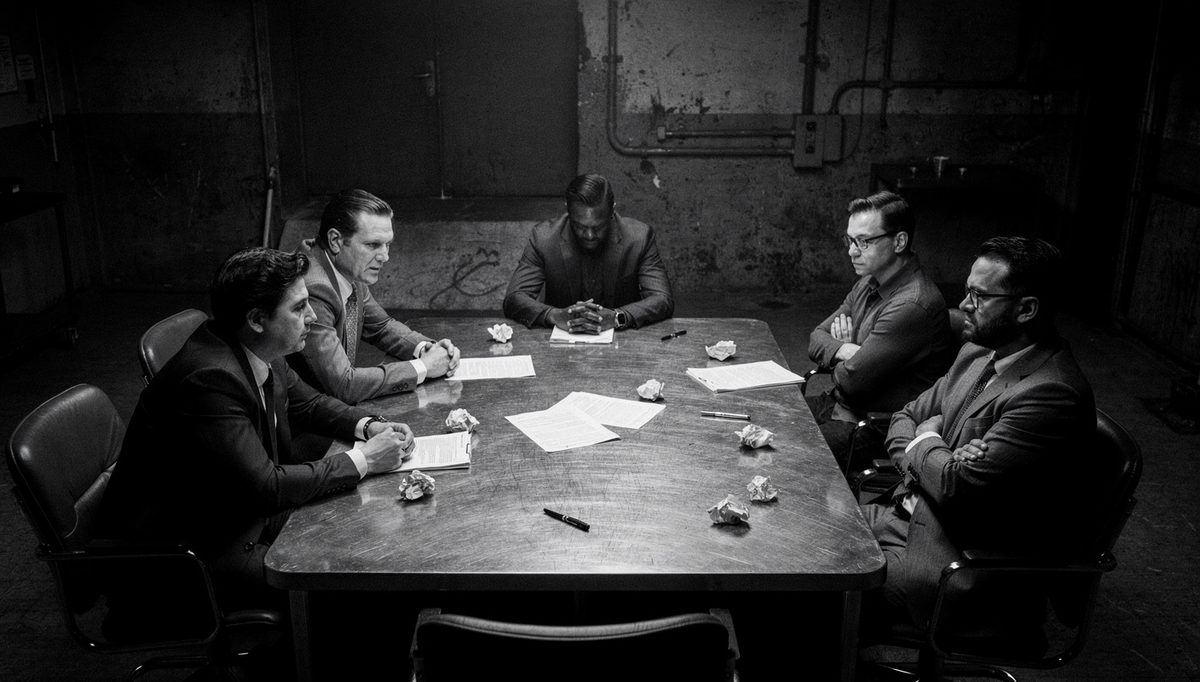
Six department heads were working through a budget reallocation. The chair was under time pressure and pushed toward a decision after thirty minutes. He asked if everyone was aligned. Several people nodded. He called the vote. It passed five to one.
What he missed: two of the five who voted in favour had not spoken since the first ten minutes. Their bodies had been sending clear signals throughout. One had her chair angled slightly away from the table. Another had been resting his chin in his hand, elbow propped, gaze directed toward the window rather than the group. Neither was leaning in. Neither had mirrored the more engaged members. The single no vote was the most honest person in the room. The other four silent doubters had simply complied.
Within a fortnight, both of those quiet members were raising objections through their managers. The budget reallocation quietly stalled. This pattern is what happens when dominant voices fill a discussion and quieter members disengage physically long before they disengage formally: their bodies tell you they are gone even while their hands go up.
3. The Moment a Divided Room Began to Heal
A community board of eight had been split three ways over a neighbourhood development proposal. Two members had not made eye contact with each other in twenty minutes. The body language in that room was a map of the conflict: bodies angled away from the opposing faction, two people with arms folded and feet pointing toward the door, a cluster of three who kept leaning toward each other and away from the rest.
Then the chair did something simple. He named a shared concern: the safety of the pedestrian crossing outside the site. Every person in that room cared about that crossing. Within seconds, bodies began to shift. The two people who had been avoiding eye contact both turned toward the speaker. One unfolded her arms to reach for her notes. The foot orientations changed. Three separate body-clusters began to merge into one shape facing the same direction.
The body language signals of convergence appeared a full five minutes before anyone used the word "agreement." The chair read those signals and knew the ground was ready. He moved forward, and the decision held. Knowing how to handle conflict during meetings often comes down to timing: catching the moment the room is physically ready before it is verbally ready.
4. Silent Dissent in a Leadership Team
This is the example that shows what it costs to miss the signals entirely. A leadership team of five was reviewing a restructuring proposal that their director had clearly invested in emotionally. The director was confident, well-prepared, and spoke with energy. Three team members nodded throughout. The fourth asked one clarifying question and then went quiet. The fifth said nothing at all.
The director read the nods as agreement. He did not notice that the two quiet members were displaying a specific cluster: they nodded verbally while their torsos were rotated slightly away from the table, their contributions to eye contact were brief and then dropped, and neither leaned forward at any point in a forty-minute discussion. One had both feet flat on the floor pointed toward the exit. These are body language signals of managed politeness, not alignment.
The restructuring launched. Within six weeks, both quiet members had raised formal concerns through HR. The proposal had to be significantly amended, at considerable cost in time and trust. What was happening in that room was an amygdala hijack playing out in slow motion: people too threatened by the power dynamic to speak, their bodies holding what their voices would not. The director paid for not reading the room.
5. Watching Consensus Form in Real Time
The clearest example I ever witnessed of consensus forming through body language happened in a staff meeting of nine people at a small manufacturing firm. They were debating shift patterns, a topic that affected everyone personally. The discussion was careful and slow.
For the first twenty minutes, bodies were scattered: some leaning back, some forward, chairs at varying distances from the table, eye contact patchy. Then a pattern began to emerge. As one particular rota option stayed on the table and the counterarguments weakened, a physical change swept through the group like a slow tide. Chairs moved closer. Backs straightened. Heads began to tilt toward the same point. Four people nodded at roughly the same moment without any orchestration.
I was watching from the side of the room. I noted the time: the group had reached physical consensus at least three minutes before the facilitator asked whether they were ready to decide. This is why ensuring every participant gets heard matters so much: the two members who had spoken least were the last to shift posture, and it was only when their bodies joined the cluster that the consensus was genuinely whole.
What These Signals Have in Common
Across all five scenarios, the same patterns surface. Consensus does not arrive in a single moment; it accumulates physically, one person at a time, as the group's bodies begin to organise around a shared point. Division shows in fragmentation: separate clusters, divergent orientations, the physical withdrawal of people who have mentally left the conversation while still sitting in the room.
The second pattern is the gap between verbal and physical agreement. People nod, say yes, raise hands, and still leave a meeting with no intention of following through. The body language signals that reveal this gap are not subtle: torso angle, foot orientation, eye contact duration, and postural openness collectively tell a story that words are written to conceal.
The third pattern is about timing. Body language shifts before verbal agreement is reached, and physical withdrawal precedes formal dissent by a significant margin. The same principle applies to tension between individuals: the physical signals of escalation appear long before the argument becomes explicit. Catching both ends of that arc, the convergence and the withdrawal, is what separates a facilitator who prevents broken decisions from one who spends months repairing them.
Reading Your Own Room
Here is what makes this practical. You do not need to become an expert in microexpressions. You need to build the habit of pausing, before you call any decision, and scanning the room for three things: postural alignment across the group, where bodies are oriented, and who has gone physically still or turned away.
If you see alignment, lean in, and open orientation from the majority of the group, the ground is ready. If you see two or three members displaying the opposite, name it directly before you proceed. A simple question, such as "I want to make sure we are all genuinely with this before we commit," is often enough to bring hidden dissent into the open where it can be resolved. Having a direct, prepared phrase ready for those moments is what turns awareness into action.
The body language signals of a room are always present. They do not wait for you to be ready. The question is simply whether you are in the habit of looking.
Frequently Asked Questions (FAQ)
What are body language signals of group consensus?
When a group reaches genuine consensus, members tend to mirror each other physically: they lean forward together, maintain open posture, make relaxed eye contact, and nod in natural synchrony. These signals emerge organically and are distinct from polite compliance, which looks stiff and controlled.
How do body language signals reveal silent dissent?
Silent dissent shows in clusters: a person may nod verbally while turning their torso away, crossing their arms, or directing their feet toward the exit. These contradictions between what someone says and how their body is positioned are the clearest indicator of unresolved disagreement.
Can body language signals predict whether a decision will stick?
Yes, with practice. Decisions made while the group displays open, synchronised posture tend to hold. Decisions reached while members show physical withdrawal, avoid eye contact, or keep their bodies angled away from the group often unravel within days, as quiet dissent surfaces through action.
What body language signals should a facilitator watch during a group discussion?
Watch for postural shifts, changes in eye contact, and whether members are orienting their bodies toward or away from the speaker. A sudden stillness across the group, or several people simultaneously breaking eye contact, often signals that something has landed uncomfortably and needs to be named.
How are body language signals different in remote versus in-person meetings?
In remote meetings, the visible signals compress to the face and shoulders. Watch for camera avoidance, reduced nodding, frozen expressions, and the moment someone mutes themselves unnecessarily. These are the remote equivalents of physical withdrawal, and they carry the same weight as turned shoulders in a live room.
How do you use body language signals to read a room before calling a vote?
Before calling any vote, scan the room for postural alignment. If most people are leaning in and facing each other, the ground is ready. If several members are angled away, arms folded, or staring at documents rather than at each other, the group is not yet aligned, and pressing forward will cost you later.