
In Short
Your body language in a hard conversation is either planned or reactive. When it is reactive, it tends to betray you at the worst possible moment. The Conversation Pre-Mortem is a structured preparation method that lets you identify how your body is likely to respond under pressure, rehearse a better physical response, and walk in with your posture already decided.
- Most people prepare their words. Almost nobody prepares their physical presence.
- Under stress, your body reverts to survival instincts, not professional intentions.
- Deliberate rehearsal of posture and gesture before the conversation builds physical composure you can trust when it counts.
Body language, in the context of preparing for a difficult conversation, refers to the deliberate management of posture, gesture, facial expression, and physical presence to support clear, confident communication. It is a learnable, practicable skill, not a fixed personality trait.
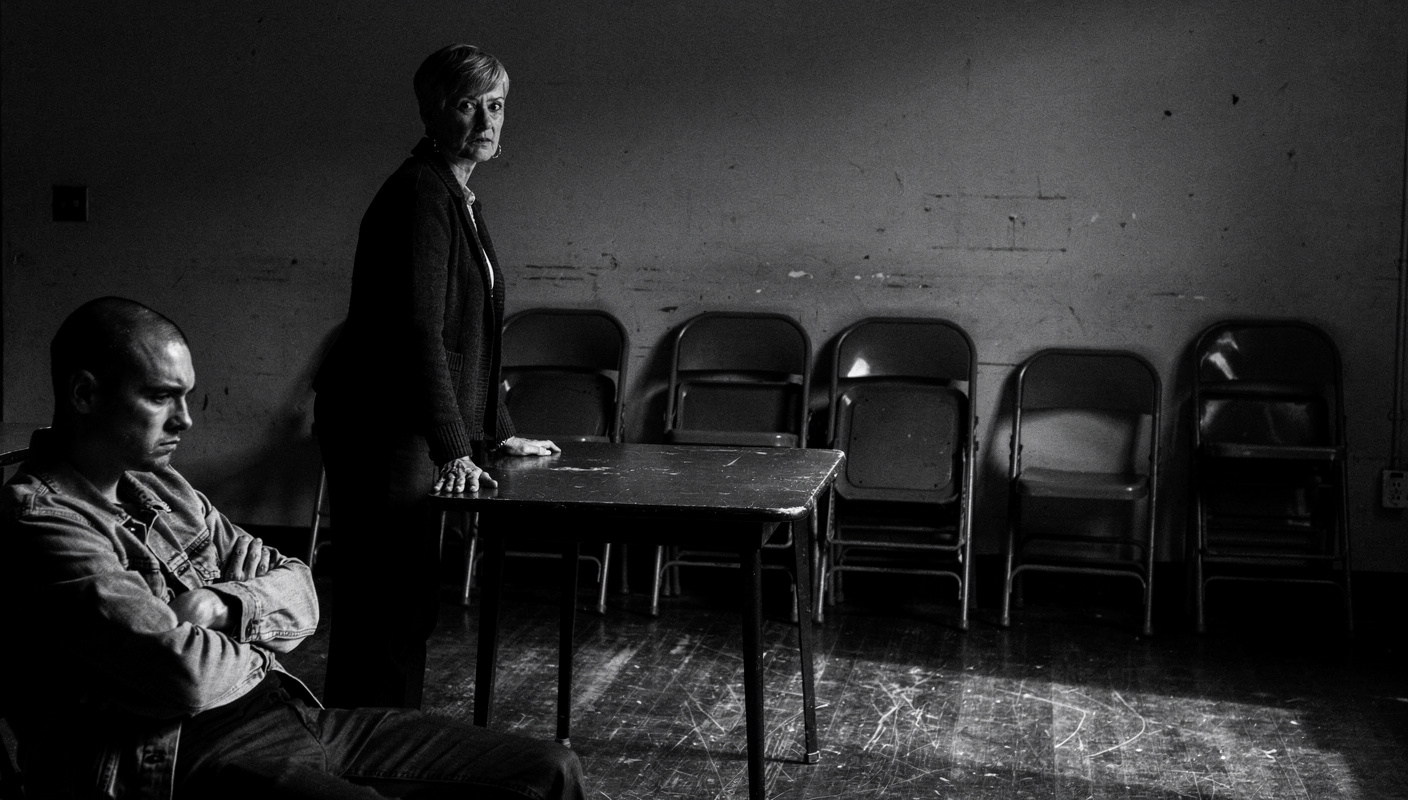
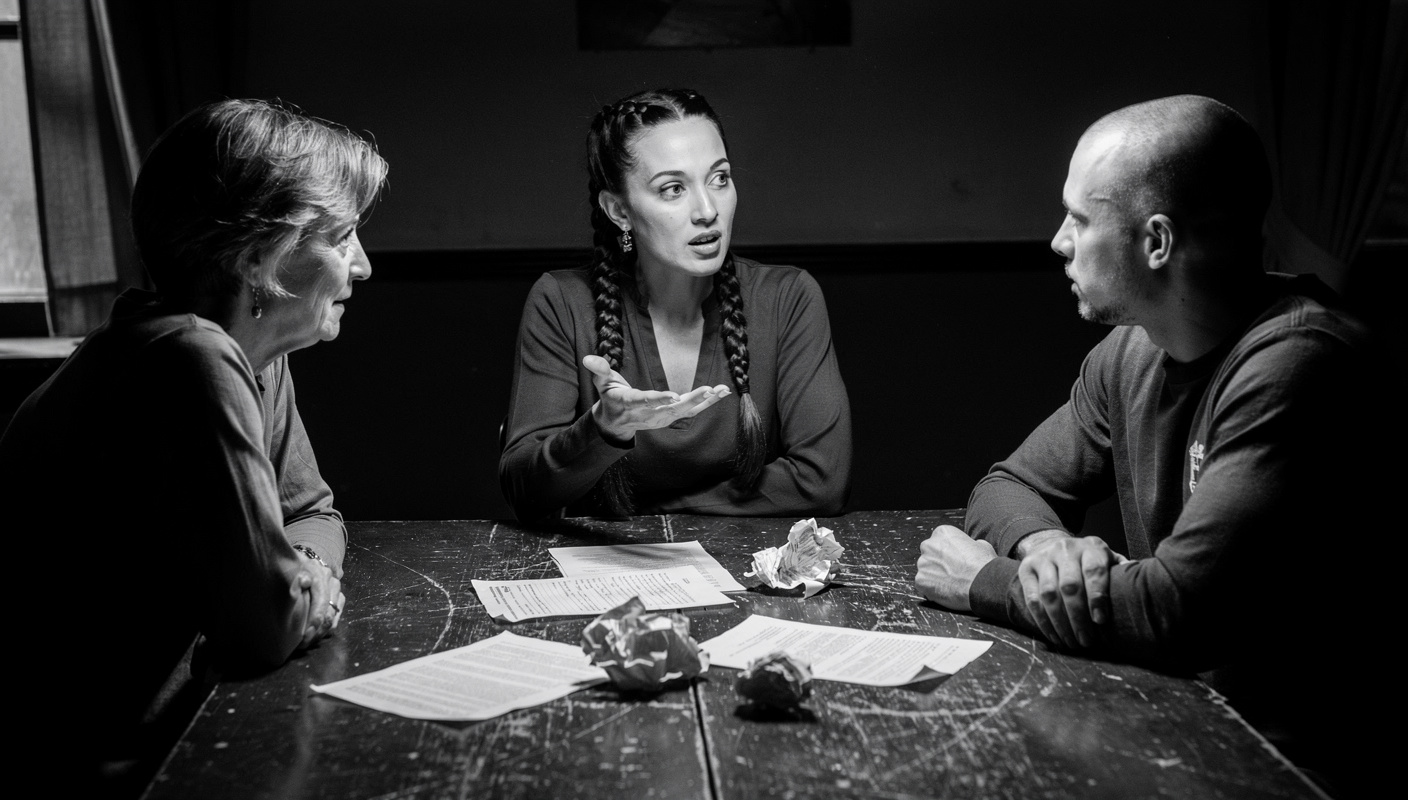
There is a particular kind of failure I have witnessed many times over six decades of working with people in high-pressure situations. Someone walks into a hard conversation with their words perfectly prepared. They know their opening line. They have thought through the main points. And then the other person says something unexpected, and everything falls apart, not because the words disappear, but because the body gives the game away entirely. Shoulders round forward. Eye contact breaks. Arms fold across the chest. The other person reads every signal and the conversation is already tilted before a second sentence is spoken.
Preparing body language in advance is not something most people think to do. They prepare arguments. They prepare scripts. But they leave their physical presence to chance, which means they leave it to stress. Under pressure, the body does not default to your best self. It defaults to something older and more defensive. The good news is that this is entirely fixable, if you prepare the right way, before you walk in the door.
Why Your Body Betrays You Before Your Words Do
The problem is physiological before it is behavioural. When the brain registers a difficult conversation as a social threat, it responds the same way it responds to a physical one. This is what I describe in Say It Right Every Time as the amygdala hijack: the part of your brain responsible for threat detection floods your system with stress hormones, and your body tightens in response. Your shoulders rise toward your ears. Your jaw clenches. Your posture collapses inward. Your eye contact becomes either too intense or too avoidant.
None of this is a character flaw. It is biology. But it is also, with practice, something you can work around.
The difficulty is that most preparation advice addresses the conscious mind. People are told to "stay calm" or "be confident," as though confidence were a switch you could flip. In Say It Right Every Time, I argue the opposite: confidence is not a prerequisite for action, it is the result of it. The confidence-competence loop works the same way for body language as it does for spoken words. You practise the physical response, the physical response becomes familiar, and that familiarity produces the calm you were hoping to summon from thin air.
What you need is a method for preparing your body, not just your mind. That method is the Conversation Pre-Mortem, applied specifically to your physical presence.
"The Conversation You're Avoiding Is the One You Need to Have."
"The Conversation You're Avoiding
Is the One You Need to Have."
Stop rehearsing conversations you'll never have. Say It Right Every Time gives you 115 word-for-word scripts and 16 proven frameworks to speak with confidence in every conversation that matters.
What the Conversation Pre-Mortem Is and Where It Comes From
I first introduced the Conversation Pre-Mortem in Chapter 3 of Say It Right Every Time as an anticipatory anxiety-reduction exercise. The core idea is simple: before the conversation happens, you walk through the ways it could go wrong, assess how likely each scenario is, and create a concrete plan for handling each one. You pre-mortise the failure instead of being ambushed by it.
Most people who encounter this technique apply it to their words: what to say if the other person gets defensive, how to respond if they challenge your data, what to do if the conversation turns emotional. All of that is valuable. But there is a second application that gets almost no attention, and it is the one I want to work through in detail here: using the Pre-Mortem to map and rehearse your physical responses in advance.
Your body language in a difficult conversation is not random. You have patterns. You have specific gestures and postures that emerge under specific kinds of pressure. The Pre-Mortem gives you a structured way to identify those patterns before they appear in the room, and to replace them with rehearsed, deliberate alternatives.
If you want to understand how nonverbal communication operates in tense situations more broadly, that context is worth reading alongside this. But here, we are focused on the practical preparation work you do before you arrive.
Before You Begin: Two Things That Must Be in Place
The Pre-Mortem only works if you complete two prior steps honestly.
First, you need a clear intention for the conversation. Not a desired outcome, an intention. The outcome depends on two people. The intention depends only on you. "I intend to stay physically open and grounded, regardless of what is said" is an intention. "I intend to get them to agree with me" is an outcome. Your body language preparation connects to the former, not the latter. The C.O.R.E. Framework for staying grounded during tense workplace conversations is a useful complement here, particularly for the moments when that intention is tested mid-conversation.
Second, you need honest self-knowledge about your body under pressure. Not what you wish you did, but what you actually do. Do you fold your arms when challenged? Do you lean back when you feel threatened? Do you avoid eye contact when you are uncertain? You cannot prepare a physical response to patterns you have not admitted to yourself.
With both of those in place, the Pre-Mortem steps below will produce something genuinely useful.
The Six-Step Body Language Pre-Mortem
Step 1: Picture the Conversation at Its Worst
Sit somewhere quiet with a notebook. Close your eyes. Run a mental film of the conversation going badly. Not catastrophically, just badly. The other person becomes defensive. They push back harder than you expected. They go quiet in a way that makes you uncomfortable. They challenge something you said.
Watch what your body does in that film. Be specific. Do your shoulders rise? Do you look away? Does your voice tighten even before the words form? Write down every physical response you notice. This is your body's current programming under stress, and you are mapping it before it can ambush you.
Step 2: Name Each Physical Pattern and Its Trigger
Take what you wrote and identify the trigger for each response. This matters because body language rarely collapses all at once. It collapses in response to specific moments.
For example: "When they challenge my data, I fold my arms." Or: "When there is silence after I say something difficult, I look away and fill the gap with unnecessary words, which makes me appear uncertain." The more precisely you can name the trigger and the response, the more precisely you can prepare for it.
If you practise the Empathy Bridge Technique before difficult conversations, you will already have some of this self-knowledge from that process. Pull it forward here.
Step 3: Design a Replacement Response for Each Pattern
For each physical pattern you identified, write a specific replacement. Not a vague intention ("be more open") but a precise physical instruction ("when challenged, press both feet flat on the floor and keep my hands loose on the table in front of me").
Here are three common patterns and their trained replacements:
Pattern: Crossing arms when the other person challenges you. Replacement: Place both hands open on the table, palms down, and leave them there.
Pattern: Breaking eye contact when the conversation gets uncomfortable. Replacement: Hold eye contact for a full breath after the other person finishes speaking before you look away or respond.
Pattern: Leaning back and reducing physical presence when you feel defensive. Replacement: Lean slightly forward at the waist, weight toward the conversation, not away from it.
Write your replacements in the first person, present tense, as though they are already happening.
Step 4: Build Your Pre-Conversation Physical Ritual
The Conversation Pre-Mortem is preparation, not magic. The physical responses you rehearse need a physiological foundation, or they will not hold when the pressure arrives. This is where the power posture comes in.
In Chapter 3 of Say It Right Every Time, I write about the physiological effects of deliberate physical positioning before a high-stakes conversation. The science is straightforward: an open, grounded stance, feet shoulder-width apart, weight balanced, shoulders relaxed and back, chin level, tells your nervous system that you are not under threat. Hold it for 60 to 90 seconds before you enter the room. Do this privately, before you are visible to the other person.
Combine the power posture with a single slow breath: inhale for four counts, hold for two, exhale for six. This activates your parasympathetic nervous system, which is the physiological opposite of the amygdala hijack. You are not faking calm. You are creating the conditions for it.
The S.B.I. Method for addressing difficult behaviour works better when you arrive in this physical state, because your body is not already primed for conflict before the first word is spoken.
Step 5: Rehearse the Physical Responses Out Loud
Reading a list of replacement responses is not enough. You need to rehearse them until they have some muscle memory behind them. This means physically doing them, not just thinking about them.
Stand up. Speak the opening of your planned conversation out loud. Then simulate the trigger: say the challenging thing the other person might say. And physically execute your replacement response. Press your feet to the floor. Place your hands open on the table in front of you. Hold your gaze. Do this three to five times, not once.
This will feel strange. That strangeness is exactly the point. You are building a new physical habit in low-stakes conditions so that it has a chance of running in high-stakes ones. This is what the confidence-competence loop looks like in practice: the small win of completing the rehearsal builds the physical confidence to attempt the real thing.
Step 6: Set One Physical Anchor for the Conversation
An anchor is a single, simple physical action you can return to when you feel yourself starting to drift back into old patterns during the conversation itself. One anchor, chosen in advance.
Good anchors are invisible to the other person and immediate to execute. For example: pressing your feet flat to the floor. Touching your thumb and forefinger together under the table. Taking one slow breath before responding. Whatever you choose, it should be something you can do in under two seconds, without drawing attention.
The anchor is your reset button. When you feel your shoulders rising or your eye contact breaking, the anchor brings you back to the physical state you prepared. This is how the 3-Second Pause stops tension from escalating in the moment: the pause is itself a kind of anchor, a beat of deliberate physical stillness before a reactive response can form.
Adapting the Pre-Mortem for Video Calls
The principles hold on video, but the physical reality changes significantly. On a screen, the other person sees your face and upper body only. That narrow frame amplifies everything: a tight jaw, a slight shoulder hunch, eyes that dart away from the camera. Small things that might pass unnoticed in a room become conspicuous in a rectangle.
When you run your Pre-Mortem for a video conversation, focus specifically on the upper body. Practise squaring your shoulders to the camera, not to the other person's image on screen. Position the camera so your eyes are level with the lens, which creates the visual experience of direct eye contact for the person watching. Place your hands visible on the desk in front of you, rather than hiding them below frame, which tends to make people appear guarded.
The biggest mistake people make on video is mirroring their stress physically while believing the other person cannot see it because they are not in the room. The other person can see it. Practise your replacement responses in front of a camera before the call, exactly as you would practise them in person.
If you lead a team and these conversations happen often, the Leadership Voice development process addresses how body language sits within the broader architecture of how leaders communicate.
Where People Go Wrong With Physical Preparation
Three mistakes come up consistently when people attempt to prepare body language in advance. Each one is understandable. Each one has a direct correction.
The mistake: Preparing physical responses in the abstract, without simulating the actual pressure.
Why it happens: Rehearsal feels awkward, and people stop before they have done it enough times to build any real muscle memory.
What to do instead: Add a specific stressor to your rehearsal. Say the challenging line out loud. Hear it. Then execute your replacement response. Without the simulated trigger, you are rehearsing the calm, not the recovery.
The mistake: Trying to manage too many physical patterns at once.
Why it happens: After mapping their patterns in Step 2, people try to fix everything simultaneously, which is overwhelming and produces a stiff, self-conscious performance.
What to do instead: Choose one primary replacement response and one anchor. Start there. Additional patterns can be addressed in later conversations. Mastery builds from one small win at a time.
The mistake: Abandoning the physical preparation when they feel confident going in.
Why it happens: If a conversation does not feel threatening in anticipation, people skip the Pre-Mortem entirely. The body tends to collapse in conversations that feel manageable until they suddenly are not.
What to do instead: Use the ritual for every significant conversation, not just the ones that feel frightening in advance. The Conversation Pre-Mortem for reducing tension before high-stakes team discussions makes the same point in a team context: preparation is most valuable precisely when it seems unnecessary.
Your Pre-Conversation Body Language Checklist
Use this before any significant conversation. It takes ten to fifteen minutes the first time. With practice, it compresses to two.
- Map your patterns. Write down two or three physical responses your body defaults to under pressure. Be honest and specific.
- Name the triggers. For each pattern, identify the specific moment in conversation that sets it off.
- Write your replacements. For each pattern, write a precise physical instruction: what you will do instead, described as a specific action, not a vague intention.
- Set your power posture. Stand in an open, grounded stance for 60 to 90 seconds before the conversation. Combine with a slow regulated breath.
- Rehearse under simulated pressure. Say the conversation out loud. Simulate the trigger. Execute the replacement. Repeat three to five times.
- Choose one anchor. One simple, invisible physical action to return to when you feel yourself drifting during the conversation.
- Check your camera or entry point. For video, confirm your lens position and upper-body frame. For in-person, decide where you will stand or sit and how you will position yourself as you enter.
Print this. Keep it somewhere you will use it.
The Conversation That Happens Before the Conversation
Here is the truth of it: the conversation where your body language is decided does not happen in the room. It happens in the ten minutes before you walk in. Every prepared gesture, every rehearsed stance, every chosen anchor, all of it is the real work. The conversation itself is just the performance of preparation you have already done.
I have watched people transform difficult professional relationships, not by becoming better arguers, but by becoming more physically composed. They stopped folding their arms. They held their gaze. They stayed in the room, physically, when the pressure came to leave it. None of that happened accidentally. It happened because they did the work beforehand.
You have the system now. The only thing left is to use it. The next time a hard conversation is on your calendar, run the Pre-Mortem. Prepare your body language the way you prepare your words. Walk in knowing what your hands will do, where your eyes will rest, how your shoulders will sit. That level of preparation is not rigidity. It is the quiet, earned confidence of someone who showed up ready.
Frequently Asked Questions (FAQ)
What does it mean to prepare body language before a conversation?
Preparing body language means deciding in advance how you will hold your posture, manage your gestures, and use eye contact during a difficult conversation. Rather than reacting physically in the moment, you rehearse your physical presence deliberately so it supports your words instead of undermining them.
How does the Conversation Pre-Mortem help with body language?
The Conversation Pre-Mortem asks you to picture the conversation going wrong before it happens. When you identify the specific moment your body language tends to collapse, crossed arms, dropped gaze, tight shoulders, you can prepare a physical response in advance and rehearse it until it feels natural.
Why does body language fall apart during high-stakes conversations?
Under pressure, the brain registers a difficult conversation as a social threat. The amygdala hijack response floods your system with stress hormones, which tighten your muscles, collapse your posture, and trigger defensive gestures. Preparation gives your nervous system a trained response to fall back on rather than a reactive one.
What is a power posture and how do I use it to prepare body language?
A power posture is a deliberate, open physical stance: feet shoulder-width apart, shoulders back and relaxed, chin level, that signals calm authority to both the other person and your own nervous system. Holding it for 60 to 90 seconds before a conversation helps regulate your physiological state and builds physical confidence.
How do I prepare body language for a remote or video conversation?
For video calls, preparation focuses on the upper body and face: square your shoulders to the camera, position your eyes level with the lens, and place your hands on the desk rather than hiding them. Rehearse staying still rather than fidgeting, and practise looking directly at the camera rather than at the other person's image on screen.
How long does it take to prepare body language using this method?
The full Conversation Pre-Mortem for body language takes about 10 to 15 minutes. With practice, the pre-conversation physical ritual, the grounding stance, the breath, the intention, compresses to under two minutes and becomes a reliable habit before any high-stakes discussion.