

What Happened
McKinsey recently published research on how top-performing CEOs approach stakeholder relationships differently than their peers. The findings point to a clear pattern: elite executives aren't just making better business decisions — they're communicating in a fundamentally different way with employees, investors, customers, and boards. The gap between good and great, it turns out, lives largely in how these leaders speak, listen, and follow through.
The Communication Angle
Most executives treat stakeholder communication like a quarterly obligation. They schedule the town hall. They send the investor letter. They do the press release. Then they wonder why nobody trusts them. Compare that to what McKinsey found in the best CEOs — these leaders treat communication as the actual work, not the packaging around the work.
Here's the sharpest contrast: the average executive communicates at stakeholders. The best ones communicate with them. That's not a small stylistic difference — it's a completely different operating model. Communicating at people means broadcasting your narrative and hoping it lands. Communicating with people means you've done the harder job of understanding what each audience actually needs to hear before you open your mouth.
Top CEOs do something specific that most leaders skip entirely: they segment their message. An employee doesn't need to hear the same version of a strategy shift that an institutional investor does. The core truth stays the same — you never spin differently to different audiences, because that's how you get caught — but the frame, the emphasis, and the language change. A plant worker needs to know how the decision affects their team on Tuesday. An analyst needs to know how it affects free cash flow in Q3. Telling both groups the same thing, verbatim, is lazy communication. It signals that you don't actually know your audience.
The second thing great CEOs do is close the loop. They don't just deliver a message — they confirm it landed. This sounds basic. It almost never happens. Most executives give a speech and call that communication. The best ones build in feedback mechanisms: direct conversations, skip-level meetings, honest one-on-ones where people can actually push back. Stakeholders stay loyal to leaders who make them feel heard. They abandon leaders who make them feel managed.
The third difference is consistency over time. One well-crafted message doesn't build a relationship. Fifty ordinary conversations, reliably delivered, over months and years — that's what builds trust. The worst thing a leader can do is go silent during uncertainty and then reappear with a polished statement when things stabilize. By then, people have already filled in the silence with their own story. And their story is always darker than the truth.
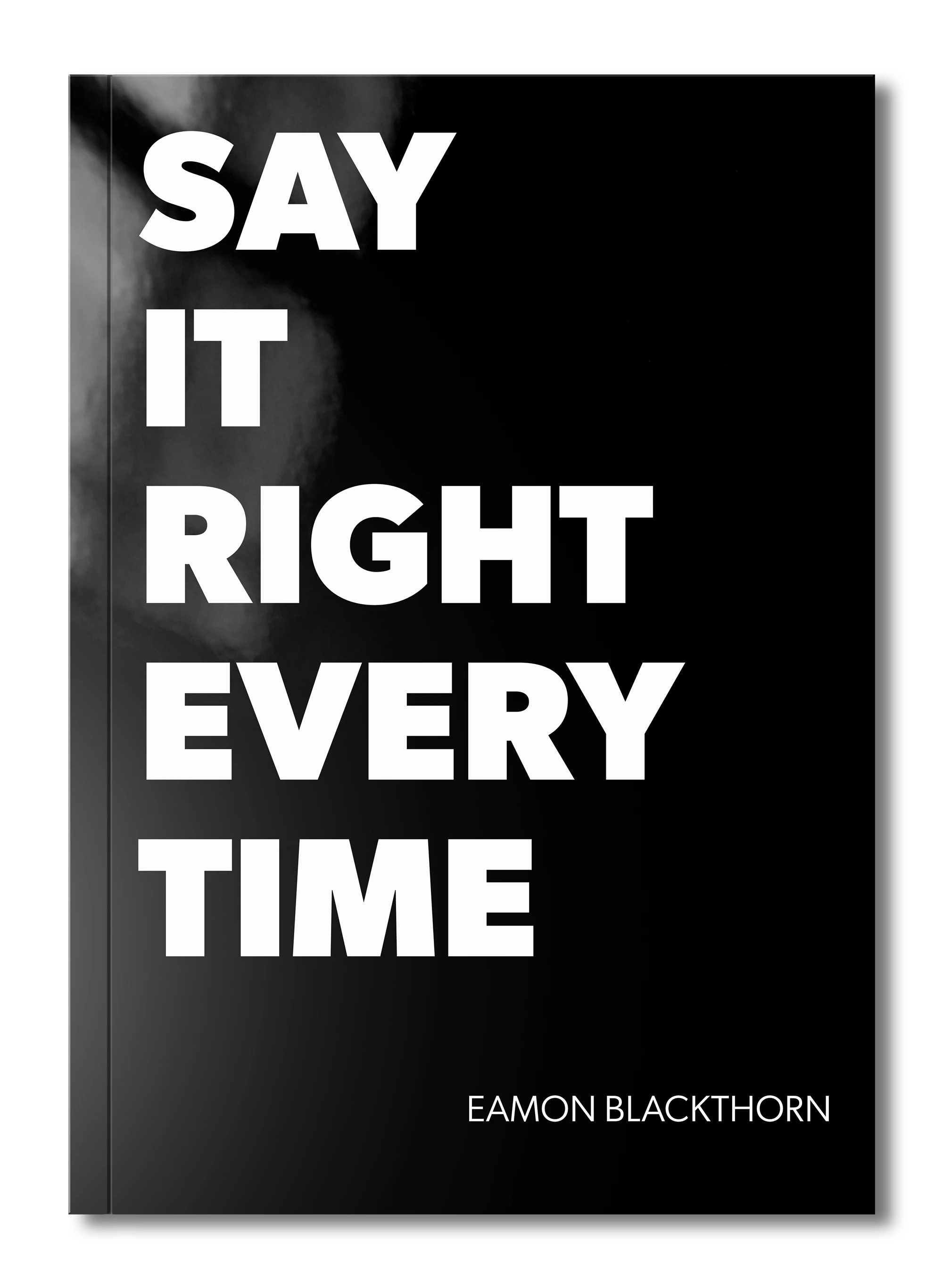
This is exactly the kind of scenario I break down in Say It Right Every Time — the chapter on audience mapping gives you a framework for identifying not just who you're talking to, but what emotional and practical state they're in before you speak a single word. Most communication fails at that first step, and it fails silently, which is the worst kind of failure.
Never Be Lost
for Words Again
Get word‑for‑word scripts for the conversations that shape your life, from job interviews and negotiations to difficult talks with family and partners, so you always know exactly what to say and how to say it.
Never Be Lost
for Words Again
Get word‑for‑word scripts for the conversations that shape your life, from job interviews and negotiations to difficult talks with family and partners, so you always know exactly what to say and how to say it.
Key Takeaway
Before your next stakeholder conversation — whether it's a board update, a team meeting, or a tough investor call — write down two things: the specific concern that person is most likely walking in with, and the one concrete thing you want them to leave believing. Then build your entire message around closing the gap between those two points. Stop preparing what you want to say. Start preparing what they need to hear.