

What Happened
Harvard Law School's corporate governance forum published a guide aimed at corporate directors on how to use transparency as a tool for building trust. The piece positions openness not as a legal obligation or PR strategy, but as a deliberate leadership practice. It's targeted at board-level executives who shape how organizations communicate with stakeholders, investors, and the public.
The Communication Angle
Here's the lesson, stated plainly: transparency without structure is just noise.
Most executives hear "be more transparent" and interpret it as "say more." So they release more statements, hold more town halls, publish longer annual reports. None of it builds trust. Why? Because volume isn't transparency. Clarity is.
The reason guides like this one matter — and why this one lands correctly — is that they reframe transparency as a communication choice, not a disclosure checklist. When a board director decides what to share, when to share it, and how to frame it for a specific audience, that's active communication work. That's the difference between a company that survives a crisis with its reputation intact and one that watches trust evaporate despite saying all the "right" things.
Think about what actually makes a stakeholder trust you. It's not that you told them everything. It's that you told them the right things, in plain language, before they had to ask. That's the mechanism. Anticipate the question, answer it directly, and don't dress it up. The moment your transparency starts to feel like a legal brief, you've already lost the room.
The best corporate communicators I've observed follow one unbreakable rule: they never make the audience work for the point. If a director is addressing investors after a difficult quarter, the instinct is to bury the bad news in context — three paragraphs of macro conditions before you name the actual problem. That's not transparency. That's delay with extra steps. Say the hard thing first. Then explain it. Then tell them what you're doing about it. That sequence is what trust is actually built on.
Directors who master this don't just communicate better — they lead better. Because when your people and your stakeholders know they'll get a straight answer from you, they stop filling the silence with their own worst-case assumptions. You control the narrative not by spinning it, but by showing up with it first.
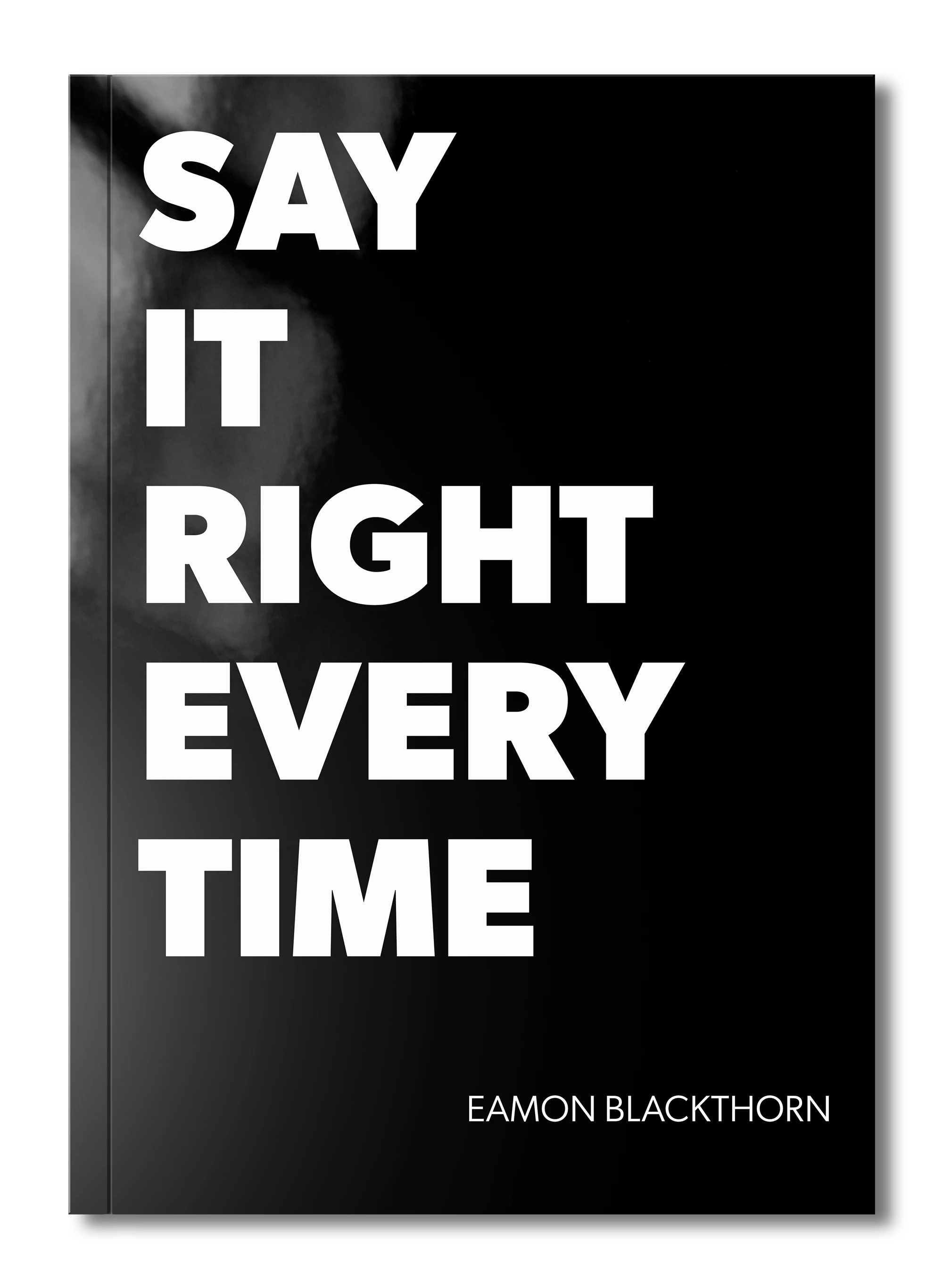
This is exactly the kind of scenario I break down in Say It Right Every Time — the chapter on leading with the hard truth gives you a framework for sequencing difficult information so your audience feels informed rather than managed. The principle is simple: people don't distrust bad news. They distrust the people who make them dig for it.
Never Be Lost
for Words Again
Get word‑for‑word scripts for the conversations that shape your life, from job interviews and negotiations to difficult talks with family and partners, so you always know exactly what to say and how to say it.
Never Be Lost
for Words Again
Get word‑for‑word scripts for the conversations that shape your life, from job interviews and negotiations to difficult talks with family and partners, so you always know exactly what to say and how to say it.
Key Takeaway
Before your next stakeholder communication — whether it's an investor update, a team briefing, or a board presentation — write down the one thing your audience is most worried about. Then make sure that thing gets addressed in the first 90 seconds. Not buried at the end. Not sandwiched between good news. First. That single habit will do more for your credibility than any communication training ever will.