

What Happened
McKinsey recently published research on what separates elite CEOs from average ones when it comes to building stakeholder relationships. The findings point to a specific set of behaviors that top executives use consistently, not just during crises or quarterly earnings calls, but as a daily operating standard. The core argument is that relationship-building is not a soft skill. It is a strategic discipline.
The Communication Angle
Here is the question worth asking: Why do so many smart, accomplished CEOs fail at stakeholder communication when they are clearly capable of mastering harder problems?
The answer is not intelligence. It is not even effort. It is that most CEOs treat stakeholder communication as broadcasting. They prepare their message, deliver it well, and consider the job done. The best CEOs do the opposite. They treat every stakeholder conversation as a two-way negotiation of trust. That requires a completely different set of skills.
The first skill is audience specificity. Top CEOs do not send the same message to employees, investors, and regulators and assume it lands equally well. They identify what each group fears, what each group wants to protect, and what each group needs to believe before they will act. Then they build the message around that. This is not manipulation. It is respect. You are saying: I know who you are, and I am speaking directly to you.
The second skill is consistency over time. One well-crafted speech does not build a relationship. What builds a relationship is saying the same thing, with the same values underneath it, across dozens of interactions over years. The CEOs who earn deep stakeholder trust are the ones who are predictable in the best sense. When something goes wrong, people already know what that leader stands for because they have heard it thirty times before in smaller moments.
The third skill is the hardest: knowing when to stop talking. Weak communicators fill silence. They over-explain, over-justify, and over-reassure. Strong CEOs make a clear point, then let it land. They leave room for the other person to respond. Silence is not failure. Silence is invitation. The moment you stop talking is often the moment the real conversation begins.
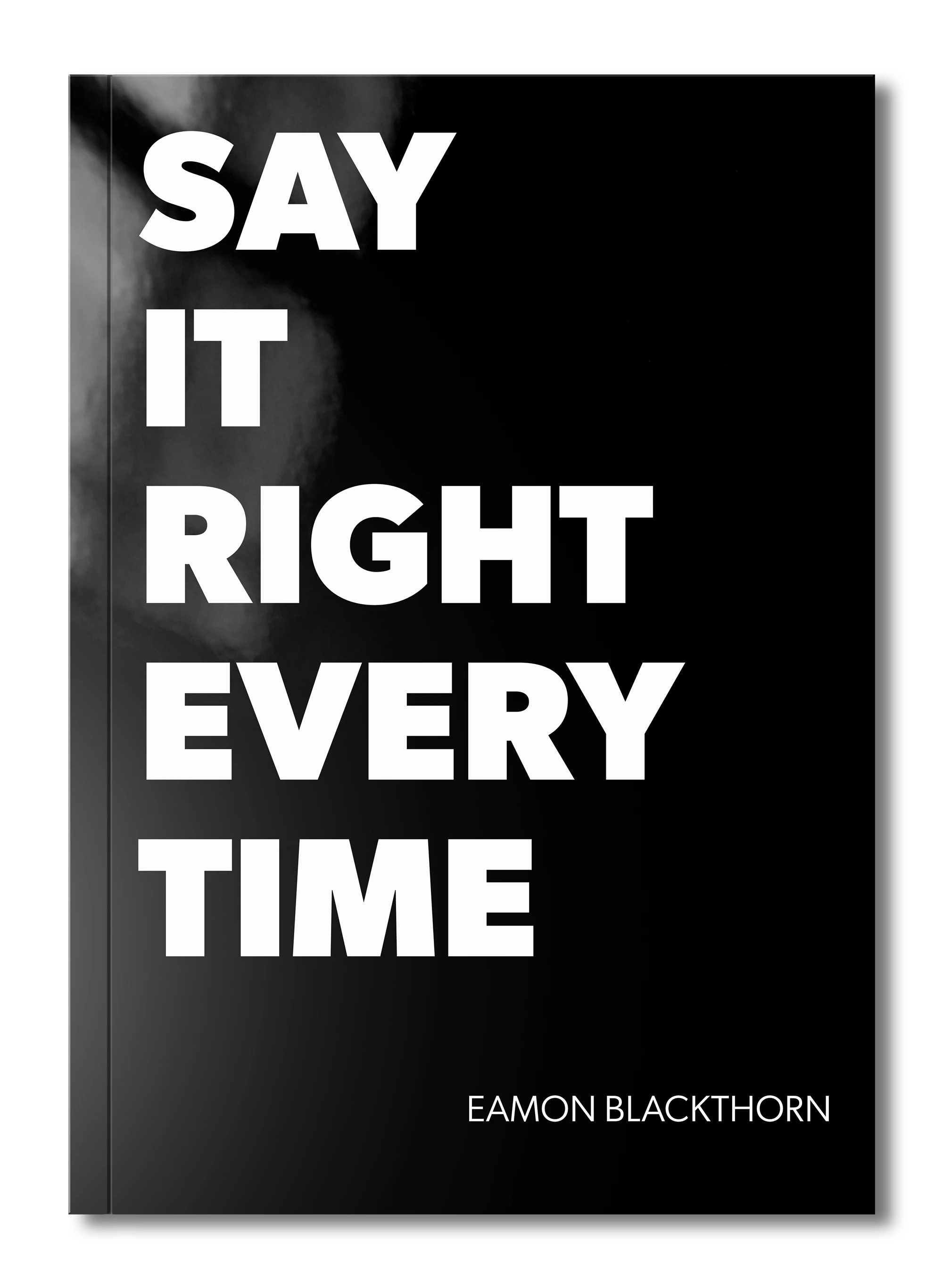
This is exactly the kind of scenario I break down in Say It Right Every Time. The chapter on audience-first communication gives you a framework for reverse-engineering your message from your listener's perspective instead of your own. It sounds simple. Almost nobody does it. The CEOs McKinsey studied are doing it instinctively. The framework makes it a repeatable process anyone can follow.
Never Be Lost
for Words Again
Get word‑for‑word scripts for the conversations that shape your life, from job interviews and negotiations to difficult talks with family and partners, so you always know exactly what to say and how to say it.
Never Be Lost
for Words Again
Get word‑for‑word scripts for the conversations that shape your life, from job interviews and negotiations to difficult talks with family and partners, so you always know exactly what to say and how to say it.
Key Takeaway
Before your next stakeholder meeting, write down two things: the one belief you need that person to walk away with, and the one question you are going to ask them that you do not already know the answer to. Preparation should be split equally between what you will say and what you will learn. Most people spend all their time on the first half and skip the second entirely.