Crisis & Reputation News
Expert commentary on crisis & reputation communication events and trends.
 4 min audio
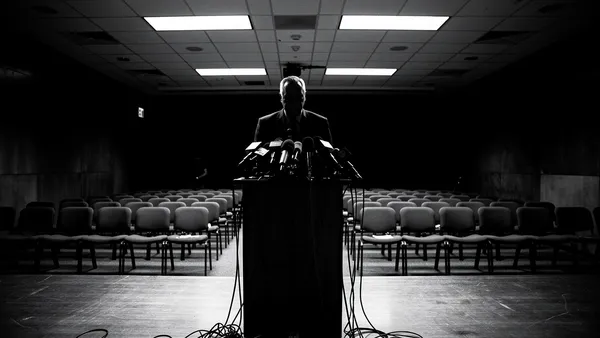
 What Celebrity Scandals Teach You About Apologies
When public figures fall from grace, their path back depends almost entirely on how they communicate, not on what they actually did. The celebrity world has become a masterclass in reputation recovery, with some stars rebuilding stronger than before while others disappear entirely. The difference is almost never about the scandal itself. It is about the words chosen, the timing of those words, and who delivers them.
 4 min audio
 Brand Crisis Communication: Lead With Truth or Lose
Shopify recently published a comprehensive guide on brand crisis management, laying out a framework for how businesses should respond when their reputation comes under fire. The guide covers everything from early detection to post-crisis recovery, positioning itself as a practical playbook for modern brands. It reflects a growing reality: companies are not asking *if* a crisis will happen, but *when*.
 4 min audio
 How to Rebuild a Damaged Brand Reputation Fast
Brand reputation is fragile, and most businesses learn that lesson too late. A damaged reputation does not fix itself quietly over time. It requires a deliberate, structured communication response. Business News Nigeria recently addressed this reality, outlining a framework for companies trying to recover lost public trust. The core challenge is not fixing what went wrong internally. It is convincing the outside world that something real has changed.
 4 min audio
 Social Media Fails: What Brands Keep Getting Wrong
Brands across industries have repeatedly torched their reputations on social media through avoidable communication blunders. From tone-deaf responses to public outrage, to corporate accounts trying too hard to be funny at the worst possible moments, these failures share a common thread. The companies that crash hardest are not the ones with the worst products. They are the ones with the worst instincts when the pressure is on.

Never Be Lost for Words Again
Get word‑for‑word scripts for the conversations that shape your life, from job interviews and negotiations to difficult talks with family and partners, so you always know exactly what to say and how to say it.
Never Be Lost
for Words Again
Get word‑for‑word scripts for the conversations that shape your life, from job interviews and negotiations to difficult talks with family and partners, so you always know exactly what to say and how to say it.
 4 min audio
 PR Crisis? Your First 24 Hours Are Everything
When a PR crisis hits, most organizations freeze. A recent piece in Lexology tackled the mechanics of reputation damage control, outlining how companies can contain fallout before it becomes permanent. The core argument: survival depends not on what went wrong, but on how fast and how honestly you respond. The clock starts the moment the story breaks, not when your legal team finishes reviewing your statement. ---
 4 min audio
 How to Turn a Crisis Into a Competitive Advantage
FTI Consulting published a strategic framework arguing that organizations should stop treating crises as disasters to survive and start treating them as opportunities to gain ground on competitors. The core claim: how a company communicates during a crisis reveals its true character, and that revelation can either cost you everything or win you loyalty that years of good PR never could. The firms that win long-term are the ones that lead, not react.
 4 min audio
 University of Liberia Crisis: What the President Got Wrong
The president of the University of Liberia recently went public with a structured plan to resolve a backlog of institutional problems: staff grievances, crumbling infrastructure, unpaid salaries, and social security disputes. The target date to reopen the university is August 25, 2026. The announcement was framed as a solution, but the communication choices behind it tell a different story.
 4 min audio
 When a Public Apology Makes Things Worse
Trinidad and Tobago MP Camille Robinson-Regis publicly apologized to UDeCOTT Chairman Shankar Bidaisee after statements she made at a press conference connected him to two HDC insurance brokerage contracts. The apology came through a written release, just days after her original remarks. The speed of the reversal and the formal channel she chose tell us everything about the pressure she was under.
Never Be Lost for Words Again
Get word‑for‑word scripts for the conversations that shape your life, from job interviews and negotiations to difficult talks with family and partners, so you always know exactly what to say and how to say it.
Never Be Lost
for Words Again
Get word‑for‑word scripts for the conversations that shape your life, from job interviews and negotiations to difficult talks with family and partners, so you always know exactly what to say and how to say it.
 4 min audio
 What a 20-Second Train Apology Teaches About Trust
In 2017, a Tokyo train operator made a rare mistake: one of its trains pulled out of the station twenty seconds ahead of schedule. Not a single passenger filed a complaint, and no one reported missing the train. Despite the complete absence of harm or public outcry, the company issued a formal written apology to the public, taking full responsibility for the error.
 4 min audio
 One Bad Quarter Can Sink a Year of Reputation Work
New research confirms what experienced operators have long suspected: in certain industries, one poor quarter of reputation management produces losses that dwarf an entire year of doing it right. The asymmetry is brutal and unforgiving. Healthcare, financial services, and consumer goods top the list of sectors where a single mishandled public moment can erase hard-won trust built over months of careful, consistent communication.
 4 min audio
 What Brands Get Wrong Before a Talent Crisis Hits
Brands routinely face the fallout when a spokesperson, influencer, or hired talent goes off-script in damaging ways. The pattern is always the same: a crisis erupts, the brand scrambles, and a playbook gets assembled after the fact. The real story here is not about damage control. It is about the communication failures that happen months before anything goes wrong, during vetting, contracting, and alignment.
 4 min audio
 Brand Talent Crisis: What to Say When It Explodes
Brands are waking up to a hard truth: the talent they partner with can detonate their reputation overnight. Ad Age recently examined how companies can build a smarter process for vetting spokespeople, influencers, and ambassadors before signing deals, and how to respond when those relationships go sideways anyway. The piece lays out a playbook covering the full arc from selection to damage control.

Celebrity Scandal Recovery: What Communication Gets Right

Brian Cox Medal: What Experts Can Learn From Him

Celebrity Comebacks: What Actually Rebuilds Trust

Why One Bad Quarter Destroys a Year of Reputation Work

Junior Dev's Win Became a Loss: A Communication Lesson

What Remote Managers Get Wrong About Communication

Stalin vs Vijay: What Attack Politics Reveals About Communication