
What Happened
Harvard Business School Online published a guide outlining five strategies for resolving conflict at work. The piece targets professionals and managers looking for structured approaches to workplace tension. It represents the kind of top-down, institutional advice that floods the corporate world every year, packaged neatly and delivered with the HBS stamp of authority.
The Communication Angle
Here is the problem with most conflict resolution advice, including whatever Harvard published: it treats conflict as a problem to be managed rather than a conversation to be had. That distinction matters more than anything else in the piece.
Compare two managers facing the same situation. An employee is underperforming and two colleagues have complained. Manager One reads the five strategies, walks into the meeting armed with frameworks, and proceeds to "facilitate dialogue" using careful, neutral language designed to offend no one. Manager Two walks in, states the specific problem plainly, listens without interrupting, and names what needs to change by Friday. One of these managers resolves the conflict. The other reschedules it.
The institutional approach to conflict, Harvard's included, almost always defaults to neutrality as a virtue. It is not. Neutrality in a conflict conversation signals to everyone in the room that you do not actually have a position. And if you do not have a position, you cannot lead anyone toward resolution. The words you choose in a conflict conversation tell the other person exactly how seriously you take the situation. Vague language produces vague outcomes. "We need to improve communication" means nothing. "I need your reports on my desk by Thursday or we restructure your role" means something.
What Harvard gets right, and what professionals consistently ignore, is the importance of separating the person from the behavior. This is not soft advice. It is tactical. When you say "you are a problem," the other person defends themselves. When you say "this specific behavior is causing this specific outcome," they have something concrete to respond to. That shift in framing opens the door to an actual solution. Most people in conflict conversations skip this entirely because it requires them to have done their homework before walking into the room.
The lesson is blunt: preparation beats strategy every time. Five frameworks mean nothing if you have not identified, before the conversation starts, the exact behavior at issue, the exact impact it is causing, and the exact change you need. That is not a framework. That is clarity. And clarity is the only thing that moves a conflict conversation forward.
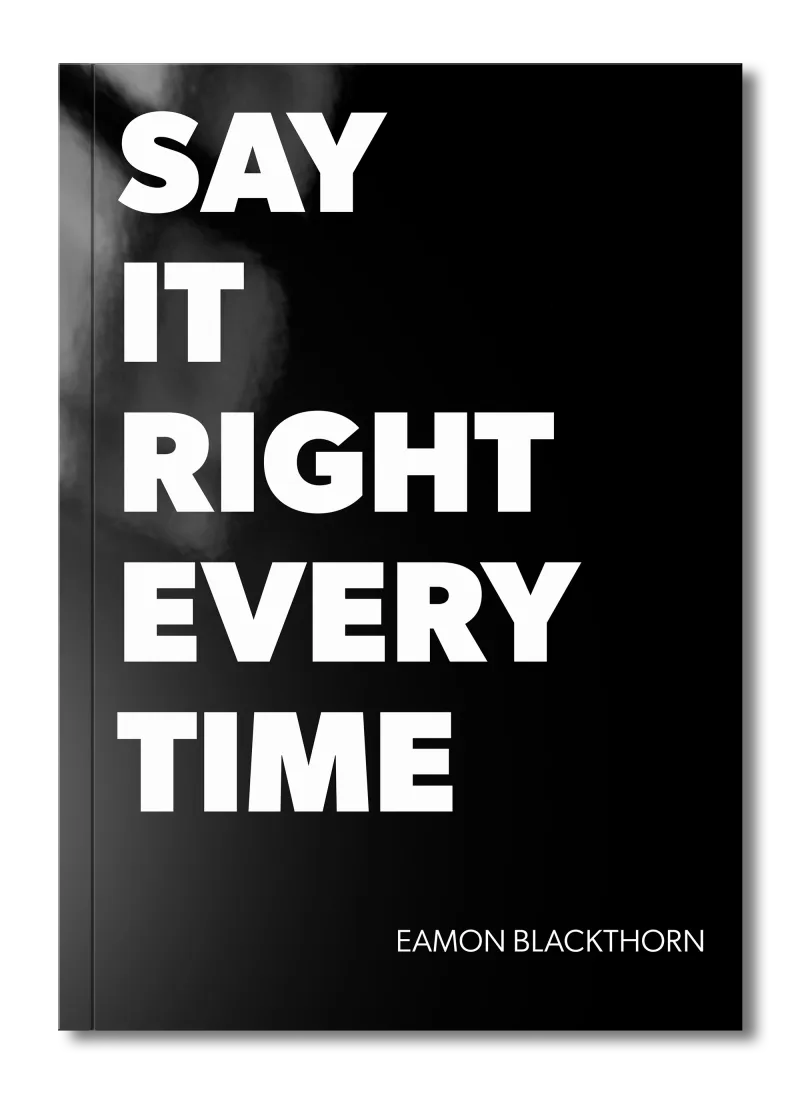
This is exactly the kind of scenario I break down in Say It Right Every Time. The chapter on high-stakes conversations gives you a framework for stripping the emotion out of your word choice without stripping the urgency out of your message. Because those two things, emotion and urgency, are not the same, and most people sacrifice one when they are trying to control the other.
Never Be Lost
for Words Again
Get word‑for‑word scripts for the conversations that shape your life, from job interviews and negotiations to difficult talks with family and partners, so you always know exactly what to say and how to say it.
Never Be Lost
for Words Again
Get word‑for‑word scripts for the conversations that shape your life, from job interviews and negotiations to difficult talks with family and partners, so you always know exactly what to say and how to say it.
Key Takeaway
Before your next conflict conversation, write down three sentences: what specific behavior you observed, what specific consequence it caused, and what specific change you need by when. Bring that paper into the room if you have to. Reading from a note is infinitely better than fumbling through vague accusations that put the other person on defense and kill any chance of resolution.