
What Happened
Senior professionals, especially those newer to executive settings, frequently find themselves interrupted mid-sentence or simply ignored when speaking in high-stakes meetings. This dynamic plays out in boardrooms daily, and most people handle it badly. They either go silent and lose ground, or they push back clumsily and look reactive. Neither response serves them.
The Communication Angle
Here is the lesson up front: the person who gets ignored is almost never the problem. The communication strategy is.
Most professionals walk into senior-level meetings prepared to share information. That is the wrong goal. At the executive level, you are not there to report. You are there to matter. The moment you shift your mindset from "here is what I know" to "here is what I am driving," your presence in the room changes completely.
When someone interrupts you, the worst thing you can do is stop. Stopping signals submission. It tells everyone in the room, including the person who cut you off, that you will yield under pressure. Instead, use what I call the "bridge and return." You say something like: "That's worth addressing, and I will. Let me finish this point first." Then you finish. Not aggressively. Not apologetically. You just finish. This works because it acknowledges the interruption without rewarding it. You are not rude. You are not a pushover. You are controlled.
Being ignored is a different problem and requires a different solution. Silence from executives is not personal indifference. It is a test of whether you will advocate for your own ideas or let them die quietly. When your comment lands in the room and gets no response, do not let it evaporate. Wait two beats, then anchor it: "I want to make sure that point registers before we move on." This forces acknowledgment without confrontation. It reframes your contribution as something worth registering, not something worth tolerating.
The deeper issue is preparation. Most people lose the floor in meetings because they take too long to get to the point. Executives interrupt slow talkers. It is not personal. It is efficient. If you front-load your conclusion (state your point in the first sentence, then support it), you give people less reason to cut you off. You have already said the thing that matters. Everything after is evidence.
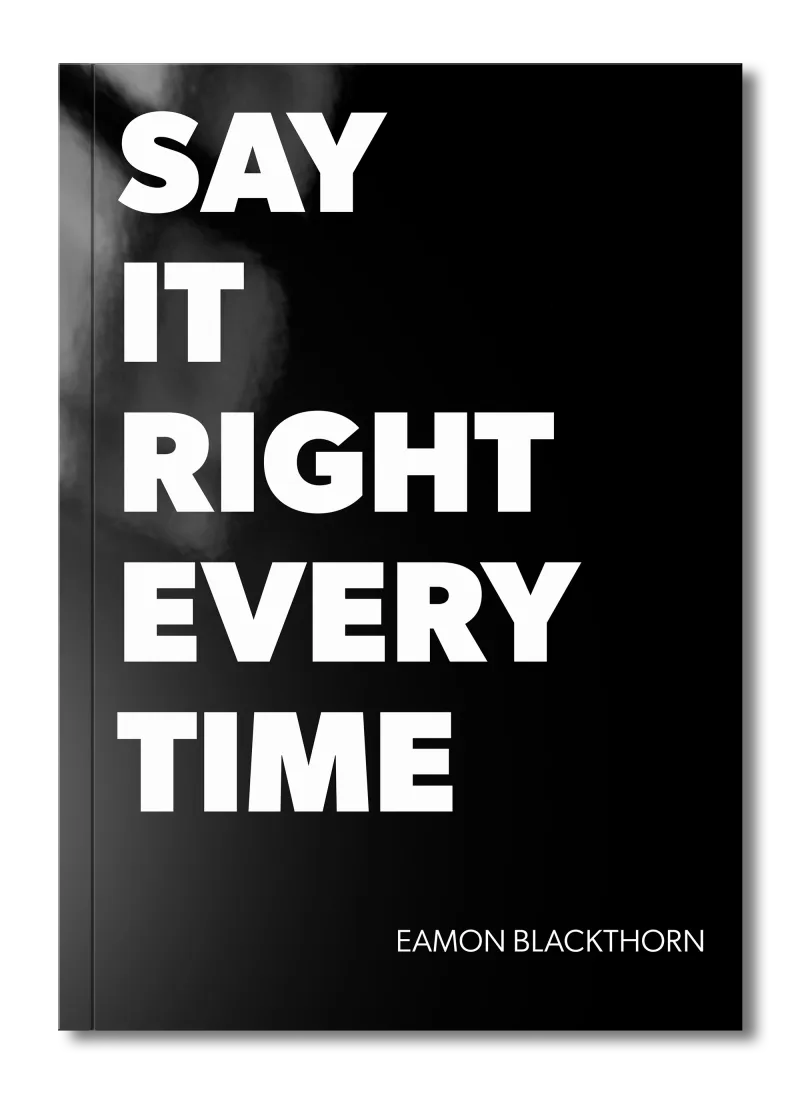
This is exactly the kind of scenario I break down in "Say It Right Every Time." The chapter on high-stakes positioning gives you a framework for entering difficult rooms with authority, specifically how to structure your opening line so that no one can afford to ignore you. The boardroom is not a place where the loudest voice wins. It is a place where the clearest voice wins. That chapter shows you how to be that voice.
Never Be Lost
for Words Again
Get word‑for‑word scripts for the conversations that shape your life, from job interviews and negotiations to difficult talks with family and partners, so you always know exactly what to say and how to say it.
Never Be Lost
for Words Again
Get word‑for‑word scripts for the conversations that shape your life, from job interviews and negotiations to difficult talks with family and partners, so you always know exactly what to say and how to say it.
Key Takeaway
Before your next senior-level meeting, write your main point in one sentence. Not a topic. Not a theme. A conclusion. Something like: "We need to cut this project timeline by 30 days or we will miss the market window." That sentence goes first when you speak, not last. When you lead with the conclusion, interruptions become less costly because you have already landed the punch.