

What Happened
Nigerian activist and presidential candidate Omoyele Sowore found himself in a public dispute over being called a "tout." Rather than letting the insult dissolve on its own, Sowore pushed back loudly and publicly. The confrontation grew beyond a simple name-calling exchange into a broader conversation about how political figures in Nigeria use aggressive public personas and whether that strategy ultimately helps or hurts their credibility.
The Communication Angle
Here is the lesson: when you publicly reject a label, you give it oxygen. Sowore's instinct to fight back is understandable, but it is also the wrong move, and here is why.
The moment you say "I am not a tout," the word "tout" is now attached to your name in every headline, every social post, and every conversation that follows. You did not kill the label. You stamped it on yourself. This is how negative framing works. The brain does not process denial well. Tell someone not to think about a red balloon and they will think about a red balloon. Sowore's very public rejection guaranteed the label would travel further and stick harder than it ever would have on its own.
Now, Sowore is not a stupid man. His communication style, aggressive, unpredictable, and relentlessly confrontational, has worked for him as a form of political identity. He built a following on being the person who punches back. So there is a version of this situation where his response is tactically defensible. But there is a difference between punching back and getting baited into defending your character. One shows strength. The other signals that the attack landed.
What should he have done instead? Redirect, do not deny. If a label does not fit, the most powerful response is to make the accuser look small by rising above the fight entirely. Something like: "My record speaks for itself. Let's talk about why fuel costs what it costs." Now you have changed the subject, demonstrated confidence, and made the attacker look like a distraction. That is not weakness. That is control.
The deeper lesson for anyone in public life is this: your reputation is not defended by what you say about yourself. It is built by what you consistently do, and protected by what you refuse to dignify with a response.
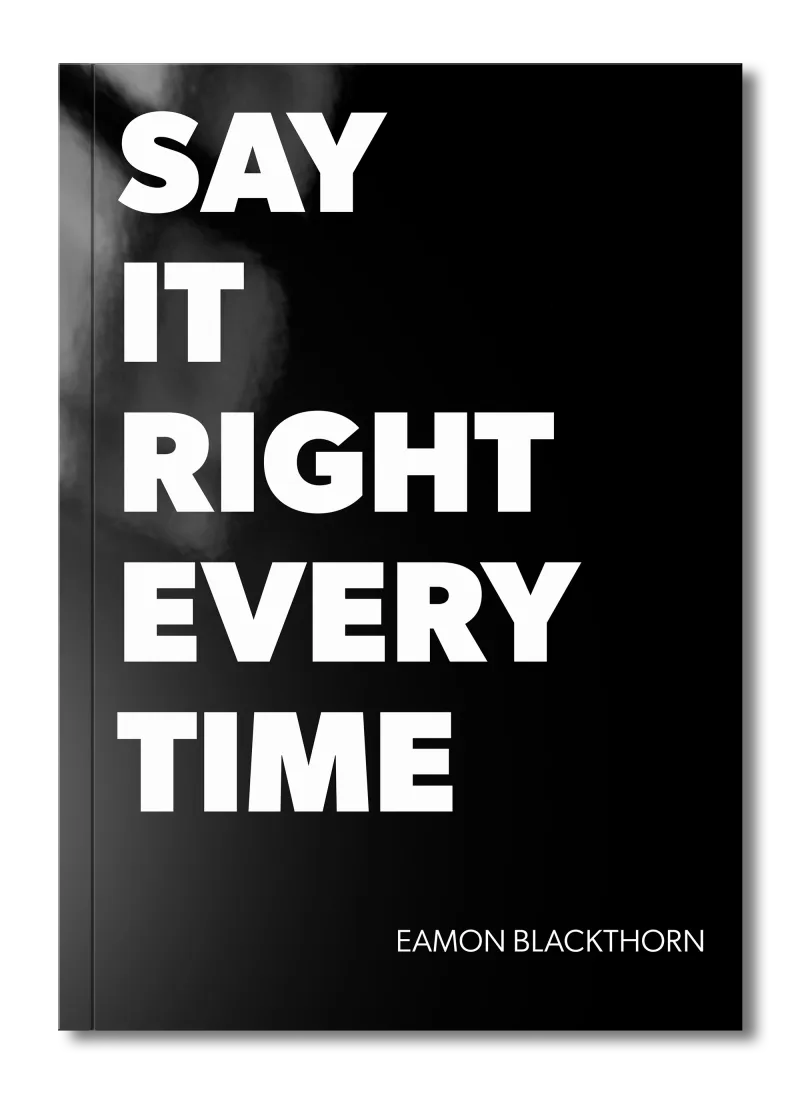
This is exactly the kind of scenario I break down in Say It Right Every Time. The chapter on reframing under pressure gives you a concrete framework for redirecting an attack without appearing to run from it. Most people think their only two options are fight or retreat. There is a third option, and it is the one that actually works: reframe the entire conversation so the attack becomes irrelevant. Sowore needed that third option. He did not use it.
Never Be Lost
for Words Again
Get word‑for‑word scripts for the conversations that shape your life, from job interviews and negotiations to difficult talks with family and partners, so you always know exactly what to say and how to say it.
Never Be Lost
for Words Again
Get word‑for‑word scripts for the conversations that shape your life, from job interviews and negotiations to difficult talks with family and partners, so you always know exactly what to say and how to say it.
Key Takeaway
Before you respond to any public criticism or label, ask yourself one question: does my response make this bigger or smaller? If your answer is "bigger," stay quiet or redirect. Write the insult on a piece of paper, then write what you want people to remember about you instead. Respond to the second line, not the first. That discipline alone will save your reputation more times than you can count.