
In Short
Being cut off mid-sentence is not just rude. It is a physical takeover of your authority, and your body is the first place to fight back.
- Your posture, hand position, and eye contact can hold the floor before your words do.
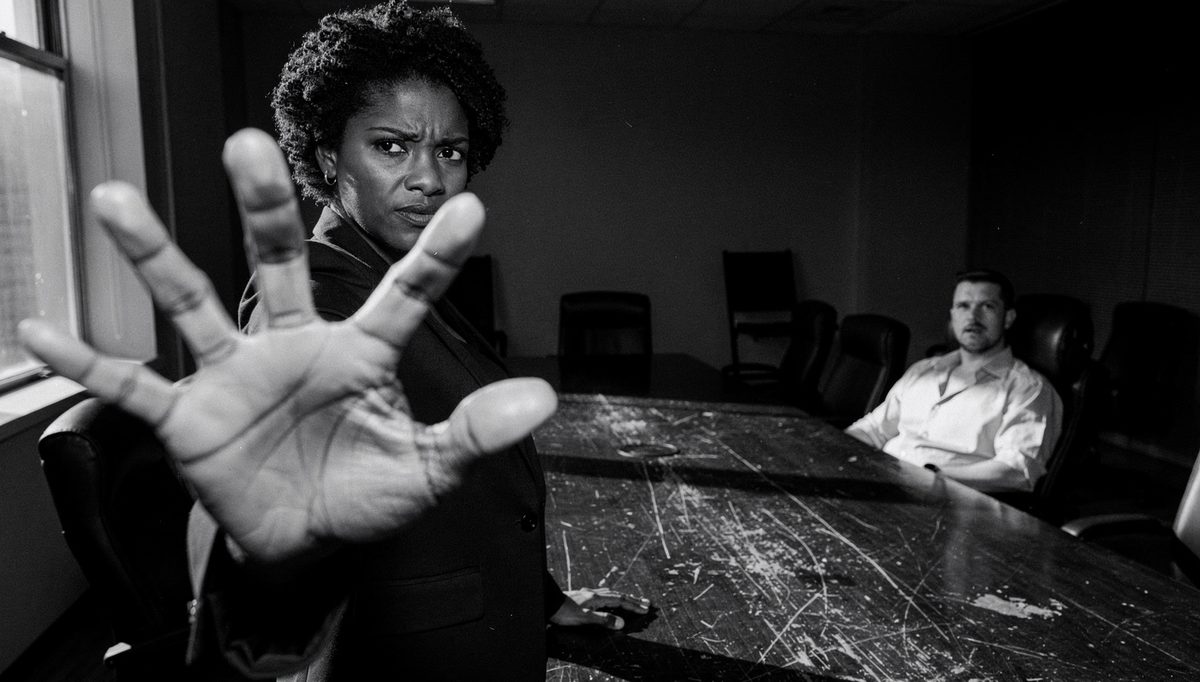
- A raised open palm, a grounded stance, and sustained eye contact are the three physical tools that reclaim your speaking turn.
- Word-for-word phrases, used with deliberate body language, stop the pattern without escalating the room.
Body language reclaiming is the deliberate use of posture, gesture, and eye contact to hold or recover your speaking turn when interrupted. It combines physical signals with brief, direct verbal phrases to restore your authority in the moment without aggression or apology.
I watched a sharp, well-prepared woman lose the floor in a leadership meeting once. She had the numbers, the argument, the evidence. A colleague cut across her mid-sentence, took the thread, and ran with it. She sat back. Her shoulders dropped. She waited for a gap that never came. By the end of the meeting, the idea was his.
She did not lose because she ran out of words. She lost because her body told the room she was done.
Body language reclaiming is the skill of holding your physical ground when someone cuts you off. In Say It Right Every Time For Women, I address this directly in Chapter 5, because allowing yourself to be repeatedly interrupted is not politeness. It is self-erasure. The good news is that the body can learn to hold the floor. These scripts will show you how.
How to Get the Most From These Scripts
Read the situation first, then find the matching script. The context note tells you when each one fits. Read the script out loud before you need it, not in the moment you need it. Your mouth needs to know the shape of the words so your brain can focus on your posture.
Adapt the bracketed words to your own language and your own room. A casual team meeting calls for different phrasing than a board presentation, and both options are here. The body language notes are not decoration. They are half the script.
"The Conversation You're Avoiding Is the One You Need to Have."
"The Conversation You're Avoiding
Is the One You Need to Have."
Stop rehearsing conversations you'll never have. Say It Right Every Time gives you 115 word-for-word scripts and 16 proven frameworks to speak with confidence in every conversation that matters.
The Physical Foundation Before Any Script Works
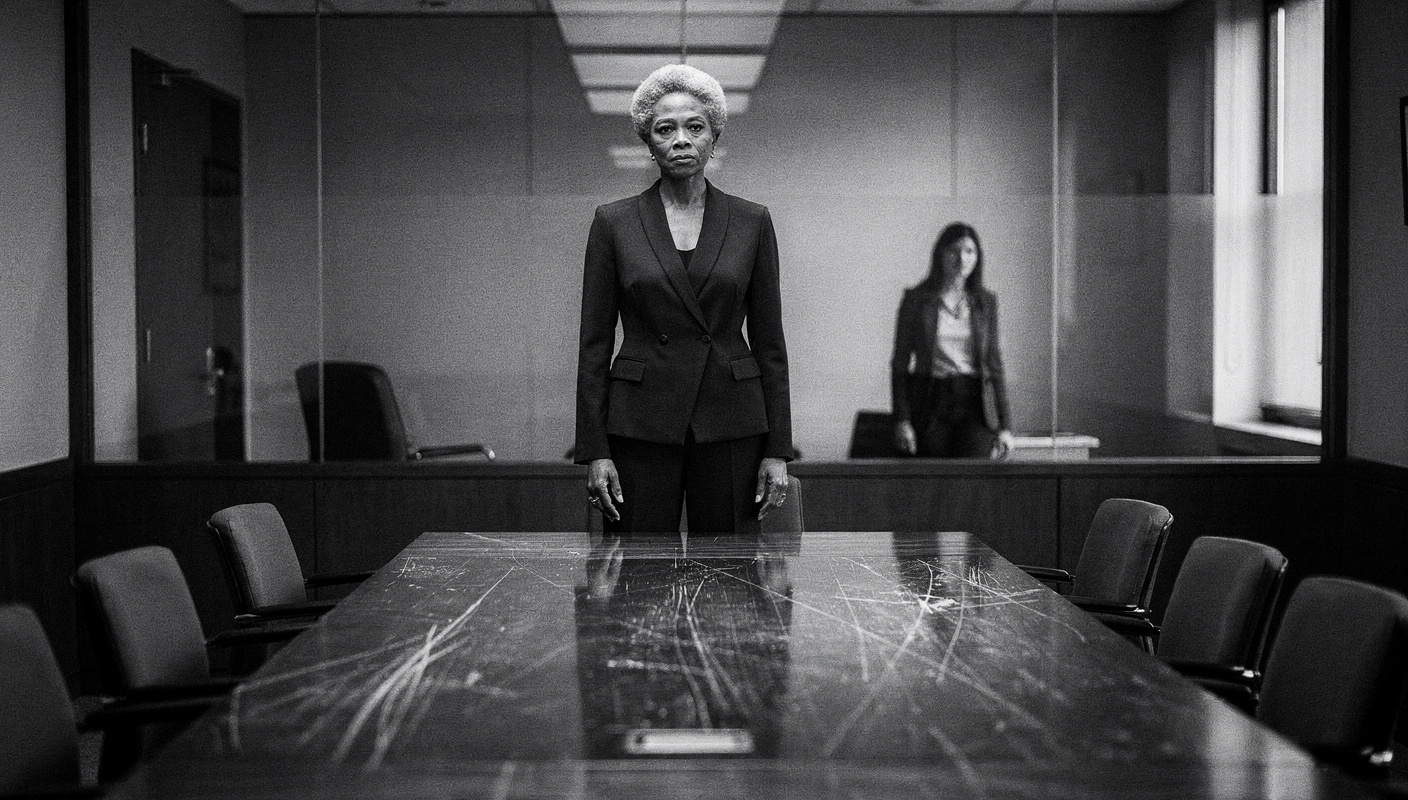
Before you say a single word, your body has already spoken. If your posture collapses when you are interrupted, the room reads that as concession. Here is the physical baseline you must hold across every script below.
Feet: Flat on the floor, hip-width apart if standing. Both feet grounded if seated. Shoulders: Square to the room, not turned toward the interrupter. Chin: Level. Not tilted down (submissive) or up (confrontational). Hands: Visible, not gripped together or hidden under the table. Eyes: Steady, not darting. Hold your gaze on one person or the group.
This stance is what I call Grounded Stillness in Say It Right Every Time For Women. It is not aggression. It is the physical declaration that you are comfortable taking up space. When you hold it under pressure, the room notices. Most people do not. That contrast is your authority.
Scripts for Reclaiming the Floor in the Moment
Script 1: The Single Interruption in a Meeting
The situation: A colleague cuts across you mid-sentence during a team meeting. It is the first time in this conversation.
Why it works: Speed matters here. You want to reclaim the floor before the interrupter gains momentum. The open palm signals stop without hostility. Continuing your sentence from exactly where you left off signals confidence and completeness. You are not starting over. You are finishing what was already yours. This script draws directly from Script #118 in Chapter 5 of Say It Right Every Time For Women.
Standard version:
"I want to finish my point. [Pause one breath.] As I was saying, [continue your sentence from the exact word where you were cut off]."
Formal version:
"I would like to complete my thought. [Pause one breath.] To continue: [pick up your sentence]."
Body language: Raise your non-dominant hand slightly, open palm angled toward the interrupter, elbow close to your body. Keep your chin level. Do not turn to face them directly. Hold your gaze on the group or the decision-maker in the room. After you deliver the phrase, lower your hand and continue at a slightly slower pace than before. Do not rush.
Watch for: If the interrupter talks over your reclaim phrase, do not repeat yourself immediately. Hold your posture, wait three seconds, and try once more. If they continue, use Script 3.
Eamon's note: The pause after "I want to finish my point" is not empty silence. It is a boundary. Hold it. The room will feel it.
Script 2: Being Cut Off While Presenting Data or a Proposal
The situation: You are presenting a formal proposal or sharing data in a meeting when someone interrupts with a question, objection, or their own point before you have finished.
Why it works: Interrupters often believe they are helping or moving things along. This script acknowledges their energy while reclaiming control of the sequence. Anchoring in data, as I describe in Chapter 5 of Say It Right Every Time For Women, keeps the conversation focused on substance rather than personality.
Standard version:
"Good question. I will come to that in a moment. [Raise open palm briefly.] Let me finish the context first, because it changes the answer. [Continue your presentation.]"
Formal version:
"I appreciate the question, and I will address it fully. First, let me complete the background, as it directly informs the answer. [Continue.]"
Body language: Do not look away from your materials or your slides when you raise the palm. Return your gaze to the group immediately after the phrase. Stay square to the room. If you are standing, do not step back. Hold your position.
Watch for: After you finish your point, return to their question. "Now, to your question about [X]..." This shows you heard them and honors the commitment you made. It builds trust while reinforcing that you control the sequence.
Eamon's note: The word "first" does a lot of quiet work. It signals structure. It tells the room there is a plan, and you are the one holding it.
Script 3: A Pattern of Being Cut Off by the Same Person
The situation: The same colleague has interrupted you two or more times in the same meeting.
Why it works: Once is an accident. Twice is a pattern. A repeated interruption in front of others is a nonverbal communication in tense situations challenge as much as a verbal one. This script names the pattern without accusation and reclaims your turn in the room, not just the sentence.
Standard version:
"I notice I keep getting cut off. I need to finish this point. [Brief pause, open palm held steady.] [Continue your point.]"
Formal version:
"I have not had the chance to complete my thought on several occasions now. I would like to do so. [Pause.] [Continue.]"
Body language: This is the one script where you make direct eye contact with the interrupter for the full phrase, not the group. Hold it through the pause. Then, when you continue your point, shift your gaze back to the group. The message is: I see what you are doing, I am not intimidated by it, and I am moving on.
Watch for: The interrupter may become visibly uncomfortable. Do not fill that discomfort. Let it sit. Keep speaking. The room is watching how you carry the silence.
Eamon's note: You are not angry in this script. You are clear. Those are very different things, and the room will hear the difference.
Script 4: The Dominant Voice in a Group Discussion
The situation: One person is dominating the discussion, repeatedly talking over others and over you. You need to reclaim space in a group, not just from a single moment.
Why it works: Dealing with dominant voices in a discussion requires a different posture strategy than responding to a single interruption. Here, you are not reclaiming one sentence. You are reclaiming your presence in the conversation as a whole. The physical approach shifts from a reactive gesture to a proactive stance.
Standard version:
"I want to bring something back to the table. [Lean slightly forward, place one hand flat on the surface.] Before we move on, [your point]."
Formal version:
"There is a point I want to ensure is heard before we proceed. [Brief pause, hand flat on table.] [Your point]."
Body language: Leaning slightly forward, with one hand flat on the table, claims physical territory in the room. Keep your voice steady and your pace deliberate. Do not raise your volume. Slow your speech slightly instead. Speed signals anxiety. Pace signals authority.
Watch for: If the dominant voice talks over this attempt, do not immediately retry. Wait for a natural breath. Then use your name if you need to: "I am going to come back to what I was saying." Using your own name claims the floor explicitly.
Eamon's note: One hand on the table is not aggression. It is gravity. Use it.
Script 5: Being Cut Off by Someone Senior to You
The situation: Your manager, a director, or a senior leader interrupts you during a presentation or discussion.
Why it works: Reclaiming the floor from someone more senior requires a different calibration. The S.T.R.O.N.G. Framework principle applies here: you can hold your ground without appearing confrontational. The phrasing defers to their role while still completing your point. The body language stays grounded without mirroring their authority posture directly.
Standard version:
"Absolutely, and I want to give you the full picture first so your question has the right context. [One-breath pause.] [Complete your point.] Now, to your question..."
Formal version:
"I will get there, and I think the context will be helpful. Allow me to complete this, and then I will address your question directly."
Body language: Do not shrink your posture toward a senior person any more than you would toward a peer. Keep your shoulders back and your chin level. Nod once when you acknowledge their interruption. Do not over-nod. One, controlled. Then return your gaze to your materials or to the broader group.
Watch for: If the senior person continues talking, do not reclaim immediately. Wait for a full sentence gap. Then say: "To circle back to my earlier point..." and complete it before taking questions. This is composure, not capitulation.
Eamon's note: Deference is not the same as surrender. You can respect someone's authority and still finish your sentence.
Script 6: The Private Follow-Up After Repeated Interruptions
The situation: The pattern of interruption has happened across multiple meetings. You need to address it directly with the person, one-on-one, after the fact.
Why it works: In-the-moment reclaiming handles the symptom. This script addresses the cause. Delivering it privately, with calm body language and no accusation, makes it far more likely to change the behavior. As I outline in Chapter 5 of Say It Right Every Time For Women, setting a boundary privately after a public pattern is often more effective than confronting it publicly again. You can also review how the S.B.I. Method addresses tension-causing behavior for additional structure around this kind of follow-up conversation.
Standard version:
"I want to flag something I have been noticing. In our last few meetings, I have been interrupted before I finish my points. I need to be able to complete my thoughts in those conversations. Going forward, can you let me finish before jumping in?"
Formal version:
"I would like to raise something with you. I have noticed a pattern in our meetings: I have been interrupted before completing my points on several occasions. I need that to change. Can we agree that I finish my thoughts before you respond?"
Body language: Sit or stand at the same level as the other person. Do not stand over them if they are seated. Keep your arms uncrossed and your hands visible on the table or in your lap. Make steady eye contact during the key request, not throughout the whole conversation. Sustained eye contact through an entire private conversation reads as pressure. Purposeful eye contact during the specific ask reads as clarity.
Watch for: If they become defensive, do not retreat. "I am not questioning your intentions. I am telling you what I need." Then stop talking. Let the quiet do its work. If you need to de-escalate a defensive reaction in the moment, the linked guidance will help.
Eamon's note: This conversation is not a complaint. It is a clear, direct request. Keep it short. One ask, one consequence, and then stop.
Script 7: Reclaiming After You Were Already Talked Over and Lost the Thread
The situation: You were interrupted, the room moved on, and you lost the floor entirely. Minutes later, you realize your point was never heard.
Why it works: Letting an unfinished point die is a form of self-erasure. Many people convince themselves the moment has passed. It has not. Returning to your point, even several minutes later, demonstrates that you track your own contributions and expect others to as well. The 3-second pause technique is particularly useful here before you speak.
Standard version:
"Before we move on entirely, I want to return to something. I was making a point about [topic] earlier and did not get to finish it. [State your point clearly and completely.]"
Formal version:
"I would like to revisit something briefly. I had a point about [topic] that was not completed. Here it is: [State your point.]"
Casual version (team meeting with close colleagues, informal setting):
"Can I come back to something? I did not get to finish my point on [topic]. [State your point.]"
Body language: When you reintroduce an earlier point, lean slightly forward and speak to the center of the room, not just to the person who interrupted you. This signals that the point belongs to everyone, not just to the person who cut it off. Keep your voice at the same pace and volume as your earlier attempt. Do not speed up. Do not raise your pitch. The tone must say: this point was always worth hearing.
Watch for: If someone says "I think we covered that," respond with: "Not quite. The specific point I want to make is [X]." You are not agreeing that it was covered. You are naming the gap.
Eamon's note: The moment you think has passed rarely has. The room has more memory than you think.
Adapting These Scripts Without Losing Their Strength
The scripts above work because they are specific and direct. The risk when you adapt them is smoothing out that directness until the script becomes polite noise. Here is how to adapt without losing the edge.
Change the words, not the structure. Every script above follows a pattern: acknowledge briefly, signal physically, reclaim verbally, continue. That pattern is the engine. The words around it are the casing. Swap the casing for language that sounds like you. Keep the engine running.
Match the register to the room. A formal version in a casual team meeting reads as stiff. A casual version in a board presentation reads as unprepared. Read the room, then choose. When in doubt, the standard version fits most professional settings.
Do not add apologies. The most common adaptation mistake is softening the script with "I am sorry, but..." or "I do not mean to be difficult, however..." Those phrases undo everything. They signal that you are not sure you deserve the floor. You do.
For more on the S.B.I. method as a tool for addressing the behavior behind repeated interruptions, see how the S.B.I. Method reduces tension when giving corrective feedback.
Where People Go Wrong With Floor-Reclaiming Body Language
Some patterns come up again and again when people first practice these scripts. Knowing them in advance will save you from learning them the hard way.
The mistake: Turning your whole body toward the interrupter when reclaiming.
Why it happens: It feels natural to face the person who is speaking.
What to do instead: Keep your body square to the room. A slight turn of the head is enough. Turning fully signals that the interrupter now controls your attention, which is exactly the wrong signal.
The mistake: Raising your voice to reclaim the floor.
Why it happens: When someone talks over you, volume feels like the natural counter.
What to do instead: Slow your pace and lower your pitch slightly. A slower, lower voice carries more authority than a louder one. Raising your volume reads as desperation. Steadying your pitch reads as confidence.
The mistake: Releasing your hand gesture too quickly.
Why it happens: Holding your hand up feels uncomfortable when someone is still talking.
What to do instead: Hold the raised open palm until the interrupter actually pauses. If you drop it early, the signal loses its authority. Hold it, then lower it smoothly once you begin speaking.
The mistake: Using the script without the body language.
Why it happens: People practice the words but forget the physical signals.
What to do instead: Practice both together. Say "I want to finish my point" while raising your palm in front of a mirror. Your body and your words need to send the same message. When they do not, the room trusts the body and ignores the words.
The mistake: Reclaiming the floor and then speaking too fast.
Why it happens: Relief at having the floor back creates an urge to get the point out quickly before losing it again.
What to do instead: Deliberately slow your first two sentences after reclaiming. Speed signals insecurity. Pace signals that you believe your point is worth the time.
Frequently Asked Questions (FAQ)
What is body language reclaiming and why does it matter?
Body language reclaiming means using deliberate posture, gesture, and eye contact to hold or recover your speaking turn when interrupted. It signals authority without aggression. Most people lose the floor not because they lack words but because their physical presence collapses under pressure.
How do you use body language to stop being interrupted in a meeting?
Raise one open palm slightly toward the interrupter, hold your posture upright, maintain direct eye contact, and keep speaking in a calm, firm voice. Do not turn your body away or shrink your stance. The physical signal does the work before the words arrive.
What hand gesture works best for reclaiming the floor?
A slightly raised open palm, held at about chest height and angled toward the interrupter, is the most effective gesture. It signals stop without aggression. Keep your elbow close to your body and your wrist relaxed so the gesture reads as calm authority, not hostility.
Does body language reclaiming work differently for women in meetings?
Yes. In Say It Right Every Time For Women, I explain that women face a specific Aggression Penalty when reclaiming the floor too forcefully. A calm, grounded stance with a raised open palm avoids this penalty while still holding authority. The tone must stay measured even when the gesture is firm.
What posture should you hold when someone cuts you off mid-sentence?
Do not lean back or turn away. Keep your shoulders square to the room, your feet flat on the floor, and your chin level. Stay still rather than fidgeting. Grounded stillness reads as authority. Collapsing your posture signals that the interruption has succeeded.
How do you recover your speaking authority after being interrupted more than once?
After repeated interruptions, address the pattern directly using a calm, brief verbal phrase paired with sustained eye contact and a stable, open stance. Do not rush or raise your volume. Slowing your speech slightly while holding your ground physically signals that you expect to be heard.
Here is the truth of it: the person who interrupts you is betting that your body will confirm their right to do it. A dropped shoulder, a turned-away gaze, a sentence that trails off, all of these tell the room the interruption worked. Body language reclaiming reverses that bet. You hold your ground in your spine before you hold it in your words. Practice these scripts until the posture is automatic, the phrase is ready, and the pause does not frighten you. Then the next time someone cuts you off mid-sentence, your body will already know what to do.