
In Short
Reading body language in noisy, crowded spaces is a skill that most people never properly develop because they try to read faces when they should be reading bodies. The signals that survive ambient chaos are postural, not facial.
- Anchor your attention to one person at a time before scanning the wider group.
- Look for clusters of at least three aligned physical signals, never a single gesture.
- Compare what you see against that person's baseline behaviour from earlier in the interaction.
Body language is the system of physical signals, including posture, gesture, movement, proximity, and facial expression, through which people communicate meaning and emotion without words. These signals often operate below conscious awareness, revealing what a person actually feels rather than what they choose to say.
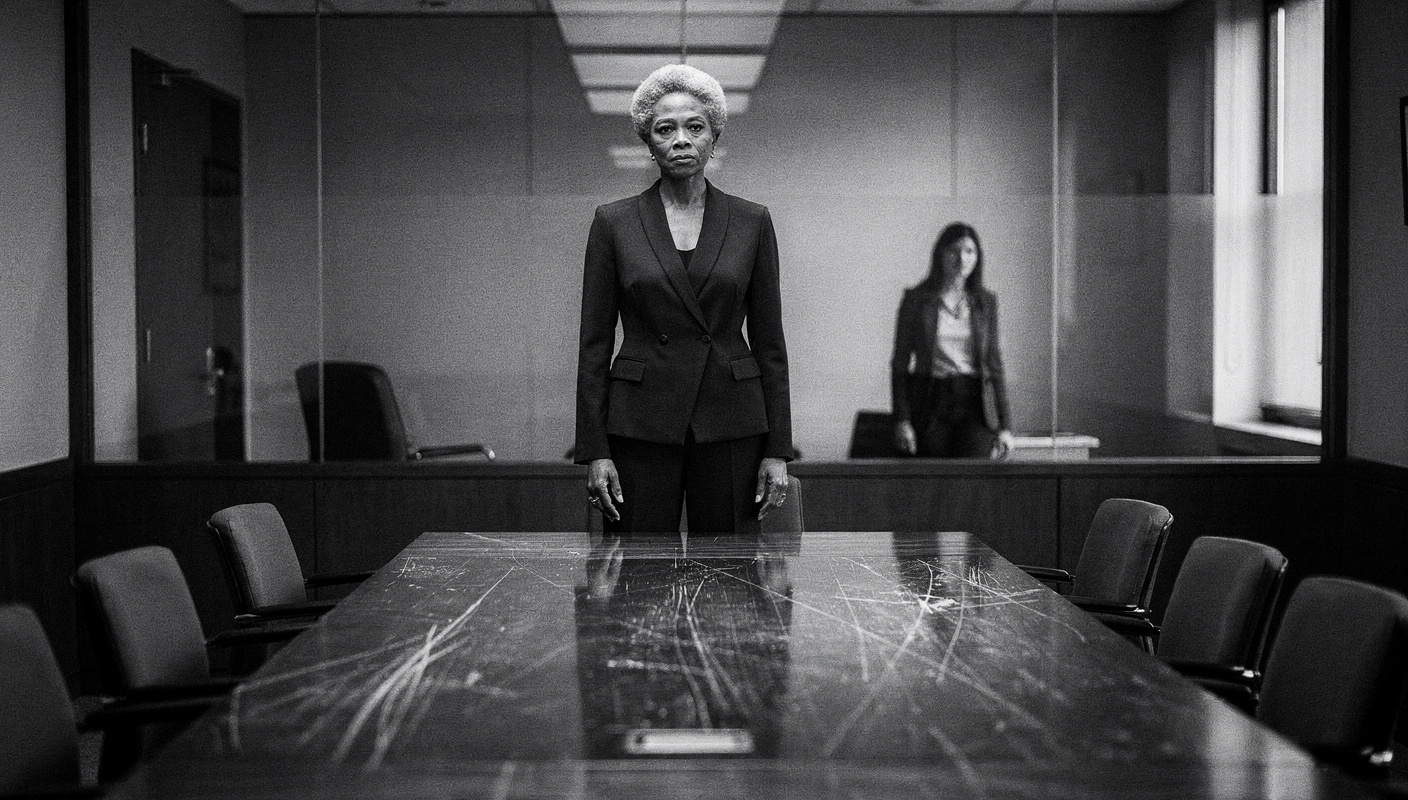
I watched a department head walk into a quarterly review and completely miss the fact that half the room had already checked out. Arms folded. Chairs angled away from the table. Three people whose eyes had stopped tracking the speaker ten minutes before he noticed anything was wrong. He kept talking at them. He read body language in that room the way most of us do: passively, late, and badly. It cost him the meeting and, eventually, the trust of his team.
Reading body language in a crowded or noisy environment is genuinely difficult. It is not enough to know what crossed arms or a turned torso might mean in theory. You need a working system for filtering signal from noise when conditions are imperfect, when people are moving around you, when ambient sound cuts off the words you might use as a cross-reference. This article gives you that system. It is built from decades of watching what works and, more often than I would like to admit, from getting it wrong myself.
Why Noisy Rooms Break Most People's Ability to Read Physical Signals
The standard advice about body language assumes ideal conditions. One person. Quiet space. Good light. You have time to notice the subtle stuff: a brief tightening around the eyes, the slight pulling back of a shoulder, the microexpression that flickers across someone's face in less than a second.
Crowded environments strip all of that away. Competing movement draws your eye constantly. Ambient noise means you are spending cognitive energy just following the words, leaving less capacity for watching. Groups create social performance; people hold themselves more rigidly in public than they do one-on-one, masking signals that would be obvious in private. The result is that most people either give up reading the room entirely, or they read single gestures out of context and get it wrong.
The good news is that the signals which survive these conditions, the ones that are large, sustained, and structural rather than subtle and fleeting, are often the most reliable. A postural shift that lasts thirty seconds tells you more than a microexpression that vanishes in a quarter of a second.
"The Conversation You're Avoiding Is the One You Need to Have."
"The Conversation You're Avoiding
Is the One You Need to Have."
Stop rehearsing conversations you'll never have. Say It Right Every Time gives you 115 word-for-word scripts and 16 proven frameworks to speak with confidence in every conversation that matters.
What You Need to Establish Before the Room Gets Complicated
Before you can read body language accurately in a difficult environment, one thing must be in place: a baseline.
A baseline is simply what a person looks like when nothing of note is happening. How do they normally sit? Do they cross their arms as a default comfort position, or only when they are closing off? Do they make steady eye contact or tend to look away while thinking? Without this reference point, you are guessing. Every deviation from normal is meaningful; normal itself is not.
Arrive early, or use the opening minutes of any group setting to gather this quietly. Watch people before the pressure begins. Notice the person who always leans back in their chair, the one who talks with their hands, the one who goes very still when concentrating. When you see them shift away from that pattern later, that shift is your signal.
This matters especially in meetings, where the role of communication in dynamics and tension is always shaped by physical signals most people never consciously observe.
How to Read Body Language Step by Step When the Environment Works Against You
Step 1: Position Yourself with a Clear Sightline
Your physical placement determines what you can and cannot observe. Sit or stand where you can see the majority of the group without turning your head sharply. The side of a room is almost always better than the centre. An angled position lets you see faces and torsos simultaneously. If you are in a standing crowd, find a natural edge rather than embedding yourself in the middle.
This is not about being on the margins. It is about giving your eyes the space to work. A conductor does not stand inside the orchestra.
Step 2: Anchor Before You Scan
Most people try to watch everyone at once. This produces a shallow, unfocused read of the whole room and a deep read of nobody. Instead, anchor your attention on one person for thirty to sixty seconds before moving to another.
Choose who to anchor on based on what matters most in the moment. If a decision is being made, watch the decision-maker. If there is tension, watch the two people closest to it. If you are trying to gauge general mood, sample three or four individuals in sequence rather than trying to process everyone simultaneously. The scanning comes after the anchoring, not instead of it.
Step 3: Read Torso and Posture First, Face Second
In noisy, crowded conditions, the face is the hardest thing to read reliably. You may be too far away. Other people may move across your sightline. The person may be consciously controlling their expression, which most adults learn to do in professional settings.
The torso does not lie as often. Where a person's chest and hips point tells you where their attention and interest genuinely sit. A person whose body is angled toward the door is already leaving, regardless of what their face is doing. Someone who turns their torso away from you mid-conversation is withdrawing, even if they keep talking. These signals are large, they persist, and they are very hard to consciously manage.
Look for postural shifts especially. A sudden change from open to closed posture, from relaxed to rigid, from leaning in to leaning back, is almost always a response to something real.
Step 4: Watch for Signal Clusters, Not Single Gestures
A crossed arm on its own means almost nothing. It might mean discomfort. It might mean the room is cold. It might be a lifelong habit. The moment it appears alongside a turned torso, reduced eye contact, and a tight jaw, you have a cluster. Three or more aligned signals pointing in the same direction carry genuine weight.
This is the discipline that separates accurate reading from projection. You are not looking for one thing that confirms what you already suspect. You are looking for a pattern that emerges without your help.
In a group setting, this also applies to the room as a whole. When several people independently begin to show similar signals, such as bodies turning away from a speaker, arms folding, or energy dropping, that collective shift is significant. It is the physical equivalent of a change in weather.
Step 5: Track Changes, Not States
The most important thing to notice is not how someone is positioned right now, but how they have moved from where they were five minutes ago. Body language is a dynamic system, not a snapshot.
Someone who began the meeting leaning forward with open posture and is now sitting back with arms crossed has told you something. Someone who was relaxed during casual conversation but stiffened when a particular topic came up has also told you something. The change is the signal.
This is why baseline matters so much. Without it, you are looking at a photograph. With it, you are watching a film.
For high-pressure situations where physical signals shift rapidly, understanding nonverbal communication in tense situations can sharpen what you know to look for.
Step 6: Check for Congruence Between Words and Body
When what someone says and what their body does align, you can trust the message. When they diverge, trust the body.
A person who says "I am completely comfortable with this decision" while touching their neck, avoiding eye contact, and pulling their chair back is not comfortable. The words are the managed version. The body is the truth.
In a crowded room, you may catch only fragments of what someone says, but you can watch their body continuously. Use that. The physical signal often tells you whether the verbal message needs to be questioned or explored further.
Step 7: Slow Down Your Conclusions
The single most common error in reading body language is moving too fast from observation to interpretation. You see something. You assign meaning. You act on that meaning. The whole sequence happens in seconds, and it skips the most important part: checking yourself.
Before you draw a conclusion, ask whether there is another explanation for what you saw. Ask whether the environmental conditions could be producing a neutral signal that looks meaningful. Ask whether you are reading the person or reading your own expectations.
Slow conclusions are more accurate conclusions. In a chaotic environment especially, patience in observation is the real skill.
Adapting This Process for Large Group Settings Like Conferences or Town Halls
When the room holds fifty people or more, you cannot anchor on individuals the same way. The scale demands a different approach.
Work in zones. Divide the room mentally into sections and read each zone as a unit before narrowing to individuals within it. A zone where people are leaning forward, faces animated, bodies open, is engaged. A zone where bodies are angled away, energy has dropped, and self-soothing gestures are appearing, touching hair, rubbing arms, checking phones, is losing interest or experiencing discomfort.
Once you have identified the zone with the most significant signals, then narrow your attention to the two or three individuals within it who seem to anchor the energy of that group. In large rooms, social influence is physical; the people others unconsciously mirror often reveal the true mood first.
This zone-to-individual sequence also helps with one of the most common problems in large group settings: dealing with dominant voices in a discussion becomes much more manageable when you can read who is genuinely engaged and who is performing compliance.
Where People Go Wrong When Trying to Read the Room
These are the errors I have made and watched others make most often. Each one has a direct correction.
The mistake: Reading a single gesture and drawing a firm conclusion.
Why it happens: The mind wants quick answers. One crossed arm feels like enough.
What to do instead: Wait for three aligned signals before you decide anything. One is noise. Three is a pattern.
The mistake: Ignoring your own emotional state while reading others.
Why it happens: When you are anxious or invested in a particular outcome, you see what confirms your fear, not what is actually there.
What to do instead: Before you read the room, take thirty seconds to notice your own state. Name it quietly. That act alone creates enough distance to observe more clearly.
The mistake: Focusing exclusively on faces and missing the larger body.
Why it happens: We are trained from childhood to read faces. The face feels like the source of truth.
What to do instead: Deliberately drop your gaze to include the torso, arms, and feet. The feet in particular are the least consciously managed part of the body and often point honestly toward what a person wants to do or where they want to be. This matters especially when you need to handle conflict during meetings before it erupts.
The mistake: Reading people in isolation from their environment.
Why it happens: The individual seems like the unit of analysis.
What to do instead: Always ask what the environment itself might be causing. A cold room produces crossed arms. A loud room produces leaning in. A cramped space produces tension that has nothing to do with the person next to you.
The mistake: Forgetting to watch yourself.
Why it happens: Reading others feels like the outward task. Your own body seems irrelevant.
What to do instead: Your physical signals are being read too. An open, grounded posture, feet steady, shoulders back but not rigid, creates the trust that makes others more readable to you. People open up physically to those who seem safe.
Your Field Checklist for Reading Body Language in Difficult Environments
Use this before and during any high-stakes group interaction.
Before the interaction begins:
- Arrive early and observe people in their neutral state to establish baselines.
- Choose your position: angled, with a clear sightline to the people who matter most.
- Notice your own physical and emotional state and name it so it does not distort your reading.
During the interaction:
- Anchor on one person for 30 to 60 seconds before shifting your attention.
- Read torso orientation and postural openness before reading the face.
- Track changes from baseline, not just current states.
- Look for clusters of three or more aligned signals before drawing any conclusion.
- Check for congruence: does the body match the words?
- In large groups, read zones first, then narrow to key individuals within each zone.
Before you act on what you have read:
- Name one alternative explanation for the signals you observed.
- Ask whether environmental factors, cold, noise, crowding, could account for what you saw.
- Decide whether to act on the signal or simply hold it as a hypothesis and keep watching.
This checklist applies whether you are in a networking room, a boardroom, or a conference hall. The environment changes; the process holds.
Reading the Room Is a Skill You Build Over Years, Not Overnight
Here is the truth of it: the ability to read body language accurately in difficult conditions is not a talent some people are born with. It is a practice. I have spent six decades watching people in rooms, and I still catch myself misreading signals when I am tired, or when I have too much at stake in the outcome.
The process in this article works because it slows you down, gives your attention somewhere to go, and keeps you honest about what you are actually seeing versus what you are projecting. It will not make you infallible. Nothing will. But it will make you consistently better than the version of yourself who walks into a room and hopes to absorb the truth by osmosis.
Start at the beginning: establish your baseline, position yourself well, and anchor before you scan. The rest follows from there. And when things escalate beyond reading into active conflict, know that de-escalating arguments during meetings depends on the same physical awareness you are building here.
If you want to understand the physiological side of why tension so often hijacks both body and perception in high-pressure moments, the amygdala hijack and how it escalates workplace tension is worth your time. And for thinking about when in-person reading matters most versus when distance flattens all of this, in-person versus digital tension management gives you the clearest framework I know.
The ability to read body language well is, in the end, the ability to pay genuine attention to another human being. That is never wasted.
Frequently Asked Questions (FAQ)
What does it mean to read body language accurately?
To read body language accurately means observing a person's physical signals, including posture, gesture, and facial expression, in context rather than in isolation. It requires noting clusters of signals and comparing them against that person's normal behaviour before drawing any conclusion.
How do you read body language in a noisy room?
In a noisy room, focus on movement and posture rather than facial expression, which is harder to catch at distance. Position yourself with a clear sightline, anchor your attention on one person at a time, and look for clusters of signals rather than a single gesture.
Can you read body language from across a room?
Yes, but you rely on larger signals at distance. Torso orientation, postural shifts, proximity to others, and broad gestures are all readable from across a room. Fine details like microexpressions require closer proximity and are less reliable in crowded settings.
What body language signals are easiest to spot in crowds?
The most visible signals in crowds are postural shifts, torso turning away from someone, self-soothing gestures like touching the neck or crossing arms, and sudden stillness amid general movement. These larger, more sustained signals hold their shape even when conditions are imperfect.
How do you avoid misreading body language in group settings?
Avoid reading a single gesture in isolation. Always look for at least three aligned signals before drawing a conclusion. Check whether the person's physical cues match their words, note their baseline behaviour early, and account for environmental factors like cold rooms or noise that cause neutral physical reactions.
Why is reading body language harder in meetings than one-on-one?
In meetings, you are tracking multiple people simultaneously, competing movement draws your attention away from the person who matters most, and social norms suppress many natural physical reactions. People in formal settings often hold themselves more rigidly, which masks the signals you would see in an unguarded moment.