
In Short
Body language determines whether your request for help reads as capable or desperate. The physical signals you send before you say a single word shape how others receive what follows.
- An open, grounded stance signals that you are asking from strength, not collapse.
- Submissive gestures such as hunched shoulders and averted eyes undermine even the clearest words.
- You can prepare your body for this conversation the same way you would prepare your words.
Body language help signaling is the set of physical cues, including posture, eye contact, gesture, and facial expression, that communicate your emotional state and confidence level when you ask another person for support or assistance.
There is a particular kind of courage in asking for help. Most people know that. What fewer people notice is the moment just before they speak, when their shoulders drop, their eyes slide toward the floor, and their voice shrinks to half its normal size. They have not said a word yet. But they have already told the other person everything. That is how body language works. It runs ahead of your words, and by the time you open your mouth, the listener has already formed an impression. I have sat across from hundreds of people asking for help over the decades, and I can tell you this: the ones who got it were rarely the ones with the most polished words. They were the ones whose bodies said, I am worth taking seriously.
What Your Physical Presence Says Before You Speak
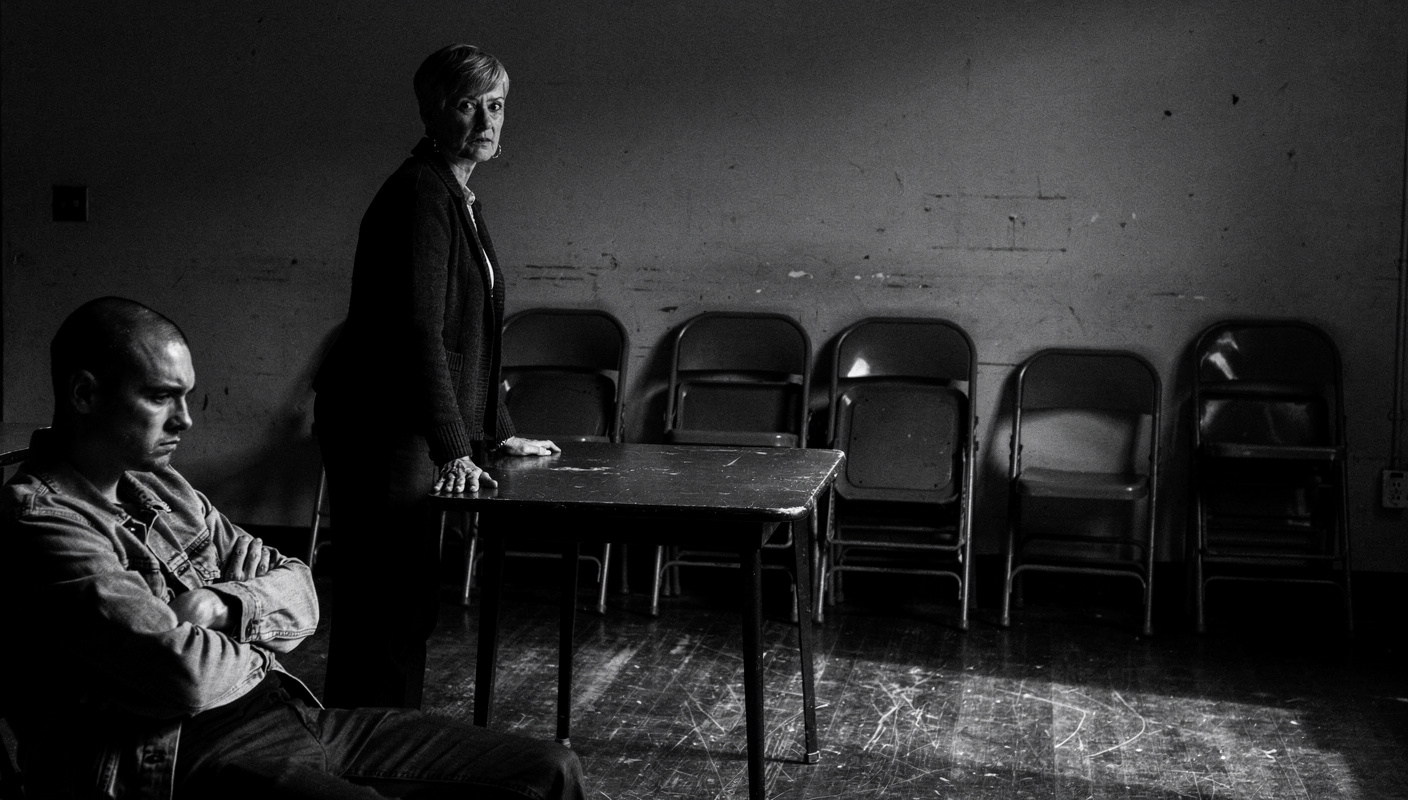
Body language is not a trick you perform. It is a readout of your internal state, broadcast outward whether you intend it or not. When you approach someone to ask for help, every signal your body sends contributes to one of two stories: that you are a capable person with a specific need, or that you are overwhelmed and unsure of yourself.
The distinction matters because people respond differently to each story. A capable person with a specific need gets engaged, practical help. An overwhelmed person tends to attract one of two responses: pity that comes with strings, or dismissal masked as reassurance. Neither serves you.
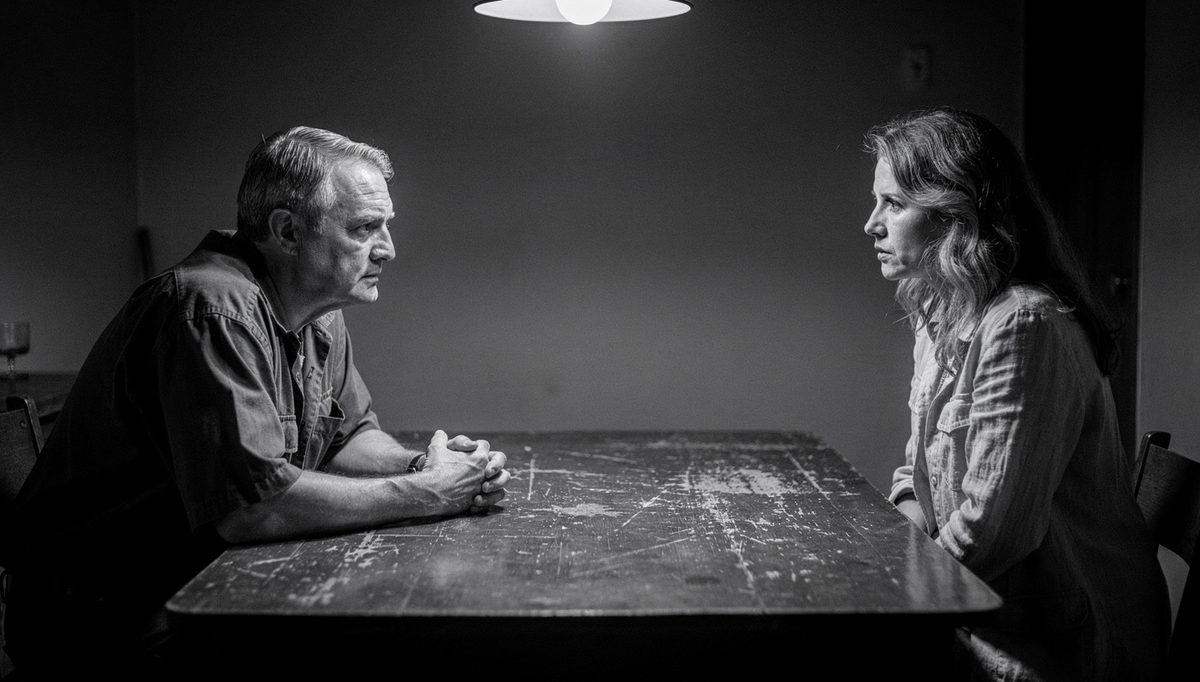
This connects directly to how we read tense interpersonal moments. When you understand nonverbal communication in tense situations, you begin to see how much information travels through physical signals before any words are exchanged.
"The Conversation You're Avoiding Is the One You Need to Have."
"The Conversation You're Avoiding
Is the One You Need to Have."
Stop rehearsing conversations you'll never have. Say It Right Every Time gives you 115 word-for-word scripts and 16 proven frameworks to speak with confidence in every conversation that matters.
What Confident Body Language Actually Looks Like Here
Confident body language when asking for help is not power posing. It is not a performance of authority. It is the physical expression of someone who is grounded: present, open, and settled.
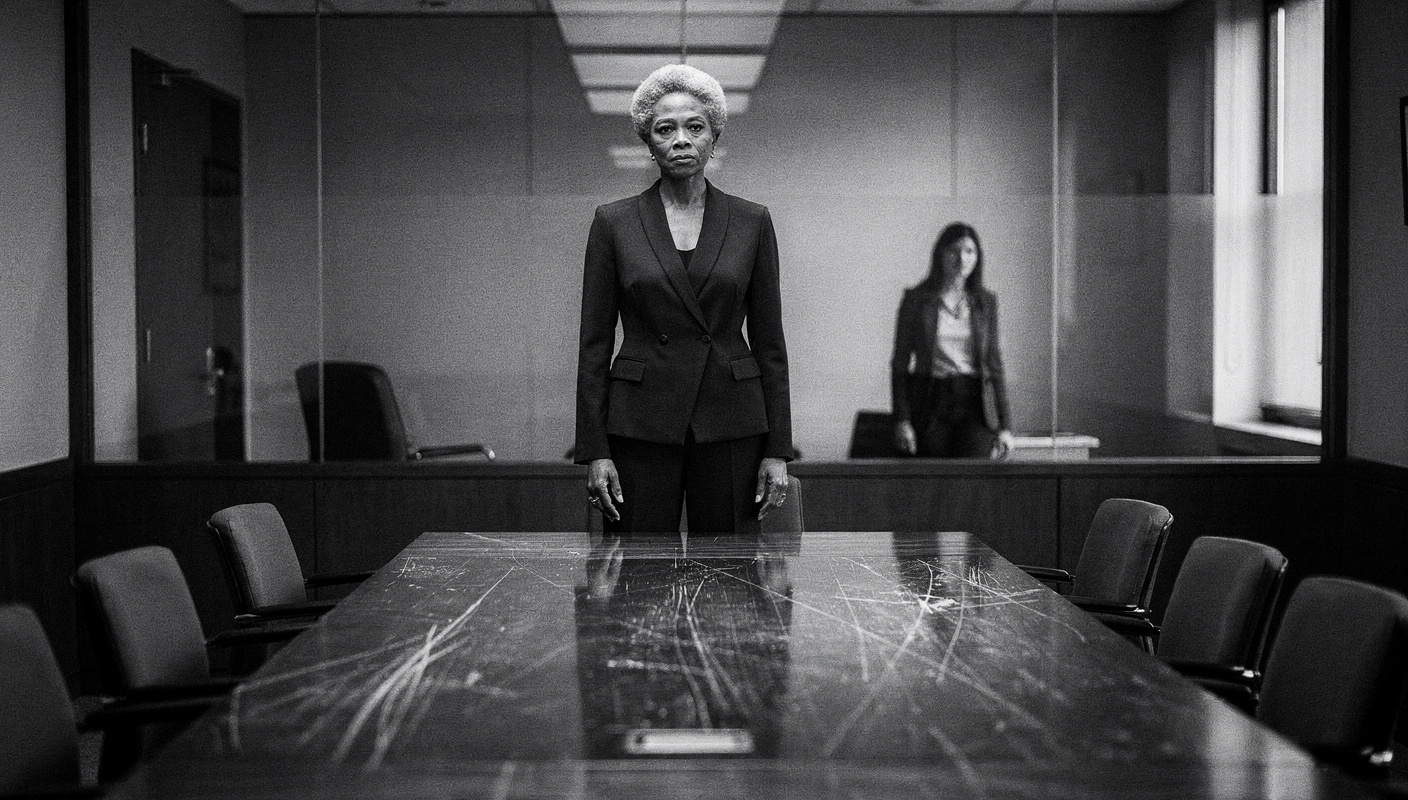
Here is what it looks like in practice. You sit or stand with your spine upright but not rigid, your weight evenly distributed, your shoulders back without being forced. Your hands rest open and still on the table, on your thighs, or by your sides. You make eye contact for three to five seconds at a time, natural and held rather than darting or locked in an uncomfortable stare. Your face is calm, not forced into a smile, not pulled tight with worry. Your chin is level, not tilted down.
When you speak, your voice carries from the chest, not from the throat. You pause where a pause belongs. You do not trail off.
That is all. It is not complicated. But it requires that you have regulated your nervous system before you walk into the room, because when anxiety takes over, every one of those signals collapses.
Three Ways People Undermine Themselves Without Knowing It
I have watched this happen more times than I can count. Someone prepares their words carefully, chooses the right moment, and then walks in and undoes all of it with their body.
The mistake: Hunching the shoulders forward and dropping the chin toward the chest.
Why it happens: Anxiety causes the body to make itself smaller. It is a protective reflex, not a conscious choice.
What to do instead: Before you enter the room, stand for thirty seconds with your feet hip-width apart, your chest open, and your chin level. Your body will carry that memory in with you.
The mistake: Touching the face, rubbing the neck, or wringing the hands while talking.
Why it happens: These are self-soothing gestures. They release tension in the body, but they broadcast it to the room.
What to do instead: Rest your hands flat on a surface or open on your thighs. Give them somewhere settled to be.
The mistake: Breaking eye contact downward at the moment the request is made.
Why it happens: Looking down feels instinctively humble, but it reads as shame or uncertainty.
What to do instead: Practise holding your gaze level and steady for the specific sentence in which you make the request. That one moment carries enormous weight.
Understanding why your body reacts this way matters. If you have ever felt your thinking cloud over mid-conversation, the amygdala hijack explains exactly what is happening in those moments, and why preparation matters so much.
Three Moments That Reveal How Much This Matters
At work, asking a senior colleague for guidance. Maura had been struggling with a project for two weeks before she finally decided to ask her manager for direction. She rehearsed what she would say. But when the moment came, she stood in the doorway rather than stepping in, she held her folder against her chest like a shield, and she addressed the floor more than the man at the desk. Her manager listened, gave a brief answer, and returned to his screen. She left with nothing useful. The words were fine. The body language said: I already know this is too much to ask.
In a team setting, requesting support from a peer. Compare that to Daniel, who pulled a chair to the side of a colleague's desk, sat down with his forearms resting on the surface, made easy eye contact, and said: "I am stuck on something. I think you have dealt with this before. Can I walk you through it?" His posture said: I am not drowning. I just need a second pair of eyes. His colleague turned toward him fully and spent twenty minutes working through the problem together.
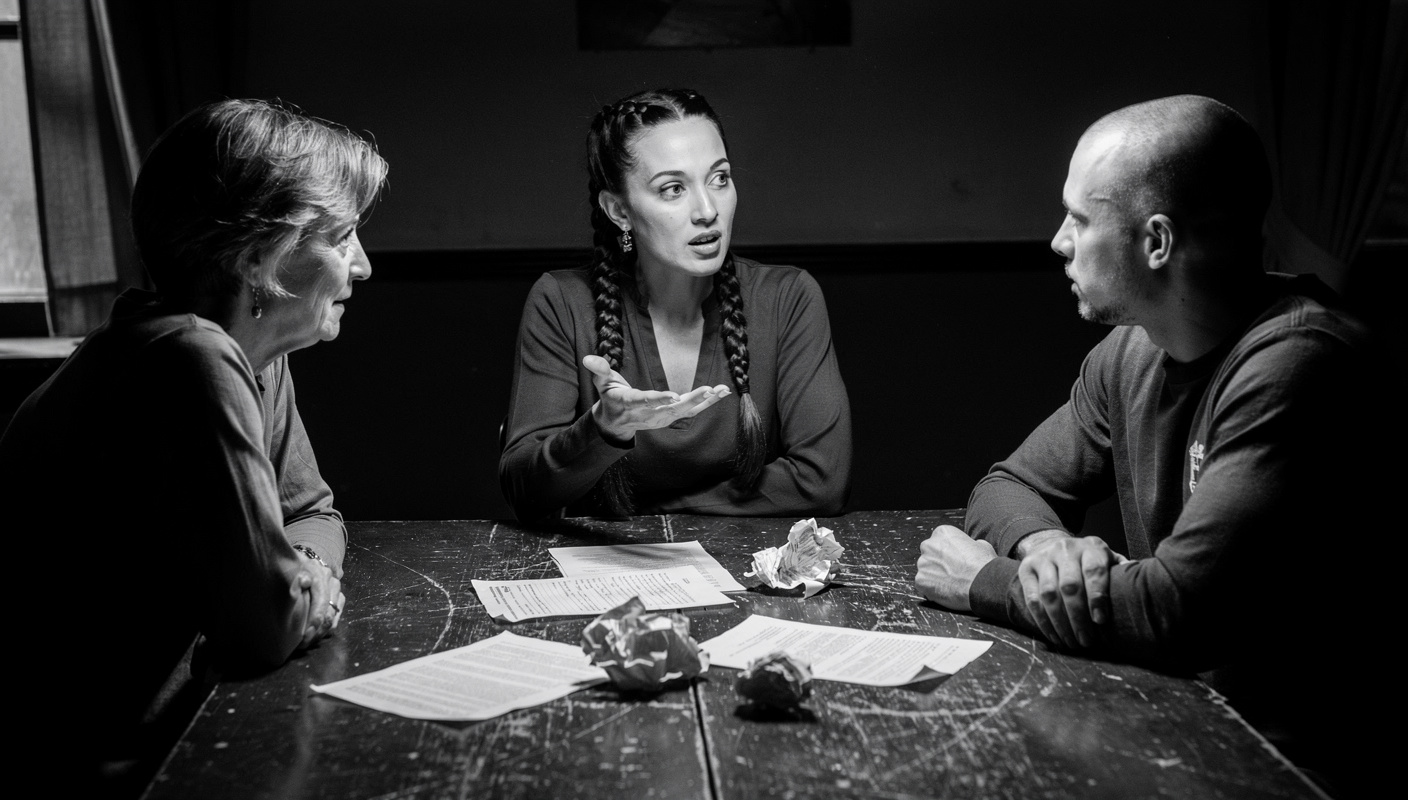
In a personal conversation, asking for emotional support. The same principles apply outside the office. When someone approaches you with their shoulders curled, their voice barely audible, and their gaze anywhere but your face, your instinct is often to protect them rather than to engage with them as an equal. When someone approaches you with their head up and their voice clear, you engage with the substance of what they are saying. The physical signals determine whether you are treated as someone who needs to be managed or someone worth listening to.
Staying grounded in your body during high-stakes conversations is a learnable skill. The C.O.R.E. framework gives you a practical method for maintaining that physical and emotional stability when the pressure rises. And if a conversation goes sideways despite your preparation, the R.E.C.O.V.E.R. method can help you find your footing again.
What People Get Wrong About Looking Vulnerable
There is a widespread belief that asking for help always makes you look weak. That belief is wrong. What makes you look weak is the combination of asking for help and physically signalling that you believe you have no right to it.
Vulnerability communicated through a grounded, open body reads as courage. Vulnerability communicated through a collapsed, avoidant body reads as fragility. The content of the request is almost identical. The physical delivery is everything.
A second misconception is that intensity signals seriousness. Some people, trying to appear confident, become rigid: squared jaw, stiff posture, unnaturally direct stare. That reads as aggression, not strength. The goal is not tension. The goal is stillness. There is a difference, and the body knows it.
Third, many people assume that if they feel anxious, it will show regardless of what they do. This is not entirely true. You cannot eliminate the physiological response, but you can choose what your body does while it is happening. Slow your breath. Unclench your jaw. Open your hands. These small physical choices interrupt the anxiety loop. They do not require you to stop feeling nervous. They require you to stop performing nervousness.
These same physical awareness skills become critical when you need to advocate your position upward. If you are making a case to a manager who tends to dismiss concerns, the V.A.L.U.E. method gives you a framework for that kind of conversation, and your body language will either support or sabotage every step of it.
In group settings, body language becomes even more complex. How you position yourself physically when asking for support in a meeting, especially when dominant voices are present, shapes whether your request is heard at all. Understanding how to deal with dominant voices in a discussion is part of the same skill set.
And when you are on the other side, giving corrective feedback or direction, the physical signals you send matter just as much. The S.B.I. method works best when your body language matches its intent: specific, calm, and direct.
Before You Walk In: A Practical Preparation
In my experience, the biggest gap is not knowledge. People often know, intellectually, that they should stand tall and make eye contact. The gap is the moment before the conversation, when the anxiety spikes and the body defaults to its old habits.
Here is what I recommend. Before any conversation where you need to ask for help, take two minutes in a private space. Stand with your feet hip-width apart, your weight even, your arms by your sides. Take three slow breaths, breathing out for longer than you breathe in. Roll your shoulders back once, gently. Let your jaw soften. Then practise saying your opening sentence out loud, at the volume you intend to use. Not a whisper. Your actual voice.
You are not faking confidence. You are giving your body a clear instruction about how to carry itself when it matters.
Body language help, offered or received, always travels through the body first. Prepare yours before you open the door.
Frequently Asked Questions (FAQ)
What is body language help signaling?
Body language help signaling refers to the physical cues you send when asking for assistance. Your posture, eye contact, and gestures tell others whether you are approaching from a place of confidence or anxiety. Those cues shape how seriously your request is taken before a word is spoken.
How does body language affect how others respond to a request for help?
When your posture is collapsed, your eye contact is avoided, or your hands fidget, others unconsciously read distress rather than capability. A grounded, open physical stance tells the other person you are capable and clear, which makes them far more willing to engage constructively with your request.
What body language signals strength when asking for help?
Upright but relaxed posture, steady eye contact held for three to five seconds at a time, open hands resting still, and a calm facial expression all signal that you are asking from a position of strength. These cues communicate that you are in control of yourself, even if you need support.
What body language mistakes make you look weak when asking for help?
Hunched shoulders, avoiding eye contact, touching your face or neck, speaking to the floor, and trailing off mid-sentence all send submissive signals. They suggest uncertainty and can cause others to either dismiss your request or treat you as more vulnerable than you are.
Can you practise confident body language before a difficult conversation?
Yes. Stand or sit in your grounded position before the conversation starts, take three slow breaths, and place your hands open on your thighs or a surface. Running through the physical stance in advance builds muscle memory, so your body does not default to tension when the moment arrives.
Does body language matter more than the words used when asking for help?
Your words shape what you ask for; your body language shapes how the request is received. If the two conflict, the physical message almost always wins. A well-worded request delivered with a tense, closed posture will be heard as less confident than a simpler request delivered with stillness and eye contact.