

What Happened
New research from the Chartered Management Institute reveals that bad middle managers are driving workers out the door at an alarming rate. The study found that poor management behavior has become one of the top reasons employees quit, and employers are only now starting to treat it as the serious retention problem it is. The CMI is calling it a warning sign that companies can no longer afford to ignore.
The Communication Angle
Here is the lesson: being promoted to manager does not make you a communicator. It just gives you an audience that has no choice but to listen. That distinction matters enormously, and most organizations are getting it completely backwards.
Middle managers fail for one specific, fixable reason. They were never taught how to have direct, honest conversations with the people they lead. Instead, they learned to manage up: impress the boss, hit the numbers, stay out of trouble. So when it comes time to give real feedback, explain a difficult decision, or tell someone their performance is not cutting it, they freeze. They go vague. They bury the message in pleasantries until the actual point disappears entirely. The employee walks away confused, and the manager thinks the problem is handled.
It is not handled. It is festering. And eventually, that employee stops asking questions and starts updating their resume.
This is entirely a communication failure, not a personality failure. The manager is not necessarily a bad person. They are someone who was handed authority without being handed the tools to use it. The result is a specific pattern: feedback that sounds like praise, instructions that sound like suggestions, and performance conversations that feel like casual catch-ups. The employee cannot read the room because the room has been deliberately obscured.
What should managers actually do? Three things. First, say the real thing first. Not after three minutes of warm-up. Not buried in a compliment sandwich. Lead with the point. "I want to talk about how you handled Monday's deadline" is a better opening than "So, how are things going?" Second, make the standard explicit. Do not assume people know what good looks like. Tell them specifically what you need and when. Third, follow up in writing. A spoken conversation is easy to misremember. A short follow-up message, even just two sentences, removes all ambiguity and shows the employee you meant what you said.
None of this requires a personality transplant. It requires a decision to communicate clearly instead of comfortably.
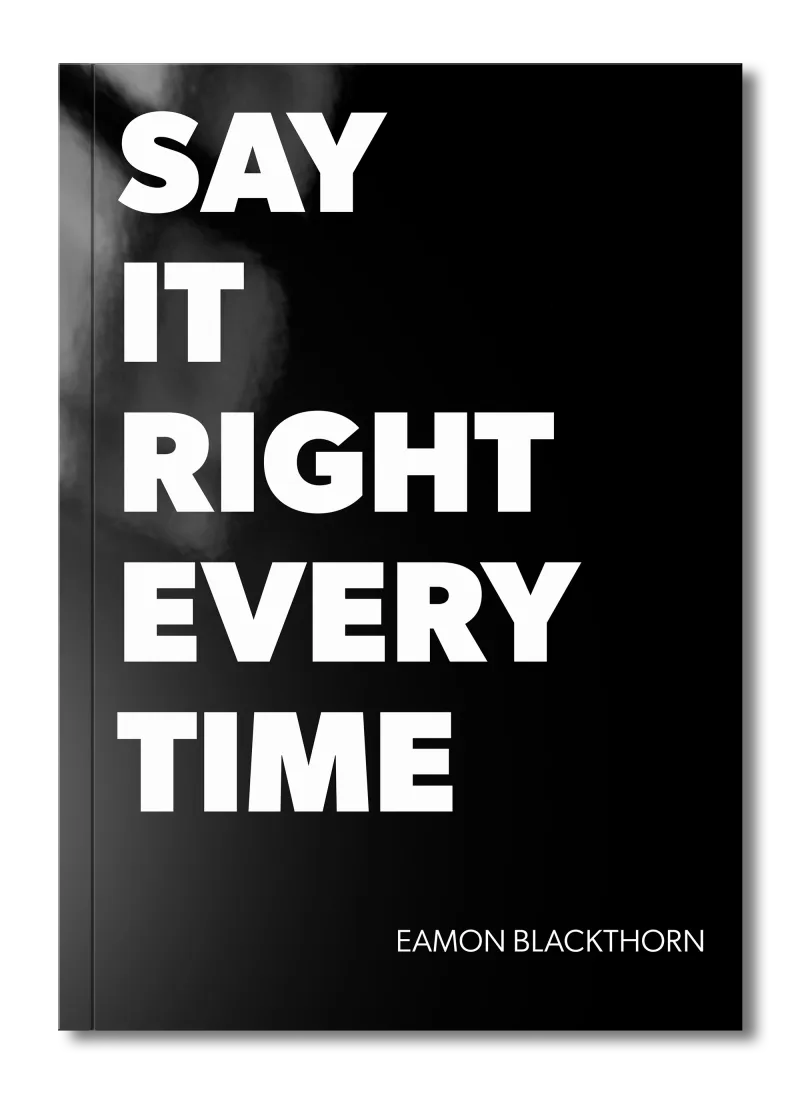
This is exactly the kind of scenario I break down in Say It Right Every Time. The chapter on difficult conversations gives you a framework for saying the hard thing without torching the relationship: how to open, how to stay on point when the other person gets defensive, and how to close in a way that actually produces change. Most managers avoid directness because they were never shown what directness with warmth looks like. That chapter fixes that.
Never Be Lost
for Words Again
Get word‑for‑word scripts for the conversations that shape your life, from job interviews and negotiations to difficult talks with family and partners, so you always know exactly what to say and how to say it.
Never Be Lost
for Words Again
Get word‑for‑word scripts for the conversations that shape your life, from job interviews and negotiations to difficult talks with family and partners, so you always know exactly what to say and how to say it.
Key Takeaway
Before your next one-on-one with a direct report, write down one sentence that answers this question: "What do I need this person to do differently, and by when?" Bring that sentence into the conversation. Say it out loud, early. That single habit will do more for your team's clarity and your own credibility than any management training seminar.