
What Happened
SHRM recently published findings on what it takes to build a genuinely connected workforce, spotlighting employee engagement as the central challenge facing organizations today. The report points to a persistent gap between what leaders think their people feel and what employees actually experience. That gap has a name, and it is not a culture problem. It is a communication problem.
The Communication Angle
Picture a Monday morning all-hands meeting. The executive at the front of the room talks for forty minutes about vision, values, and Q3 priorities. Employees nod. They file out. By noon, half of them cannot tell you what the meeting was actually about. This is not hypothetical. This is most companies, most weeks.
The SHRM findings point to something communication professionals have known for years: engagement does not come from information delivery. It comes from two-way exchange. Leaders who confuse broadcasting with communicating are not connecting their workforce. They are performing connection while actually maintaining distance.
Here is the specific failure I see repeated constantly. Leaders default to what I call "announcement mode." They package information in polished, top-down statements and then wonder why no one feels heard. The problem is structural. When you only speak and never listen in any meaningful, organized way, you train your people to be passive. Passive people are not engaged people.
What actually works is what I call "reciprocal dialogue design." You do not just open a meeting. You open a meeting with a direct question that requires a real answer. Not "Any questions?" at the end of a presentation, which is a social cue to stay quiet. I mean a genuine prompt at the start: "Before I share our direction, tell me what is slowing you down this week." That one move repositions the leader as someone who listens before they lead. It signals that the conversation runs both ways.
The other piece SHRM's data consistently supports is consistency. Engaged employees do not just feel heard once during an annual survey. They feel heard in a rhythm. Weekly. In small moments. Through managers who know how to ask the right questions and actually respond to what they hear. The skill here is not empathy as a soft concept. It is knowing how to follow up. When someone tells you something matters to them, your next sentence either builds trust or destroys it.
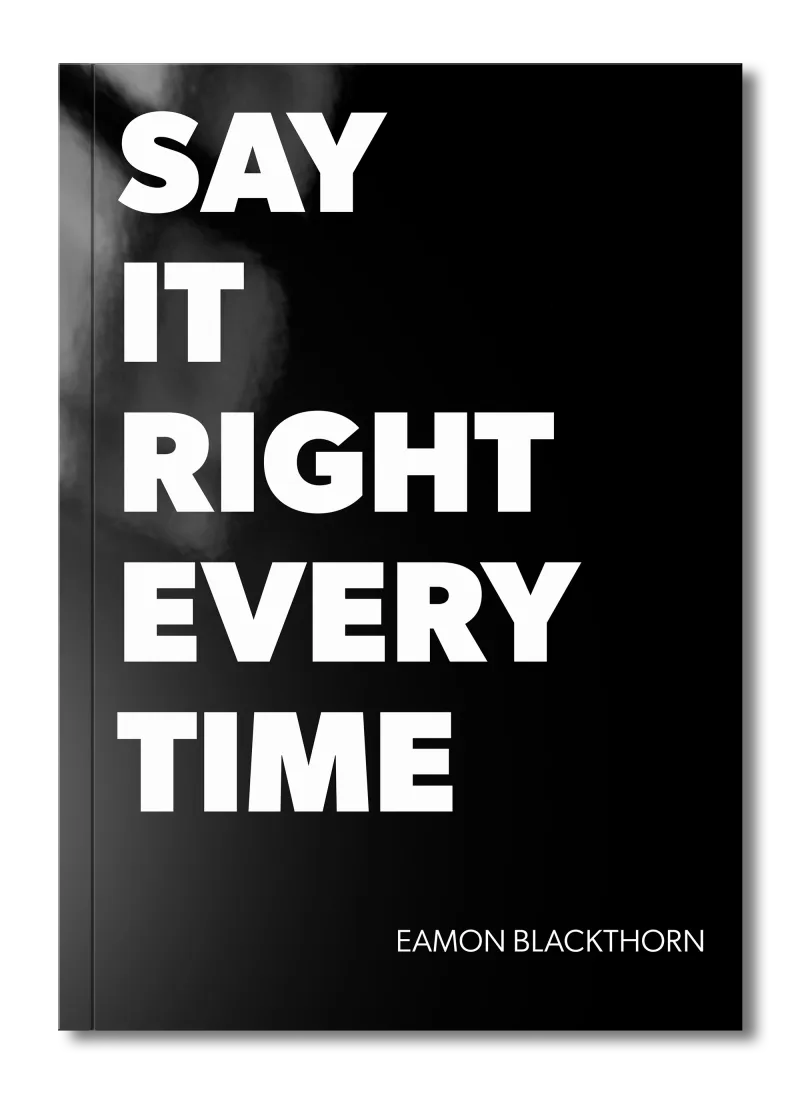
This is exactly the kind of scenario I break down in Say It Right Every Time. The chapter on structured listening gives you a framework for turning one-sided conversations into genuine exchanges. Most leaders think they are good listeners because they do not interrupt. That is a low bar. Real listening is active, it is intentional, and it produces a response that proves you actually absorbed what someone said. The chapter walks you through exactly how to do that in a professional setting, whether you are running a team of five or leading a company of five hundred.
Never Be Lost
for Words Again
Get word‑for‑word scripts for the conversations that shape your life, from job interviews and negotiations to difficult talks with family and partners, so you always know exactly what to say and how to say it.
Never Be Lost
for Words Again
Get word‑for‑word scripts for the conversations that shape your life, from job interviews and negotiations to difficult talks with family and partners, so you always know exactly what to say and how to say it.
Key Takeaway
Before your next team meeting, replace your opening slide with one open question. Write it down in advance. Make it specific to what your team is actually dealing with right now, not a generic icebreaker. Then close your mouth and take notes on what you hear. Do not defend, explain, or pivot immediately to your agenda. Just listen for three minutes. That single change will tell your people more about whether they belong in this organization than any engagement survey ever will.