

What Happened
Forbes recently published a piece urging leaders to sharpen their executive presence through deliberate, strategic communication. The article positions presence not as a personality trait you either have or don't, but as a learnable set of behaviors. The core argument: how you communicate signals your authority before your ideas even land.
The Communication Angle
Here is the problem with most executive presence advice. It tells you to "be confident" and "own the room." That is not guidance. That is a fortune cookie. What actually builds presence is specific, repeatable behavior. And the Forbes piece, to its credit, points in that direction, even if it stays at the surface level.
Let's dissect what strategic communication actually requires.
First, clarity of intent before you open your mouth. Most leaders walk into rooms with a topic, not a purpose. There is a massive difference. A topic is "the Q3 budget." A purpose is "I need this group to approve a 15% reallocation before we leave." When you know your purpose, every word you say serves it. When you only have a topic, you ramble. People with executive presence never ramble.
Second, the architecture of a message matters more than the delivery. Most communication training obsesses over eye contact and vocal tone. Those are finishing touches. The foundation is structure: lead with your conclusion, then give your evidence, then invite the response. This is not natural. Our instinct is to build to the conclusion like we're writing a mystery novel. Leaders who flip that instinct and front-load the point get taken seriously. Leaders who bury the point lose the room before they ever reach it.
Third, presence is built in the moments between sentences, not during them. Pausing after a key point is not dead air. It is a signal that what you just said deserves to settle. Most nervous communicators rush through silence because it feels like failure. Confident ones use silence as punctuation. That pause after your main point tells the room: I said something worth sitting with.
The Forbes piece gestures at all of this, but stops short of giving readers a mechanism to actually change their behavior. Knowing you should "communicate strategically" is worthless without knowing the exact moves that make it happen.
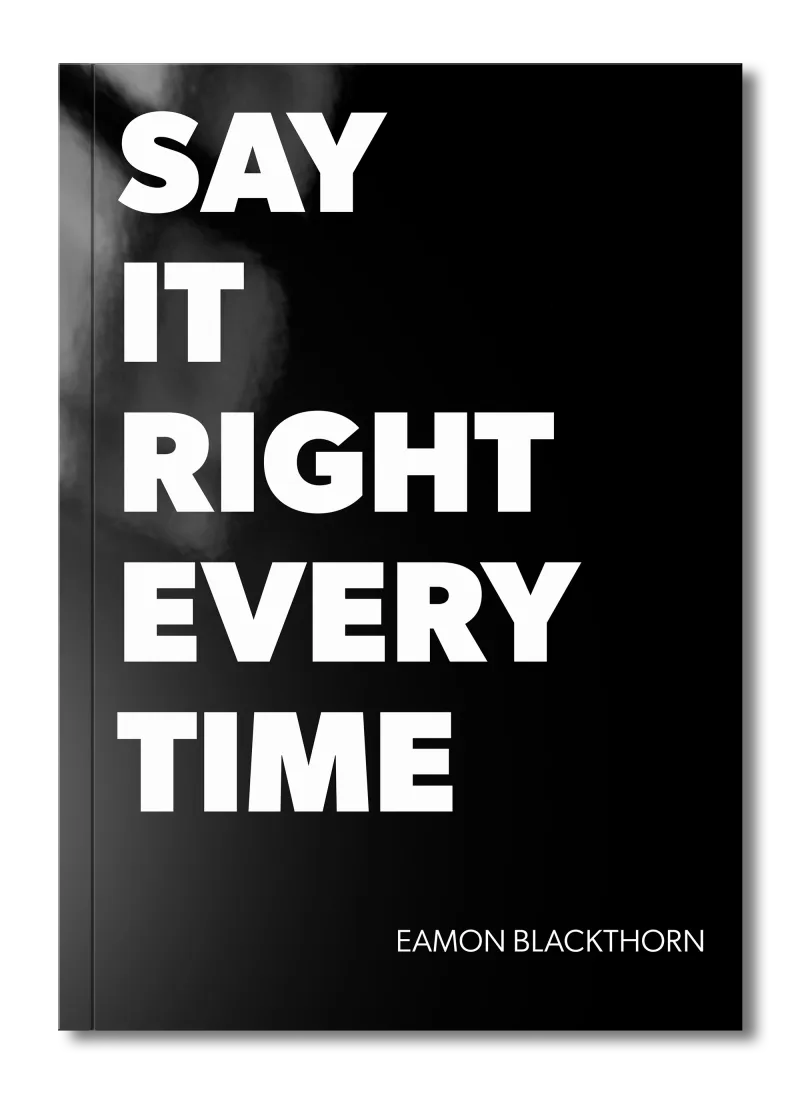
This is exactly the kind of scenario I break down in Say It Right Every Time. The chapter on purposeful openings gives you a framework for entering any high-stakes conversation with a clear first line that establishes authority and direction simultaneously. Because the first 15 seconds set the frame for everything that follows. Get those seconds right and presence follows naturally. Get them wrong and no amount of eye contact will save you.
Never Be Lost
for Words Again
Get word‑for‑word scripts for the conversations that shape your life, from job interviews and negotiations to difficult talks with family and partners, so you always know exactly what to say and how to say it.
Never Be Lost
for Words Again
Get word‑for‑word scripts for the conversations that shape your life, from job interviews and negotiations to difficult talks with family and partners, so you always know exactly what to say and how to say it.
Key Takeaway
Before your next leadership meeting, write down one sentence: "By the end of this conversation, I need the group to (blank)." Put it at the top of your notes. Then start your remarks with that outcome stated plainly, not hinted at, not saved for the end. Watch how the dynamic shifts when people know from word one why you are talking.