
What Happened
New research puts the cost of workplace conflict in the UK at £51.2 billion annually, roughly 1.7% of the entire national economy. The University of Westminster study, commissioned by Acas, found that 14 million employees experienced conflict at work in 2025. That figure is not a rounding error. It is a national communication failure playing out inside offices, warehouses, and boardrooms every single day.
The Communication Angle
Here is the question that number forces us to ask: if conflict is this expensive, why are we still treating it like a personal problem instead of a professional skill gap?
Because most people have never been taught how to have a hard conversation. That is the real story behind the £51.2 billion. The money does not vanish because people disagree. It vanishes because disagreements go unaddressed until they become grievances, then legal disputes, then departures. Silence is not neutrality. Silence is a slow leak in the organization.
The communication failure here runs in both directions. Employees stay quiet because they fear retaliation or awkwardness. Managers stay quiet because they confuse avoiding conflict with maintaining harmony. Both groups are wrong, and both are paying for it. The specific error is the same in each case: they are choosing comfort in the short term over clarity in the long term. That trade always costs more than it saves.
What actually works is direct, early conversation framed around outcomes rather than feelings. Not "you made me feel undervalued" but "here is what I need this project to look like and here is where I think we are misaligned." One of those opens a negotiation. The other opens a wound. The distinction sounds small. The financial difference, apparently, is tens of billions of pounds.
Managers especially need to hear this: your job is not to make people feel comfortable. Your job is to make the team function. That means naming tension out loud before it calcifies. A one-line email does not fix a festering disagreement. A direct, two-minute conversation usually does. The technique is simple: state what you observed, state what you need, and ask one specific question. Three steps. No speeches. No therapy session. Just clarity, delivered early.
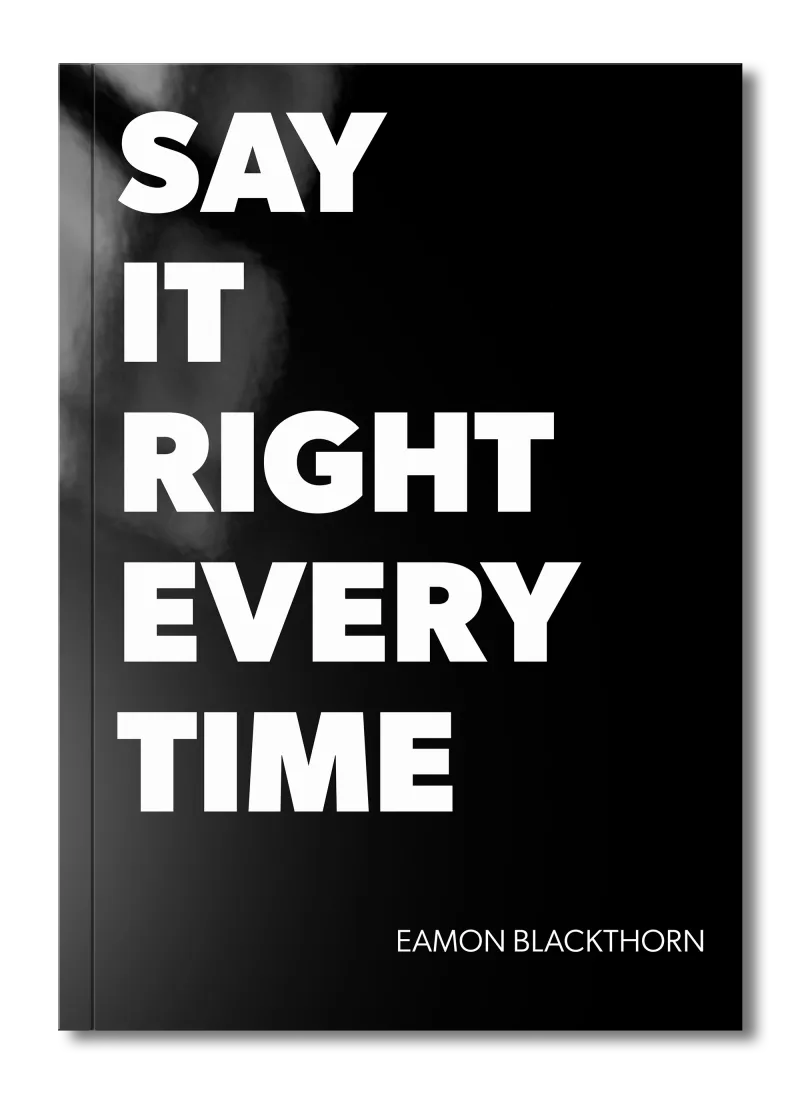
This is exactly the kind of scenario I break down in Say It Right Every Time. The chapter on difficult conversations gives you a framework for entering high-stakes exchanges with a clear structure so the conversation moves toward resolution instead of circling the same grievance on repeat. The £51.2 billion problem is not a management problem or an HR problem. It is a sentence-by-sentence problem, and that is entirely fixable.
Never Be Lost
for Words Again
Get word‑for‑word scripts for the conversations that shape your life, from job interviews and negotiations to difficult talks with family and partners, so you always know exactly what to say and how to say it.
Never Be Lost
for Words Again
Get word‑for‑word scripts for the conversations that shape your life, from job interviews and negotiations to difficult talks with family and partners, so you always know exactly what to say and how to say it.
Key Takeaway
Before your next tense interaction at work, write one sentence: "The outcome I need from this conversation is..." That single sentence does two things. It stops you from going in emotionally loaded, and it gives the other person something concrete to respond to. You are no longer two people trading feelings. You are two people solving a specific problem. That shift in framing is where conflict either gets resolved or gets expensive.