
What Happened
Being talked over or ignored in a room full of senior executives is one of the most common and demoralizing experiences professionals face. It happens across industries and levels. Someone raises a point, gets cut off mid-sentence, or watches their idea vanish into silence only to be credited to someone else five minutes later. The question is not whether it will happen to you. The question is what you do when it does.
The Communication Angle
Here is the contrast that matters: the professional who shrinks versus the professional who holds ground. Both are in the same room, facing the same dismissal. Only one of them walks out with their credibility intact.
The shrinking response looks like this. You get interrupted. You stop talking. You wait for a pause that never comes, and you spend the rest of the meeting getting smaller. You tell yourself you will follow up in an email. You do not. This is not timidity. It is a trained response to social pressure, and it is costing you professionally every single time you give in to it.
The holding-ground response requires one specific skill: the controlled re-entry. When you get cut off, you do not wait for permission to speak again. You wait for a natural breath in the conversation, then you say exactly this: "I want to finish the point I was making." Not "sorry to interrupt" and not "I know we moved on, but." You name what you are doing plainly and you do it. That sentence is short, calm, and impossible to argue with without looking rude. It puts the social awkwardness on the person who interrupted you, not on you.
The ignored-idea problem has a different fix. When your point disappears into the room and someone else gets credit for it three minutes later, you speak up immediately. You say: "That builds on what I raised earlier, and I want to add to it." You are not accusatory. You are not emotional. You are simply drawing a visible line between your contribution and the conversation. If you let the moment pass, it is gone. If you catch it in real time, you own it.
The deeper issue here is that most professionals confuse silence with professionalism. They think holding back is composed and strategic. It is not. Silence in a room where you are being dismissed reads as agreement with your own dismissal. The executives who interrupt you are not necessarily doing it consciously. They are responding to signals. When you stop talking, you send the signal that your point was not that important. The fix is to never send that signal.
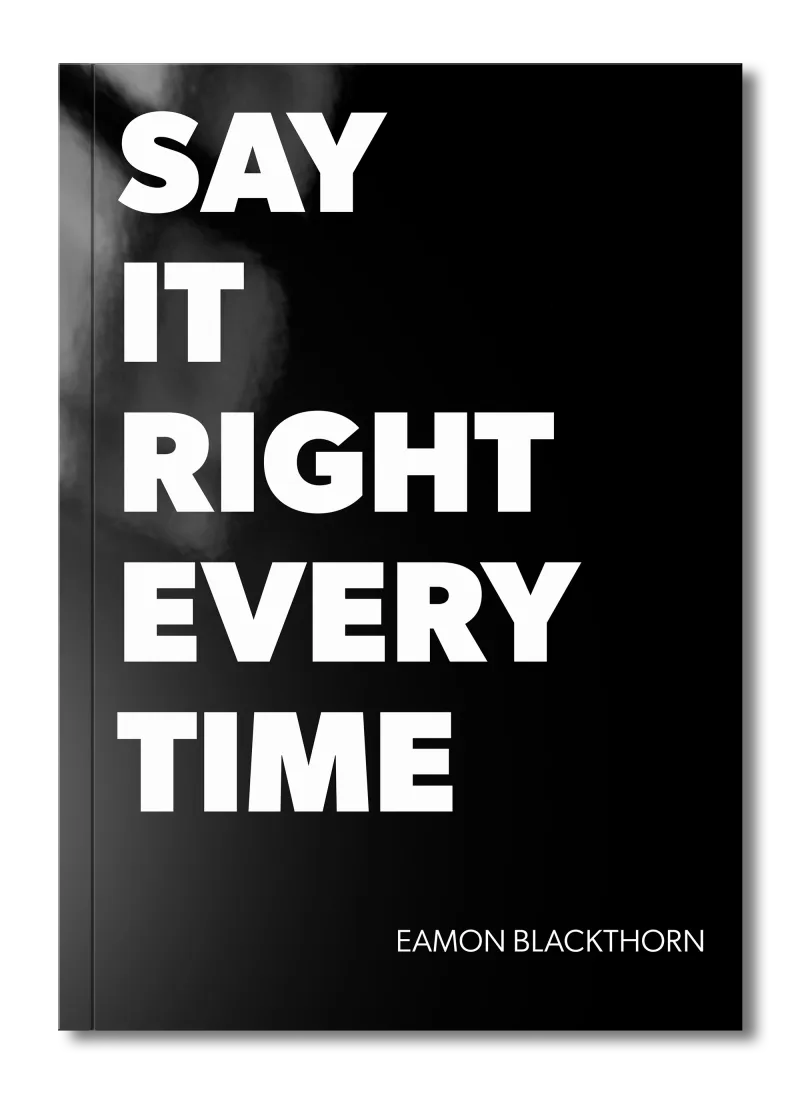
This is exactly the kind of scenario I break down in Say It Right Every Time. The chapter on holding your position under social pressure gives you a framework for staying composed and direct when the room is working against you, so you never have to choose between keeping the peace and keeping your credibility.
Never Be Lost
for Words Again
Get word‑for‑word scripts for the conversations that shape your life, from job interviews and negotiations to difficult talks with family and partners, so you always know exactly what to say and how to say it.
Never Be Lost
for Words Again
Get word‑for‑word scripts for the conversations that shape your life, from job interviews and negotiations to difficult talks with family and partners, so you always know exactly what to say and how to say it.
Key Takeaway
Before your next meeting with senior leaders, write down one point you will make and commit to finishing it no matter what. If you get cut off, your only job is to say: "I want to finish that thought." Practice that sentence out loud before you walk in the room. Literally say it. The first time you use it in a real meeting, it will feel uncomfortable. That discomfort is the work.