
What Happened
In October 2026, thirty-four early-career researchers from seventeen countries gathered in Trieste for a two-day intensive workshop. The goal was direct: learn to translate scientific findings into language that policymakers and ordinary citizens can actually use. The participants worked on real environmental and technological challenges, practicing the craft of making evidence matter to people who weren't trained in a lab.
The Communication Angle
Here is the question that workshop raises: Why does science keep losing the argument in public?
It is not because scientists are wrong. It is because they are trained to speak to each other, not to the people who need to act on what they know. A researcher who can write a flawless methodology section will often blank when asked to explain the same finding to a city council member. That gap is not a knowledge problem. It is a translation problem, and translation is a learnable skill.
What Trieste got right was the framing. This was not a media training seminar about sound bites. It was a structured practice environment where researchers could rehearse connecting evidence to decisions. That distinction matters enormously. Sound bite training teaches you to perform. Decision-focused communication training teaches you to persuade. Performance fades under pressure. Persuasion holds.
The second smart move was the mix of participants. Seventeen countries means seventeen different political contexts, seventeen different levels of public trust in institutions, and seventeen different sets of assumptions about what "proof" looks like to a non-scientist. When you force young researchers to explain their work across those differences, something useful happens: they stop defaulting to their field's internal vocabulary. They find the common ground, which is almost always a human consequence. Not a data point. Not a confidence interval. A consequence.
Here is the actionable truth buried inside all of this: the moment you know your material is not the moment you are ready to communicate it. You are ready when you can answer two questions in plain language. What does this mean for the person in front of me? And what do I want them to do next? If you cannot answer both in under thirty seconds, you are not ready.
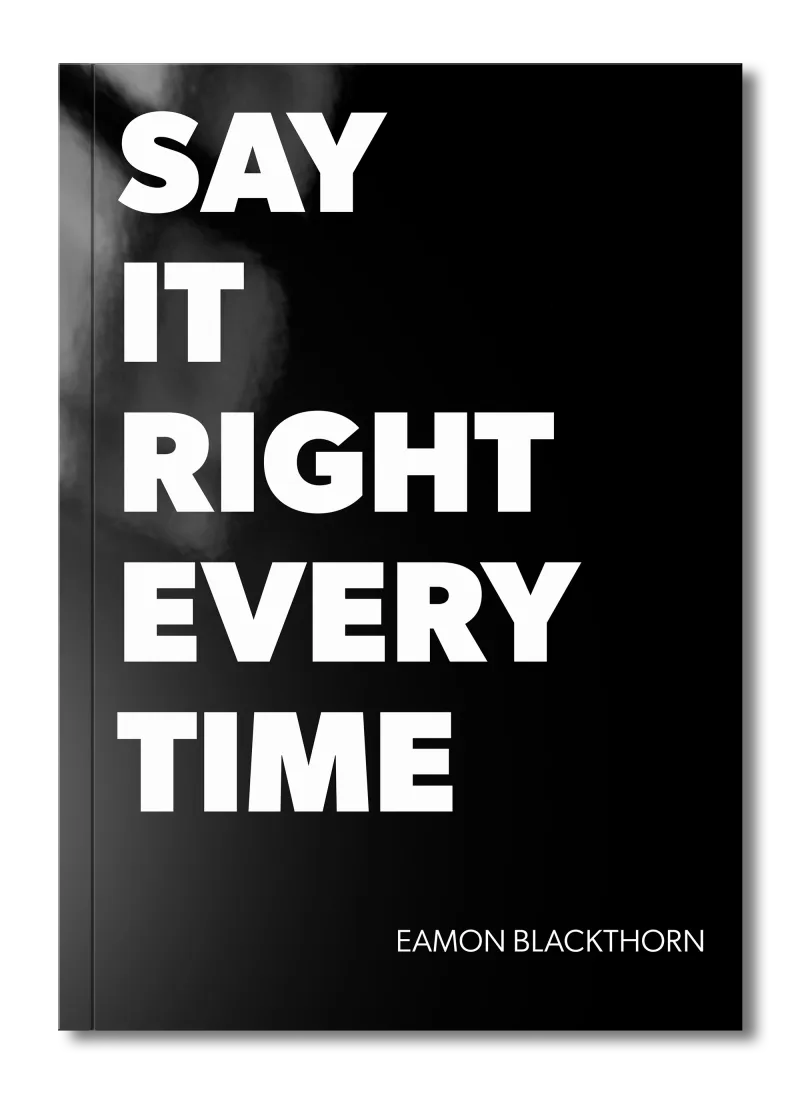
This is exactly the kind of scenario I break down in Say It Right Every Time. The chapter on audience-first preparation gives you a framework for reverse-engineering your message from the listener's decision point backward. Most people build a presentation forward from their own knowledge. The researchers in Trieste are learning to build it backward from the listener's need. That one shift in direction is the difference between informing someone and actually moving them.
Never Be Lost
for Words Again
Get word‑for‑word scripts for the conversations that shape your life, from job interviews and negotiations to difficult talks with family and partners, so you always know exactly what to say and how to say it.
Never Be Lost
for Words Again
Get word‑for‑word scripts for the conversations that shape your life, from job interviews and negotiations to difficult talks with family and partners, so you always know exactly what to say and how to say it.
Key Takeaway
Before your next presentation to a non-specialist audience, write this at the top of your notes: "The one thing I need them to do after this is (blank)." Fill in the blank before you write a single slide. Every word in your presentation should serve that outcome. Everything else is noise, and noise is what causes science to lose to politics every single time.