
In Short
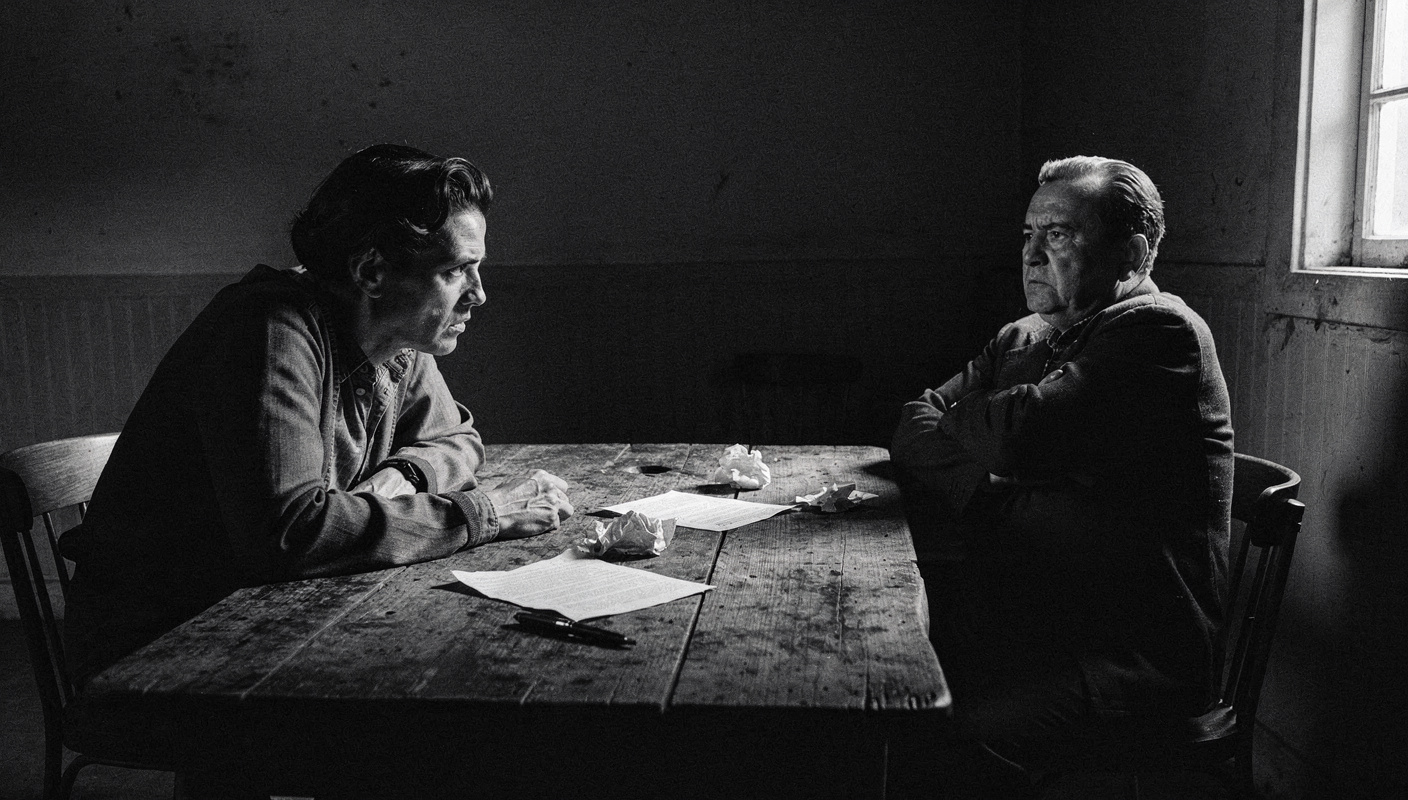
Multi-party conflict dynamics are not simply two-party disputes with extra people. The more parties at the table, the more fault lines exist, the faster alliances shift, and the more likely it is that the conflict you can see is not the conflict doing the damage.
- Coalitions form and dissolve beneath the surface discussion, often driven by fear rather than genuine alignment.
- Procedural conflict, disagreements about how the negotiation is being run, blocks substantive progress more reliably than any disagreement about outcomes.
- The negotiator who maps interests accurately before addressing positions will always outperform the one who reacts to what is said rather than what is driving it.
Multi-party conflict dynamics refer to the patterns of tension, escalation, and coalition formation that emerge when three or more parties negotiate simultaneously. Unlike bilateral disputes, multi-party conflict spreads laterally through shifting alliances, competing agendas, and procedural breakdowns that compound unpredictably.
Why Multi-Party Conflict Behaves Differently from a Two-Party Dispute
Most people learn to handle conflict in pairs. You and one other person, a disagreement, a resolution. That model is clean. It is also almost useless when a third party enters the room.
Here is the truth of it: multi-party conflict does not scale linearly. Two parties create one fault line. Three parties create three potential fault lines. Four parties create six. Each new voice at the table multiplies the number of places where tension can ignite, and the places you are not watching are the ones that will burn you.
I have sat in negotiations where two parties were locked in a heated substantive disagreement while a third party was quietly forming an alliance with a fourth, one that would make the original dispute irrelevant within the hour. The visible conflict was a distraction. The real negotiation was happening in the margins.
What makes this harder is that multi-party conflict spreads sideways. In a two-party dispute, each side feels the other's pressure directly. In a multi-party setting, one party's escalation can pull three others into reactive positions simultaneously. You do not get a bilateral escalation spiral. You get a room-wide cascade.
"The Conversation You're Avoiding Is the One You Need to Have."
"The Conversation You're Avoiding
Is the One You Need to Have."
Stop rehearsing conversations you'll never have. Say It Right Every Time gives you 115 word-for-word scripts and 16 proven frameworks to speak with confidence in every conversation that matters.
The Core Mechanism: How Conflict Spreads Through a Multi-Party Room
Let me tell you something I learned the hard way, watching negotiations fracture when they should have held: the mechanism that drives multi-party conflict is not disagreement. It is perceived threat to position, and those threats rarely come from where people expect.
When a party at a multi-party table feels threatened, their first move is almost never to address the threat directly. Their first move is to seek safety, which means finding allies. Coalition formation begins the moment one party reads the room as adversarial. Another party observes that coalition forming and reads it as a threat to their own position. They begin their own quiet alignment. Within twenty minutes, you have a room that looks like it is discussing a shared problem but is actually running three separate political campaigns.
This dynamic has a quality I would call conflict contagion. One party's defensiveness infects another's perception, which triggers a third party's protective instincts, which confirms the first party's original suspicion. Nobody chose this. It simply propagated, because nobody had a clear enough picture of what was actually driving each person's position.
The distinction between positions and interests becomes genuinely urgent in multi-party settings, more so than in any bilateral dispute. A position is what a party says they want. An interest is what would actually satisfy them. In two-party negotiations, a skilled negotiator can usually surface the underlying interest with a few careful questions. In a multi-party setting, you are mapping multiple interest landscapes simultaneously, and the interactions between them are where the real complexity lives.
Consider a realistic scenario. A company is renegotiating a supplier contract with input from procurement, operations, and legal. Procurement wants to cut cost. Operations wants to protect delivery timelines. Legal wants to reduce liability exposure. Each party states a position. The positions are in conflict. But beneath them, all three departments share one interest: they do not want to be blamed if the contract fails. That shared interest, once surfaced, is the ground on which a workable agreement can be built. Without surfacing it, the negotiation stays a three-way positional battle that nobody wins cleanly.
For practical guidance on handling conflict when it erupts in the moment, How to Handle Conflict During Meetings walks through the response skills you need at the table.
Procedural Conflict: The Fault Line Nobody Names
In every multi-party negotiation I have ever witnessed fall apart, there was a procedural conflict nobody addressed early enough. Not a disagreement about outcomes, but a disagreement about how the conversation was being run.
Procedural conflict is about process: who sets the agenda, whose concerns get heard first, who has authority to make binding decisions, whether decisions require unanimity or majority. These questions feel administrative. They are not. They are the scaffolding of the negotiation, and when parties disagree on the scaffolding, nothing substantive can be built.
The reason procedural conflict is so damaging in multi-party settings is that it provides a legitimate-sounding outlet for substantive frustration. A party that feels outmanoeuvred on a substantive issue will often begin raising procedural objections as a proxy for their real grievance. "We were not given enough time to review this proposal" may mean "We feel this proposal was designed to disadvantage us." Hearing the procedural complaint as only procedural, and fixing only the process, leaves the substantive grievance untouched.
The practical consequence of this is direct: in any multi-party negotiation, you must establish process agreement before substantive discussion begins. Not as a formality. As a genuine investment. When every party has visibly consented to how the negotiation will be run, you remove one major category of conflict before the real work starts.
If you are dealing with tension between specific individuals within a larger group dynamic, How to Use the D.E.A.L. Method to Defuse Tension Between Two Colleagues Who Refuse to Cooperate gives you a concrete method for that bilateral tension inside the multi-party room.
Why Experienced Negotiators Still Get This Wrong
Knowing that multi-party conflict is complex does not protect you from its mechanics. I have watched skilled negotiators walk into multi-party settings and immediately apply every instinct that serves them well in bilateral disputes. Those instincts, good as they are in pairs, actively mislead you at a larger table.
The most common error is focusing on the loudest conflict rather than the most consequential one. When two parties are in heated disagreement, every instinct says to resolve that disagreement. But in a multi-party setting, the heated exchange may be a symptom. The cause is often in a quieter corner of the room, in a silent alliance or an unaddressed procedural grievance or an unmet need that one party has not yet found words for.
A second error is treating coalition formation as inherently problematic. Coalitions are not always destructive. A stable coalition between two parties can actually reduce the number of active fault lines in a complex negotiation, creating a clearer structure. The problem is not coalitions per se; it is coalitions formed from fear rather than genuine alignment, because fear-based coalitions are brittle. They collapse the moment circumstances shift, and when they collapse, they drag the whole negotiation with them.
The D.E.A.L. method for resolving conflicts that are fracturing team synergy is particularly useful here, because it gives you a structured way to work through the layers of conflict rather than reacting to the surface.
A third error is sequencing issues in the wrong order. Bringing the hardest, most contested issue to the table first feels efficient. It is a reliable way to fracture a multi-party negotiation before it has any momentum. Early small agreements build trust between parties. They also create a psychological investment in the process: parties who have already reached agreement on smaller matters have a reason to stay at the table when the difficult issues arrive.
Reading the Room When Every Party Has a Different Agenda
The practical skill that separates negotiators who navigate multi-party conflict well from those who do not is interest mapping: the ability to build and maintain an accurate picture of what each party actually needs, as distinct from what each party is currently demanding.
This requires genuine preparation before the table convenes. For every party in the negotiation, you need to answer three questions: What is their stated position? What underlying interest does that position serve? And what would a satisfactory outcome actually look like for them, even if they have not said so directly?
When you hold that map clearly, something changes in how you hear the conflict. A party raising an objection is no longer simply an obstacle. They are a signal. Their objection tells you which of their interests they believe is currently under threat. Your job is to address that threat directly, or to demonstrate clearly why the current proposal does not threaten it, before asking them to move.
This is closely connected to the dynamics explored in How Unmet Needs Drive Team Conflict and What to Say to Restore Synergy, which goes deeper into the language of addressing underlying needs rather than surface positions.
When the conflict has already escalated and relationships are strained, the repair work is different from the navigation work. How the B.R.I.D.G.E. Method Rebuilds Working Relationships After Tension Has Created a Genuine Breakdown is the tool I reach for when the damage is structural rather than situational.
De-escalation in a multi-party room requires slightly different instincts than in a one-to-one exchange. The principles in How to De-escalate Arguments During Meetings translate well, but you need to apply them with awareness that reducing tension between two parties may inadvertently shift pressure toward a third.
What You Can Do Differently Starting at the Next Table
The analysis above is only useful if it changes how you prepare and how you respond. Here is what I would ask you to take away as concrete practice.
Before the negotiation begins: Map every party's interests, not just their positions. Prepare process ground rules and seek genuine consent to them, not passive acceptance. Identify which issues are likely to generate procedural objections and address the underlying concern in advance.
When conflict surfaces at the table: Before responding to what a party says, ask yourself which of their interests they are protecting. Separate procedural objections from substantive ones and address each on its own terms. Never let a process grievance go unacknowledged, even if you cannot immediately fix it.
When coalitions begin to form: Do not treat all coalitions as threats. Assess whether the forming alliance is driven by shared genuine interest or by shared fear. If it is fear-based, the right intervention is to address the fear directly, not to try to break the coalition.
When the table is fracturing: Slow down. A negotiation in collapse cannot be saved by accelerating toward a resolution. Call a process pause, acknowledge the difficulty explicitly, and return to the question of what each party actually needs rather than what each party is currently insisting on.
The D.E.A.L. method applied to feedback disagreements illustrates how the same structural approach to conflict resolution scales across different contexts, which is a useful reminder that the principles here are not unique to formal negotiations.
Advanced Conflict Dynamics in Multi-Party Negotiations: Putting It Together
Multi-party conflict dynamics will always be more complex than bilateral disputes. That is not a problem to solve; it is a condition to understand. The negotiator who walks into a multi-party setting expecting the same dynamics as a one-to-one exchange will be consistently surprised by what happens. The negotiator who understands how conflict spreads, how coalitions form, how procedural grievances mask substantive ones, will read the room accurately and respond to what is actually happening.
This much I know for certain: the table does not lie. Every silence, every procedural objection, every unexpected alliance is telling you something about unmet interests and perceived threats. Your job is to develop the clarity to hear it. The more faithfully you map the interests in the room before you react to the positions, the more reliably you will navigate multi-party conflict dynamics toward an outcome that holds.
Frequently Asked Questions (FAQ)
What are multi-party conflict dynamics in negotiation?
Multi-party conflict dynamics describe the shifting patterns of tension, alliance, and breakdown that emerge when three or more parties negotiate together. Unlike bilateral disputes, multi-party conflict spreads sideways through coalitions, procedural disagreements, and competing agendas that operate beneath the surface discussion.
Why do multi-party negotiations escalate faster than two-party talks?
When a third party enters a negotiation, conflict no longer travels in a straight line between two people. It spreads through side conversations, shifting alliances, and perceived threats to coalitions. Each new party adds potential flashpoints, and a single escalation can pull every other party into a reactive position simultaneously.
How do you manage multi-party conflict dynamics at the negotiation table?
Start by mapping each party's underlying interests, not just their stated positions. Identify which conflicts are substantive and which are procedural. Address process disagreements first, because they block everything else. Then sequence substantive issues so that early small agreements build momentum before the hardest conflicts are tabled.
What is coalition formation in multi-party negotiations?
Coalition formation is when two or more parties align their positions to strengthen their combined influence against the others. Coalitions can stabilise a negotiation by reducing the number of active fault lines, but they can also entrench conflict by creating an in-group and an out-group dynamic that freezes progress.
How can you tell when multi-party conflict is about to break down completely?
Watch for three signs: parties stop addressing each other and begin performing for the room instead, procedural objections multiply as a proxy for substantive frustration, and side conversations replace the main table discussion. When all three appear together, the negotiation is no longer functioning and needs a structural reset before it can continue.
What is the difference between substantive and procedural conflict in negotiations?
Substantive conflict is about what is being decided: resources, terms, outcomes. Procedural conflict is about how the negotiation is being run: who speaks when, what is on the agenda, who has authority to decide. Procedural conflict is often the more urgent problem because it prevents substantive issues from being addressed at all.