
In Short
Most conflicts do not erupt. They accumulate. The communication patterns that predict escalation are visible long before anyone loses their composure, but only if you know what to look for.
- Escalation follows a predictable sequence of small communication shifts, not one explosive moment.
- The mechanism is threat perception: once someone feels attacked rather than heard, the pattern changes and compounds quickly.
- You can interrupt the spiral if you catch it in the first few moves, but only if you are watching for the right signals.
Communication patterns that predict escalation are recurring sequences of verbal and non-verbal behaviour that signal a conflict is intensifying beyond productive tension. They appear before a breakdown becomes obvious, often disguised as ordinary friction, and left unaddressed, they lock both parties into a hardening cycle of defence and attack.
How Conflict Actually Builds Before Anyone Notices
People tend to think of conflict as a moment. A confrontation, a raised voice, a door shut too hard. In my experience, that moment is never the beginning. It is the end of a sequence that started much earlier, often in an ordinary conversation that nobody would have flagged as dangerous.
Here is what I have observed over six decades of watching people communicate: the content of a disagreement rarely determines how bad it gets. What determines it is the pattern of communication that surrounds the content. Two people can argue about a budget line or a project deadline and either resolve it in ten minutes or carry the damage for months. The difference is not the subject. It is the sequence of moves that plays out between them.
Understanding what those moves look like, and why they work the way they do, is what gives you the power to interrupt them. Without that understanding, you are always reacting. With it, you can respond instead.
"The Conversation You're Avoiding Is the One You Need to Have."
"The Conversation You're Avoiding
Is the One You Need to Have."
Stop rehearsing conversations you'll never have. Say It Right Every Time gives you 115 word-for-word scripts and 16 proven frameworks to speak with confidence in every conversation that matters.
The Mechanism Beneath Every Escalating Conflict
The engine driving escalation is threat perception. The moment a person feels attacked, disrespected, or cornered, their entire communication posture shifts. They stop listening to understand and start listening to respond. They move from curiosity to defence. And once that shift happens, everything they hear from the other person passes through a filter of suspicion.
This is not weakness. It is a deep human reflex, and it activates faster than conscious thought. The problem is that it is contagious. When you shift into a defensive posture, the person across from you senses it, even if they cannot name it. They begin to feel unsafe. Their posture shifts too. Within a few exchanges, neither person is talking to the other. They are both talking at the wall they have built between them.
The practical consequence of this is significant. Once threat perception is active on both sides, the actual words being spoken matter less and less. Tone carries more weight than content. A neutral question lands as an accusation. A factual statement sounds like blame. This is the mechanism behind every conflict spiral, and it explains why two intelligent adults can leave the same conversation with completely opposite accounts of what was said.
What feeds the spiral is that each defensive move appears justified to the person making it. You raised your voice because they were dismissive. They were dismissive because you were aggressive. They were aggressive because you seemed contemptuous. The sequence loops back on itself, and both people genuinely believe the other one started it. In that condition, resolving the content of the disagreement becomes almost impossible. You have to address the pattern first. Understanding how unmet needs drive this cycle can help you see what is really fuelling the friction before it becomes a conflict you cannot easily repair.
What Escalation Looks Like in Real Conversations
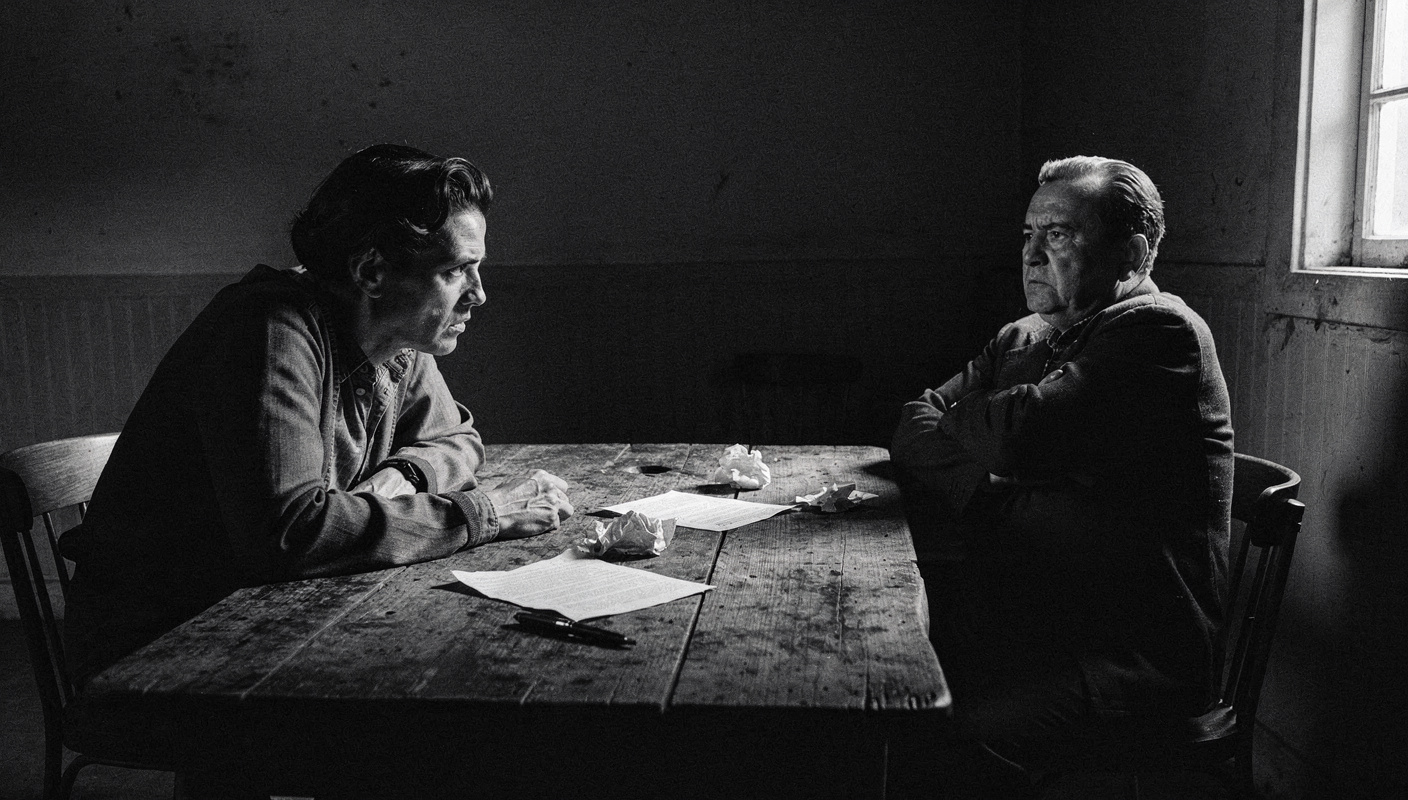
Let me give you a scene I have witnessed in various forms more times than I can count. Two colleagues are discussing a project handover. One of them arrives slightly on edge, distracted by something unrelated. The other notices the flat tone and reads it as indifference. They ask a pointed question: "Did you actually read the brief?" It is meant as a genuine check. It lands as a challenge.
The first colleague straightens slightly, voice becoming careful and clipped. "Of course I read it." The second, now sensing defensiveness, pushes: "It just seems like some of these points are being ignored." The first responds with a subject change, moving past the point rather than addressing it. The second falls quiet, lips pressed together.
Nothing dramatic has happened. No one has shouted. But the pattern has already shifted. The subject change was a form of stonewalling: a withdrawal from engagement. The quiet that followed was not acceptance. It was suppression. Two moves in, and both people are now operating from threat perception. The conversation continues, but it is already producing heat instead of light. Knowing how to de-escalate arguments during meetings often depends on catching this kind of shift in the first few exchanges, before the positions harden.
The other pattern I see constantly is blame framing: phrasing that assigns fault as its first move rather than its last. "You always do this." "This keeps happening because of how you handle things." These phrases are not just imprecise. They are threat signals. The person on the receiving end hears them as attacks on their character, not descriptions of a problem. Their response will reflect that, and the conversation tilts from there.
Why People Miss These Signals Until the Damage Is Done
The honest answer is that most people are trained to track content, not delivery. In professional settings especially, we are taught to focus on what is being said: the facts, the arguments, the information. The how, the tone, the timing, the body language, these get filed under "style" and treated as secondary.
But escalation does not travel through content. It travels through delivery. The words might be reasonable. The tone tells a different story. And because tone is harder to quote or document, people learn to dismiss it, even as it is doing the majority of the communicative work.
There is also a threshold problem. Each individual signal of escalation feels minor in the moment. A slightly clipped reply. A glance away. A sentence that redirects without resolving. None of these, on their own, would alarm anyone. It is the accumulation that matters, and accumulation is easy to miss when you are inside the conversation. Staying grounded during a tense exchange requires a system that helps you track both what is being said and how the conversation is moving, which is exactly what the C.O.R.E. Framework is built to do.
Here is the truth of it: by the time most people recognise that a conflict has escalated, the pattern has been running for a while. They are not watching the first act. They are halfway through the second. The repair is still possible, but it is harder from there.
The Four Signals Worth Training Yourself to Catch
Across the conflicts I have watched and the ones I have been in myself, four communication signals appear again and again in the early stages of escalation. They are reliable enough that I treat them as a practical early-warning system.
Contempt in tone. This is the first and most dangerous signal. Contempt does not require harsh words. It travels in a particular flatness of voice, a slight curl in phrasing, an eye contact pattern that communicates superiority rather than connection. It is corrosive because it signals to the other person that you do not respect them, and once that is felt, almost nothing they hear from you will be received in good faith.
Blame framing. Listen for sentences that begin with the other person as the subject and a problem as the verb. "You never..." or "You always..." or "This happened because you..." are not descriptions of situations. They are attributions of fault, and they invite a defensive counter-move almost every time.
Displacement moves. This is when someone responds to a point by introducing a different grievance rather than addressing what was raised. It looks like deflection. It is actually an escalation signal, because it tells you the person has stopped engaging with the content and started protecting their position.
Emotional withdrawal. Not every escalation gets louder. Some go quiet. When someone who was engaged suddenly becomes flat, brief, and surface-level in their responses, that is not resolution. It is suppression. The conflict is still there. It has simply gone underground, where it will build pressure until it finds a different exit. Learning how to use the D.E.A.L. Method to defuse tension between two colleagues who refuse to cooperate is particularly valuable when withdrawal has already set in.
What You Can Actually Do With This Understanding
Recognising these patterns in the moment is a skill. It takes practice and it takes a degree of detachment, which is genuinely difficult when you are also a participant in the exchange. But the skill is learnable, and it pays returns that most other communication tools do not.
The first thing you can do is slow down. Escalation feeds on pace. When a conversation starts to move fast and get sharp, the instinct is to match it. Resist that. Speaking at three-quarters of your normal pace, asking a question rather than making a statement, pausing before you respond: each of these choices interrupts the rhythm of the pattern without requiring the other person to do anything differently. You change the dynamic unilaterally.
The second is to name the process without judging the person. "I think we have drifted from the actual question here" is a repair attempt. It redirects without accusing. It gives both people a way back to the content without either one having to admit fault. This kind of move, offered clearly and without edge in the voice, can shift a conversation's entire trajectory if it comes early enough. The D.E.A.L. Method applies this principle at the team level, giving you a structured way to address conflicts that have already begun fracturing how people work together.
The third is to trust what you observe in yourself. Your own physiology is a reliable signal. When your breathing shortens, when you feel heat in your chest, when you start composing your counter-argument before the other person has finished speaking: that is threat perception activating in you. Catch it. Name it to yourself. It will not disappear, but naming it puts you back in the driver's seat. If the conversation has already gone wrong despite your best efforts, the R.E.C.O.V.E.R. Method gives you a practical path forward when a tension-management conversation makes things worse.
When the Pattern Has Already Set In
Sometimes you catch it late. The conversation has already hardened and both people are dug into their positions. The signals have been running for long enough that neither party feels safe enough to shift without something concrete happening first.
In those situations, the goal changes. You are not trying to resolve the conflict in that moment. You are trying to stop the escalation from embedding itself as the permanent pattern between these two people. That is a different and more modest aim, but it is the right one. The B.R.I.D.G.E. Method was built specifically for this kind of situation, where genuine relational damage has been done and a structured approach to rebuilding is what the situation requires.
What tends to work in this condition is a reset: a direct acknowledgement that the conversation is not working, followed by a clear proposal to approach the underlying issue differently. Not an apology for your position, but an honest recognition that the way both of you have been communicating is making resolution harder, not easier. That kind of honesty, offered with genuine calm rather than pointed politeness, carries real weight. It signals that you are more committed to solving the problem than to winning the exchange.
The Conversation Before the Conflict
After decades of watching conflicts unfold and helping people repair the damage left behind, this is the thing I keep returning to: almost every serious conflict had a moment, somewhere near the beginning, when a different choice was available. A slower response. A question instead of a statement. A naming of the tension before it found its own direction.
The communication patterns that predict escalation are not mysterious. They follow a logic, and that logic can be learned. What requires courage is watching for those signals in real time, inside the pressure of an actual exchange, and then choosing a different move. Not because the other person deserves it in that moment, but because you understand where the pattern leads if no one does. That understanding, earned through clear observation and honest practice, is the most practical conflict tool you will ever carry.
Frequently Asked Questions (FAQ)
What are communication patterns that predict escalation?
Communication patterns that predict escalation are repeated verbal and non-verbal signals that appear before conflict becomes unmanageable. They include blame framing, contempt in tone, defensive deflection, and withdrawal from dialogue. Recognising them early gives you a chance to interrupt the spiral before it takes hold.
How do patterns predict escalation in workplace conflict?
In workplace conflict, escalation patterns show up as dismissive language, interrupting, side conversations that exclude others, and a shift from discussing issues to attacking character. These signals accumulate gradually, which is why they are easy to miss until the conflict is already serious and harder to repair.
Why do most people miss the early signs of conflict escalation?
Most people miss early escalation signals because they focus on content rather than delivery. They hear the words but ignore the tone, the timing, and the body language. By the time the conflict feels obvious, the communication pattern has been reinforcing itself for days, sometimes weeks.
What triggers conflict escalation in negotiations?
In negotiations, escalation is most often triggered by perceived disrespect, unmet expectations, or the feeling that the other person is not listening. These perceptions shift the conversation from problem-solving to self-protection, and once that shift happens, the communication pattern changes dramatically and quickly.
Can communication patterns that predict escalation be reversed mid-conversation?
Yes, but it requires a deliberate repair attempt made calmly and without defensiveness. Naming the pattern directly, slowing the pace of the conversation, and returning focus to the shared problem rather than the other person all help interrupt the escalation spiral before it becomes entrenched.
What is the difference between tension and escalation in conflict?
Tension is the natural friction that arises when two people have competing needs or views. Escalation is what happens when that friction is mishandled repeatedly. The communication pattern between them hardens, stakes rise, and both people shift from problem-solving to defending their position at all costs.