
In Short
When someone refuses to acknowledge a conflict exists, you cannot wait for their permission to address it. You need a method that works around denial without escalating it.
- Name the situation through specific, observable facts rather than interpretations or accusations.
- Shift the frame from "we have a conflict" to "I noticed something and I want to understand it."
- Move toward resolution in stages, without requiring full mutual acknowledgment as a precondition.
Navigating conflict denial is the process of addressing an active dispute when one party refuses to acknowledge the problem exists. It requires reframing, careful language, and a staged approach that creates the conditions for honest dialogue without triggering deeper resistance.
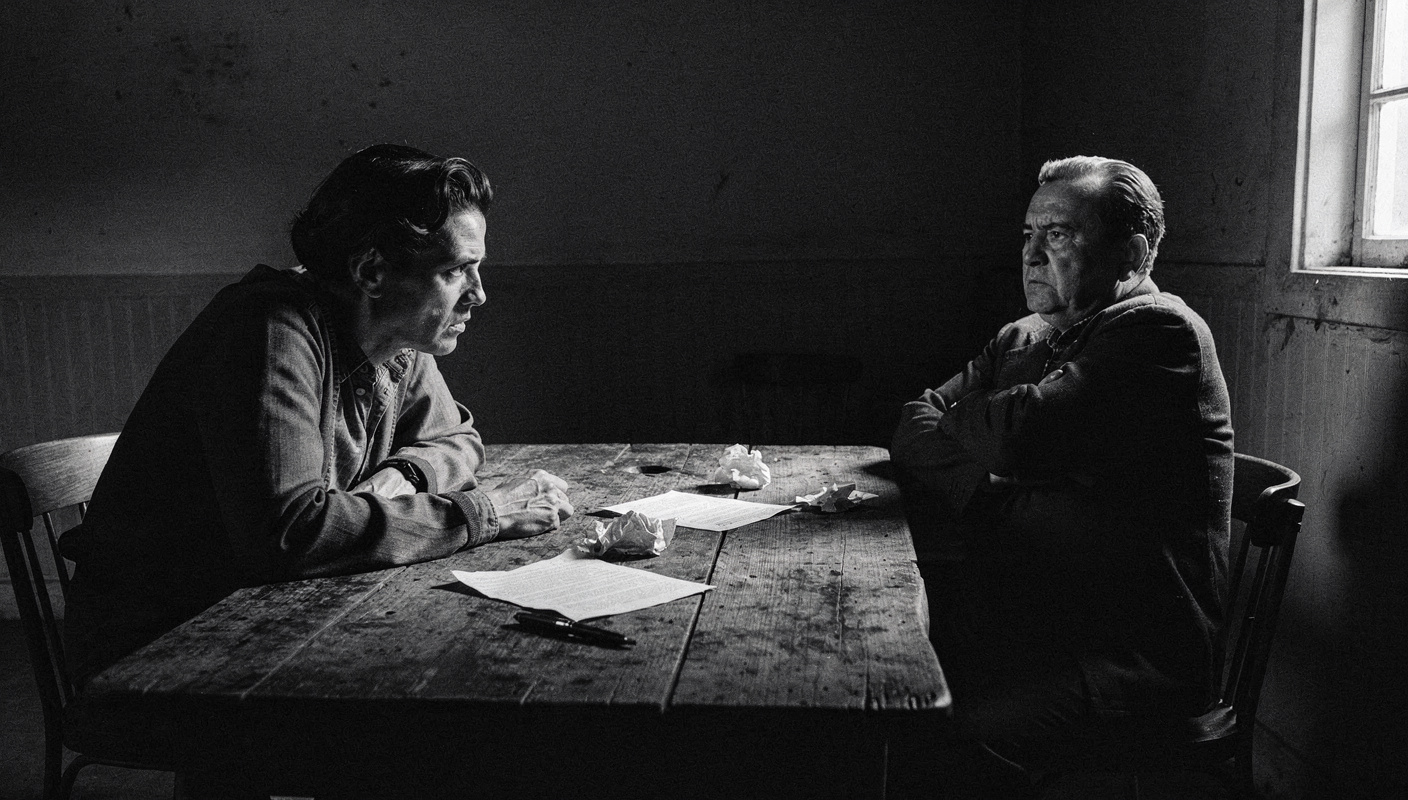
There is a particular kind of frustration that I have seen hollow people out over the years. It is not the conflict itself that does the damage. It is sitting across from someone who looks at you with a calm face and says, "I don't know what you're talking about. I don't see any problem here." The conflict is real. You can feel it in every meeting, every email, every conversation that goes slightly wrong. But the other person will not name it, and so you are left holding the weight of it alone.
Navigating conflict denial is genuinely one of the hardest communication challenges you will face at work. Standard resolution tools assume both parties agree there is something to resolve. When one person refuses to acknowledge that, the whole process breaks down before it begins. What you need is a different approach entirely, one that does not depend on the other party's willingness to show up first.
This is that approach.
Why Denial Is Not the Same as Dishonesty
Before you do anything else, you need to understand what you are actually dealing with. I spent too many years assuming that when someone denied a conflict, they were being dishonest or manipulative. Sometimes that is true. More often, it is not.
Most people who refuse to acknowledge conflict are not lying. They are protecting themselves. Admitting that a problem exists feels threatening because it can feel like admitting fault, inviting attack, or losing ground in a relationship that already feels unstable. Denial is a defensive move, not a calculated one.
This matters because it changes how you approach the conversation. If you treat denial as a tactic, you will fight it. If you treat it as fear, you can work with it. Your goal is not to expose the other person. Your goal is to make acknowledgment feel safe enough that they can step toward it without losing face.
If you are also dealing with unresolved tension that goes deeper than one incident, it helps to understand how unmet needs drive team conflict and what to say to restore synergy. That piece gives context for why people entrench themselves in the first place.
"The Conversation You're Avoiding Is the One You Need to Have."
"The Conversation You're Avoiding
Is the One You Need to Have."
Stop rehearsing conversations you'll never have. Say It Right Every Time gives you 115 word-for-word scripts and 16 proven frameworks to speak with confidence in every conversation that matters.
What You Need Before the Conversation Starts
Do not go into this unprepared. I have made that mistake enough times to know the cost.
You need three things in place before you say a word.
First, you need clarity about the specific behaviour causing the problem, not the feeling it creates, not the story you have built around it, but the actual observable action. "You dismissed my proposal in the meeting on Tuesday" is specific. "You always undermine me" is not.
Second, you need a private setting. This kind of conversation cannot happen in a hallway or a group meeting. The other person needs to be able to respond honestly without an audience watching them do it. If you are managing remote teams, a one-to-one video call with cameras on is your closest equivalent.
Third, you need to let go of the requirement that they agree with your version of events before the conversation can move forward. That expectation is the thing that turns a difficult conversation into a standoff. Go in willing to hear a perspective you did not anticipate.
How to Navigate Conflict When Denial Is the Starting Point
This is the core process. Follow it in order. Each step builds on the one before it.
Describe the behaviour, not the conflict. Do not open with "I think we have a problem" or "There's a conflict between us." Both phrases put the other person on the defensive immediately. Instead, describe a specific, observable moment. "In the team meeting last Thursday, when I raised the timeline issue, you moved straight to the next agenda item without responding. I want to understand what happened there." You are not naming a conflict. You are naming an incident. That is a smaller, safer invitation.
Name the impact on the work, not your feelings about the person. After the behaviour, describe the concrete consequence. "Because that issue wasn't addressed, the team is now working to two different deadlines." Keep it about the work. The moment you say "It made me feel ignored," the other person can dispute your feelings. They cannot dispute the existence of two contradictory deadlines. This is not about suppressing your experience. It is about giving them something factual to respond to, which is harder to deny.
Ask a genuine question and then be quiet. This step is where most people fail. They describe the situation and then immediately fill the silence with more explanation, more evidence, more argument. Do not. Ask a single, open question: "Can you help me understand how you saw that?" Then stop talking. The silence will feel uncomfortable. Hold it anyway. You are giving the other person the space to step toward the conversation instead of being pushed into it.
Acknowledge whatever they offer, even if it is partial. If they say, "I didn't realize the timeline was an issue," do not respond with, "Well, it's been an issue for weeks." Take what they have given you. "I appreciate you saying that. That's actually useful context." You are not capitulating. You are reinforcing the behaviour you want to see more of: engagement. Responding to a small step forward with a larger demand is the fastest way to push them back into denial.
Separate the immediate issue from the broader pattern. Once you have their engagement on the specific incident, you can gently expand. "I want to make sure this kind of miscommunication doesn't keep happening, because I think we work better when we're aligned early." You are now talking about a pattern without labelling it a conflict. This is the opening through which a real conversation can begin. For practical language to use in this moment, how to start a difficult conversation that's blocking your team's synergy gives tested scripts you can adapt directly.
Propose a concrete next step, not a resolution. Do not reach for a grand reconciliation. Reach for the next manageable action. "Can we agree to flag timeline concerns at the start of each meeting rather than after the agenda has moved on?" A specific, practical proposal gives both of you something to agree on without requiring anyone to admit they were wrong. Agreement on a process is progress, even when agreement on the past is still out of reach.
Document and follow through. After the conversation, send a brief written summary. "Thanks for talking through the timeline issue. As we agreed, we'll flag concerns at the start of each meeting going forward." This is not about creating a paper trail for future disputes. It is about making the agreement real and visible, which matters when the other person's default is to behave as though no conversation took place.
When the Denial Is Coming From Above You
The process above works well between peers. It becomes more complicated when the person refusing to acknowledge the conflict has authority over you.
In those situations, the framing shifts. You cannot approach a manager or a senior colleague the same way you would a teammate. The power imbalance affects what they risk by acknowledging the problem, and what you risk by naming it.
In hierarchical settings, anchor everything to organisational outcomes. "I want to raise something because I think it's affecting the team's ability to deliver" is a different conversation than "I think there's a tension between us." The first invites them to engage as a leader. The second invites them to get defensive as a person. When you frame the issue as a shared professional concern rather than an interpersonal complaint, you give them a way to engage without threatening their position.
If you are working through a conflict that has surfaced inside a team meeting and needs addressing in that context, how to handle conflict during meetings gives you a parallel framework for managing the group dynamic while you work the one-to-one channel.
The Mistakes That Make Denial Harder to Break
I have made most of these myself, and I have watched others make them for decades.
The mistake: Demanding acknowledgment before engaging with the issue.
Why it happens: It feels unfair to solve a problem someone will not even admit exists.
What to do instead: Separate acknowledgment from progress. You can make progress on the behaviour without winning the argument about whether a conflict occurred.
The mistake: Bringing evidence like you are building a case.
Why it happens: You feel unheard and you want proof.
What to do instead: One clear, specific example is more powerful than a list of ten. A list reads as an attack. One example reads as a concern.
The mistake: Involving others before you have tried the direct conversation.
Why it happens: You feel you need witnesses or allies.
What to do instead: Go direct first. Every additional person you bring in raises the stakes and makes the other party more likely to entrench. If direct conversation genuinely fails, then escalation is warranted. Not before.
The mistake: Returning to the same script every time.
Why it happens: You believe persistence will eventually work.
What to do instead: If the same approach has failed twice, change the frame entirely. Try the D.E.A.L. method to resolve conflicts that are fracturing team synergy or the D.E.A.L. method to defuse tension between two colleagues who refuse to cooperate for a structured alternative when your current approach has run out of road.
The mistake: Treating the conversation as a one-time event.
Why it happens: Conflict feels like something that should be resolved in a single sitting.
What to do instead: Plan for multiple conversations. The first one cracks the door. The later ones open it.
Your Pre-Conversation Checklist
Use this before every difficult conversation where denial is likely.
- Have I identified one specific, observable behaviour to describe? Not a pattern, not a feeling, one moment.
- Can I state the concrete impact on the work in a single sentence?
- Have I chosen a private setting where the other person can respond without an audience?
- Have I prepared an open question to ask after I describe the situation?
- Am I willing to hear something that does not match my current version of events?
- Do I have a specific, practical next step to propose if the conversation opens up?
- Am I prepared to follow up in writing afterward?
If you cannot answer yes to all seven, prepare further before you start. Arriving half-ready to a conversation like this is worse than not going at all. If you want additional preparation support, how to raise a concern in a team meeting without disrupting synergy covers the public-facing version of this challenge, and how to de-escalate arguments during meetings gives you tools for when things heat up faster than you planned.
The Ground You Are Standing On
Here is the truth of it: you cannot force someone to acknowledge a conflict. You cannot argue them into seeing what they have decided not to see. What you can do is change the conditions so that acknowledgment becomes possible, and then move toward resolution whether or not it ever fully arrives.
That is not defeat. That is the real work of navigating conflict denial. Full mutual acknowledgment is the ideal outcome. A changed behaviour, a clearer working relationship, a specific agreement about how to handle the next flashpoint: those are also victories. Do not let the perfect close the door on the possible.
The process in this article will not work every time. Nothing does. But it gives you a real method, grounded in how people actually behave under pressure, and that is the only kind of tool worth carrying into a difficult conversation.
Frequently Asked Questions (FAQ)
What is navigating conflict denial in the workplace?
Navigating conflict denial means addressing an active dispute when the other party refuses to acknowledge the problem exists. It requires reframing, careful language, and a staged approach that creates the conditions for honest dialogue without triggering deeper resistance or making the other person entrench further into their position.
How do you start a conversation about conflict when the other person denies it?
Start by describing specific, observable behaviour rather than your interpretation of it. Say what you noticed, when it happened, and how it affected the work. Avoid the word conflict initially. Ground the conversation in shared facts so the other person has something concrete to respond to, not just a feeling to dismiss.
Why do people refuse to acknowledge conflict at work?
Most denial is not dishonesty. People avoid acknowledging conflict because doing so feels threatening. Admitting a problem exists can feel like admitting fault, inviting confrontation, or losing status. Understanding this helps you frame the conversation in a way that reduces threat and makes acknowledgment feel safer for them.
What should you do when someone keeps avoiding a difficult conversation?
Stop pursuing the same approach and change your frame. Shift from seeking acknowledgment of the conflict to seeking a conversation about a specific observable impact. You do not need them to agree there is a problem. You need them engaged with a concrete issue. That is a smaller, safer ask, and far more likely to get a real response.
Can you resolve conflict if the other party never acknowledges it?
Partial resolution is possible, and often enough. You can change the dynamic, address the specific behaviour causing harm, and establish a clearer working relationship even without a full mutual reckoning. Full resolution is the goal, but it should not be the condition that has to be met before you take any action at all.
How do you navigate conflict denial without making the situation worse?
Stay focused on behaviour and impact, not personality or motive. Avoid words like always, never, and you clearly think. Give the other person a face-saving way into the conversation. Ask questions rather than making declarations. The goal in the early stages is to open the door, not to win the argument about whose version of events is correct.