
In Short
Clothing and body language are not two separate signals. They are read together as one unified message, and when they conflict, the conflict costs you credibility before you have spoken a word.
- Your physical presentation sets the frame through which every gesture, posture, and expression gets interpreted.
- Congruence between what you wear and how you carry yourself amplifies both signals.
- Incongruence creates a tension that your audience feels but rarely names, and resolves by trusting the wrong signal.
Clothing and body language congruence is the degree to which a person's physical presentation and nonverbal behaviour send a consistent, unified message. When attire, grooming, posture, and gesture align, the overall signal is amplified. When they conflict, credibility is quietly eroded.
I have watched a lot of capable people walk into rooms and lose the moment before they opened their mouths. Not because they lacked confidence. Not because their ideas were weak. Because something in the way they presented themselves created a small but persistent tension with the way they moved and held themselves. The audience felt it. Nobody could articulate it. And the person standing there had no idea it was happening.
The relationship between clothing and body language is one of the most consequential things people overlook in nonverbal communication. Most people think of them as separate concerns: dress well over here, work on your posture over there. But your audience does not process them separately. They arrive as one signal, and when the parts contradict each other, that signal fractures. What follows is an honest look at why that fracture happens, what it costs you, and how to close it.
The Frame Problem: How Physical Presentation Sets the Interpretive Context
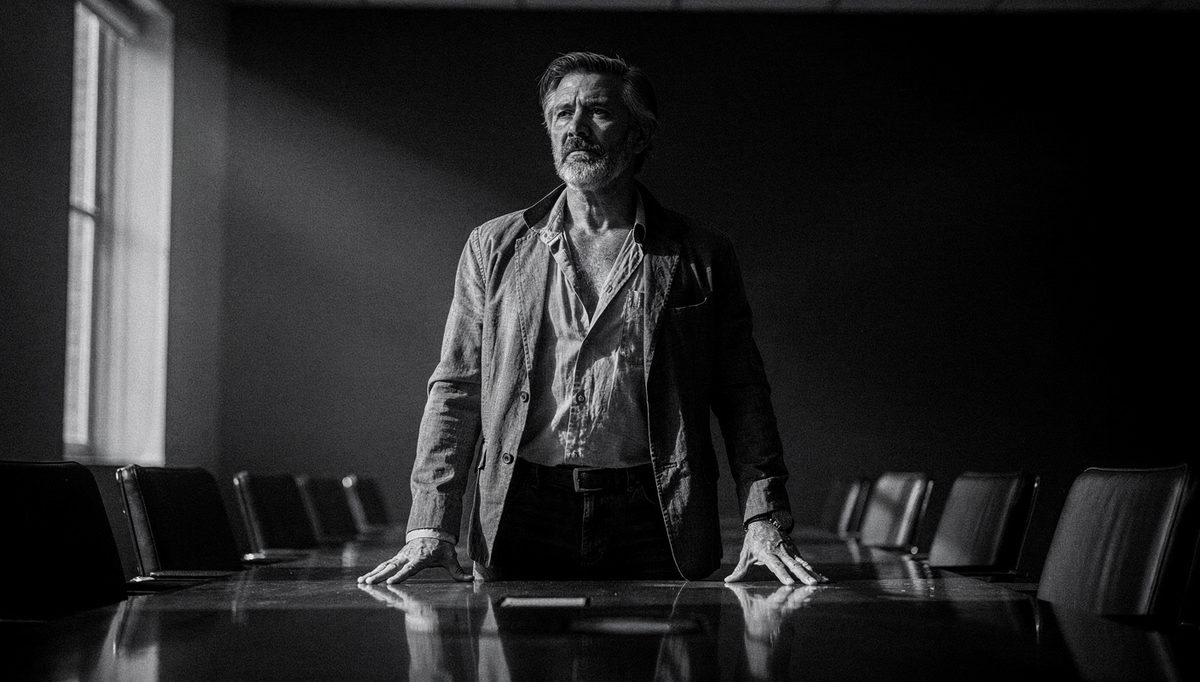
Before any gesture lands, before any expression is read, your overall physical presentation has already told the room something. Think of it as the frame around a painting. The frame does not change what is in the painting, but it shapes how a viewer approaches it. Walk into a boardroom in a well-fitted jacket, upright and composed, and the room begins to receive you as someone with authority. Walk in with the same upright posture but in a rumpled shirt and scuffed shoes, and the room receives the same posture as something slightly different: maybe relaxed, maybe careless, maybe unprepared. The gesture did not change. The frame changed.
This is the core mechanism. Physical presentation, including your clothing, grooming, and the overall impression your appearance creates, primes the people in the room to interpret your body language in a particular way. It does not determine the interpretation completely, but it tilts it. And a tilt, across a whole meeting or a whole conversation, adds up to something significant.
I learned this the hard way in my thirties. I was a confident speaker by then, comfortable with eye contact and open gestures. I walked into a client meeting having underestimated the formality of the occasion. My body language was fine. My presence was not. I spent the first twenty minutes of that meeting fighting a deficit I had created before I sat down. Nonverbal communication in tense situations often comes down to exactly this: not what you do in the moment, but what you communicated before the moment began.
"The Conversation You're Avoiding Is the One You Need to Have."
"The Conversation You're Avoiding
Is the One You Need to Have."
Stop rehearsing conversations you'll never have. Say It Right Every Time gives you 115 word-for-word scripts and 16 proven frameworks to speak with confidence in every conversation that matters.
When Clothing and Gesture Pull in Opposite Directions
The place where this really shows is in the gap between intention and reception. You intend to project confidence. You have practised your posture, your stillness, your eye contact. But your presentation sends a different signal, and the room resolves the contradiction in the only way it can: by trusting the signal it received first.
The brain processes visual information in layers, and the broadest layer, the overall impression of a person's appearance, comes before the fine-grained layer of specific gestures and micro-expressions. When those layers are in conflict, the broad layer wins. This is not a conscious decision on the audience's part. It is a function of how attention works under conditions of ambiguity.
Here is what this looks like in real life. A young manager I once worked with had developed genuine gravitas in his body language. Steady, unhurried, direct in his eye contact. But he persistently dressed below the expectations of his role, not badly, but casually, in a way that read as disengaged from the environment he was in. His team respected him in small meetings. In larger forums, with people who did not know him, the casualness of his appearance framed his composure as indifference. The posture said strength. The presentation said he was not fully present. People trusted the presentation.
This is also why overdressing relative to a room can create its own contradictions. Arrive in formal attire to a highly casual environment and your body language suddenly has to work harder to signal approachability. The formality of your dress can make relaxed, warm gestures read as performance. Congruence is always the goal, and congruence is always relative to context.
The reverse of this, when your clothing does match your body language, produces something worth understanding. It creates amplification. A composed posture in appropriate attire does not just look composed; it looks certain. Open gestures in clothing that signals engagement do not just look friendly; they look trustworthy. The role of communication in meeting success depends heavily on this kind of amplification, because a room full of people reads unified signals faster and more favourably than fragmented ones.
Where the Contradiction Becomes Costly
There are three situations where the gap between physical presentation and body language does its most serious damage.
In high-stakes first encounters. When someone does not know you, your appearance and your body language are the only data they have. Incongruence here creates a cognitive dissonance that takes real effort to overcome. First impressions do not disappear; they get revised slowly and with difficulty. If you need credibility quickly, you cannot afford to spend the first part of any conversation paying off a debt your presentation created.
In moments of conflict or challenge. When a conversation becomes tense, people look for signals of stability and groundedness. How to handle conflict during meetings requires you to communicate steadiness through every channel available. If your body language is calm but your physical presentation has already created doubt, the doubt rises to the surface under pressure. People are looking for a reason to read you as uncertain, and an incongruent presentation gives them one.
When you are trying to establish authority without rank. If you do not have formal positional power in a room, and you need to be heard anyway, your nonverbal communication has to work especially hard. How to deal with dominant voices in a discussion is partly a physical problem: you need to occupy space with authority. If your presentation undercuts that authority before you have said anything, the work of being heard becomes significantly harder.
Why Most People Never Make This Connection
The reason this goes unnoticed is that people practise body language and manage their appearance as entirely separate disciplines. You might read about posture and open gestures. You might think about what to wear. But you rarely ask how those two things interact in the mind of the person receiving them. You treat them as parallel tracks when they are, in fact, a single signal.
There is also a natural bias toward focusing on what feels controllable in the moment. In the room, under pressure, you are thinking about what to say and how to hold yourself. What you are wearing is already decided. And so it drops out of conscious consideration, even though it is shaping everything. How timing affects the impact of feedback follows a similar logic: the conditions you create before a critical moment determine how the moment itself lands, and those conditions are often set earlier than people realise.
There is a third reason. Most feedback people receive about their physical presentation is about clothing in isolation: too formal, too casual, the wrong colour. Rarely does anyone say, "Your presentation is creating a frame that your body language cannot overcome." That is a more precise observation, and it requires someone paying attention to the whole signal, not just its parts.
Closing the Gap: Making Presentation and Body Language Work as One Signal
The practical work here is not complicated, but it requires a specific habit of thought. Before any consequential encounter, ask yourself one question: what does this room require of me? Not what do I want to project, but what does this context call for? Then hold your planned presentation and your likely body language up against that question together.
If the room requires credibility, check that both your clothing and your posture point toward the same kind of credibility. If the room requires warmth and connection, check that your presentation does not create distance that your open gestures will have to spend energy overcoming. Using a grounding framework like the C.O.R.E. method before a difficult conversation applies to your physical state as well: composure is not just in your breathing and your stillness; it is in the coherence of your whole presentation.
Pay attention to fit, not just formality. Clothing that does not fit properly creates its own body language problem: it restricts movement, draws the eye to discomfort, and signals a lack of attention to detail. A well-fitted garment in a modest fabric often reads as more composed than an expensive one that does not sit right. Your body language flows more naturally when your clothing does not fight you.
Grooming carries the same weight as attire. Dishevelment in one area introduces doubt about all areas. And that doubt, once introduced, requires your body language to work overtime to address it. The S.B.I. method works partly because it gives people a clear, structured signal in a moment of tension. Your combined presentation and body language work the same way: when they are coherent and deliberate, they give the room a clear signal to trust.
The goal is not to dress for status or to perform a version of yourself that feels false. The goal is congruence. When what you wear and how you carry yourself point in the same direction, every signal you send becomes cleaner, stronger, and more persuasive. When they pull apart, even your strongest gestures get diluted by the noise.
Frequently Asked Questions (FAQ)
What is clothing and body language congruence?
Clothing and body language congruence means your physical presentation and your gestures, posture, and expressions all send the same message. When they align, people read you as credible and composed. When they conflict, your audience feels a subtle unease they often cannot name.
How does clothing affect how body language is perceived?
Clothing sets the interpretive frame through which every gesture is read. A confident posture in casual clothes may read as relaxed or unprepared depending on the setting. The same posture in a well-fitted jacket often reads as composed authority. Context and attire shape the meaning of movement.
Can poor clothing choices undermine confident body language?
Yes, consistently. You can hold perfect posture and steady eye contact, but if your presentation signals carelessness, people unconsciously discount those signals. The brain resolves the conflict by trusting the visual layer it processes first, which is your overall physical appearance before specific gestures.
Why do people miss the connection between presentation and body language?
Most people think of clothing and body language as separate channels. They practise gestures and posture in isolation without considering how their physical presentation primes the audience to interpret those signals. The two are read together as one unified message, not as independent streams.
How can I make my clothing and body language work together?
Start by asking what message your role requires in a given room. Then check whether your clothing, grooming, and posture all point toward the same message. When they align, your body language becomes amplified. When they conflict, even your strongest gestures get diluted.
Does this apply in casual or remote working environments?
It applies everywhere. In a video call, your clothing from the shoulders up, your posture, and your eye contact toward the camera form one unified signal. A slumped posture in a neat shirt still reads as disengaged. Physical presentation and body language work together regardless of the setting.