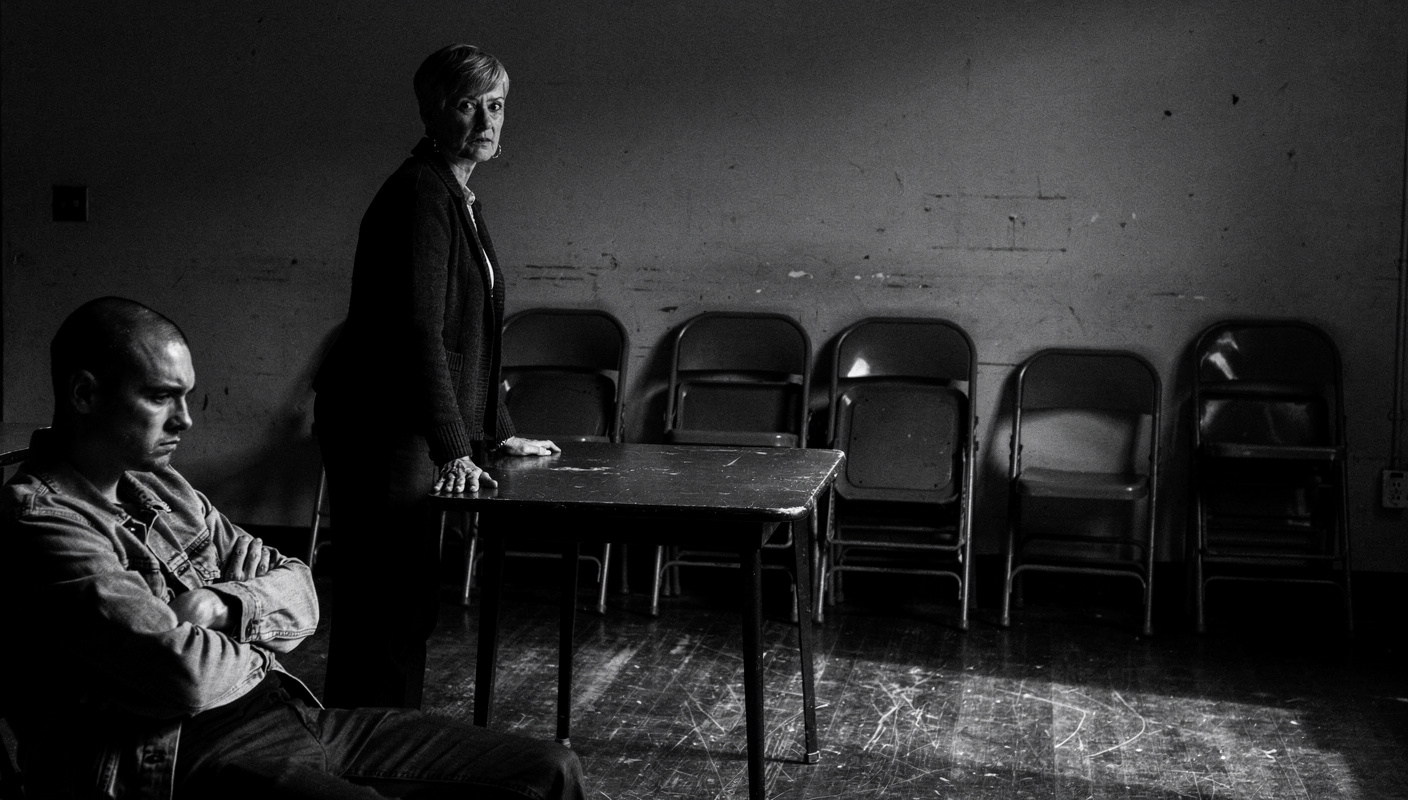

In Short
Your body tells people whether you are listening long before you respond. Active listening body language is not a performance technique. It is the physical expression of genuine attention, and other people read it with startling accuracy.
- A forward lean, open posture, and steady gaze communicate presence and respect.
- Even small distractions, checking a phone, shifting away, going still and blank, register as disengagement.
- The body always speaks first. The words that follow either confirm or contradict what it already said.
Active listening body language is the set of physical signals, including posture, eye contact, facial expression, and stillness, that communicate to a speaker that you are fully present and genuinely receiving what they are saying. It is the visible, nonverbal dimension of attention.
There are things you only understand when you watch them happen in front of you. I spent years telling people that body language mattered. Then I sat in a room and watched a senior manager completely lose the trust of a colleague in four minutes, not because of anything he said, but because of what his body kept doing while she was speaking. That is when I stopped talking about active listening body language in the abstract and started paying close attention to what it actually looks like in the room.
Definitions tell you what something is. Examples show you how it behaves. The five scenarios below are built from real types of situations I have witnessed across decades of working with teams, managers, and leaders. Read them to sharpen your ability to recognise these signals in the room, whether in others or in yourself.
What to Watch Before the Words Begin
Before you read the examples, let me give you a short set of physical signals to track. These are the ones that consistently separate genuine attentiveness from its imitation.
Orientation: Does the person's torso face the speaker, or is it angled away toward the door, a screen, or somewhere else? The body points toward what holds its real interest.
The lean: A slight forward lean signals investment. A lean back is not always disengagement, but combined with other signals, it often means the person has mentally stepped out of the conversation.
Eye contact: Steady but natural gaze communicates presence. Frequent glances away, especially toward a phone or clock, communicate that something else matters more.
Stillness: People who are genuinely absorbed in what someone is saying tend to go quietly still. Repetitive movement, tapping, adjusting clothing, or clicking a pen, often signals impatience or distraction.
Facial responsiveness: A face that tracks what is being said, with small shifts in expression, tells the speaker their words are landing. A fixed or flat expression suggests the listener has gone somewhere else.
Keep these signals in mind as you read what follows.
"The Conversation You're Avoiding Is the One You Need to Have."
"The Conversation You're Avoiding
Is the One You Need to Have."
Stop rehearsing conversations you'll never have. Say It Right Every Time gives you 115 word-for-word scripts and 16 proven frameworks to speak with confidence in every conversation that matters.
When the Body Contradicts the Words
A product team held a weekly check-in. The team lead, a man in his mid-forties, opened the meeting by saying, "I want to hear from everyone this week." Then a newer team member, a woman about six months into the role, began to raise a concern about a process gap she had noticed.
While she spoke, the team lead kept his laptop open. He glanced at the screen twice in the first thirty seconds. His chair was turned about fifteen degrees away from her, and his left hand moved between tapping the table and adjusting his water bottle. He nodded once or twice, but the nod was shallow and slightly out of sync with what she was actually saying.
She finished her point, and he responded thoughtfully. His words were fine. But the damage was already done. Afterward, another team member mentioned quietly that the newer woman "didn't seem like she'd push that again."
Here is the truth of it: the team lead's words said "I want to hear from you," but his body said "I am tolerating this." She believed the body. People always believe the body first.
This example is important because the failure was entirely invisible to the person committing it. He genuinely thought he had listened. The mismatch between spoken intent and physical signal is one of the most common and most costly dynamics in team communication.
A One-on-One Where the Body Did the Work
A project manager I once observed had a reputation for being someone people wanted to talk to. I watched her in a one-on-one with a junior colleague who was clearly struggling with a task he did not want to admit he found difficult.
From the moment he started talking, she closed her notebook. She turned her chair fully toward him. Her feet were flat on the floor, her hands rested open on the table, and she leaned forward just slightly, not dramatically, but enough that her attention was visible. When he hesitated mid-sentence, she did not fill the silence. She held his gaze and waited. Her expression shifted as he spoke: a small frown when he described the difficulty, a slight nod when he arrived at a tentative solution.
He left that meeting visibly lighter. The practical outcome was solid, but that was secondary. What mattered was that he felt genuinely heard. She had not used a single technique. She had simply pointed her whole body at another human being and stayed there.
This is what active listening body language looks like when it is working: not a checklist of positions, but a coherent physical message that says "you have my full attention." When you bring this into meeting environments, the effect on group trust is immediate and lasting.
The Room Where Someone Stopped Talking
A team of six met monthly to review progress on a long-running project. Over the course of three months, one member, a quiet analyst with genuine insight, gradually said less and less at each meeting.
No one said anything hostile to her. The dynamic was subtler. Whenever she spoke, the two most senior people in the room would continue a side conversation at low volume, their bodies angled toward each other rather than toward her. One of them had a habit of checking his phone when anyone outside his immediate circle had the floor. The other would nod quickly in a way that clearly signalled "wrap it up" rather than "I am with you."
By the fourth month, she answered direct questions briefly and offered nothing unprompted. The team lost a valuable voice without anyone intending to silence it. The physical signals had done the silencing for them.
I have seen this happen more times than I care to count. Making sure every participant feels heard is not just a facilitation principle. It depends on every person in the room managing their own body language, especially the senior people, because the most powerful person in the room sets the standard for how attention is distributed.
The Difficult Conversation Held with the Right Posture
A team leader needed to deliver corrective feedback to a colleague who had a pattern of talking over others in group discussions. This was the kind of conversation that can either open a door or permanently close one, depending almost entirely on how it is handled physically.
She chose a small, quiet room. She sat at an angle to him, not directly opposite, which would have felt confrontational, but not beside him either. She kept her arms uncrossed, her hands visible, resting loosely on the table. She made eye contact when she spoke and when she listened to his response, but broke it naturally and briefly when she was framing her next thought, which signalled reflection rather than avoidance.
When he became defensive and his voice tightened, she did not mirror his energy. She slowed her own breathing, and her posture stayed open. That physical steadiness was its own kind of message: "I am not here to fight you, and I am not going anywhere." He eventually softened.
The words she used mattered. But the physical container she built around those words, the open posture, the steady gaze, the unhurried stillness, made it possible for him to receive them. You can find a clear structure for this kind of feedback conversation in the S.B.I. method, but the method only lands when the body language around it signals safety rather than threat.
When Mirroring Went Wrong
Not every attempt at attentive body language lands the way it is intended. A team member, having read about mirroring as a listening technique, consciously copied the posture and gestures of a colleague during a difficult team discussion about workload fairness.
The colleague noticed. About ten minutes in, he stopped mid-sentence and said, "Are you mimicking me?" The conversation derailed entirely. The trust in the room dropped, and it took weeks to recover.
The lesson is not that mirroring is wrong. Subtle, natural attunement to another person's energy is a real and valuable signal. The lesson is that when physical attention becomes performance rather than genuine presence, people feel it. Active listening body language has to be grounded in actual interest. The moment it becomes a tactic you apply rather than an expression of real focus, the body betrays you. Authenticity shows in ways the conscious mind cannot fully control, and so does its absence.
For tense group dynamics, the C.O.R.E. framework offers a way to stay internally grounded so that your physical presence reflects genuine composure rather than managed performance.
What These Scenarios Have in Common
Looking across these five situations, the pattern is not subtle. In every case where listening was communicated effectively, the body was doing one clear thing: it was pointing, wholly and continuously, at the other person. Not performing attention. Not indicating attention. Giving it.
The failures share a different pattern. They all involve the body doing something other than attending. Facing the screen, scanning the phone, nodding out of rhythm, mirroring as a technique rather than a genuine response. In each case, the other person read the signal accurately and adjusted their behaviour accordingly. They withdrew, they stopped trusting, or they felt the distance and pulled back.
There is also something worth naming about power. In several of these examples, the person whose body language caused the problem was the most senior person in the room. Body language shapes how dominant voices affect a discussion, and senior people often underestimate how closely their physical signals are watched and interpreted by everyone else.
The other consistent finding: the body is faster than the words. People form an impression of whether they are being listened to within seconds of beginning to speak. By the time you say something thoughtful in response, the judgment is already made.
Recognising Your Own Signals
These examples are useful only if you use them as a mirror. The honest question is not "do I listen?" but "what does my body do while others are speaking?"
Most of us have a default posture for meetings, one-on-ones, and difficult conversations. That default posture either builds connection or quietly erodes it, and we often have no idea which, because we are focused on what we are thinking rather than what we are showing.
Here is a simple way to start. After your next significant conversation, ask yourself three things: Was my body oriented toward the other person for the full exchange? Did I introduce any repetitive movement that might have signalled impatience? Was my face tracking what they were actually saying, or was it set?
Managing conflict well in a meeting starts with managing your own physical signals before you say a word. The same applies to earning the kind of trust where people bring you real problems rather than polished summaries.
You earn that trust body first. The words confirm it, or they do not. But the body has already spoken.
Frequently Asked Questions (FAQ)
What is active listening body language?
Active listening body language refers to the physical signals that show another person you are fully present and paying attention. These include eye contact, a slight forward lean, open posture, and controlled stillness. Together, they communicate genuine interest without a single word spoken.
How do you show active listening through body language?
You show active listening through body language by turning your body toward the speaker, making steady but natural eye contact, leaning slightly forward, and reducing distracting movements. Nodding occasionally to acknowledge a point, and keeping your face open and responsive, signals that you are absorbing what is being said.
What body language signals show you are not listening?
Signals that suggest you are not listening include crossed arms, a turned-away torso, checking a phone or watch, looking past the speaker, and a blank or fixed facial expression. Even subtle signals like tapping fingers or shifting weight repeatedly can communicate impatience or disengagement.
Why does active listening body language matter in the workplace?
In the workplace, people decide whether to trust you, confide in you, and work openly with you based partly on how you physically receive their words. When your body language signals genuine attention, you earn respect and build connection. When it signals distraction, relationships erode quietly over time.
Can you improve your active listening body language with practice?
Yes. Active listening body language is a skill, not a fixed trait. With deliberate practice, you can build habits like grounding your posture, reducing fidgeting, and making your gaze more steady. Most people see measurable improvement within a few weeks of consistent, conscious effort.
Does mirroring someone's body language help with active listening?
Subtle mirroring, matching a speaker's general posture or energy level rather than copying specific gestures, can signal attunement and make people feel understood. The key word is subtle. Obvious mirroring reads as performance and breaks the connection you are trying to build.