
In Short
Submission and dominance cues in body language operate before anyone speaks a word. They shape who gets heard, who gets dismissed, and who holds the room, often without anyone naming what just happened.
- Dominance signals expand: wide stance, sustained eye contact, slow deliberate movement, claiming space.
- Submission signals contract: lowered chin, broken gaze, hunched shoulders, shrinking into corners.
- Reading these cues clearly gives you a genuine advantage in any social or professional setting.
Submission and dominance in body language refers to the physical signals people send to communicate relative status, confidence, or deference. These include posture, eye contact, use of space, and gesture, and they operate largely below conscious awareness in everyday social interactions.
I watched a senior engineer lose a promotion he deserved, not because his ideas were weak, but because his body told a different story. He walked into the panel review with rounded shoulders, sat on the edge of his chair, and dropped his gaze every time a senior leader looked at him. His words said "I am ready." His body said "Please don't choose me." The panel believed his body. Understanding submission and dominance cues in body language is not about manipulation. It is about learning to read what is actually happening in a room, and deciding, consciously, what your own body says.
What to Watch Before the Words Start
Most people focus on what gets said. The more useful skill is watching what gets established before anyone speaks.
When people enter a shared space, a negotiation begins immediately. It happens through the body. Who takes the centre seat, who hovers near the wall, who holds eye contact, who blinks away first: all of it is information. By the time a meeting formally opens, the power map of the room is already drawn.
Dominant body language expands. It takes up space: wide stance, arms resting across the back of chairs, voice projected without effort. Submissive body language contracts. It apologises for existing: feet together, arms close to the torso, voice trailing upward at the ends of sentences as if asking permission to have spoken at all.
The key thing to watch is clusters, not single signals. One crossed arm tells you nothing. Crossed arms combined with a turned torso, a lowered chin, and averted eyes tells you someone has psychologically left the conversation. Train yourself to read groups of signals together, not individual gestures in isolation.
"The Conversation You're Avoiding Is the One You Need to Have."
"The Conversation You're Avoiding
Is the One You Need to Have."
Stop rehearsing conversations you'll never have. Say It Right Every Time gives you 115 word-for-word scripts and 16 proven frameworks to speak with confidence in every conversation that matters.
Five Scenarios Where Body Language Decided the Outcome
Example 1: The Project Manager Who Owned the Room Without Speaking
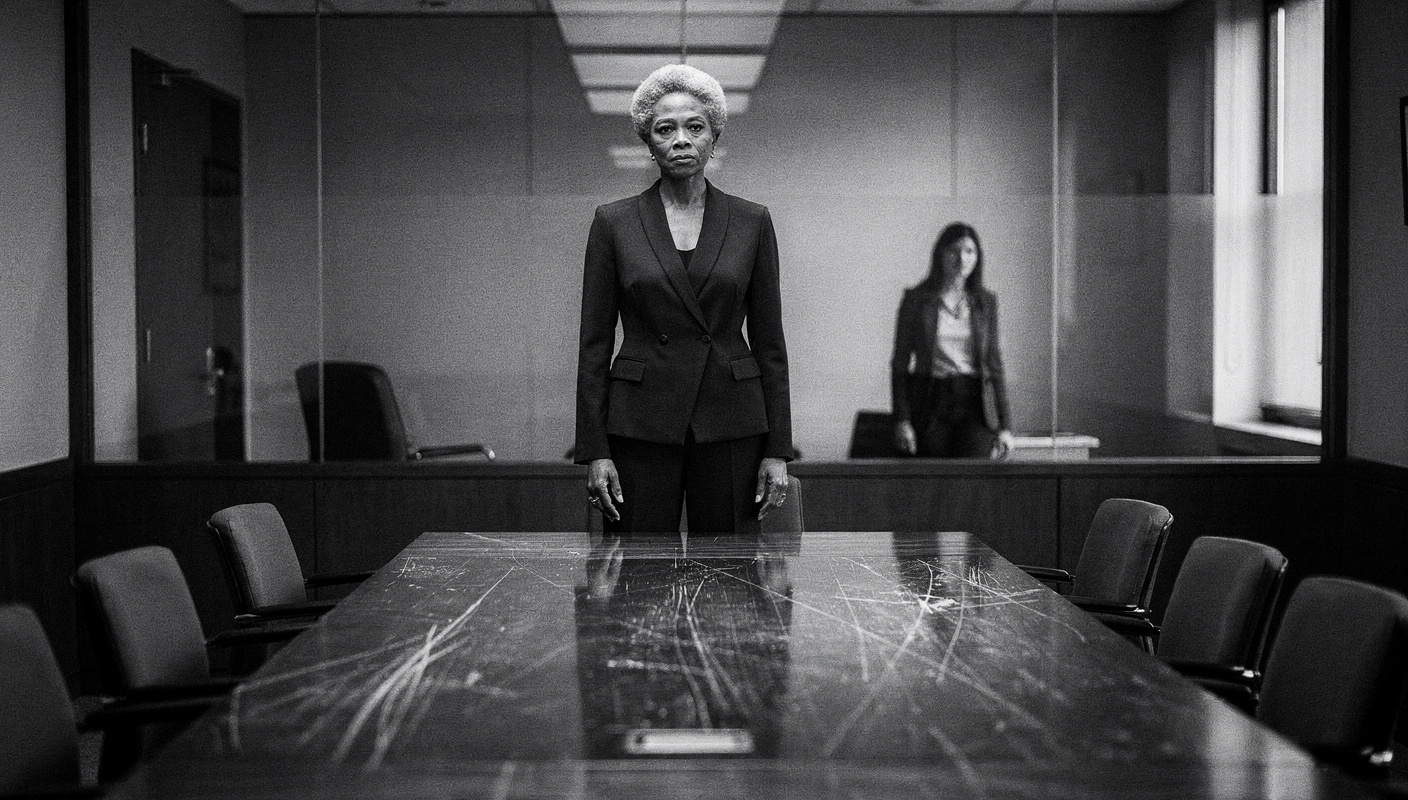
A project manager walked into a tense budget review ahead of two senior directors. She arrived early, chose a seat at the middle of the table rather than the end, and set her papers down without rushing. When others entered, she turned to face them fully, made brief, warm eye contact, and nodded once. She did not perform warmth. She simply claimed her place.
When the meeting opened and a director challenged her projections immediately, she did not lean back or fold her arms. She placed both hands flat on the table, held the director's gaze, and paused for two full seconds before she spoke. That pause was not hesitation. It was authority.
What this reveals: dominance is not loudness. It is stillness combined with held ground. Her posture told the room she belonged there long before her arguments did.
Here is the truth of it: you do not need to perform status. You need to stop performing anxiety. The stillness does the work.
Example 2: The New Hire Who Disappeared in Plain Sight
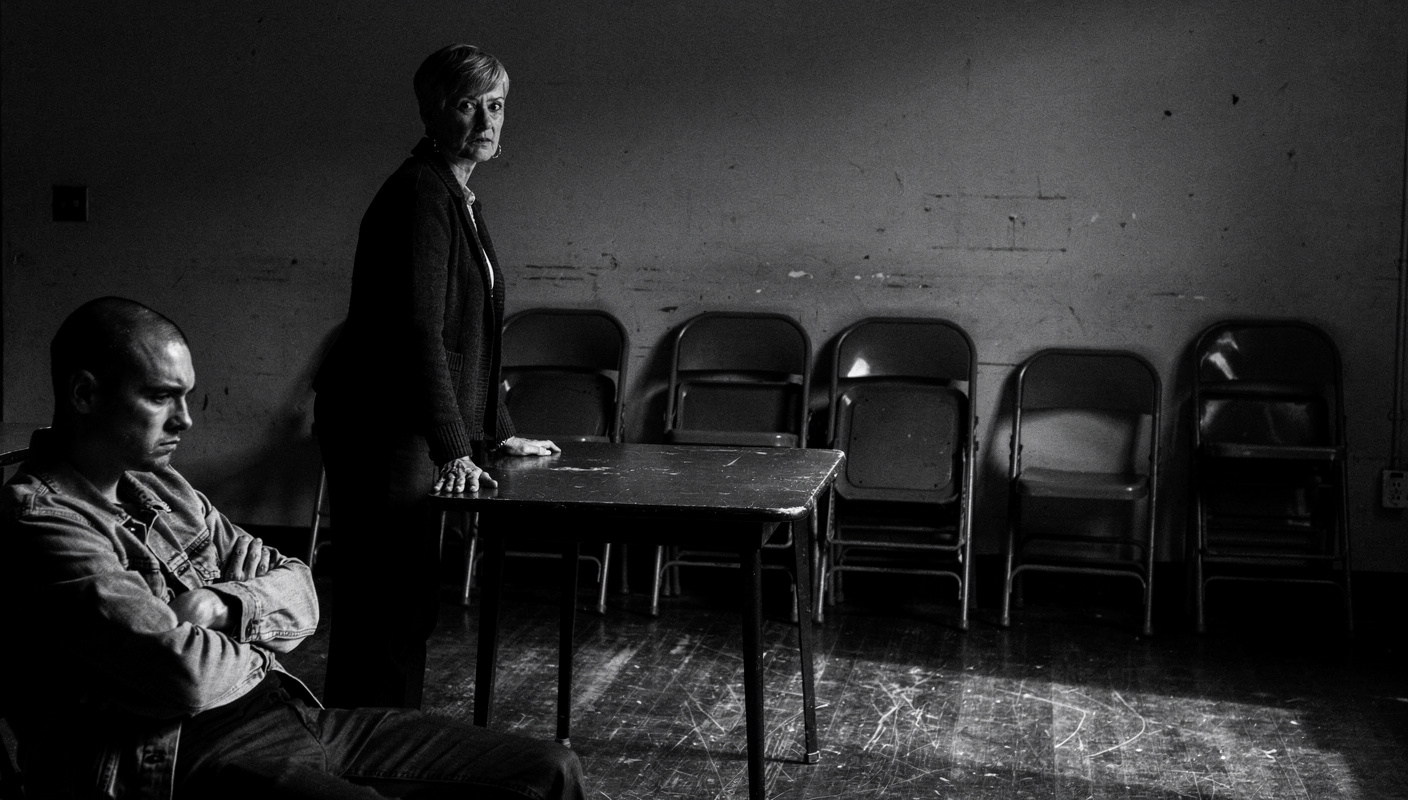
A talented new hire joined a team of six. She had strong ideas and solid experience. But in her first three team meetings, she sat consistently to the side of the table, angled slightly away from the group, with her notepad held against her chest like a shield. When she did speak, her voice rose at the end of each sentence, turning statements into questions. Senior colleagues began talking over her without noticing they were doing it.
Within a month, she had been mentally filed as "junior" by the whole team, despite having more relevant experience than two of the people who consistently interrupted her. She was submitting with her body, and the room was responding accordingly.
What this reveals: submission cues do not just reflect low status; they create it. The room treats your body language as a reliable signal of your confidence, even when it is simply a nervous habit. If you want to understand more about how nonverbal communication shapes high-tension dynamics, the pattern is the same: the body leads, and the room follows.
The cost here was real. She spent six more months rebuilding a reputation that her body had quietly damaged in six weeks.
Example 3: A Dominant Voice That Silenced Everyone
A senior consultant had a habit of leaning across the table when others spoke. Not aggressively, not consciously: he simply moved forward, expanded his physical presence, and held eye contact without blinking for slightly too long. His gestures were wide and declarative. When he finished a point, he leaned back and looked around the table slowly, as if scanning for disagreement.
One by one, the quieter team members stopped offering alternatives. Not because he shut them down verbally, but because the physical cost of disagreeing with him felt too high. His body had claimed the room as territory, and the rest of the team, unconsciously, yielded it. If you are working on how to deal with dominant voices in a discussion, recognising this physical pattern is the first step.
What this reveals: dominant body language, unchecked, does not just project confidence. It suppresses the people around it. A room full of good thinkers falls silent because one person's posture makes contribution feel costly.
Example 4: Two Leaders and the Space Between Them
Two department heads had a running disagreement that was affecting their teams. A facilitator brought them together for a structured conversation. Before a word was exchanged, both leaders chose seats directly across from each other, a classic confrontational geometry. Both sat upright with arms on the table, chests forward, faces set. The facilitator recognised this immediately.
She asked them both to move to adjacent chairs, angled slightly toward a shared document on the table. Within ten minutes, the conversation had shifted. They were both leaning toward the same point on the page rather than at each other. How you position bodies in a conflict changes what the conflict feels like, and what becomes possible within it.
What this reveals: proxemics, the use of physical space and positioning, is one of the most underused tools in managing tension. The body's geometry shapes the mind's willingness to move.
Example 5: The Manager Who Missed Every Signal
A team's performance had been slipping for two quarters. Their manager, a confident communicator and a genuinely decent person, was completely baffled. He held regular one-to-ones. He asked good questions. But he had one habit he was unaware of: in every meeting, he sat with his arms crossed and his chair slightly back from the table, angled toward the door. He was not bored or dismissive. He was a tall man who found small meeting rooms physically uncomfortable.
But his team read it differently. To them, his posture said "I want to be somewhere else." Gradually, they stopped bringing him real problems. They gave him the surface updates they thought he wanted and held the difficult conversations among themselves. The result was that a manager who genuinely cared was operating on incomplete information because his body had accidentally signalled that honesty was unwelcome. This kind of unintended signal is closely related to how communication shapes meeting success at every level.
What this reveals: you do not need to intend a message for it to land. Your team will read your body whether you are sending signals or not. Absence of intention is not a defence.
What Recurs Across These Scenarios
Three patterns run through every one of these situations.
First, body language acts faster than reasoning. The room registers submission and dominance cues before anyone has consciously processed them. By the time people are thinking about what they have observed, they have already responded to it.
Second, clusters of submissive signals are self-reinforcing. The new hire who sat at the edge of the table also spoke with rising inflection and held her notepad as a barrier. Each signal amplified the others. A single submissive cue might be invisible; three together are unmistakable, even to people who could not name what they were responding to.
Third, dominant body language is not about aggression. The project manager who owned the room was still and warm. The facilitator who repositioned the two department heads was quiet and practical. Real authority in body language is grounded, not loud. Loudness, in fact, often signals anxiety rather than strength.
Understanding how conflict behaviour develops under pressure helps explain why even capable people revert to submission cues the moment the stakes rise.
Applying This to Your Own Presence
Reading these patterns in others is the easier half. Reading them in yourself requires something harder: honest observation without self-criticism.
Start with one specific question the next time you enter a meeting: where does your body go? Do you take a central or peripheral seat? Do you place your things on the table or hold them? Do you meet people's eyes as they arrive or look at your phone?
You are not trying to perform dominance. You are trying to stop performing deference when you do not mean to. The goal is congruence: your body saying the same thing as your mind. If your ideas deserve space in the room, your body should claim that space before you have uttered a word.
Handling conflict during meetings becomes significantly easier when you can read the physical signals that precede the verbal ones. And managing the aftermath of a public disagreement becomes possible when you understand that repair, too, is partly physical: turning toward someone, opening your posture, slowing your movement.
Reading submission and dominance cues clearly does not give you power over others. It gives you power over yourself, and that is the only kind worth having.
Frequently Asked Questions (FAQ)
What are submission and dominance cues in body language?
Submission and dominance cues are physical signals that communicate relative status between people. They include posture, eye contact, use of space, and gesture. Dominance cues expand and claim territory; submission cues contract and yield it. They operate below conscious awareness in most interactions.
How do you read dominance body language in a meeting?
Watch for expansive posture, sustained eye contact, slow deliberate movement, and comfort taking up physical space. A dominant person often speaks without rushing, holds their position rather than leaning away, and faces others squarely. These signals accumulate to project authority before a single argument is made.
What does submissive body language look like at work?
Submissive body language typically includes a lowered chin, hunched or narrowed shoulders, broken eye contact, and a tendency to make the body physically smaller. People showing submission often nod excessively, angle away from the dominant person, and speak with rising inflection as though asking permission.
Can submission and dominance cues be misread?
Yes, and the consequences matter. A person with a quiet, still posture may be confident rather than submissive. Someone who leans forward aggressively may be anxious rather than dominant. Context, baseline behaviour, and clusters of signals together give a more accurate reading than any single cue.
How can I project confidence without appearing aggressive?
Confidence in body language is about stillness, not size. Slow your movement, plant your feet, and keep your chest open without thrusting it forward. Maintain comfortable eye contact, speak at a measured pace, and resist the urge to fill silence. These signals read as grounded authority, not threat.
Why do submission cues appear even when someone feels confident?
Habit, culture, and early social conditioning shape our body language more than our feelings in a given moment. Someone who learned to make themselves small in childhood may still display submission cues even when they feel sure of themselves. Changing these patterns requires deliberate practice, not just mindset shifts.