

What Happened
FTI Consulting published research arguing that organizations should stop treating crises as pure damage limitation exercises. Their position: a well-handled crisis can actually strengthen a company's reputation rather than simply protect what existed before. The report challenges the defensive crouch most companies default to when things go wrong, suggesting that how you communicate under pressure reveals more about your organization than any marketing campaign ever could.
The Communication Angle
Here is the lesson, stated plainly: your crisis response is your character on display. Everything else is performance.
Most leaders walk into a crisis thinking about survival. How do we stop the bleeding? How do we keep this off the front page? That instinct is wrong, and it costs them. The organizations that come out stronger are the ones that treat a crisis as a moment to demonstrate exactly who they are, not to manage perceptions of who they were.
The specific technique that separates winners from survivors is what I call "forward declaration." Instead of spending your communication energy explaining what went wrong (which is backward-facing and positions you as reactive), you spend the majority of your words declaring what you are doing now and committing to specific, verifiable actions in the future. The public does not need a full autopsy. They need proof that you are in control and that you give a straight answer. One sentence on the problem, three sentences on the fix. That ratio matters.
The second technique is transparency calibration. Radical honesty does not mean emotional dumping or confessing to things you are still investigating. It means you say exactly what you know, exactly what you do not know yet, and exactly when you will update people. "We know X. We do not yet know Y. We will tell you by Friday." That structure builds trust because it treats the audience like adults. Most crisis communications fail because they either over-explain (which signals panic) or under-explain (which signals arrogance).
Third, and this is the one leaders resist most: you must name the standard you failed to meet. Not blame external circumstances, not soften it with passive construction. Say the standard, say you fell short, say what standard you are now committing to. That move transforms a liability into a leadership moment. Audiences forgive far more than executives expect. What they do not forgive is evasion.
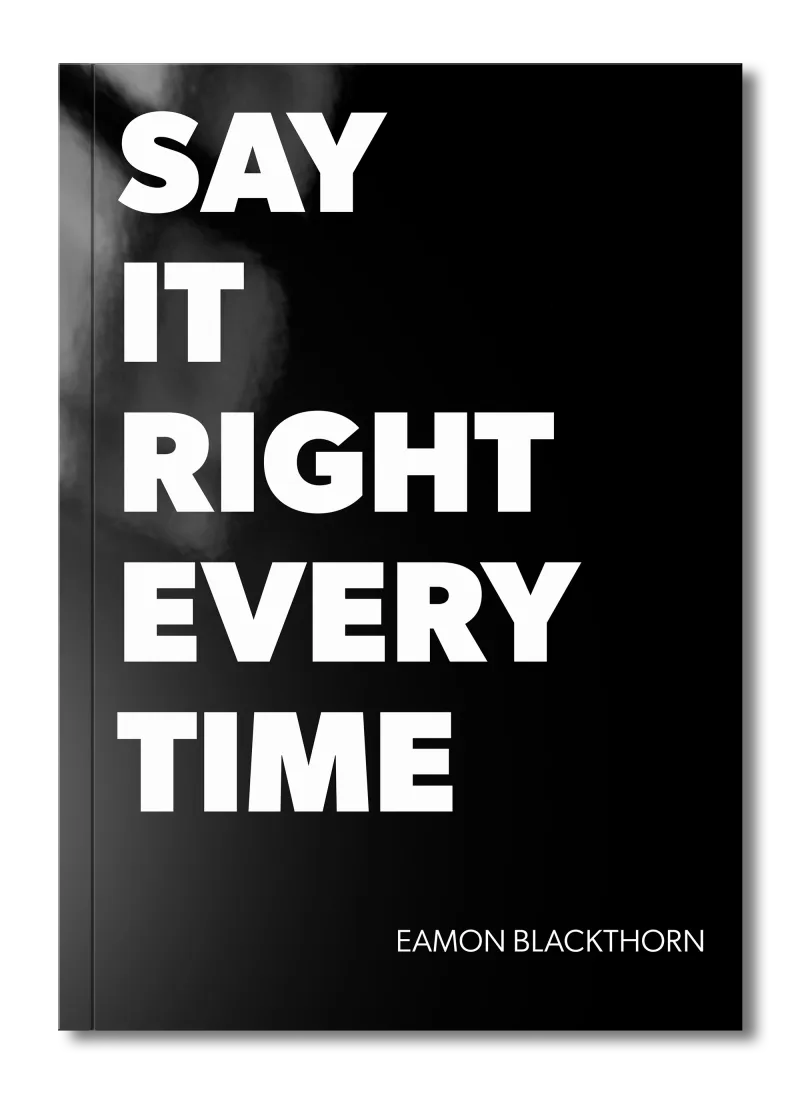
This is exactly the kind of scenario I break down in Say It Right Every Time. The chapter on high-stakes conversations gives you a framework for structuring any communication where the stakes are high and time is short. The core principle there is identical to what FTI is pointing at: the words you choose when everything is going wrong become the most honest advertisement your organization will ever run. You do not rise to the occasion. You fall to the level of your preparation.
Never Be Lost
for Words Again
Get word‑for‑word scripts for the conversations that shape your life, from job interviews and negotiations to difficult talks with family and partners, so you always know exactly what to say and how to say it.
Never Be Lost
for Words Again
Get word‑for‑word scripts for the conversations that shape your life, from job interviews and negotiations to difficult talks with family and partners, so you always know exactly what to say and how to say it.
Key Takeaway
Before your next crisis response communication (whether it is a public statement, a team address, or a media interview), write down this single sentence and read it aloud before you speak: "What is the one specific, verifiable action I am committing to, and by what date?" If you cannot answer that in one clean sentence, you are not ready to communicate yet. Wait until you can. Vagueness in a crisis is not caution. It is damage.