

What Happened
On a recent episode of Zoom's CX-focused podcast, host Ben Neo interviewed Leigh Hopwood, the CEO of the CCMA, about how artificial intelligence is reshaping customer conversations. Their central argument: in a world where AI handles more and more of these interactions, the companies that win will be the ones customers actually trust. The concept of "purposeful friction" emerged as a counterintuitive tool for building that trust.
The Communication Angle
Here is what most companies get wrong about AI and customer experience: they treat speed as the goal. Faster responses, fewer clicks, zero wait time. They optimize for efficiency and wonder why customers still feel cold about the whole interaction. Speed without trust is just a faster way to feel ignored.
The idea of purposeful friction cuts directly against that instinct, and it is correct. Purposeful friction means deliberately slowing a conversation down at key moments, adding a pause, a confirmation step, a human check-in, not because the technology cannot move faster, but because the customer needs to feel that someone (or something) is actually paying attention. It signals care. And care is the foundation of trust.
This is fundamentally a communication problem, not a technology problem. When you strip every rough edge from a conversation, you also strip the signals that make people feel heard. Think about what happens in a human conversation when someone repeats your concern back to you before answering. That pause, that reflection, it costs a few seconds and it builds enormous confidence. AI interactions need the same architecture. The friction is the message.
What Hopwood and Neo are really describing, whether they frame it this way or not, is the difference between a transaction and a relationship. Transactions are frictionless. Relationships have texture. If your AI is running purely transactional conversations, your customers know it. They are not fooled by a friendly tone and a fast response. Trust requires something that feels like effort.
The practical implication for anyone managing customer communication is this: audit your AI scripts the same way you would audit a sales pitch. Ask where the conversation slows down to show the customer they matter. If the answer is nowhere, you have a trust deficit building in silence.
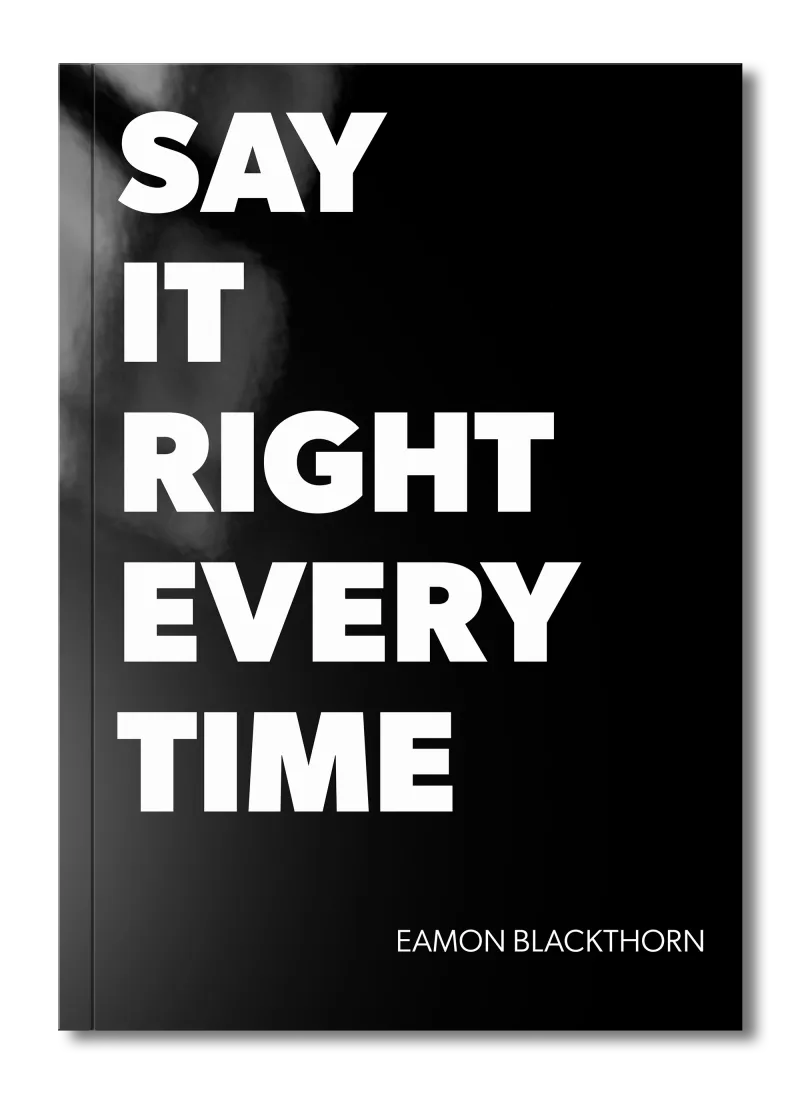
This is exactly the kind of scenario I break down in Say It Right Every Time. The chapter on pacing and silence gives you a framework for knowing when to slow a conversation down on purpose, and how to signal attentiveness without adding confusion. Most people think communication skill means saying the right words. The bigger skill is knowing when to hold back, when to reflect, and when a beat of intentional pause does more work than any clever sentence ever could.
Never Be Lost
for Words Again
Get word‑for‑word scripts for the conversations that shape your life, from job interviews and negotiations to difficult talks with family and partners, so you always know exactly what to say and how to say it.
Never Be Lost
for Words Again
Get word‑for‑word scripts for the conversations that shape your life, from job interviews and negotiations to difficult talks with family and partners, so you always know exactly what to say and how to say it.
Key Takeaway
Before your next review of any customer-facing AI or scripted interaction, identify one moment in the conversation where you can add a deliberate pause or confirmation step. Something like: "Let me make sure I have this right before we move forward." That single line changes the customer's experience from being processed to being heard. Build that moment in. Then measure whether satisfaction scores shift. They will.