

What Happened
When a company gets caught in a scandal, the instinct is to manage the story. Crowe Global recently examined how organizations attempt to restore trust after public failures, looking at the patterns that separate companies that survive from those that don't. The research reveals something uncomfortable: most companies focus on optics when they should be focused on evidence. The gap between those two choices determines everything.
The Communication Angle
Here's what actually happens when a scandal breaks. The communications team assembles. The lawyers get involved. Everyone agrees the company needs to "get ahead of the story." Then they draft a statement that sounds like it was written by a committee of people who are afraid of being quoted — because it was. That statement is the first domino to fall in the wrong direction.
The companies that recover from scandals don't do it by talking their way out. They do it by doing their way out, and then talking about what they did. That sequence matters more than anything else in crisis communication. Johnson & Johnson didn't survive the Tylenol crisis in 1982 because they issued a brilliant press release. They survived because they pulled 31 million bottles off shelves — a concrete, costly, visible action — and then let that action speak. The words followed the behavior. Every company that fails at trust restoration inverts this order.
The second mistake is the language of deflection dressed up as accountability. "Mistakes were made." "We fell short of our standards." "We are committed to doing better." These phrases are everywhere because executives believe they're safe. They're not safe. They're radioactive. Your audience isn't stupid. When they hear passive-voice non-apologies, they don't hear humility. They hear cover-up. Real accountability has a subject, a verb, and a consequence. "I made this decision. It was wrong. Here is what changes because of it." That's three sentences. Most companies can't bring themselves to say them.
The third failure point is timeline. Trust is not restored in a press cycle. Companies keep waiting for the moment when they can declare victory and move on. There is no such moment. Trust rebuilds incrementally, through repeated evidence that the behavior has changed. The communication job isn't to announce the fix — it's to narrate the ongoing proof. A monthly update that says "here's what we changed, here's what we measured, here's what we're still working on" does more trust work than any single apology statement, no matter how well-crafted.
The companies that get this right treat their audience as partners in the rebuild, not as a jury to be persuaded. That's not soft thinking — it's strategic. People forgive organizations that make them feel respected. They don't forgive organizations that make them feel managed.
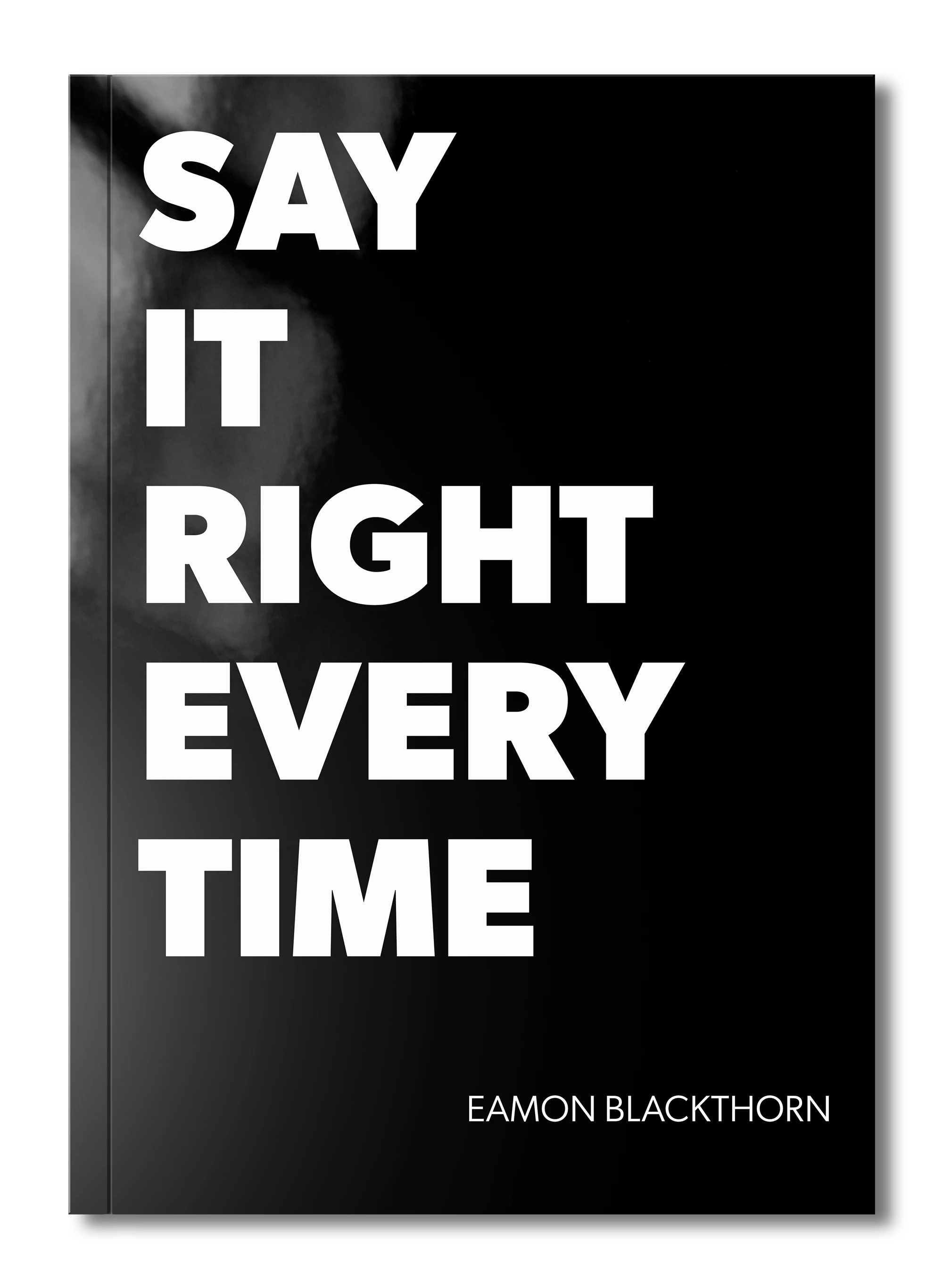
This is exactly the kind of scenario I break down in Say It Right Every Time — the chapter on accountability language gives you a framework for structuring difficult admissions so they actually rebuild credibility instead of quietly eroding what's left of it. The difference between a statement that lands and one that backfires is almost always in the architecture of the sentences, not the sincerity of the speaker.
Never Be Lost
for Words Again
Get word‑for‑word scripts for the conversations that shape your life, from job interviews and negotiations to difficult talks with family and partners, so you always know exactly what to say and how to say it.
Never Be Lost
for Words Again
Get word‑for‑word scripts for the conversations that shape your life, from job interviews and negotiations to difficult talks with family and partners, so you always know exactly what to say and how to say it.
Key Takeaway
The next time you need to address a failure — in a meeting, in a client conversation, in a public statement — write down the specific action you are taking, not the feeling you are expressing. "We are deeply sorry" is a feeling. "We are refunding every affected customer by Friday and changing the approval process that caused this" is an action. Lead with the action. Let the feeling be implied by the evidence.