
What Happened
Gallup's latest research reveals that employee engagement has dropped to troubling lows, and the data points directly at leadership as the culprit. Workers across industries are disconnecting from their jobs, their teams, and their organizations. This is not a compensation story or a benefits story. It is a communication story, and the numbers make that impossible to ignore.
The Communication Angle
Let's call this what it is: a leadership language failure playing out at massive scale.
When engagement collapses, most executives reach for surveys, task forces, and town halls. They treat the symptom. What they should be diagnosing is the daily communication diet their managers are feeding employees. Because engagement does not die in a single moment. It erodes. It erodes through a thousand small conversations where a manager fails to connect someone's daily work to something that actually matters.
Here is the core problem. Most managers speak to their teams in the language of tasks. "Finish this. Submit that. Hit this number." Task language produces compliance. It never produces engagement. Engagement requires meaning language. That means telling people not just what to do, but why it matters, who benefits from it, and how their specific contribution connects to a larger outcome. That is not a soft skill. That is the difference between a team that shows up and a team that checks in.
Gallup's own research has consistently shown that the manager accounts for at least 70 percent of the variance in team engagement scores. Seventy percent. That means the message, the tone, the consistency, and the clarity of daily leadership communication is doing most of the heavy lifting. And most managers have never been taught to communicate with intention. They improvise. They react. They talk a lot without saying much.
The fix is not a new engagement program. The fix is training managers to have better one-on-one conversations, specifically conversations where they ask real questions and actually listen to the answers. Not "how are things going?" which invites nothing. But "what is one thing slowing you down right now?" or "what part of your work feels most disconnected from the team's goals?" Those questions open doors. They signal to an employee that their experience is visible and that their manager is paying attention. That alone moves the needle.
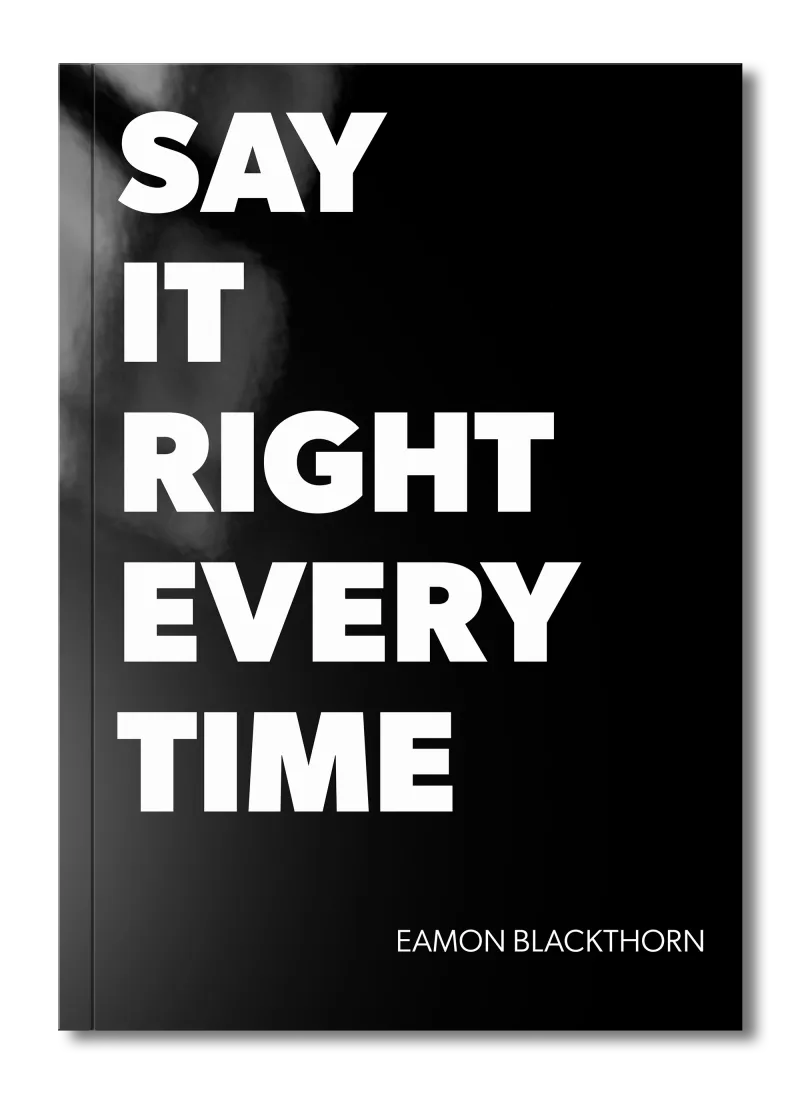
This is exactly the kind of scenario I break down in Say It Right Every Time. The chapter on intentional listening gives you a framework for turning ordinary check-ins into conversations that actually build trust and commitment. Most managers think they are listening. They are not. They are waiting for their turn to redirect. There is a specific technique in that chapter for breaking that habit in real time, and it directly applies to every one-on-one a manager has this week.
Never Be Lost
for Words Again
Get word‑for‑word scripts for the conversations that shape your life, from job interviews and negotiations to difficult talks with family and partners, so you always know exactly what to say and how to say it.
Never Be Lost
for Words Again
Get word‑for‑word scripts for the conversations that shape your life, from job interviews and negotiations to difficult talks with family and partners, so you always know exactly what to say and how to say it.
Key Takeaway
Before your next one-on-one with a direct report, replace your status update agenda with one real question: "What part of your work feels pointless right now?" Then close your mouth and listen for at least 90 seconds without interrupting or fixing. Write down what they say. Reference it in your next conversation. That single habit, repeated consistently, does more for engagement than any all-hands meeting ever will.