
What Happened
SHRM recently published research on building a connected workforce, spotlighting what separates engaged employees from disengaged ones. The findings pointed to a familiar culprit: the gap between what leaders think they are communicating and what employees actually hear. Organizations are investing heavily in engagement strategies, but the needle barely moves. The reason is not budget or benefits. It is how leaders talk to their people.
The Communication Angle
Here is the core failure happening in most workplaces right now. Leaders announce engagement initiatives. They send emails, hold town halls, post on the intranet. They mistake volume for connection. The message goes out, but no real communication happens. That is the distinction most organizations never make, and it costs them everything.
Engaged employees do not feel connected because of a ping-pong table or a quarterly bonus. They feel connected because someone in authority spoke to them directly, specifically, and honestly. That means a manager who says "Here is exactly how your work affected our Q3 numbers" instead of "Great job, team." Specificity is the engine of trust. Vague praise is noise. Specific recognition is signal.
The second layer is consistency. Employees disengage when what leaders say in all-hands meetings does not match what those same leaders do on Tuesday afternoon. This is called message-behavior alignment, and it is the single most powerful force in workplace communication. When a CEO says "people are our priority" and then cancels one-on-ones for three straight months, the real message lands loud and clear. Words are cheap. Patterns are the truth.
The third layer is direction of communication. Most engagement strategies are built on broadcasting, pushing information down. The organizations that actually build connected workforces build listening structures. Not suggestion boxes. Not anonymous surveys that sit in a spreadsheet. Real, structured conversations where employees speak and leaders respond with visible action. The response is what closes the loop. Without it, asking for input is worse than not asking at all. It signals that the voices do not matter.
Fix these three things: specificity in recognition, alignment between words and actions, and a real response mechanism for employee input. You do not need a new engagement platform. You need better communication discipline.
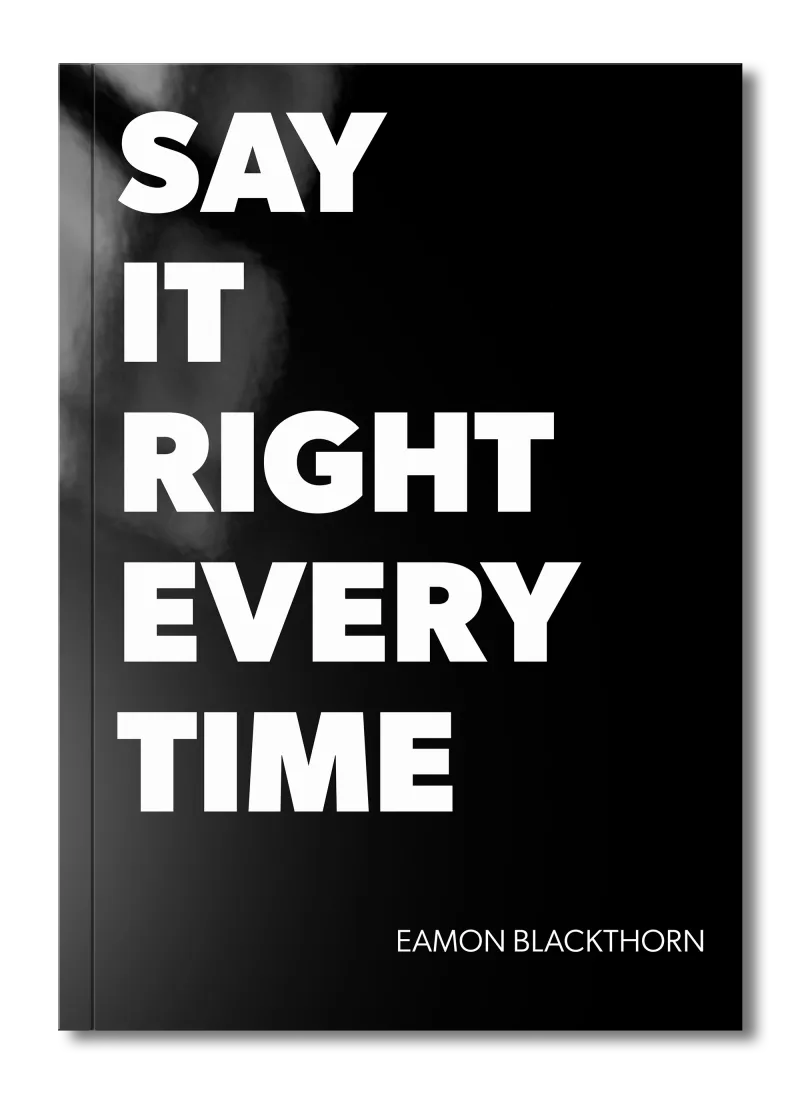
This is exactly the kind of scenario I break down in Say It Right Every Time. The chapter on precision language gives you a framework for replacing vague, feel-good communication with the kind of specific, evidence-based language that actually changes how people feel about their work and their workplace. The difference between a manager who is liked and a leader who is trusted comes down to word choice, every single time.
Never Be Lost
for Words Again
Get word‑for‑word scripts for the conversations that shape your life, from job interviews and negotiations to difficult talks with family and partners, so you always know exactly what to say and how to say it.
Never Be Lost
for Words Again
Get word‑for‑word scripts for the conversations that shape your life, from job interviews and negotiations to difficult talks with family and partners, so you always know exactly what to say and how to say it.
Key Takeaway
Before your next team meeting, write down one specific thing each person on your team did well in the last two weeks. Not "good work on the project." Name the exact decision, the exact moment, the exact result. Then say it out loud in the meeting, with that person present. Do this once. Watch what happens to the room. That is how you build connection, one specific, honest, public acknowledgment at a time.