

What Happened
Russell Brand recorded and shared a video message intended for prisoners, which Downing Street quickly labeled "appalling" and confirmed was under active investigation. The message drew sharp condemnation from government officials at the highest level. Brand, already navigating serious public allegations about his conduct, managed to generate a fresh wave of institutional outrage at precisely the moment silence would have served him best.
The Communication Angle
Let's be direct about what Brand did wrong. He spoke when he had no standing to speak. In crisis communication, the first rule is brutal and simple: your right to be heard shrinks in direct proportion to how much your credibility is under attack. Brand is facing serious accusations. Reaching into a prison to deliver a message is not a neutral act. It signals that he believes his platform still carries moral weight. It doesn't. Not right now. And broadcasting that belief out loud is what turned a smoldering situation into a fresh fire.
The second failure is audience selection. Speaking to prisoners while under investigation for serious offenses is not just tone-deaf, it is strategically catastrophic. It hands your critics the perfect image. Suddenly, you are not a man defending himself against allegations. You are a man seeking influence over vulnerable people while your own conduct is being scrutinized. Brand gave his opponents a gift, wrapped it, and put a bow on it.
There is also the matter of institutional provocation. When you are under investigation, the last thing you do is take actions that force governments and regulatory bodies to respond publicly. Every response from No. 10 is another news cycle. Every official statement of condemnation is another headline that connects Brand's name to words like "appalling" and "investigation." He created the conditions for his own ongoing burial in the press.
What should Brand have done? Nothing. Absolute strategic silence. No messages, no videos, no public appearances framed as good works. When your credibility is the question, performing virtue is the worst possible answer. It looks like a campaign, not a conscience. The public is not stupid, and journalists are actively watching for exactly this kind of move.
The deeper communication lesson here applies far beyond celebrity scandal. When you are in a hole, putting on a show inside the hole does not get you out. It just draws more attention to the fact that you are in a hole. The only move that works is to stop digging, retain legal and communications counsel who will actually say no to you, and let time and demonstrated conduct do the work.
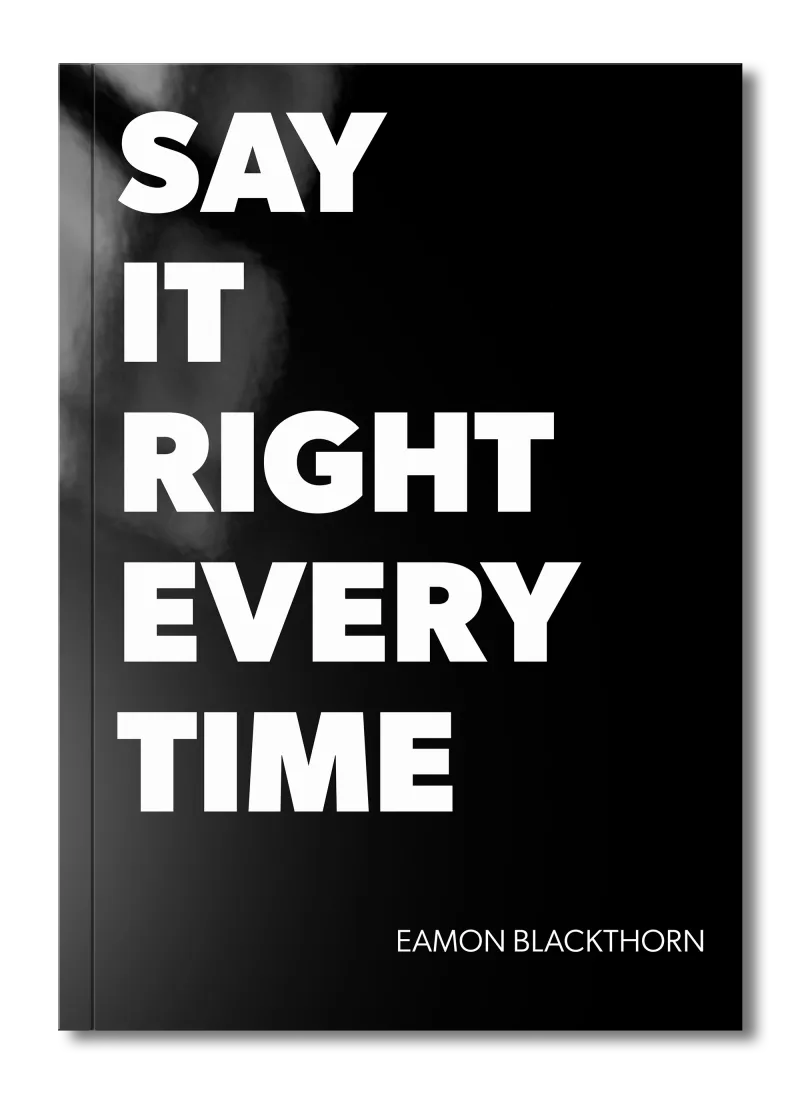
This is exactly the kind of scenario I break down in Say It Right Every Time. The chapter on timing and credibility gives you a framework for reading the room before you open your mouth, specifically how to assess whether the moment is working for you or against you, and how to make the call between speaking up and standing down. Getting that judgment right is not instinct. It is a skill, and it is learnable.
Never Be Lost
for Words Again
Get word‑for‑word scripts for the conversations that shape your life, from job interviews and negotiations to difficult talks with family and partners, so you always know exactly what to say and how to say it.
Never Be Lost
for Words Again
Get word‑for‑word scripts for the conversations that shape your life, from job interviews and negotiations to difficult talks with family and partners, so you always know exactly what to say and how to say it.
Key Takeaway
Before you make any public statement during a personal or professional crisis, ask yourself one question: does this action require people to trust me in order to receive it well? If the answer is yes, and your credibility is currently in doubt, do not make the statement. Full stop. Wait until your actions have rebuilt enough trust that your words can land without resistance.